
Iron ore prices fluctuated in opposite directions on May 20th, with the market anticipating a recovery in hot pig iron production.
Iron ore prices on the Dalian Commodity Exchange edged higher to 800 CNY/tonne on expectations of a resumption of blast furnace production in China, while prices in Singapore recorded their fifth consecutive day of declines.
At the close of trading on May 20th, the global iron ore market saw mixed results across key exchanges. While iron ore prices in China recovered slightly due to expectations of increased hot pig iron supply, the Singapore market continued to face downward pressure due to concerns about steel demand and the impact of natural disasters.
Fluctuations in iron ore prices and steelmaking raw materials.
At the Dalian Commodity Exchange (DCE), the most actively traded September iron ore futures contract closed at 800 CNY/tonne, up 0.19%. Conversely, on the Singapore Exchange, the benchmark June iron ore contract fell 0.41% to $107.35/tonne. This marked the fifth consecutive day of declines for this commodity in the Singapore market.
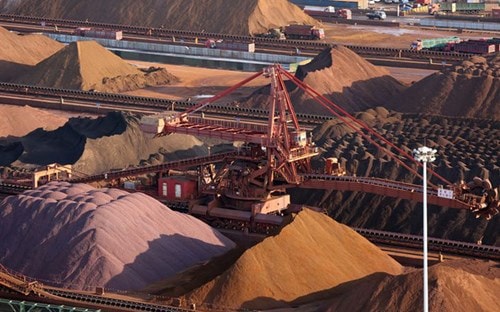
Below is a summary table of price movements for steel raw materials and products during the trading session on May 20th:
| Item | Exchange | Value / Volatility |
|---|---|---|
| Iron ore (September) | Dalian (DCE) | 800 CNY/ton (+0.19%) |
| Iron ore (June) | Singapore | 107.35 USD/ton (-0.41%) |
| Coke | Dalian (DCE) | An increase of 0.29% |
| Coke | Dalian (DCE) | An increase of 0.28% |
| Steel bars | Shanghai (SHFE) | A decrease of 0.25% |
| stainless steel | Shanghai (SHFE) | An increase of 1.57% |
Expectations of recovery from hot pig iron production.
The rally on the Dalian exchange was driven by news of blast furnace operations resuming. According to a report from Shanghai Metals Market, four blast furnaces in China restarted this week after maintenance, while only two others began temporary shutdowns for repairs. Hot pig iron production is a key indicator for forecasting short-term iron ore demand.
However, experts from ANZ Research note that pressure remains due to concerns that rising global energy costs will impact purchasing power and indirectly put pressure on China's steel demand.
Challenges from monetary policy and natural disasters
On a macroeconomic level, the People's Bank of China (PBOC) has kept its benchmark lending rate unchanged for the 12th consecutive month. Despite ample interbank liquidity, policymakers have shown no signs of an emergency rate cut, even though economic and credit activity in the country remains in a slow recovery phase.
In addition, natural disasters are disrupting supply chains. Prolonged heavy rains in southern and central China have caused widespread flooding, killing at least 21 people. Key steel-producing regions such as Guizhou, Guangxi, and Hubei provinces are being directly affected, halting transportation and production for many businesses.


