
Iron ore prices remained stable at $115.37 per ton on April 22nd.
The global iron ore market saw slight fluctuations during the morning session on April 22nd. Stable supply following negotiations, combined with stockpiling demand ahead of the holiday, helped keep prices sideways.
World iron ore prices remained stable during the morning trading session on April 22nd. The balance between the prospect of increased supply following contract negotiations and the demand for stockpiling ahead of the holiday season in China kept prices from fluctuating significantly.
Iron ore price movements on major exchanges
At the Dalian Commodity Exchange (China), the most actively traded iron ore contract recorded a slight increase of 0.38%, rising to 787 yuan/tonne (approximately $115.37/tonne) at 02:14 GMT.
Conversely, on the Singapore Exchange, the price of iron ore futures for May delivery saw a slight downward adjustment. Specifically, it fell 0.14% to $106.75 per ton. The contrasting prices on the two exchanges reflect the cautious sentiment of investors amid new signals from global supply.
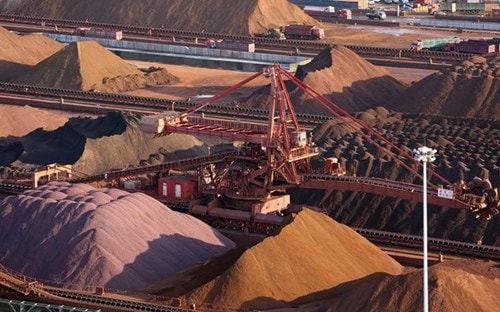
Supply is stable after negotiations.
One of the key factors impacting the market is the completion of supply contract negotiations between major mining corporations and China's state-owned purchasing unit. According to financial experts, the conclusion of these negotiations has clarified the future supply outlook, easing psychological pressure on the market.
Currently, most of the factors putting downward pressure on prices have already been reflected in the listed prices. In the short term, the market is finding support from the actual consumption demand of steel mills ahead of the long holiday period in early May.
Stockpiling demand is supporting steel and raw material prices.
Typically, steel producers in China increase their raw material inventories to support production throughout the holiday period. This inventory replenishment is acting as a crucial support, helping iron ore prices remain stable despite signs of increased supply.
In the long term, demand for seaborne iron ore is projected to remain stable in the coming years. The decline in demand in some traditional markets is expected to be offset by strong growth in emerging economies and a recovery in production in the European region.
Market for related goods
Similar to iron ore prices, other input materials such as coking coal and coke also recorded slight increases this morning. Meanwhile, steel products on the Shanghai Futures Exchange showed little change, with slight divergence between construction steel and hot-rolled coil.


