
Iron ore prices remained at $115.05 per ton on April 23rd, despite rising cost pressures.
Global iron ore prices fluctuated within a narrow range on April 23rd as the market grapples with geopolitical risks in the Middle East and the prospect of expanding supply from major miners.
World iron ore prices remained flat during the morning trading session on April 23rd. Investors are currently cautiously assessing the impact of rising transportation costs due to tensions in the Middle East against the prospect of abundant supply from leading mining companies.
Price fluctuations on major exchanges
As of 09:12 (Vietnam time) on April 23rd, the most actively traded iron ore contract on the Dalian Commodity Exchange (China) stood at 785.5 CNY/ton, equivalent to approximately 115.05 USD/ton. This development shows almost absolute stability compared to the previous session.
In the Singapore market, at 8:02 AM on the same day, the benchmark iron ore contract for May delivery recorded a slight decrease of 0.18%, to $107.1 per ton. Earlier in the same session, the price had briefly touched $107.5 per ton – the highest level since March 30th. Notably, iron ore prices in Singapore have successfully maintained above the psychological threshold of $100 per ton for more than six consecutive weeks.
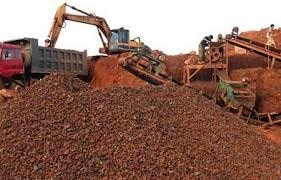
Geopolitical factors and transportation cost pressures
The market is currently being directly impacted by developments in the Middle East. Iran's seizure of two container ships in the Strait of Hormuz on April 22nd has increased uncertainty in the region and affected the prospects for negotiations between the US and Iran.
According to analysts, geopolitical tensions have driven up energy prices, which in turn has driven up transportation costs and input costs for the mining industry. This is a key factor in consolidating the current price range of iron ore, preventing further sharp declines despite other pressures.
Steel supply outlook and market developments
The current upward trend in iron ore prices is being limited by positive signals regarding global supply. BHP Group recently announced that its third-quarter iron ore production exceeded expectations. Simultaneously, the resolution of supply contract disputes with China is expected to boost exports to the world's largest steel consumer market.
Meanwhile, Rio Tinto – the world's largest supplier – maintained its forecast for Pilbara iron ore consumption in 2026 at between 323 and 338 million tonnes. However, the company also warned of potential risks to the supply chain due to the complex geopolitical situation.
In the Chinese domestic market, other steelmaking raw materials are showing an upward trend:
- Coke:An increase of 0.43%.
- Coke:An increase of 1.03%.
On the Shanghai Futures Exchange, steel products also saw price increases across the board. Specifically, rebar rose 0.35%, hot-rolled coil increased 0.68%, wire rod gained 0.61%, and stainless steel edged up slightly by 0.27%.


