
World iron ore prices fell for the fourth consecutive session, reaching $100.45 per ton.
Pressure from port inventories in China and low profit margins for steel mills caused iron ore prices to fall across international exchanges on June 8th.
World iron ore prices recorded a decline for the fourth consecutive session on June 8th. At the Dalian Commodity Exchange (DCE), the September iron ore contract fell 0.78% to 759 CNY/tonne (equivalent to 111.83 USD/tonne). At the same time, on the Singapore Exchange, the benchmark July contract also fell 1.26% to 100.45 USD/tonne.
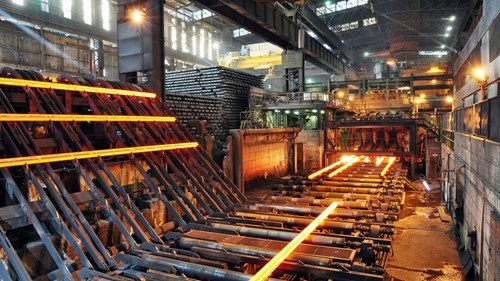
Pressure from supply and inventory in China.
According to data from SteelHome, although iron ore inventories at major Chinese ports decreased slightly by 0.91% compared to the previous week, current figures are still approximately 25 million tons higher than the same period in 2025. DBX Commodities assesses that iron ore supply remains abundant as shipments to China continue to set new records.
In contrast to abundant supply, crude steel production is trending downward. Low profit margins are forcing steel mills to change strategies, prioritizing the use of low-iron ore to optimize production costs. Data from Mysteel shows that the blast furnace operating rate at 247 Chinese steel mills last week reached 83.94%, down 0.2 percentage points from the previous week.
The impact of weather and the fluctuations of related commodities.
Steel production in China also faces risks from natural disasters. The country's meteorological agency issued flash flood warnings for Hunan, Guangxi, and Guizhou provinces on June 7-8. Extreme weather events could disrupt supply chains and directly impact production in these key areas.
In the raw materials market, coking coal prices fell 1% and coke prices fell 1.46%. Meanwhile, prices of finished steel products on the Shanghai Futures Exchange showed clear divergence: rebar and wire rod prices remained almost unchanged, hot-rolled coil (HRC) prices fell 0.15%, while stainless steel prices rose slightly by 0.14%.
Notably, on the international market, major Australian mining companies are seeking government support ahead of China's negotiating strategy. Beijing is attempting to gain a greater advantage in iron ore pricing through the possibility of applying a centralized sales mechanism to Australia's key export commodity.


