
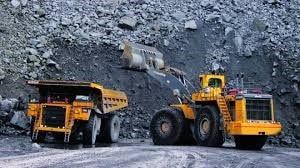
Coking coal prices in China fell to 1,273 yuan per ton due to weak steel demand.
Slump demand for steel in China, due to bad weather and trade barriers, has driven down the prices of coking coal and other steelmaking raw materials.
On May 27th, coking coal prices in the Chinese market reversed course and fell, erasing the gains of the previous two sessions. Concerns about declining steel demand overshadowed supply uncertainties stemming from mining accidents in Shanxi province.
Raw material price movements on the exchanges.
At the close of daytime trading, the most actively traded coking coal contract on the Dalian Commodity Exchange (DCE) fell 1.16% to 1,273 yuan per ton (equivalent to $187.65 per ton). Similarly, the coke contract also lost 1.08%, closing at 1,877.5 yuan per ton.
| Item | Exchange | Price | Fluctuations |
|---|---|---|---|
| Coke | DCE (China) | 1,273 CNY/ton | -1.16% |
| Coke | DCE (China) | 1,877.5 CNY/ton | -1.08% |
| Iron ore | DCE (China) | 781.5 CNY/ton | -0.32% |
| Iron ore (June) | Singapore (SGX) | 105.2 USD/ton | +0.17% |
Pressure from downstream demand and weather conditions.
Demand for crude steel is showing clear signs of slowing down. According to data released by the China Iron and Steel Association (CISA) on May 26th, the average daily crude steel output during the period of May 11-20 is expected to decrease by 0.9% compared to the first 10 days of the month. This indicates that mills are proactively cutting production as input material consumption weakens.
The primary cause has been identified as heavy rainfall in southern China, disrupting logistics and halting construction projects. Ge Xin, an analyst at consulting firm Lange Steel, predicts the steel market will begin a seasonal downturn starting in June.
Challenges for China's steel industry
Besides domestic factors, the Chinese steel industry is also facing numerous pressures from the international market. Increasing trade barriers, carbon tax regulations, and fierce competition from rival countries are directly impacting export volumes.
Despite tight coal supplies following rigorous safety inspections at coal mines in Shanxi province (where a recent gas explosion killed 82 people), prices are unlikely to sustain their upward trend. According to analysts at Everbright Futures, steel mill profit margins are shrinking significantly due to high input costs while finished steel prices remain under constant downward pressure.
On the Shanghai steel futures market, prices for most commodities declined. Rebar fell 0.73%, hot-rolled coil fell 0.5%, and wire rod fell 1.09%. The only bright spot was stainless steel, which saw a slight increase of 0.81%.


