
Pepper prices today, May 18, 2025: Prices remain high.
Today, May 18th, the domestic price of pepper is between 151,000 and 153,000 VND/kg. Pepper prices remain high compared to yesterday. Strong export demand may lead to a slight increase in pepper prices towards the end of the second quarter.
Today's pepper prices in the domestic market (May 18, 2025)
Today's pepper prices in some key growing regions remained high compared to yesterday. As a result, the average domestic pepper price is between 151,000 VND/kg and 153,000 VND/kg.
In the Central Highlands region, today's pepper price in Dak Lak remains unchanged compared to yesterday, currently at 153,000 VND/kg.
Today's pepper price in Gia Lai remains unchanged compared to yesterday, currently at 151,000 VND/kg.
Today's pepper price in Dak Nong remains unchanged compared to yesterday, currently at 153,000 VND/kg.
In the Southeast region, today's pepper price in Ba Ria - Vung Tau is 151,000 VND/kg, unchanged from yesterday. Dong Nai also remains unchanged from yesterday at 151,000 VND/kg.
In addition, the price of pepper in Binh Phuoc today remains unchanged compared to yesterday, currently at 151,000 VND/kg.
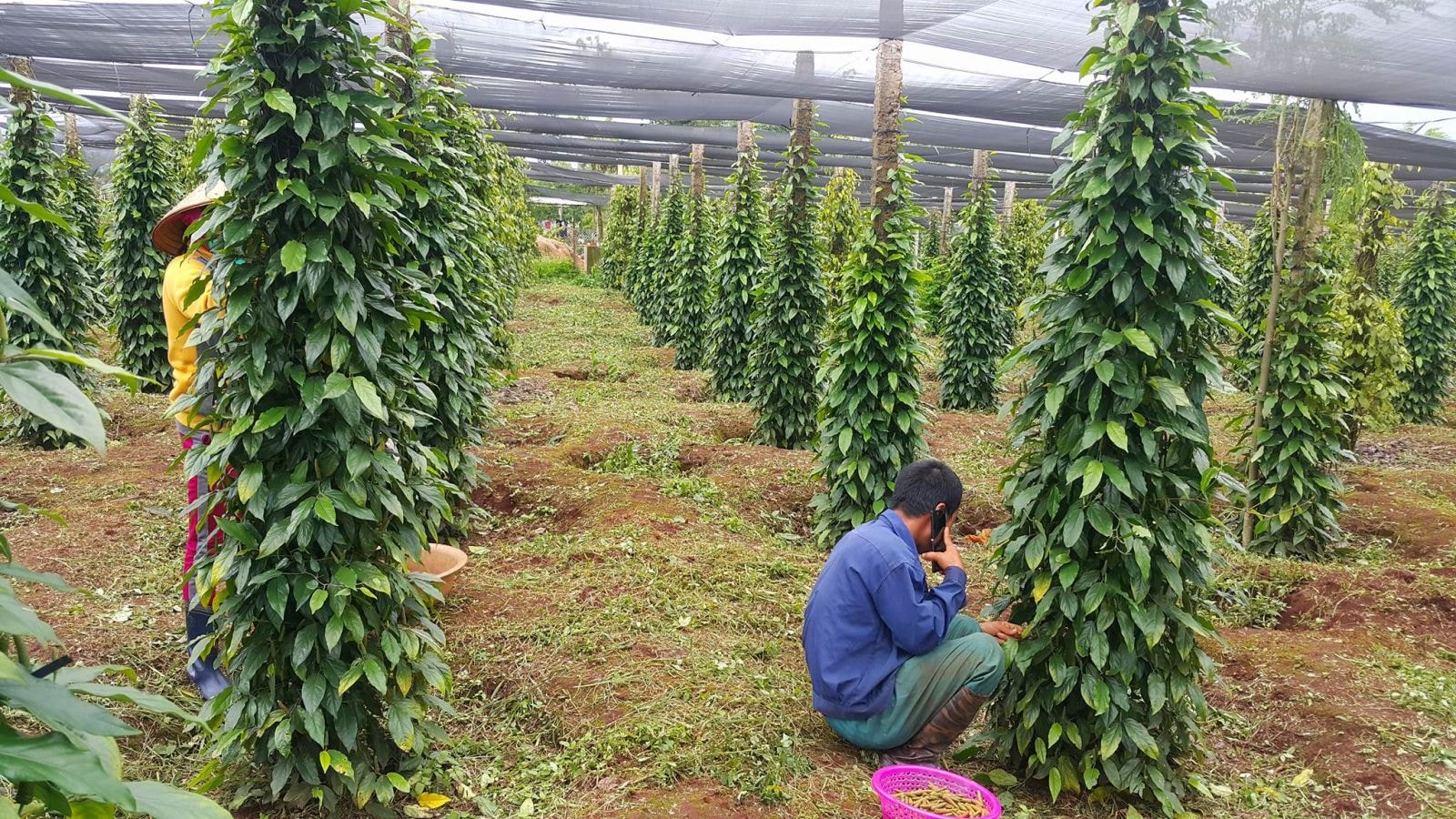
Today's pepper prices (May 18th) on the world market.
On the world market, based on quotations from exporting companies and export prices in various countries, the International Pepper Association (IPC) has updated the prices of various types of pepper traded on the international market on May 17th (local time) as follows:
Indonesian Lampung black pepper prices remained unchanged from yesterday at US$7,301/ton. Additionally, Muntok white pepper prices also remained unchanged from yesterday at US$10,051/ton.
The price of Brazilian ASTA 570 black pepper remained unchanged from yesterday at $6,800 per ton.
Malaysian ASTA black pepper prices remained unchanged from yesterday at US$9,200/tonne. Additionally, the price of ASTA white pepper from the same country remained stable at US$11,900/tonne.
Prices for all types of Vietnamese pepper remain unchanged compared to yesterday. Specifically, the price of Vietnamese black pepper (500 gr/l) is 6,700 USD/ton; and the price of 550 gr/l is 6,800 USD/ton.
Similarly, the price of Vietnamese white pepper remained unchanged from yesterday at $9,700 per ton.
Some forecasts suggest that pepper prices may increase slightly from mid-May to early June 2025. This is mainly due to businesses accelerating the completion of delivery contracts in the second quarter and increased import demand from major markets such as Europe and the Middle East.
However, according to the Vietnam Pepper and Spice Association, the domestic market currently lacks clear upward price momentum. Slow consumption, coupled with the wait-and-see attitude of traders, has resulted in little price fluctuation.
Experts believe that after the US implemented retaliatory tariffs, Vietnamese pepper is facing significant competition from Brazil and Indonesia, two countries with lower tariffs, reducing the attractiveness of Vietnamese pepper in the US market.
On the world market, since the beginning of May 2025, pepper prices have shown a clear divergence among producing countries. In Indonesia, pepper prices are trending upwards. Meanwhile, Vietnam, Malaysia, and Brazil have recorded slight decreases compared to the beginning of April. Brazil, in particular, currently maintains a stable price level with little fluctuation.
In the second quarter, Vietnamese pepper is subject to a 10% tariff when exported to the US. It is expected that in the third quarter, this tariff could increase to over 25% to 30%, further eroding the competitiveness of Vietnamese pepper in this important market.
Given the unpredictable developments, the Government has assigned the Ministry of Agriculture and Environment, in coordination with the Ministry of Finance and relevant agencies, to study solutions to support the temporary storage of agricultural products such as rice, coffee, and pepper. The goal is to stabilize prices and income for farmers during the peak harvest season.
The government also requested ministries, departments, and localities to closely monitor global trade developments, proactively manage operations flexibly, and provide timely information to support businesses in coping with fluctuations arising from international trade instability.


