
The 'multi-compartment' farm of a Thai ethnic minority female farmer.
Leaving her office job, Ms. Luong Thi Nhung, from Thai Hung hamlet, Muong Ham commune, boldly transitioned into business and gradually built a diversified, self-contained production model. By utilizing by-products, proactively managing inputs, reducing costs, and controlling diseases, her family earns approximately 350 million VND annually, becoming one of the exemplary women entrepreneurs in the locality.
From small-scale livestock farming to multi-income model
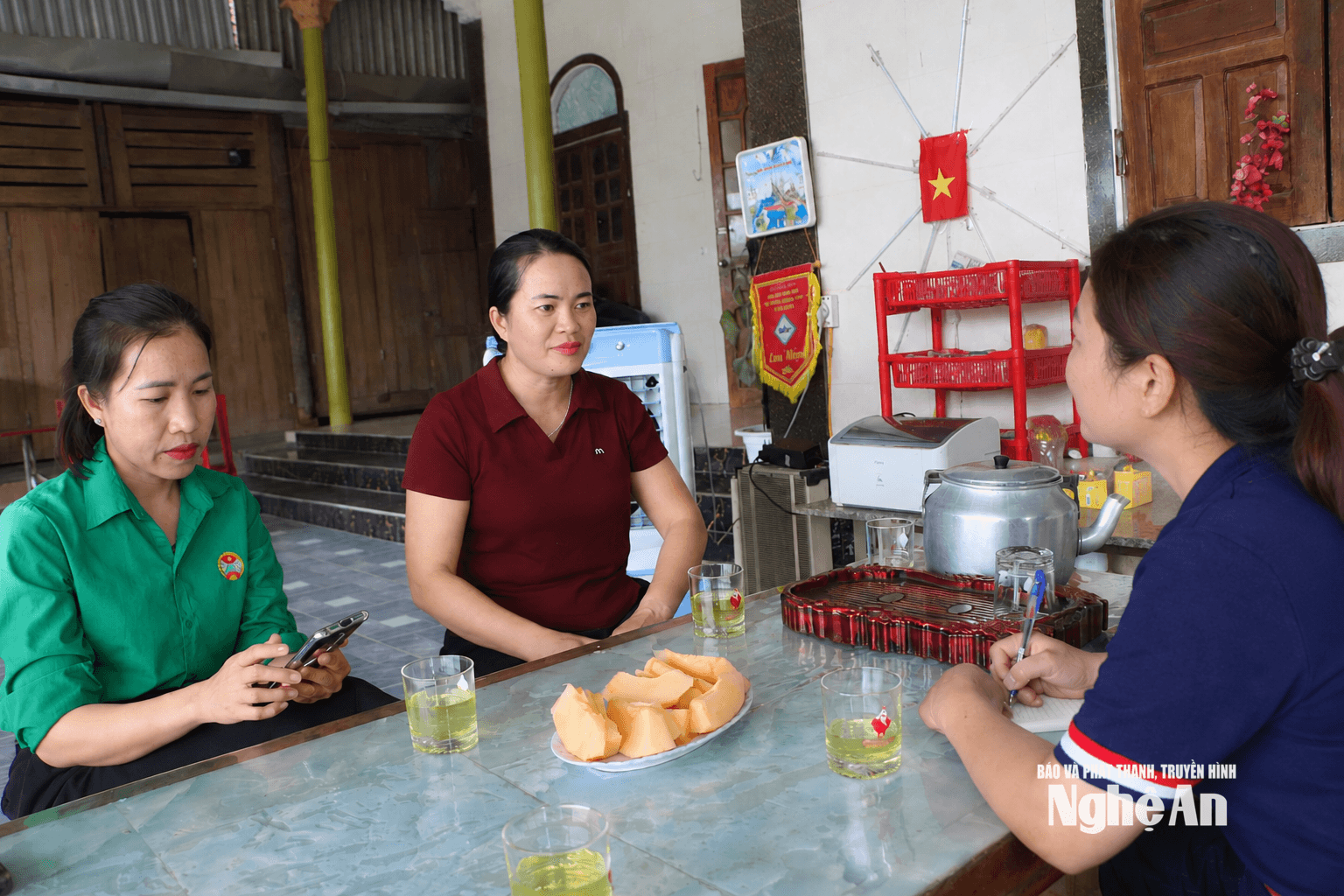
Born in 1979, after graduating from Nghe An Teacher Training College, Ms. Luong Thi Nhung participated in the Young Intellectuals Volunteer Project and spent two years teaching in Chau Ly commune (formerly Quy Hop district). Afterward, she returned to her hometown and worked for 17 years at the Party Committee Office of the former Chau Thai commune. In 2006, she was admitted to the Party. Her job was stable, but in 2021, due to family circumstances, she decided to quit. This was also the time she began to reconsider her family's economic development.
Lacking the capital to invest in a large-scale model, Ms. Nhung chose to start with what her family could manage independently. From small-scale livestock farming, she gradually expanded the scale, combining various types of animals and crops.
To date, the family maintains approximately 10 breeding sows, 30 fattening pigs, 5-7 breeding cows, a herd of about 30 goats, and a flock of about 200 pigeons, chickens, and ducks. In addition to livestock farming, the family owns 1 hectare of acacia trees, 4 sao (approximately 0.4 hectares) of rice paddies, 5 sao (approximately 0.5 hectares) of medicinal basil, and 5 sao (approximately 0.5 hectares) of sugarcane.
She also maintains a grocery store combined with a milling service, which both generates additional income and provides more raw materials for livestock farming.
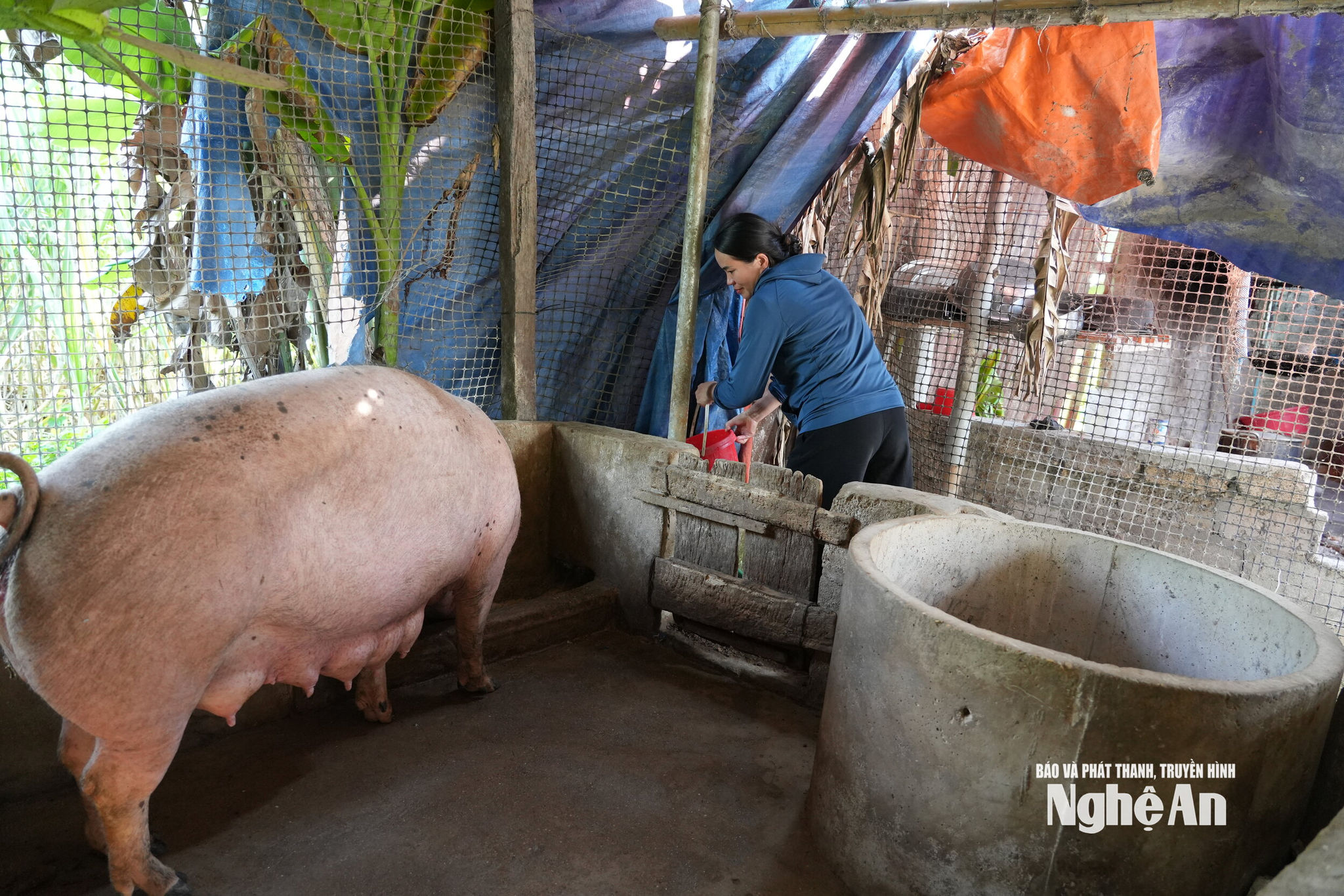
What Nhung cares about in livestock farming is how to ensure that all stages of the farm support each other, reducing unnecessary expenses. With her pig herd, after sows give birth, she proactively raises the piglets into market pigs. She also pays close attention to selecting breeding boars and artificial insemination to improve the quality of the offspring.
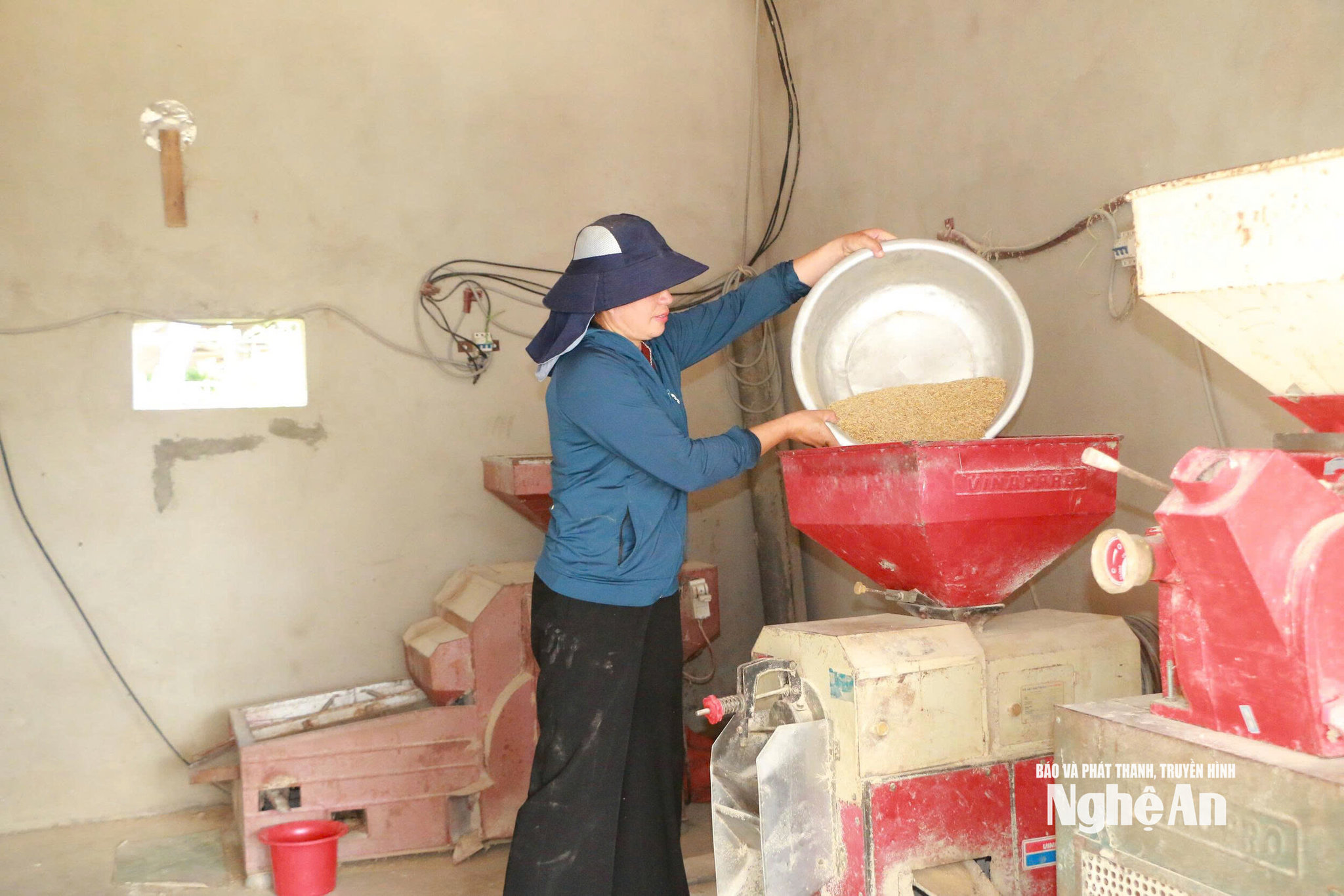
The family proactively sources green fodder from milkweed, corn, and rice. The milling machine serves both as a service for the local people and helps the family utilize the bran as animal feed.
In addition, she also brews rice wine, using about 2 tons of glutinous rice each year to produce approximately 2,000 liters of wine. After distillation, the leftover mash is not discarded but is used to make animal feed. From one raw material, the family gains both rice wine and a source of feed for their livestock. This method helps her reduce costs while minimizing the amount of by-products that need to be discarded.
"Livestock farming requires careful planning, especially regarding feed costs and disease prevention. We should utilize whatever resources we can, but we must ensure the animals are healthy and not compromise quality for the sake of saving costs," Ms. Nhung shared.
Dividing the farm into "multi-compartment" sections helps keep livestock safe.
While utilizing resources efficiently is how Ms. Nhung reduces costs, organizing the farm into separate zones is how she controls risks.
In her farm, she arranged separate areas for different groups of livestock, relatively separating them in terms of pens, care areas, and sanitation, limiting the movement of animals, people, and farming equipment. According to her, each type of livestock has different characteristics and disease risks, so it's impossible to organize farming by gathering everything in one area.
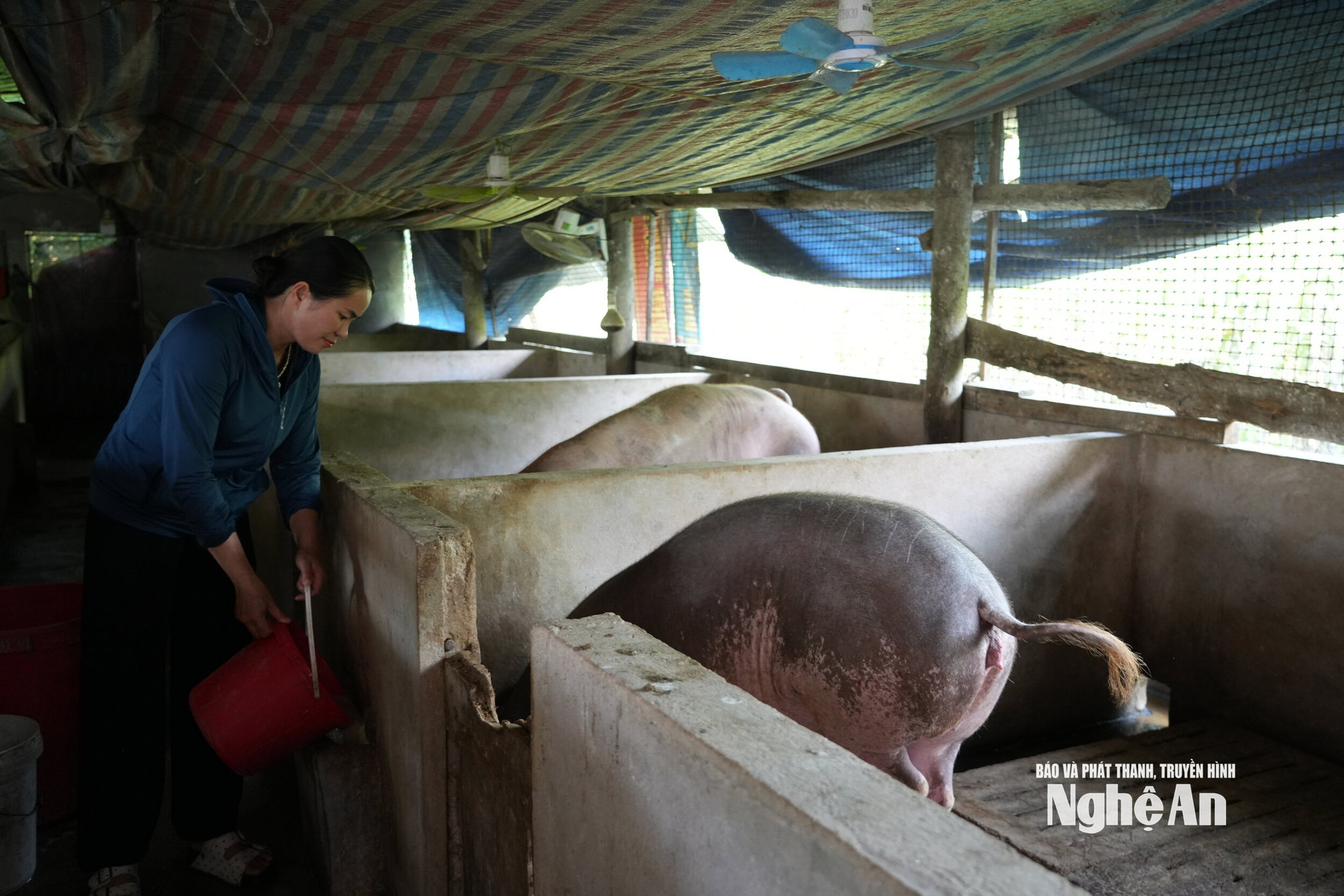
Dividing the farm into separate sections allows her to easily monitor the condition of the livestock, control hygiene, provide care, and handle any abnormalities. When introducing new animals or detecting sick animals, she proactively isolates them, limiting the risk of spreading to other areas. In addition, she regularly cleans the barns, vaccinates the animals, and monitors their health.
Despite lacking formal veterinary training, Ms. Nhung proactively learned online, attended training courses, and accumulated practical experience. She combined feed with certain herbs to boost the animals' immunity. Through several outbreaks of dangerous diseases affecting livestock and poultry, her family's herd remained intact, maintaining production.
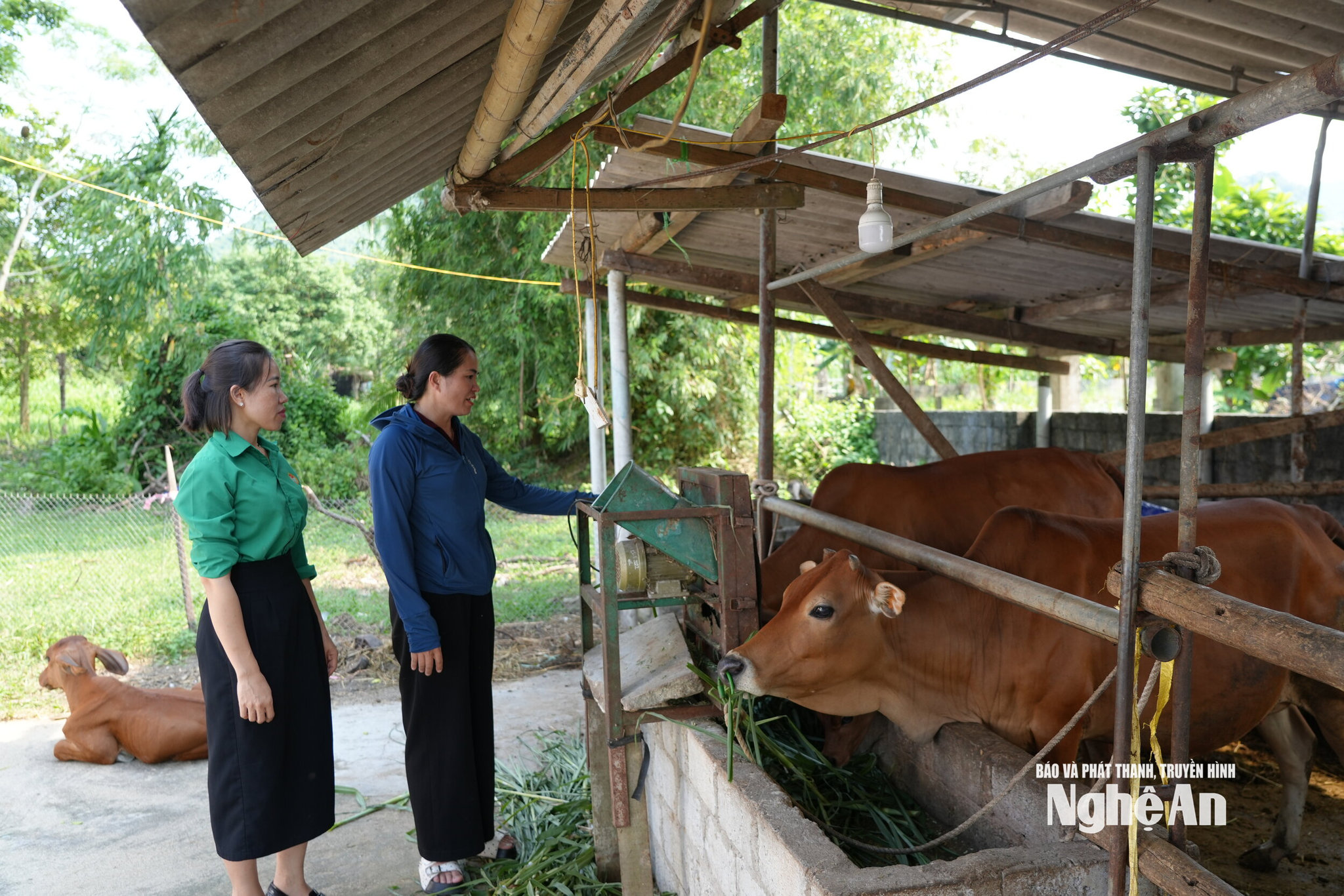
Another aspect she focuses on is waste management. Animal manure and waste are treated using biological bedding, biogas digesters, and probiotics to create organic fertilizer. This method not only reduces odors and the risk of environmental pollution but also provides additional fertilizer for crops. Thus, in her farm, livestock waste becomes an input for farming, contributing to reduced production costs.
Thanks to this organizational structure, Nhung's family model doesn't rely entirely on one type of livestock or one source of income. When the price of a product fluctuates, other sources of income can provide support. Livestock farming combined with crop cultivation, milling, brewing alcohol, and grocery business creates multiple links in a single livelihood. The family's income reaches approximately 350 million VND per year.
Besides focusing on developing her family's economy, Ms. Nhung also actively shares her experience with members and farmers in the hamlet. Previously, she served as the Head of the Farmers' Association Branch, and is currently the Head of the Hamlet's Front Committee.
Based on her own production experience, she encouraged her fellow villagers to boldly adopt technological advancements, proactively prevent and control diseases, and utilize readily available resources to reduce costs and develop their household economies.
The way Ms. Nhung organizes production, proactively manages inputs, controls diseases, and utilizes available resources to reduce costs and diversify revenue streams demonstrates that the effectiveness of an agricultural model lies not only in the scale of investment but also in the rational planning of each stage.
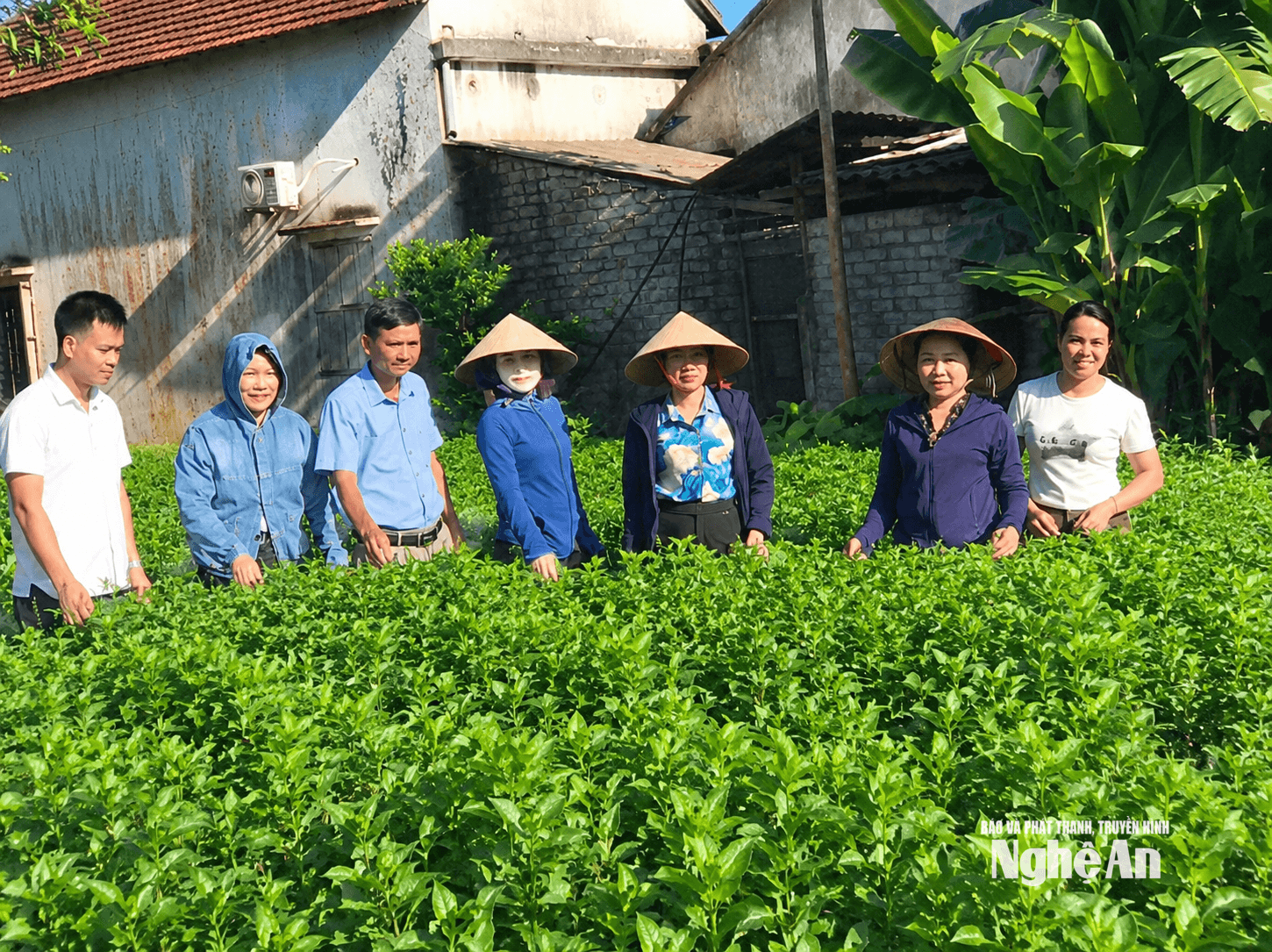
Thanks to her achievements in production, business, and association activities, Ms. Nhung has been recognized and commended for many years. In 2022, 2023, and 2024, she received Certificates of Merit from the Quy Hop District Farmers' Association; and in 2025, she received a Certificate of Merit from the Muong Ham Commune Farmers' Association.
Ms. Luong Thi Nhung is an active and hardworking member who knows how to plan and organize production to suit her family's conditions. A noteworthy aspect of Ms. Nhung is that, based on her family's practical success, she actively shares her experience and encourages other members to apply advanced techniques and develop their businesses, thereby contributing to the spread of the movement of women and farmers excelling in production and business in the locality.
Ms. Vi Thi Hang, Chairperson of the Farmers' Association of Muong Ham Commune


