
Gold prices fell sharply on the morning of November 4th, and SJC's revenue decreased by 67%.
Gold prices fell sharply on the morning of November 4th due to China's cancellation of tax incentives for gold sellers. SJC recorded a significant decrease in revenue and profit in the first half of 2025.
Gold prices fell sharply on the morning of November 4th in both domestic and international markets after China canceled its tax incentive policy for gold sellers.
By 9:00 AM, the world gold price had fallen to approximately $3,977 per ounce, a decrease of $18.37 compared to yesterday. This development occurred within just a few hours, indicating that gold prices are reacting very strongly to new information from the world's largest market.
The Chinese government has decided to end the practice of allowing retailers to deduct value-added tax (VAT) when selling gold, in an effort to boost government revenue amid economic difficulties.
However, this move caused domestic gold prices in China to rise sharply due to increased trading costs. As people reduced their gold purchases, demand for physical gold decreased, leading to a sharp drop in global gold prices.
Besides factors from China, gold prices are also affected by the easing of US-China trade tensions, weakening gold's role as a safe haven. At the same time, the appreciation of the US dollar makes gold more expensive for investors holding other currencies, significantly reducing demand for gold.
As of 9:00 AM on November 4th, domestic gold prices have fallen sharply, following the trend of global gold prices. At SJC Company, SJC gold bars are listed at 146.2 - 148.2 million VND/ounce, a decrease of 800,000 VND per ounce in both buying and selling prices.
The price of plain SJC gold rings also decreased by 500,000 VND/ounce, to 143.4 - 145.9 million VND/ounce.
Bao Tin Minh Chau adjusted the price of SJC gold bars down to 147.2 - 148.2 million VND/ounce, while the price of BTMC plain gold rings also decreased by 300,000 VND/ounce, to 146.2–149.2 million VND/ounce.
Similarly, the price of SJC gold at DOJI and PNJ systems is listed at around 145-148 million VND/ounce for plain gold rings. This sharp price drop shows that the adjustment trend of domestic gold prices is closely following the fluctuations of world gold prices.
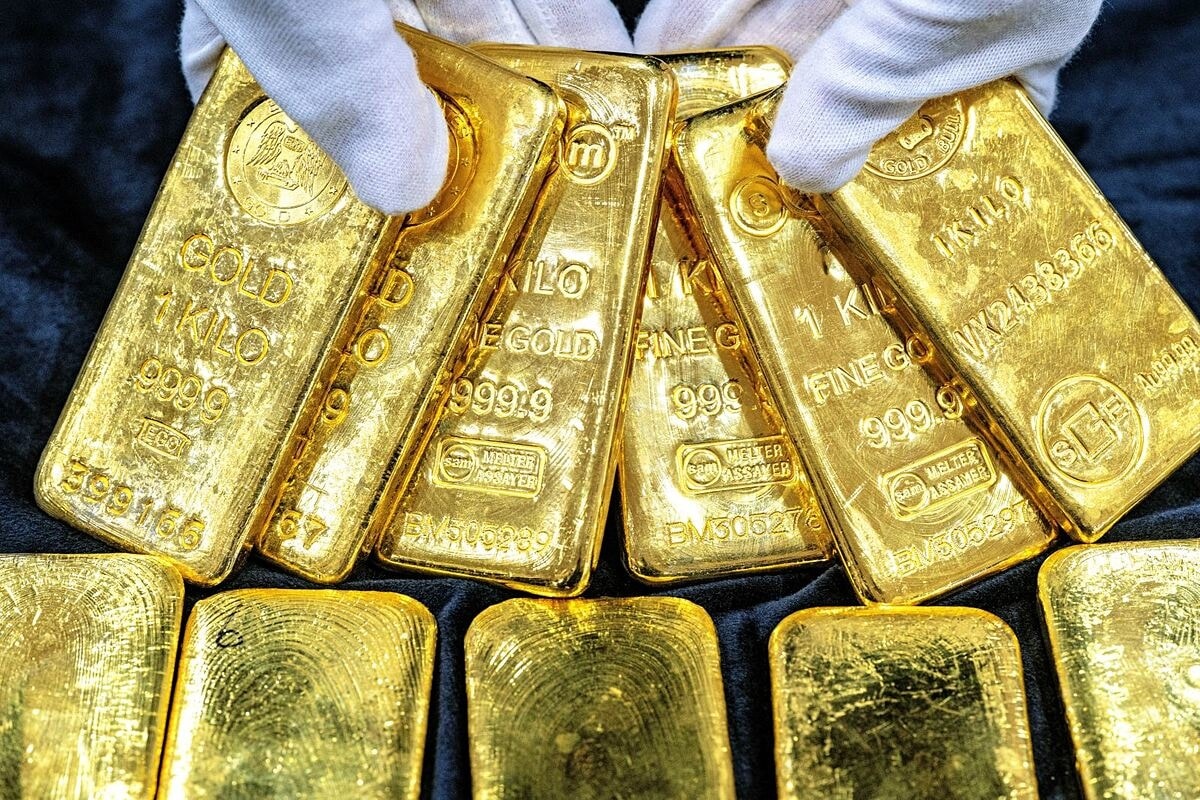
Amidst volatile gold prices, Saigon Jewelry Company Limited (SJC), the producer of SJC gold bars, has just released its Q2/2025 financial report showing a significant decline.
In this quarter, the parent company's net revenue reached VND 4,910 billion, a decrease of 62% compared to the same period last year, while after-tax profit only reached VND 15 billion, a decrease of as much as 69%.
Overall, in the first six months of 2025, the parent company's net revenue reached nearly 8,000 billion VND, a decrease of 67% compared to the same period in 2024. Pre-tax profit reached 45.6 billion VND and after- tax profit was 37 billion VND, nearly half the amount compared to last year.
At the consolidated level, SJC's net revenue reached VND 8,835 billion, a decrease of 65%, while consolidated after-tax profit reached nearly VND 68 billion, a decrease of 29% compared to the same period.
SJC is a 100% state-owned enterprise, under the direct management of the Ho Chi Minh City People's Committee, with over 35 years of experience in the gold, silver, and gemstone industry. SJC's network comprises over 200 stores and dozens of official dealers nationwide, many of which are authorized to trade SJC gold bars.
Despite gold prices reaching historical peaks in 2025, SJC's business results declined sharply due to shrinking profit margins. When gold prices are too high, consumer demand drops significantly, preventing the company's revenue and profits from increasing proportionally.
Gold prices are currently under pressure from various economic and international policy factors. However, many experts believe that in the long term, gold remains a safe investment channel, especially as risks of inflation, economic recession, or geopolitical instability may return.
In the short term, gold prices may continue to correct around the $3,950–$4,000/ounce range before finding a more stable trend.


