
Decoding the Oreshnik missile technology: A combination of classic components and Mach 11 speed.
Analysis of Oreshnik missile fragments reveals the presence of Soviet-era vacuum tubes and gyroscopes, raising questions about the weapon's groundbreaking nature.
The Oreshnik missile (also known as Kedr), once touted by Russian officials as a groundbreaking technological breakthrough, is now the focus of attention after technical experts analyzed actual fragments. The results revealed a different reality regarding the structure and performance of this hypersonic weapon system.
The presence of older generation electronic technology
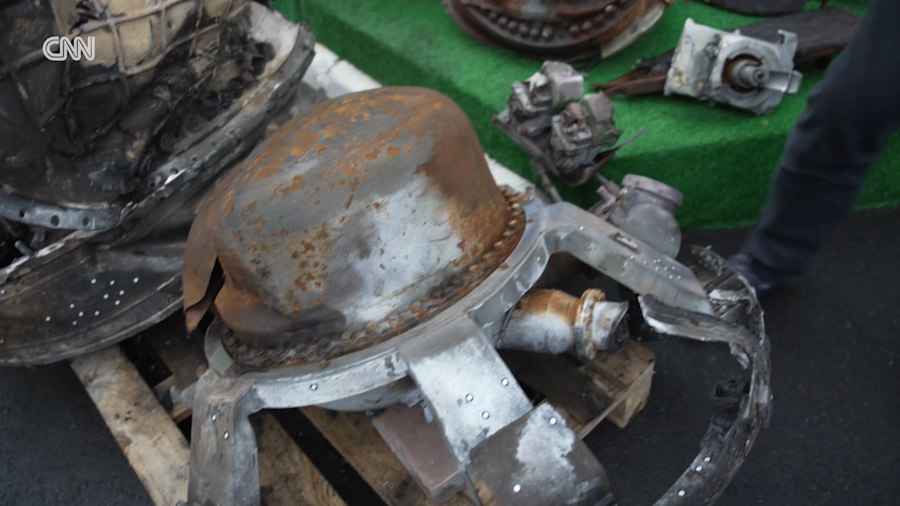
Based on videos released by CNN, international journalists had the opportunity to directly examine the remaining parts of the Dnipro missile that struck in November 2024. Despite being touted as a next-generation weapon, the Kyiv Forensic Research Institute's examination revealed that many internal components bore the hallmarks of military technology from decades ago.

Most notably, the Oreshnik's inertial navigation system still uses a mechanical gyroscope. Ukrainian experts involved in the assessment believe that this type of device has a similar design to the systems that astronaut Yuri Gagarin used in his early space flights.

In addition, Soviet-era vacuum tubes were found on the control panel. Analysts hypothesize that these components may have served as a high-speed switching "lock" or a high-frequency resonator. The use of old components doesn't necessarily mean obsolescence, as they often offer better protection against electromagnetic pulses (EMP) than modern chips, but it does demonstrate Russia's traditional approach to technology.
Origin of components and warhead structure
The markings on each component indicate that they were manufactured starting in early 2018. This has led to speculation that the Oreshnik missile may have been assembled from spare parts from other missile projects rather than being a completely new design from scratch.

In terms of combat structure, the Ukrainian side showcased a system for deploying individual warheads. According to the design, the Oreshnik carries six sub-components, each capable of splitting into six smaller parts, creating a total of 36 potential impact points. However, its effectiveness in recent combat operations has revealed certain limitations.
In the attack on the outskirts of Lviv on the night of January 9, 2026, imaging data showed that only four groups of projectiles made landfall, along with two other individual projectiles. The distances between the impact points were quite far apart, indicating that hypersonic speeds posed a significant challenge to the accuracy of the guidance system and the heat resistance of the warheads upon re-entry into the atmosphere.
Questions about kinetic energy efficiency
With a final trajectory velocity believed to exceed Mach 11 (approximately 3,740 m/s), the Oreshnik primarily inflicts damage based on kinetic energy rather than high explosives. However, independent studies suggest that the destructive power of this warhead may have been exaggerated.
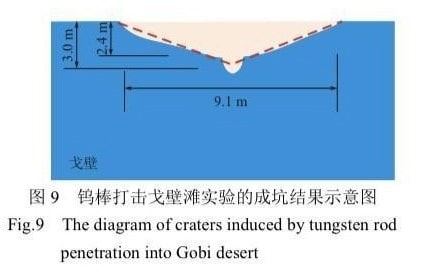
Researcher Andriy Tarasenko cites an experiment from China in the Gobi Desert, showing that a 140 kg tungsten rod hurtling down at 4,650 m/s only created a crater 3 meters deep and 4 meters in diameter. This result raises questions about the Oreshnik's ability to destroy hardened underground targets without using a conventional explosive warhead.
Technically, Oreshnik is identified as a development based on the RS-26 Rubezh medium-range ballistic missile. The Ukrainian Ministry of Defense Intelligence Agency stated that the system's actual internal designation is Kedr. Russia's renaming it Oreshnik is seen as part of a media effort to promote a completely new weapon system.


