
Decoding the iPhone 18 Pro Max battery: Why is Apple confident in competing with rivals offering 7,000 mAh batteries?
Despite Chinese Android manufacturers competing to offer massive battery capacities, the iPhone 18 Pro Max is said to maintain a 5,400 mAh battery thanks to superior optimization from the A20 Pro chip and iOS 27.
While Chinese Android smartphone manufacturers are constantly joining the race for higher specifications with massive batteries reaching 6,000 to 7,000 mAh, Apple seems to be staying out of this wave. The latest leaks about the iPhone 18 Pro Max generation suggest that Apple is preparing to prove the opposite philosophy: Battery capacity as stated in the specifications is not the only factor determining a phone's operating time.
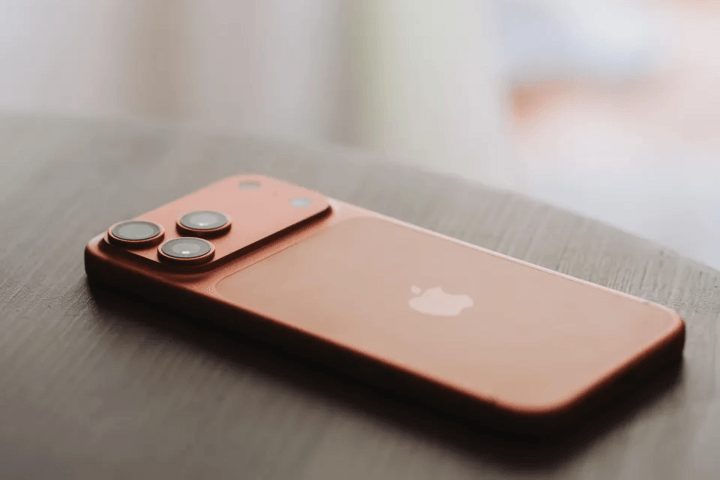
Power from optimal performance: When 5,400 mAh goes head-to-head with 7,000 mAh
According to leaker Ice Universe, the iPhone 18 Pro Max version with eSIM is expected to have a 5,567 mAh battery, while the variant using a physical SIM will have a 5,391 mAh battery. In terms of numbers, this isn't a groundbreaking capacity, and is even on par with current mid-range Android phones.
However, the true strength of Apple's flagship doesn't lie in the size of its battery. The combination of the A20 Pro processor, iOS 27 operating system, and improved thermal architecture is expected to give the device a battery life comparable to or exceeding competitors with 7,000 mAh batteries. The previous generation has proven this: the iPhone 17 Pro Max, with its moderately sized battery, achieved a continuous screen-on time of up to 7 hours and 46 minutes, beating the Vivo X300 Pro, which has a 6,510 mAh battery but only lasts 6 hours and 30 minutes.
Bảng so sánh hiệu suất pin thực tế (Tham khảo thế hệ trước)
| Thiết bị | Dung lượng pin (mAh) | Thời gian sáng màn hình (On-screen) |
|---|---|---|
| iPhone 17 Pro Max | ~4.400 | 7 giờ 46 phút |
| Xiaomi 17 Ultra | 6.800 | ~9 giờ |
| Vivo X300 Pro | 6,510 | 6:30 |
| OnePlus 15R | 7,400 | 8:47 AM |
Clearly, chipset performance and new power management technology are the core factors. If the A20 Pro chip achieves up to 30% power savings as rumored, Apple's approximately 5,400 mAh battery could completely bridge the huge capacity gap with its Android competitors.
Physical barriers to silicon-carbon battery technology
Why does Apple persist with traditional lithium-ion batteries while Chinese manufacturers have switched to silicon-carbon batteries? In theory, silicon-carbon batteries have superior energy density, allowing for more storage capacity in a smaller space. However, this technology faces a major hurdle regarding volume expansion.
During a charge-discharge cycle, lithium-ion batteries only change by about 10% of their volume. In contrast, silicon-carbon materials can expand and contract by up to 300%, increasing the risk of battery swelling or reducing component lifespan. To overcome this, engineers have to add more carbon to reinforce stability, but this reduces energy density. This is why major players like Apple, Google, and Samsung are still choosing to wait for the technology to mature before widespread adoption.
The philosophy of proprietary hardware and the future of the energy race.
Over the years, Apple has demonstrated that its core competence lies in optimizing the synergy between its proprietary hardware and software, rather than engaging in a purely specifications-based arms race.
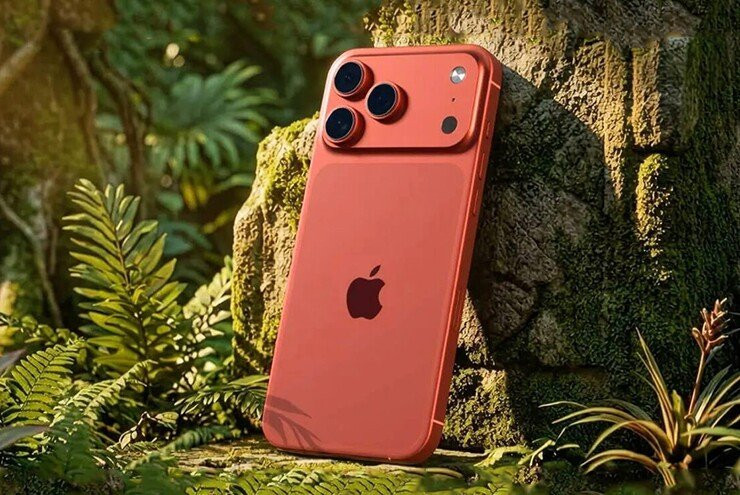
The future looks more promising than ever. If a 5,391 mAh battery in the iPhone 18 Pro Max can challenge its 7,000 mAh competitors, then when Apple officially adopts silicon-carbon technology, the order of the high-end smartphone battery era will certainly be redefined. At that point, an iPhone with a 7,000 mAh battery, combined with superior optimization, will be fully capable of outperforming competitors with 8,000 mAh or larger batteries.


