
Decoding the Razer Huntsman V3 Pro: Is an 8KHz refresh rate really necessary?
With an 8000Hz refresh rate and custom optical switches, the Razer Huntsman V3 Pro offers a responsive feel. However, this performance comes with a high price tag and demanding CPU requirements.
Power from an 8000Hz refresh rate.
The Razer Huntsman V3 Pro 8KHz is positioned as a tool for competitive gamers, with its core upgrade being an 8000Hz polling rate. Technically, this reduces input lag from 1.7ms (at the common 1000Hz) to just 0.58ms. This difference, while difficult to perceive with the naked eye, can provide an advantage in games requiring extremely fast reflexes, such as Counter-Strike or Rainbow Six Siege.
However, this performance improvement comes with a trade-off. Increasing the refresh rate to 8000Hz will consume more CPU resources. In CPU-bound gaming scenarios, this can impact frame rates (FPS). Users need to consider their system configuration to maximize the potential of this technology without sacrificing overall performance.
Unlimited customization with 2nd generation optical switches.
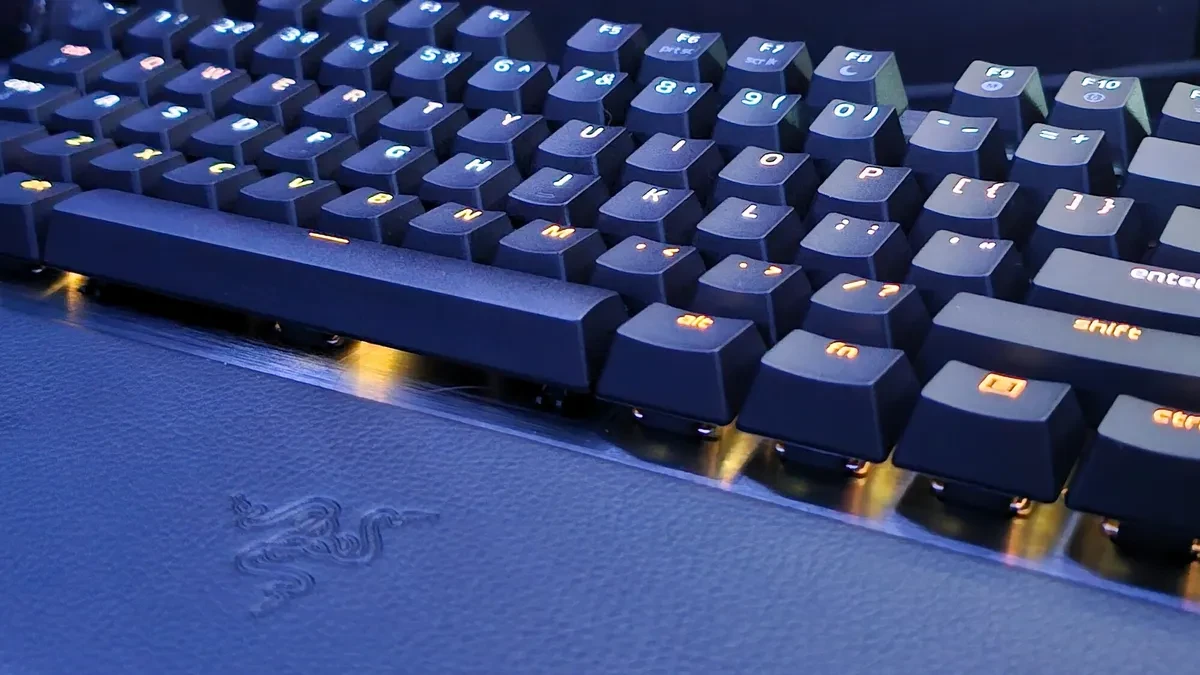
Beyond its refresh rate, the highlight of the Huntsman V3 Pro 8KHz lies in its second-generation analog optical switches. This technology allows users to customize the actuation point within a wide range from 0.1mm to 4.0mm. This means you can set the key to register commands with a light touch (0.1mm) for quick actions, or require a deeper press (4.0mm) to avoid accidental keystrokes.
The Rapid-Trigger feature is also integrated, allowing the key to be reset as soon as it starts moving upwards, instead of waiting for it to return to its original position. This is extremely useful for repetitive actions in games, providing more precise control over character movement. Additionally, the Snap-Tap feature, while controversial and limited in some games, is also an option for those who want to optimize input.
Improved design and typing experience.
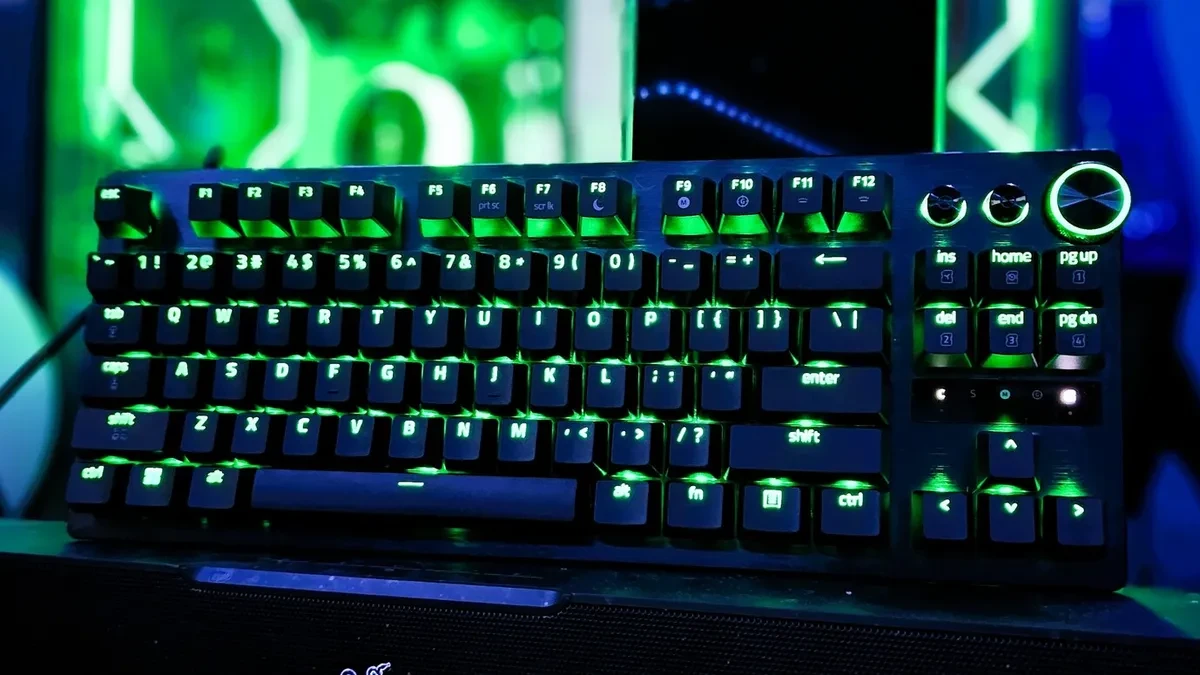
The Razer Huntsman V3 Pro 8KHz comes in two main versions: TKL (Tenkeyless) and Full-size. The TKL version is particularly suitable for FPS gamers who need more space for wider mouse movements. The keyboard has a sturdy construction despite its relatively light weight.
Based on user feedback, Razer has improved the typing experience. They've added a layer of "Thick EPDM + EVA" material under the keys. This layer dampens noise, minimizing the harsh clicking sounds of the previous version and providing a quieter, more pleasant typing experience during extended use.
Position in the gaming gear market
In the high-end gaming keyboard segment, Razer's main competitor is Wooting. Previously, Wooting had an advantage in features such as magnetic switches and high refresh rates. With the launch of the Huntsman V3 Pro 8KHz, Razer has closed the gap in technology, especially with its 8000Hz refresh rate, creating a more direct and intense competition.
Other brands like SteelSeries with its Apex Pro line or Logitech G Pro X are also worth considering. However, the combination of an 8KHz refresh rate and a wide actuation range starting from 0.1mm makes the Huntsman V3 Pro 8KHz one of the most impressively sized products currently available.
Who is the ideal user?
The Razer Huntsman V3 Pro 8KHz isn't for everyone, primarily due to its high price tag, ranging from $219.99 to $269.99 depending on the version. This keyboard is specifically designed for professional gamers or highly competitive players who can truly take advantage of its ultra-low latency and deep customization options.
If you're a casual gamer or don't need to optimize your reflexes down to the millisecond, its advanced features might not be necessary. In that case, there are many other options on the market at more reasonable prices that still adequately meet your gaming and daily work needs.


