
BOT monitoring: 'The reports are excellent, but the responsibilities are very light'
Why is it that the section on collective and individual responsibilities in the monitoring report only has five and a half lines? This question was raised by National Assembly Vice Chairwoman Tong Thi Phong when the National Assembly Standing Committee conducted a monitoring session on the implementation of policies and laws on investment and exploitation of transportation infrastructure projects under the BOT (build-operate-transfer) contract form on the morning of August 15th.
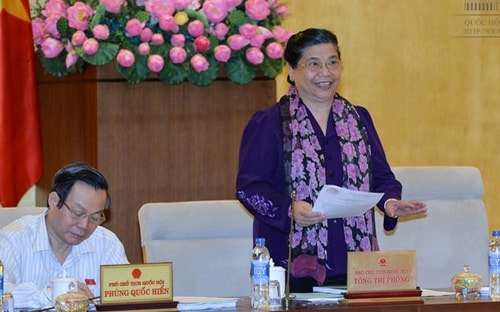 |
National Assembly Vice Chairwoman Tong Thi Phong speaks at the oversight session. |
The 36-page, nearly 24,000-word monitoring report points out numerous shortcomings, inadequacies, and violations. However, the section on collective and individual responsibilities is mentioned very briefly.
The original text of this section, consisting of 5.5 lines, reads: “According to the Ministry of Transport, competent State agencies (ministries, sectors, and localities) have issued directives to relevant agencies and organizations to rectify the shortcomings mentioned in the conclusions of the inspection and audit agencies, and all deductions have been recorded and deducted in the final settlement documents by the relevant agencies. Regarding the handling of responsibility of ministries, sectors, localities, and investors for the shortcomings and errors mentioned in the conclusions of the inspection agencies.”
Commenting that the report was very good but the responsibilities were too lenient, National Assembly Vice Chairwoman Tong Thi Phong argued that the five and a half lines mentioned above did not adequately address the collective and individual responsibilities in the field of supervision. "Was there any leniency? Was everything left unsaid?" the Vice Chairwoman questioned.
"This is a report from the Standing Committee of the National Assembly, so please be upfront about responsibilities; this section needs further supplementation and careful evaluation," she said.
According to the Deputy Speaker of the National Assembly, it is also necessary to clarify the role of inspection and auditing in the supervised area, as this is a dual oversight process to see if the competent authority has acted correctly.
Agreeing with this viewpoint, Vice President Dang Thi Ngoc Thinh said that she did not agree with the proposal to strengthen inspection and supervision by citizens and professional social organizations... Because this is a very complex field that requires in-depth expertise, it is necessary to strengthen specialized inspections.
Emphasizing that inspection, examination, and auditing are very important tools because BOT projects are all places where "those without authority are exempt," the Chair of the Judiciary Committee, Le Thi Nga, argued that specialized supervisory tools must be the functional agencies themselves.
Ms. Nga also expressed agreement with Vice Chairwoman Tong Thi Phong's observation that the section on identifying responsibility in the monitoring report was very limited, consisting of less than six lines.
"Besides providing macro-level value, the monitoring results should include both praise and criticism, and must point out the responsibility of those who perform poorly," Chairman Nga suggested.
Paying more attention to the concerns of the people was also a topic raised by many during the discussion session.
"How can we build roads for the people to use when they don't accept them and have no positive feelings towards them?" asked Nguyen Duc Hai, Chairman of the Finance and Budget Committee.
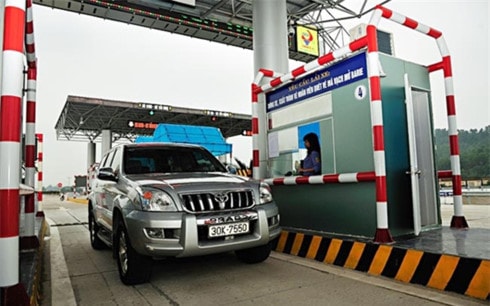 |
| The Prime Minister demands openness and transparency at BOT toll stations. (Illustrative image) |
Immediately afterwards, Mr. Hai indirectly provided a partial answer to this question, stating that banks are behind all the projects, and the fact that the capital mainly comes from banks leads to pressure on interest rates, resulting in high costs and causing many people to react negatively.
"Our management methods are flawed; the people have complained a lot about the toll stations. These issues need careful analysis, and we need to ensure a balance of interests between the State, investors, and the people," said National Assembly Vice Chairwoman Tong Thi Phong.
Also mentioning the management-related causes, the Chairman of the Foreign Affairs Committee, Nguyen Van Giau, stated that with bank loans charging interest rates exceeding 10% and fees being collected for up to 20 years, the price increase is justified.
Mr. Giau gave an example of a BOT road that was only 30 km long, and it was just a matter of adding asphalt instead of widening it significantly.
"Their people say terrible things," he said.
"There are many grievances regarding BOT toll collection, but we haven't done a good job of listening to the opinions of the people, the frequent users of these roads, and haven't created consensus," commented National Assembly Chairwoman Nguyen Thi Kim Ngan.
According to Nguyen Le/vneconomy


