
Monitor thoroughly and prevent repeated recommendations from being processed slowly.
The Standing Committee of the National Assembly outlined the results of the supervision, the limitations, and proposals to strengthen the supervision of legal documents in 2026.
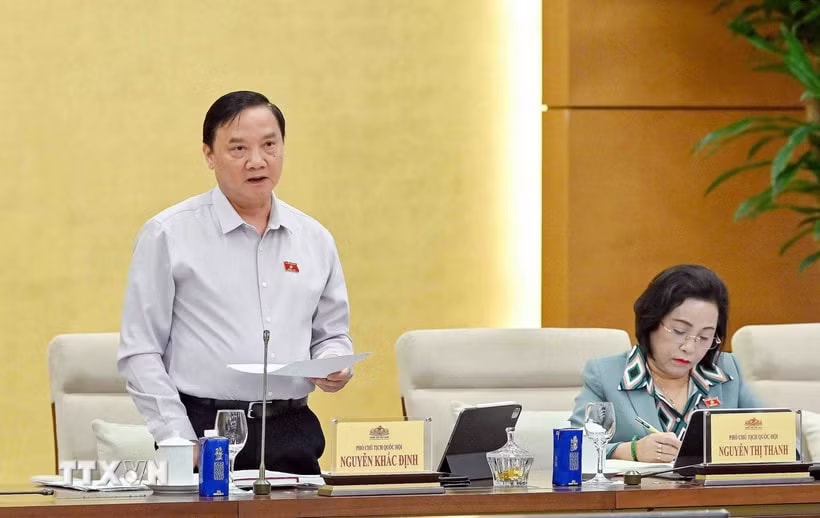
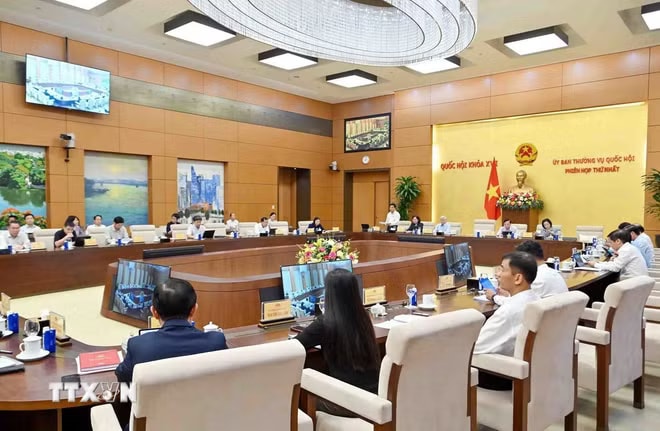
Continuing the agenda of the First Session, on the morning of April 14th, the Standing Committee of the National Assembly reviewed the consolidated report on the results of monitoring legal documents under the responsibility of the Council of Ethnic Minorities and the Committees of the National Assembly in 2025.
352 detailed regulations help laws, ordinances, and resolutions to be implemented promptly.
According to a report presented by Le Thi Nga, Chairwoman of the National Assembly's Committee on Citizen Petitions and Supervision, immediately after the merger, consolidation, and establishment of new committees, the National Assembly's Ethnic Council and committees continued to carry out the systematic supervision of legal documents, having supervised 602 documents.
Many agencies have conducted oversight of a large volume of documents, contributing to improving the quality and effectiveness of the issuance of legal documents. Basically, the Government and ministries have made considerable efforts in implementing the recommendations of the National Assembly's agencies during the oversight sessions in 2024 and the quarters of 2025.
According to the report, 26 monitoring recommendations have been implemented, contributing to positive changes in the drafting and implementation of laws. However, 25 recommendations remain unimplemented; some of these have been raised over multiple monitoring periods and have dragged on for many years.
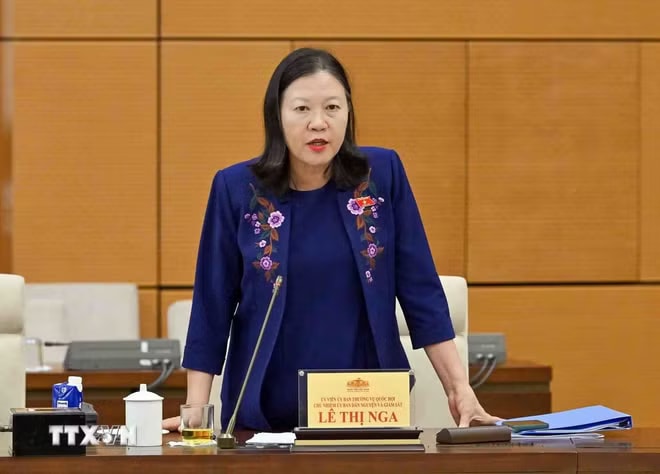
In 2025, the Government, the Prime Minister, Ministers, heads of ministerial-level agencies, and heads of sectors issued 352 detailed regulations, helping laws, ordinances, and resolutions of the National Assembly and the Standing Committee of the National Assembly to be implemented promptly.
However, 173 documents were issued later than the effective date stipulated by the laws, ordinances, and resolutions; some of these were delayed by 6 months to 2 years; 47 articles and clauses assigned for detailed regulation of 21 laws and resolutions have yet to be issued; notably, many laws have come into legal effect but still lack a large number of detailed regulations.
The report also assesses that the legal documents issued in 2025 basically ensure constitutionality, legality, and consistency with the Constitution, laws, resolutions of the National Assembly, ordinances, and resolutions of the Standing Committee of the National Assembly; ensure compatibility with international treaties to which Vietnam is a signatory; and ensure compliance with the authority, procedures, forms of documents, and legal grounds as prescribed by the Law on the Promulgation of Legal Documents.
To date, no errors or violations regarding procedures have been detected. However, one government decree contains provisions that lack consistency within the legal system, and one circular from the Ministry of Education and Training contains provisions that are not in line with practical realities, creating difficulties and obstacles in its implementation.
The Standing Committee of this Commission recommends that the Government, the Prime Minister, and relevant ministries and agencies focus on implementing and definitively addressing the shortcomings. Specifically, they should definitively implement the 25 recommendations from previous oversight sessions that have not yet been completed; and urgently issue, within their authority, detailed regulations for the 47 articles and clauses that have not yet been issued in 2025.
The study examines amendments and additions to one government decree and one circular from the Ministry of Education and Training, noting that some content lacks consistency and is not in line with practical realities.
Deputy Speaker of the National Assembly Nguyen Khac Dinh noted that the monitoring of legal documents by the National Assembly's Ethnic Council and Committees in 2025 is becoming increasingly systematic, with more professional reporting.
In 2025, the workload of lawmaking increased dramatically, with the National Assembly passing many laws, resulting in a large number of detailed regulations and implementing guidelines. However, the workload will be even greater in 2026 as most laws will come into effect that year.
This context necessitates even more significant reforms in the monitoring of legal documents in 2026.
"Recently, the General Secretary, the President, the Prime Minister, and the Chairman of the National Assembly have repeatedly emphasized the increasing importance of monitoring legal documents and stressed that it must be a regular and continuous task for the National Assembly and elected bodies," he said.
Deputy Speaker of the National Assembly Nguyen Khac Dinh also frankly pointed out that "the report is still somewhat vague" and needs further study and revision to be more appropriate.
In the recommendations section, it is necessary to emphasize the need to strengthen the supervision of legal documents in the coming period in accordance with the new Law on Supervisory Activities and Resolution 115 of the Standing Committee of the National Assembly. This is a particularly important, regular, and continuous task of the National Assembly's Ethnic Council, Committees, and elected bodies at the local level.
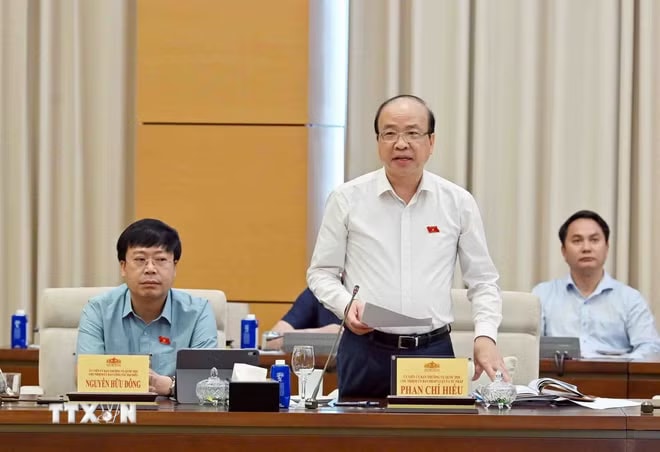
Chairman of the Committee on Law and Justice Phan Chí Hiếu suggested adding another reason for the delay and backlog in issuing detailed regulations: changes in the mindset of lawmaking, and a significant increase in the volume of detailed regulations guiding implementation.
The Law on the Promulgation of Legal Normative Documents also contains many new provisions, leading to some initial confusion in its application. Furthermore, the capacity and qualifications of some officials involved in the drafting of legal normative documents are limited and have not kept pace with the legislative thinking in the spirit of Resolution 66-NQ/TW and the new Law on the Promulgation of Legal Normative Documents, especially after the shift in the role of revising draft laws based on the opinions of National Assembly deputies from the National Assembly to the Government, which has somewhat affected the quality of legislative drafting.
Many recommendations made during previous monitoring sessions have not been fully resolved.
Previously, the Standing Committee of the National Assembly had given its opinion on the Report on the results of monitoring the resolution and response to voters' petitions submitted to the 10th Session of the 15th National Assembly; and provided input on the draft Report of the Central Committee of the Vietnam Fatherland Front summarizing the opinions and recommendations of voters and the people submitted to the First Session of the 16th National Assembly.
Concluding this discussion, Vice Chairman of the National Assembly Nguyen Doan Anh stated that the Standing Committee of the National Assembly basically agreed with the draft report and highly appreciated the Presidium of the Central Committee of the Vietnam Fatherland Front for actively and proactively compiling a relatively comprehensive collection of opinions and recommendations from voters and the people.
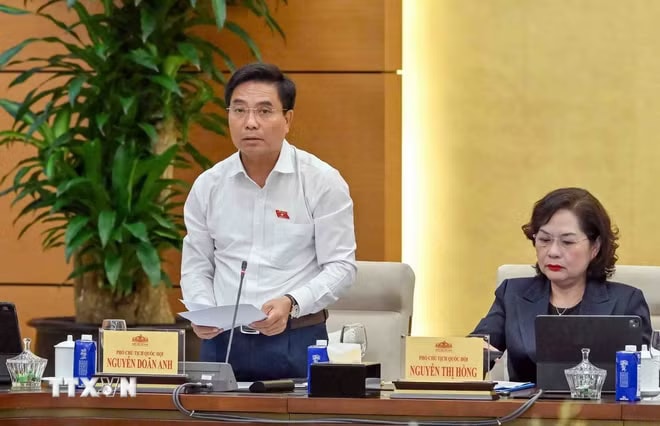
The recommendations outlined in the report closely reflect the opinions and suggestions of voters and the public, providing an important basis for monitoring the implementation by relevant agencies.
The Standing Committee of the National Assembly requests the Central Committee of the Vietnam Fatherland Front to continue to carefully study and evaluate the contents of the draft report and supplement it based on the comments and suggestions of the Standing Committee of the National Assembly.
The Standing Committee of the National Assembly basically approved the report on the results of monitoring the resolution and response to voters' petitions submitted to the 10th Session of the 15th National Assembly; acknowledging the efforts of the Government and ministries in resolving voters' petitions. Many issues have been addressed and resolved, contributing to the improvement of policies and laws and the removal of practical difficulties.
However, addressing the petitions of voters and the public still has some limitations: the quality is uneven, there are instances of responses being merely explanatory, and the issues are not resolved completely and effectively.
Some recommendations are being addressed slowly and protractedly, especially many recommendations from voters and the Standing Committee of the National Assembly during previous oversight sessions that have not been resolved completely.
The Standing Committee of the National Assembly requests the Government, the Prime Minister, and central ministries and agencies to focus on resolving outstanding and long-standing petitions. It also calls for strengthening the accountability of leaders and linking the results of petition resolution to performance evaluations.
The Committee on Citizen Petitions and Oversight will preside over the review of unresolved petitions and strengthen the monitoring and urging of the implementation of recommendations following oversight activities.
Follow up and monitor thoroughly, preventing situations where repeated requests are made but the response is still slow; strengthen monitoring and supervision of responses and resolution of requests, while linking this to the responsibility of the head of the agency.
Also during the morning session, the Standing Committee of the National Assembly gave its opinion on the draft Resolution of the National Assembly on some breakthrough mechanisms and policies for the development of Vietnamese culture and on the explanation, acceptance, and revision of the draft Law on Beliefs and Religions (amended).


