
The arduous journey to school for students in disadvantaged areas of Nghe An province.
Nearly four months have passed since the floods, but the journey to school for students in Tuong Duong commune and many other mountainous communes remains arduous, as the only bridge across the Lam River leading to the school has been destroyed. To prevent disruption to their education, makeshift classrooms have been opened, and new roads have been constructed, despite the many difficulties and obstacles.
Difficulties in getting to school
At just after 6 a.m., Mr. Lo Van Sen from Nhan village, Tuong Duong commune, crossed the river by ferry with his grandson, Lo Tuan Kiet (6 years old), to attend Thach Giam 2 Town Primary School in Tuong Duong commune.
He recounted that his grandson could have attended a school in a remote location, but his parents worked far away, and there was no one to take him to and from school, so the family had no choice but to send him to the school on the other side of the river. On sunny days, it only took the two of them 15 minutes to get to school. But when it rained, the road in the village became muddy, making the nearly 3-kilometer journey extremely difficult. Sometimes, upon reaching the riverbank, they would encounter strong currents, and the boat would move slowly, forcing them to wait for almost half an hour. After arriving at the school and waiting for his grandson to go to class, he would rush back to the boat to quickly return to the other side of the river to tend to his fields and gardens.
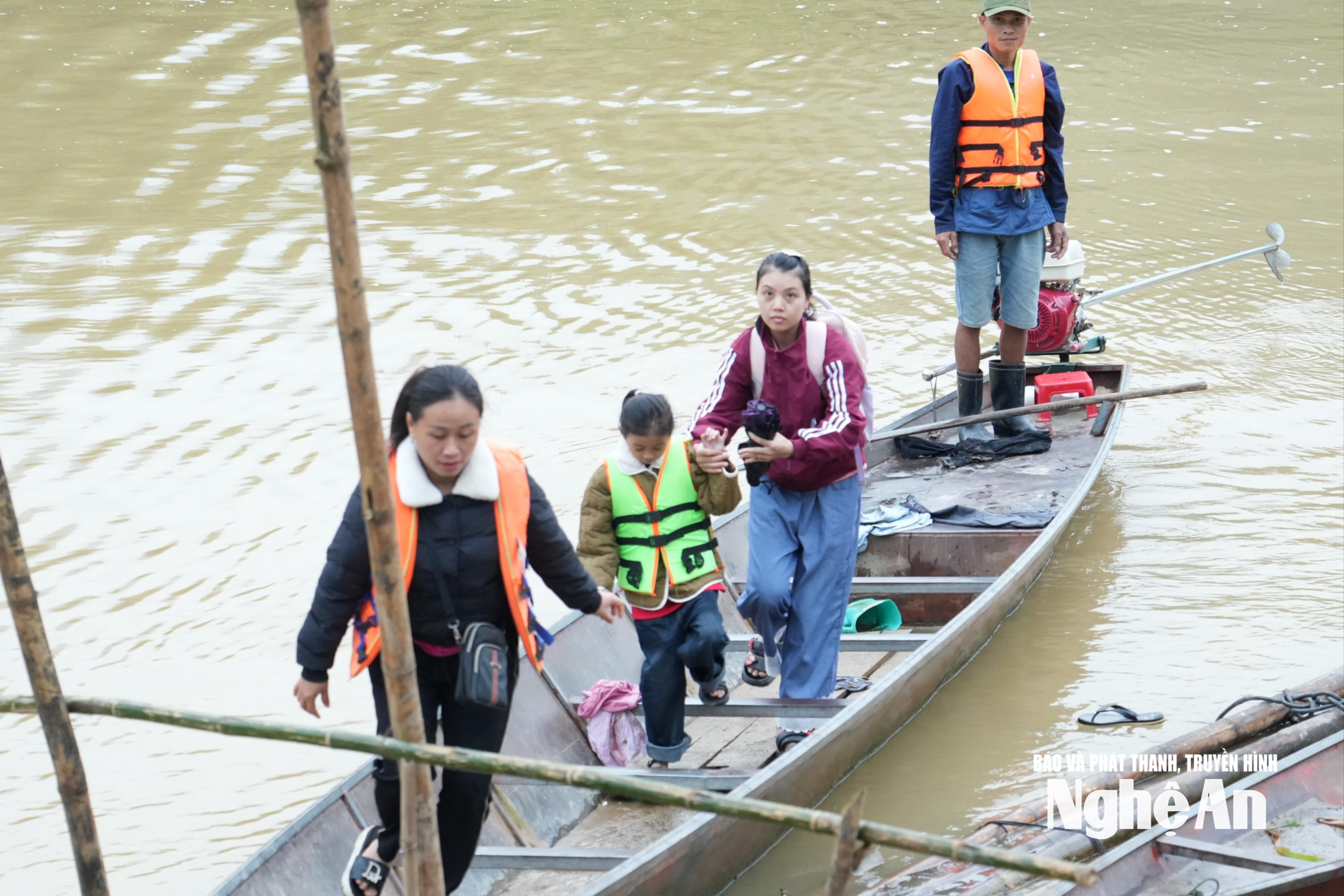
Instead of saying they're going to school, since the beginning of the school year, Mr. Sen's family has referred to their children and grandchildren's attendance at school as "temporary residence" or "temporary absence." This is because, in the past, the children would go to school in the morning, return at noon, and then go back to school in the afternoon for their afternoon classes.
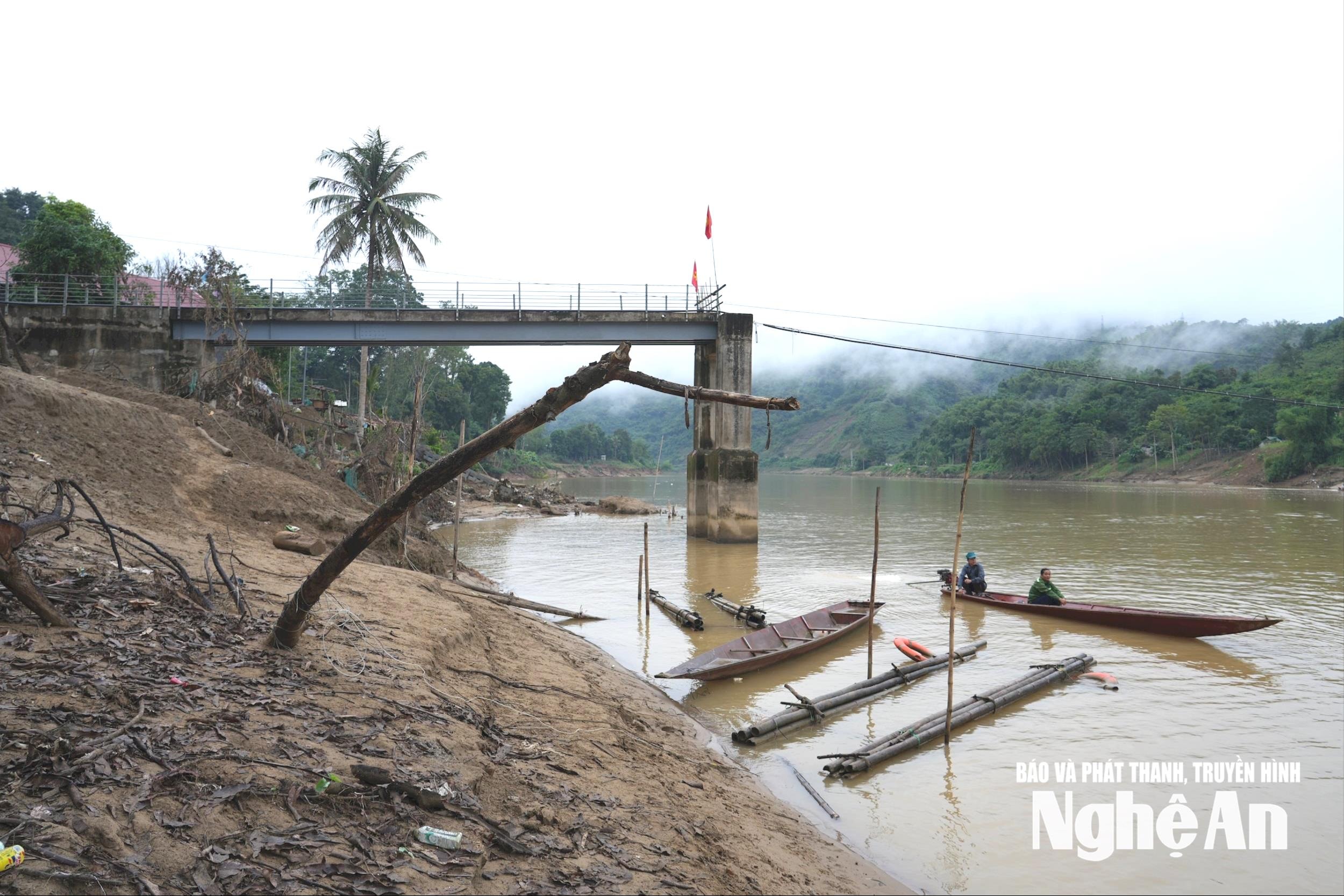
However, from the end of July 2025, after the historic flood passed, the two suspension bridges in Chan and Lau villages were swept away, cutting off transportation for people in the villages on both sides of the river, including Chan, Mac, Lau, and Nhan villages. To avoid disrupting their children's education, Mr. Danh's family asked a relative near the school in Thach Hoa village to cook meals and let the children rest at home during lunchtime.
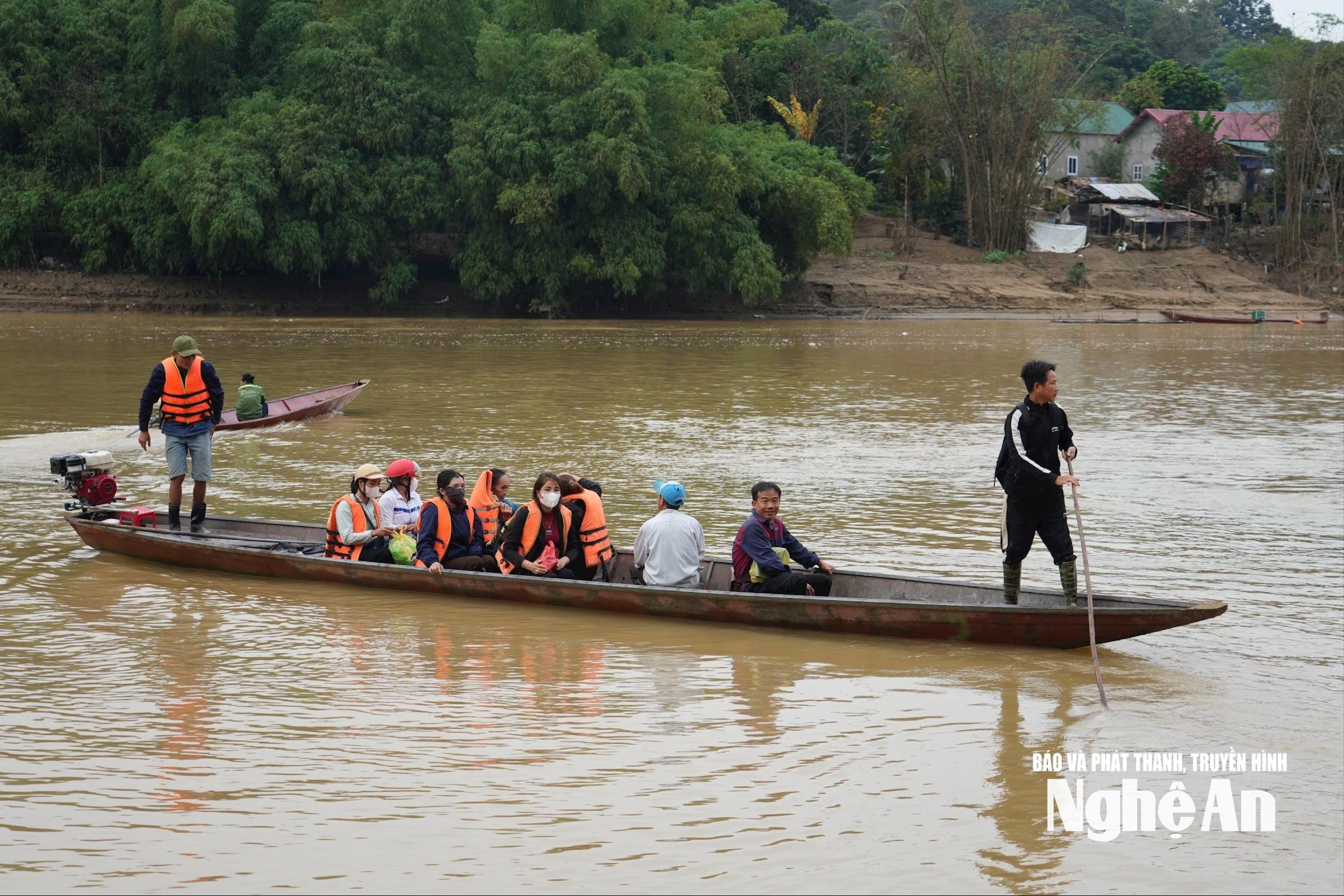
In recent months, many temporary ferry crossings have appeared along the Lam River in Tuong Duong commune to transport people across the river. The ferry crossing at Chan village, in particular, sees the highest volume of traffic due to its proximity to the school and the national highway.
Present at the ferry dock from early morning, in just over 30 minutes, nearly 100 people had crossed the river, mainly students from all three levels: primary, secondary, and high school. Lu An Ky, a 9th-grade student from Thach Giam Town Secondary School, whose home is in Chan village, said: "This year I'm in 9th grade, so besides attending classes in the morning, I have to stay at school in the afternoons to prepare for exams. On days with good weather, crossing the river is quite easy. But on some days, the water rises high, the boat can't cross, and I have to miss school. Since the beginning of the year, we've had to miss 4-5 classes."
Not only students, but also parents live in constant fear every day. Ms. Xa Thi Nang from Nhan village said: “My family has two children, one in primary school and one in kindergarten. Every morning we have to cross the river four times by ferry. It’s bearable when it’s sunny, but when it rains, we tremble. Everyone is scared, but we still have to take the risk to send our children to school.”
Don't let your studies get interrupted.
Mr. Lo Van Chuan from Thai Hoa village was hired by Tuong Duong commune to row boats to transport people from four villages: Ban Chan, Ban Mac, Ban Lau, and Ban Nhan across the Lam River after the suspension bridge in Ban Lau was damaged.flash floodThe ferry service is completely free and funded by the local government. Every day, to ensure the students get to school on time, he arrives around 5:30 a.m. and works continuously until late afternoon. Each ferry trip across the river only takes about 5 minutes, but during that time, he is constantly worried about ensuring the safety of his passengers.
My boat is registered to carry a maximum of 12 people, but I rarely carry all the passengers because I'm afraid of the danger. Even I can't guarantee absolute safety because it's difficult to predict the current, especially when it's strong. Everyone boarding the boat is required to wear a life jacket.
Mr. Lo Van Chuan, from Thai Hoa village
Thanks to these ferry services, students' education has been maintained to some extent. However, for long-term stability, schools have had to be flexible in various ways.
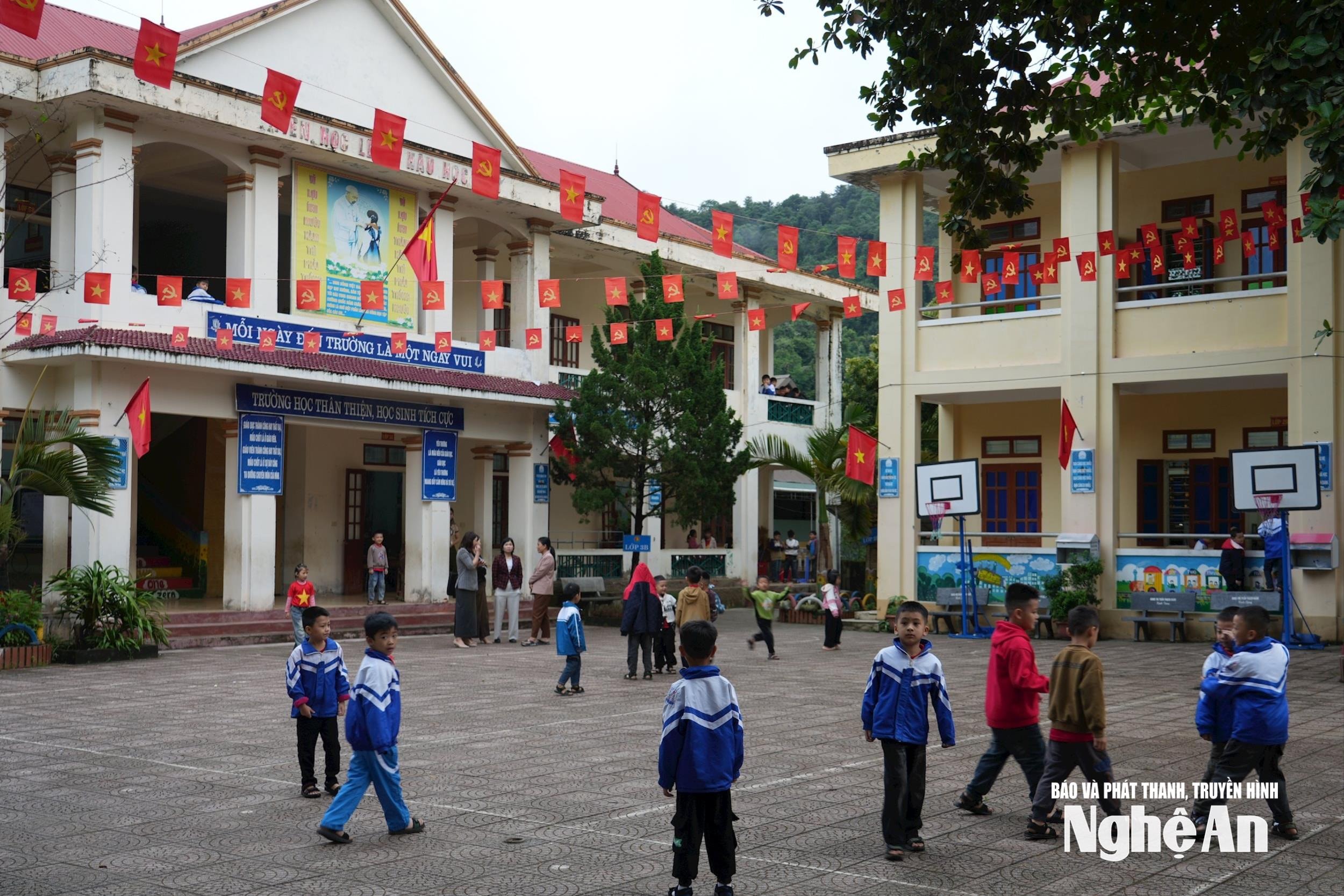
At Thach Giam Town Secondary School, which has 523 students, 75 of whom live on the other side of the river, the school administration decided to organize a temporary boarding program for them. Principal Ha Huy Thang said: “Because the students are scattered across many villages, it’s impossible to open a separate school branch, so the school organizes lunch for them at the school. Each meal costs 30,000 VND. Initially, parents contributed, but later a charitable organization in Hanoi provided 20,000 VND per meal, and parents contributed the rest.”
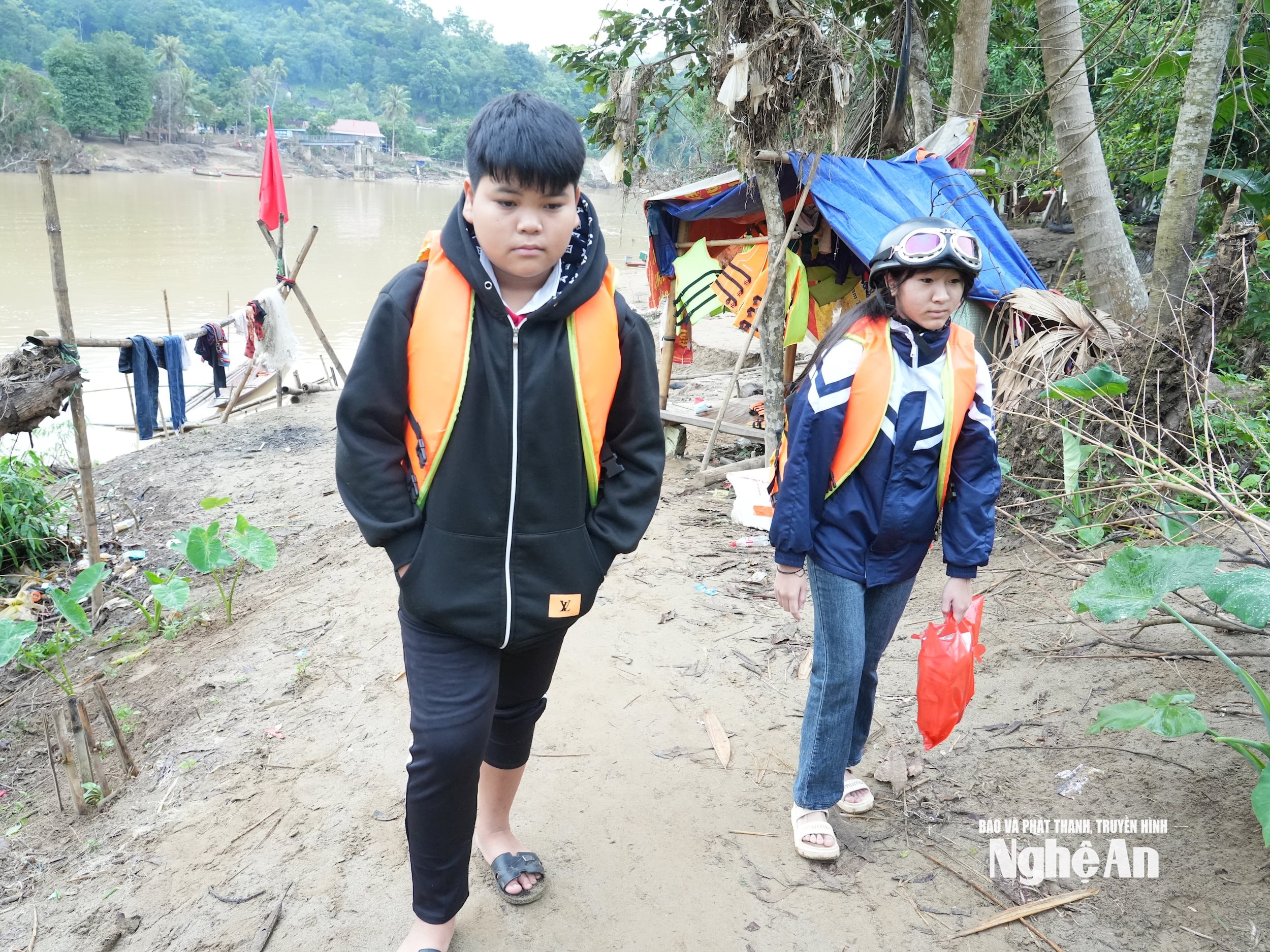
The school principal added: "For now, since the school has received support until the end of the school year, we are not too worried about the implementation costs. But in the long term, the school hopes to have a bridge soon so that parents and students can feel secure coming to school. Or the education sector and local authorities can find a solution to organize a boarding program for students. Because currently, the implementation is only a temporary solution; students who stay for lunch are temporarily resting at home practicing. The tables and chairs for the boarding program are being borrowed and sourced from support funds. The school is also assigning teachers to stay and supervise the boarding program on a voluntary basis."
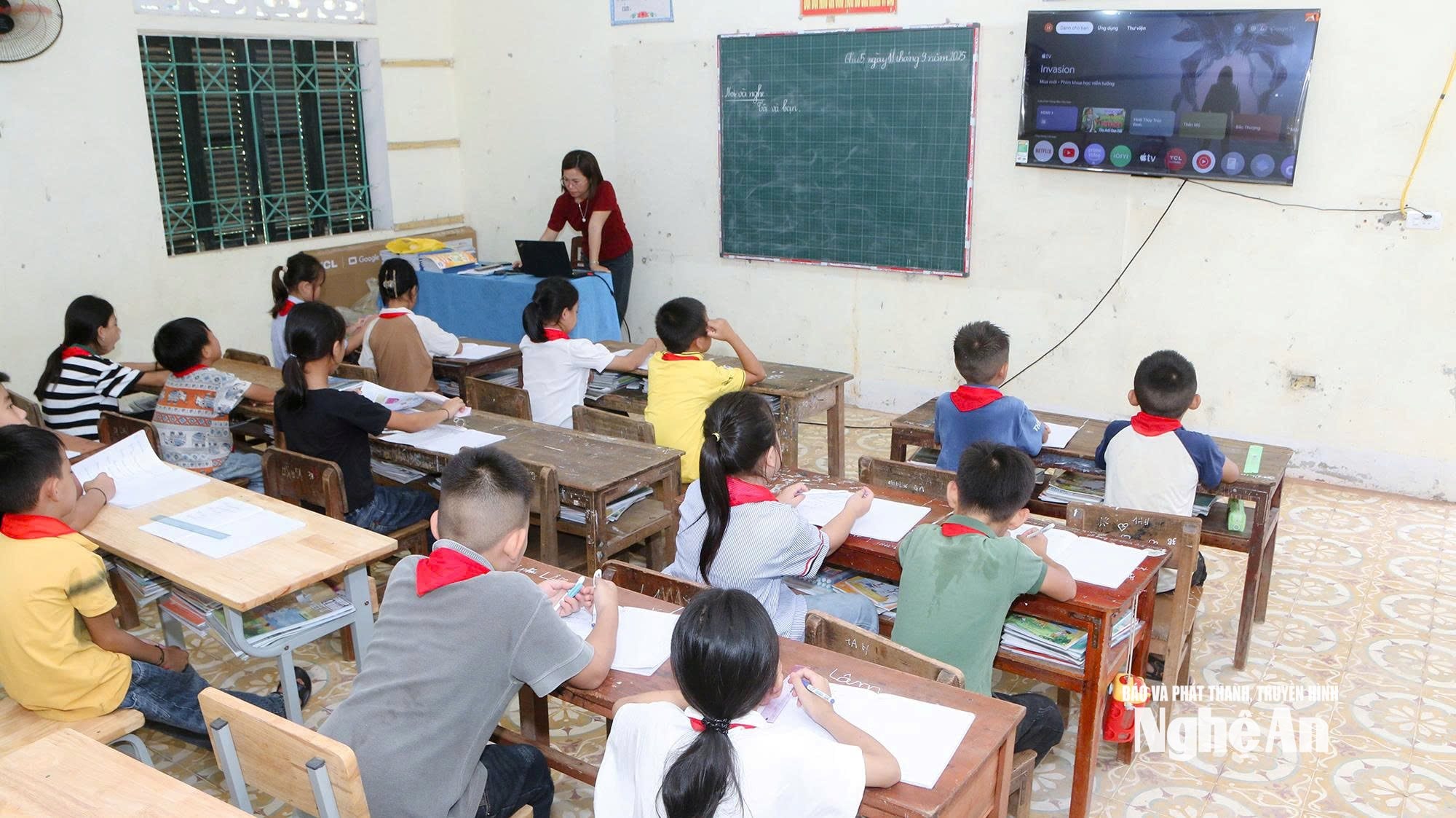
Meanwhile, at Thach Giam Town Primary School, because there are over 100 students from the four villages across the river, the school has been reusing old classrooms that have been abandoned for two years in Chan village to open an additional branch school for students from grades 1 to 5 since the beginning of the school year. Teacher Nguyen Dinh Hung, the school principal, said: Currently, 85 students are studying at the branch school. The remaining 22 students, whose parents work far away and who live with their grandparents without anyone to take them to school, still have to cross the river daily to attend the main school.
According to Mr. Hung, since the opening of the additional branch school, students' learning has been stable and uninterrupted. However, the current difficulty is that the road between the four villages is quite long and frequently affected by landslides due to heavy rains and floods, causing disruptions at times. Furthermore, elementary school students attend school for two sessions a day, making transportation very difficult for families. The long-term solution is to organize a boarding program for the students.
Since the beginning of the school year, due to the impact of floods, many suspension bridges in the mountainous communes of Nghe An province have been swept away, affecting the travel and daily lives of the people. To overcome this difficulty, local authorities have implemented various solutions. In Luong Minh commune, because the Xop Mat suspension bridge was swept away by floods, hundreds of students in the area have been safely assisted by the commune police in crossing the river to school since the beginning of the school year.
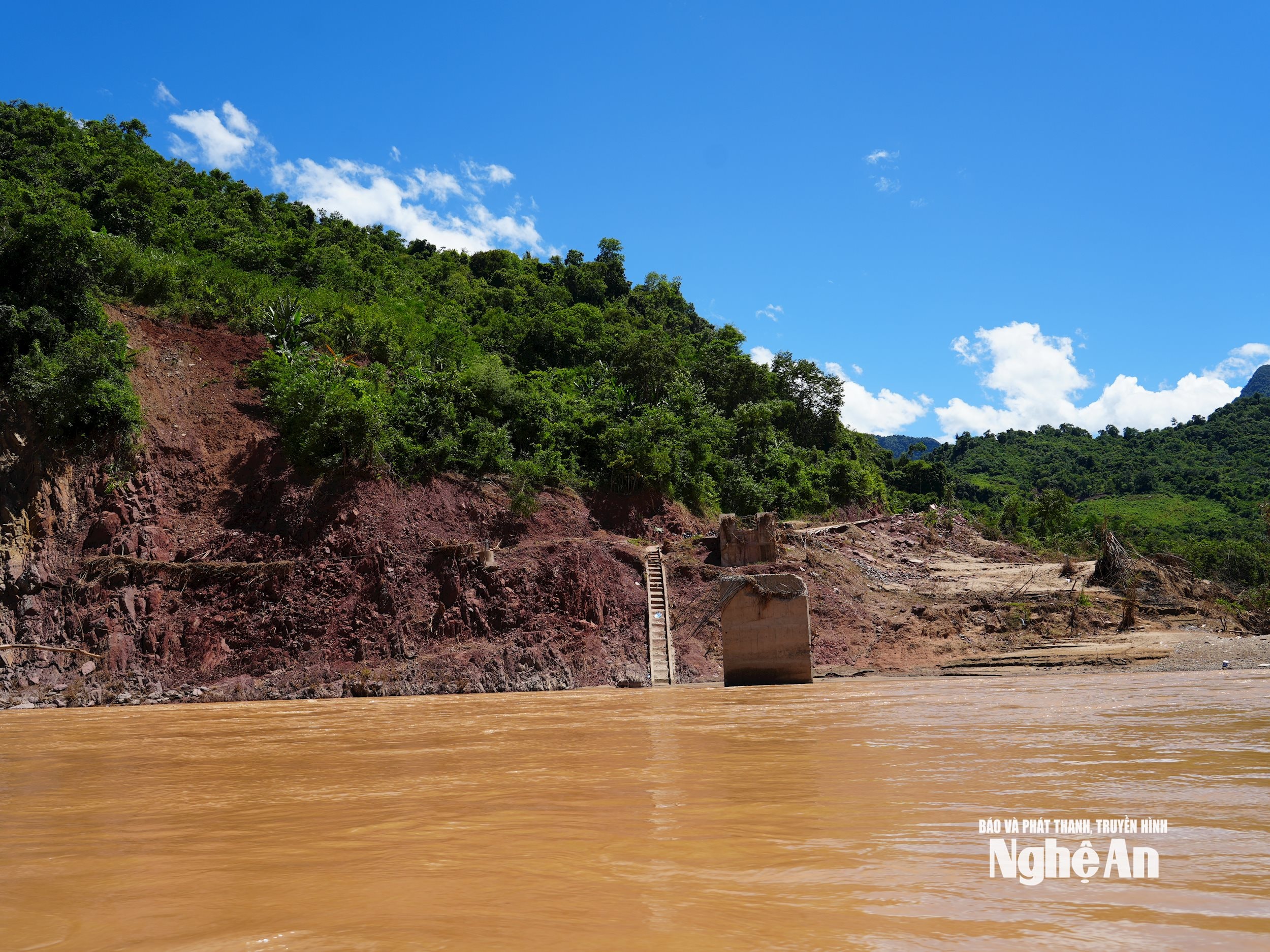
At My Ly 2 Ethnic Boarding Primary School in My Ly commune, after typhoon No. 3, the entire school building and the Yen Hoa bridge – the only route for students from the villages of Cha Nga, Nhot Lot, Yen Hoa, and Peng Peng to get to school – were swept away by the floodwaters. Students have to temporarily study at a separate school location, in conditions lacking in everything.
Mr. Tran Dinh Ha, the school principal, said: Currently, teachers can only teach 19-22 lessons per week instead of the 32 lessons per week as stipulated. The Cha Nga branch school, in particular, lacks electricity, preventing students from learning English and Computer Science. The school and local people's greatest hope is to rebuild the suspension bridge or construct a temporary bridge so that people can travel. Once that happens, My Ly 2 Primary School can bring all students from grade 3 and above from the branch schools, as well as all students from the Cha Nga branch school, to the main school campus and provide boarding facilities.
"We are hoping to implement the new program starting in the second semester so that the students can keep up with it. We will try to overcome the remaining difficulties regarding accommodation, meals, and teacher assignments, prioritizing the students' studies in the immediate future," Mr. Ha added.


