
What do teachers need to prepare for an English proficiency assessment?
Until an official matrix is published, all scientific predictions are for guidance and reference only; they should absolutely not be considered "sample questions," and certainly not be used as a basis for rushing into intensive exam preparation courses.
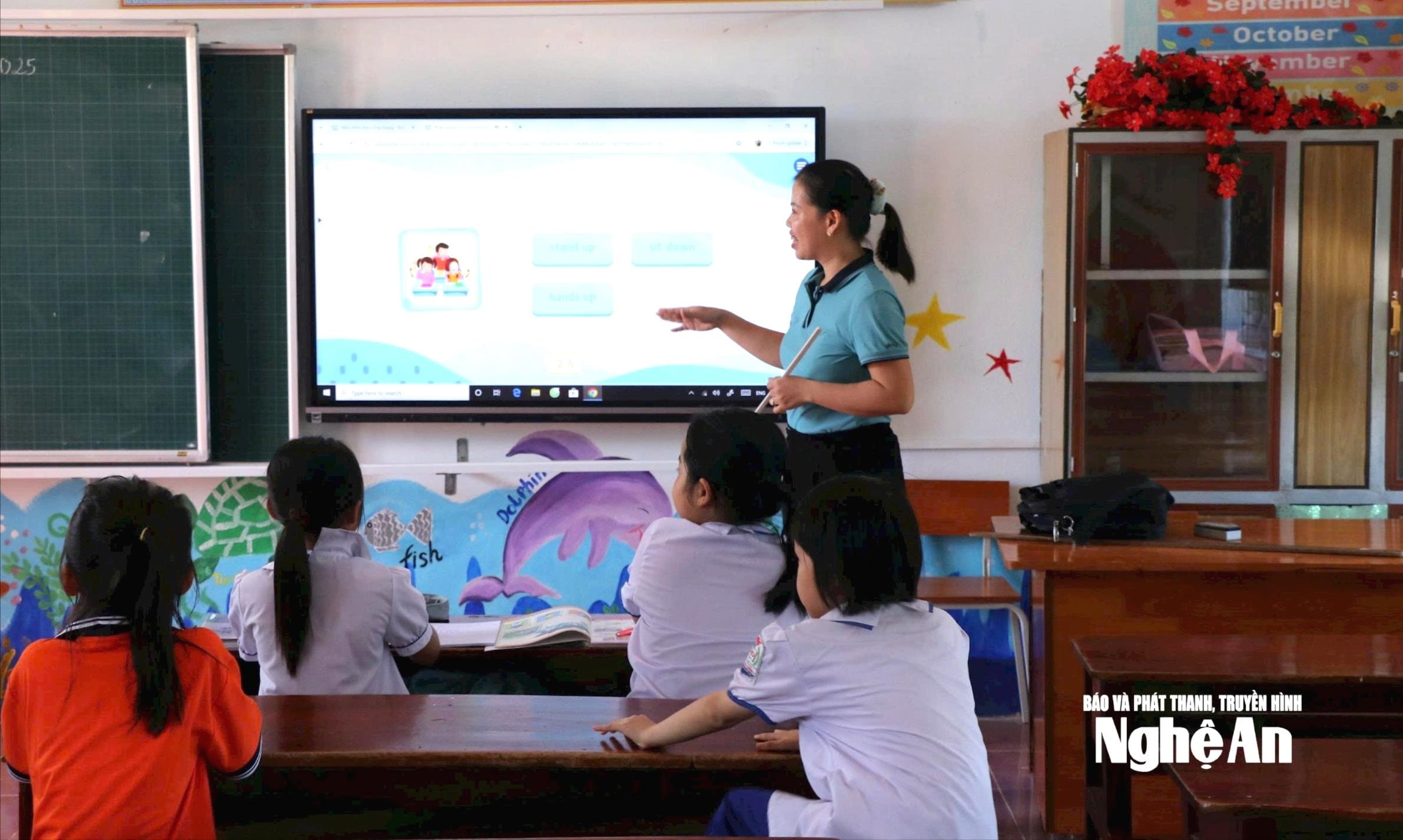
In recent days, following the announcement of a large-scale English proficiency survey being implemented in various localities, a very real and legitimate need has emerged: Teachers want to know what they need to prepare, what direction to take for revision, and what core competencies the survey will measure. However, this is an issue that needs to be discussed with extreme caution from the perspective of scientific assessment. If predictions are turned into a "guessing the questions," teachers will be misled. If the survey is exaggerated into a high-pressure exam, the core spirit of the policy will be misinterpreted. Conversely, if it is underestimated or ignored, teachers will miss a valuable opportunity to reassess their foreign language proficiency in a rapidly changing professional landscape.
This article presents conditional analyses and predictions based on three scientific grounds: the directive in Official Letter 816/NGCBQLGD-PTNGCB (Official Letter 816) dated May 26, 2026, from the Department of Teachers and Educational Management Staff, Ministry of Education and Training, regarding the organization of English proficiency surveys for general education teachers; the descriptive levels of the 6-level Foreign Language Proficiency Framework used in Vietnam; and the principles of designing general education language proficiency assessments according to international standards.
1. Management nature: Survey and collect macro-level data, not micro-level assessment.
The first thing that needs to be clearly clarified is that Circular 816 uses the concept of "English proficiency assessment," which is completely independent of the concepts of "certification exams," "teacher evaluation," or "professional ranking and evaluation." This is not simply a difference in wording, but a fundamental difference in modern educational management thinking.

A standardized certification exam aims to validate, standardize, and penalize individuals. Meanwhile, an evidence-based policy-making survey aims to collect objective data to identify the current state of the system and accurately determine training needs. The official statement, "Do not use the results of this survey for teacher evaluation," is a strong message of policy integrity.
Therefore, when forecasting the format of survey tests, we should not view them as a miniature, challenging version of rigorous academic exams like IELTS, VSTEP, or Aptis for language specialists. If designed in the spirit of a survey, the test should aim for a single goal: to relatively accurately identify the actual competency range of teachers, providing a basis for subsequent policy support.
2. Competency Framework Positioning: Approaching the intersection point from level 2 to level 4
According to the guidelines, the participants in this survey are public school teachers (excluding English teachers) who have self-assessed their current competence as falling within the range of level 2 to level 4. This is an important technical indicator to understand the scope and difficulty of the test.
Levels 2, 3, and 4 in the 6-level Foreign Language Proficiency Framework for Vietnam are equivalent to levels A2, B1, and B2 according to the Common European Framework of Reference (CEFR), describing distinct states of language use:
• Level 2 (Basic): Able to use English in common, familiar communication situations.
• Level 3 (Transition): Able to handle most general communication, reading comprehension, and learning situations.
• Level 4 (Independent): Uses English relatively actively in common social, academic, and professional contexts.
Since the survey subjects are teachers of other subjects, the content of the answers will inevitably deviate completely from in-depth linguistic knowledge or foreign language teaching theories. The most logical and scientific focus should be on the ability to use general English in daily life, basic professional English, and the ability to access information to support daily teaching activities.
3. Technical infrastructure: Standardization trend through online surveys.
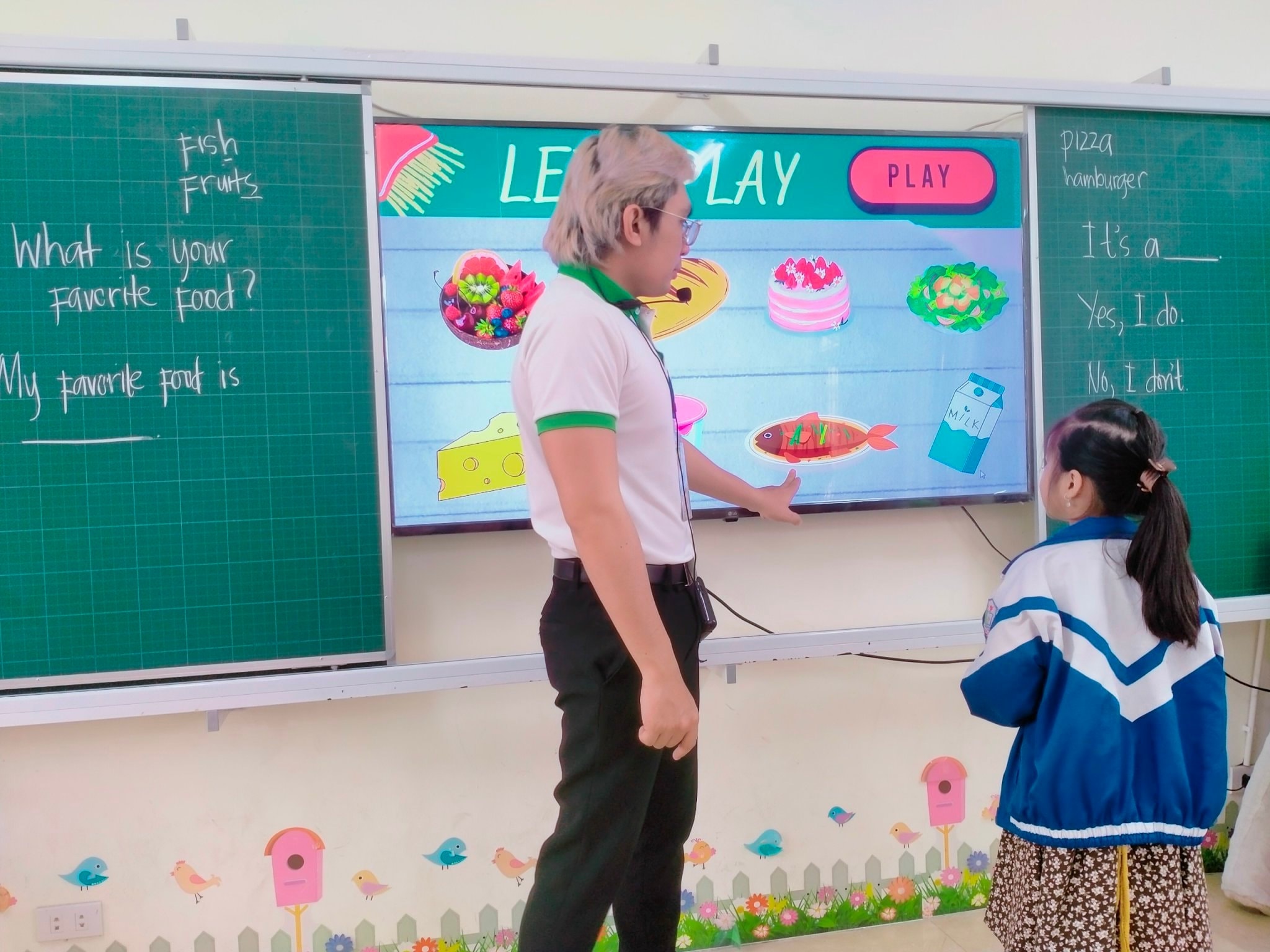
The document clearly stipulates that the survey will be conducted online using a computer system. This infrastructure allows for the prediction that the mechanical structure of the questions will prioritize macro-level standardization, rapid data collection, and objective scoring using algorithms to minimize the pressure of large-scale manual processing.
Therefore, tasks that can be graded automatically, such as multiple-choice questions and contextual fill-in-the-blanks, will have a dominant weight. A large-scale online survey is usually structured around core components: Listening Comprehension, Reading Comprehension, and Contextual Language Use; combined with basic short Writing or Speaking tasks if the technical infrastructure and time allow. If the goal is to be streamlined, optimize resources, and measure quickly, the survey can focus heavily on the two data reception skills: Listening and Reading.
4. Component Structure: Forecasting Real-World Language Competency Assessment Tasks
Based on the objective of assessing competency levels 2 to 4 for non-English-specialized secondary school teachers, the survey components will likely appear in familiar task formats but "embedded" within a real-world school context:
• 4.1. Listening Comprehension: This tests the ability to grasp information in familiar or semi-professional contexts. The context could be a short announcement over the school loudspeaker, a conversation between colleagues, instructions for using teaching software, or a short speech on the topic of education, STEM, school health, or technology. The main question types will be multiple-choice questions, identifying key details, or inferring the speaker's intent at a moderate level.
• 4.2. Reading Comprehension: This skill is the backbone of teaching as it is closely linked to teachers' ability to self-learn and utilize international learning materials. Reading texts could include professional emails, English-language teaching guides, or short articles on popular education, science, and technology trends. Questions will revolve around identifying the main idea, researching details, understanding the meaning of words in context, and making simple logical inferences.
• 4.3. Vocabulary and Grammar in Context: To assess practical competence, this section will absolutely avoid isolated grammar questions that are tricky or misleading. Instead, the test will prioritize fill-in-the-blanks in a complete passage (Cloze test), selecting functional communicative structures appropriate to the classroom situation. Topics will revolve around the school environment, educational technology, and career development activities.
• 4.4. Short Writing (If applicable): The task will be highly practical, such as writing a short email to an international colleague, writing a class announcement in English, or giving a brief opinion on an experiential learning activity.
• 4.5. Brief Speaking (If applicable): Teachers can answer directly via microphone on the recording system. Questions will be very relatable, such as introducing themselves, describing a teaching activity, or giving a brief perspective on the application of technology in schools. The focus of assessment will be on confidence, clear pronunciation, and the ability to fluently express basic ideas.
5. Exclusion of bias: Exam formats that are not part of the survey focus.
To help teachers save time and avoid misdirected revision, we need to use the process of elimination for academic or commercial exam formats:
• Not a full IELTS Academic level: Because the teacher does not need to study abroad or conduct in-depth research using academic language.
• This is not a TOEIC for businesses: The context of international trade and business is completely unfamiliar to the general education environment.
• No assessment of foreign language pedagogy theory: This is because the survey is for teachers who are not English specialists.
• No in-depth translation or academic terminology checks: Any context, if present, is integrated in the form of applied academic language.
6. Adaptation Strategy: Five Core Solutions for Strengthening Substantive Capabilities
Following the philosophy of "Teaching authentically - Learning authentically - Assessing authentically," the smartest and most sustainable way for teachers to prepare is not by scouring for "predicted exam questions" or attending crash courses on exam tips. Teachers should proactively adapt through five practical actions:
1. Familiarize yourself with technology: Practice computer skills, time management, how to use headphones, and how to interact with online interfaces.
2. Reinforce core grammar: Review common communication and reading comprehension structures at levels 2 to 4 (basic verb tenses, applied passive voice, simple relative clauses, systematic conjunctions).
3. Develop a habit of reading and understanding open resources: Spend 15-20 minutes each day reading short English articles about education, STEM, and school technology to naturally build your vocabulary.
4. Practice active listening for the main idea: Listen to short, clear conversations from authentic learning sources to develop a reflex for understanding the essence rather than just picking out individual words.
5. Practice short speeches: Write or speak short passages using simple but accurate sentences about your work, school, and career development goals.
7. Academic Integrity: Beware of the wave of "guessing exam questions" and exam preparation for the sake of passing.
Whenever large-scale surveys are conducted, the education market tends to be disrupted by unofficial information about "internal sample questions" and "courses guaranteeing exam success." Teachers need to remain calm and alert to be wary of these waves of commercialization.
A serious survey conducted by the Ministry of Education and Training and the Department of Teachers and Educational Management Staff always operates on the principles of absolute confidentiality, objectivity, and fairness. Learning tricks to "beautify" survey results is essentially an act of self-sabotage. When data inaccurately reflects the system, subsequent support policies will be misaligned. Only when teachers participate with the utmost honesty can the system identify areas of deficiency and allocate resources for training, learning materials, and support mechanisms to the right places at the right time.
Predicting the format of English proficiency tests is a professional activity requiring careful consideration and high responsibility. We can make predictions about competency levels based on test-taking science, but under no circumstances should these predictions become exam pressure or an administrative burden for teachers.
The ultimate goal of Circular 816 is not to grade or classify teachers, but rather to serve as a wake-up call for the entire system to reflect on itself. Let's approach this survey with a calm, confident, and honest mindset. The survey is not a response; it is the starting point for each teacher to create their own sustainable career development roadmap in the era of global integration.
References:
1. Ministry of Education and Training (2014). Circular No. 01/2014/TT-BGDĐT dated January 24, 2014, promulgating the 6-level foreign language proficiency framework for Vietnam.
2. Ministry of Education and Training (2015). Decision No. 729/QD-BGDĐT dated March 11, 2015, promulgating the format of the English proficiency assessment test from level 3 to level 5 according to the 6-level Foreign Language Proficiency Framework for Vietnam.
3. Ministry of Education and Training (2016). Decision No. 1481/QD-BGDĐT dated May 10, 2016, promulgating the test format for assessing English proficiency level 2 according to the 6-level Foreign Language Proficiency Framework for Vietnam (for adults).
4. Ministry of Education and Training (2026). Plan No. 179/KH-BGDĐT dated February 3, 2026 on surveying English language proficiency and determining training needs for teachers.
5. Department of Teachers and Educational Management Staff (2026). Official Letter No. 816/NGCBQLGD-PTNGCB dated May 26, 2026, on organizing a survey of English proficiency for general education teachers.
6. Council of Europe (2020). Common European Framework of Reference for Languages: Learning, Teaching, Assessment - Companion Volume.
7. OECD (2019). Making Education Policies Work: Evidence-Based Policy Making in Education.
8. UNESCO (2024). Global Education Monitoring Report: Leadership in Education / Teachers and Teaching.


