
The Ancestral Well of the Hoang Nghia clan - A source of prosperity and well-being for the people.
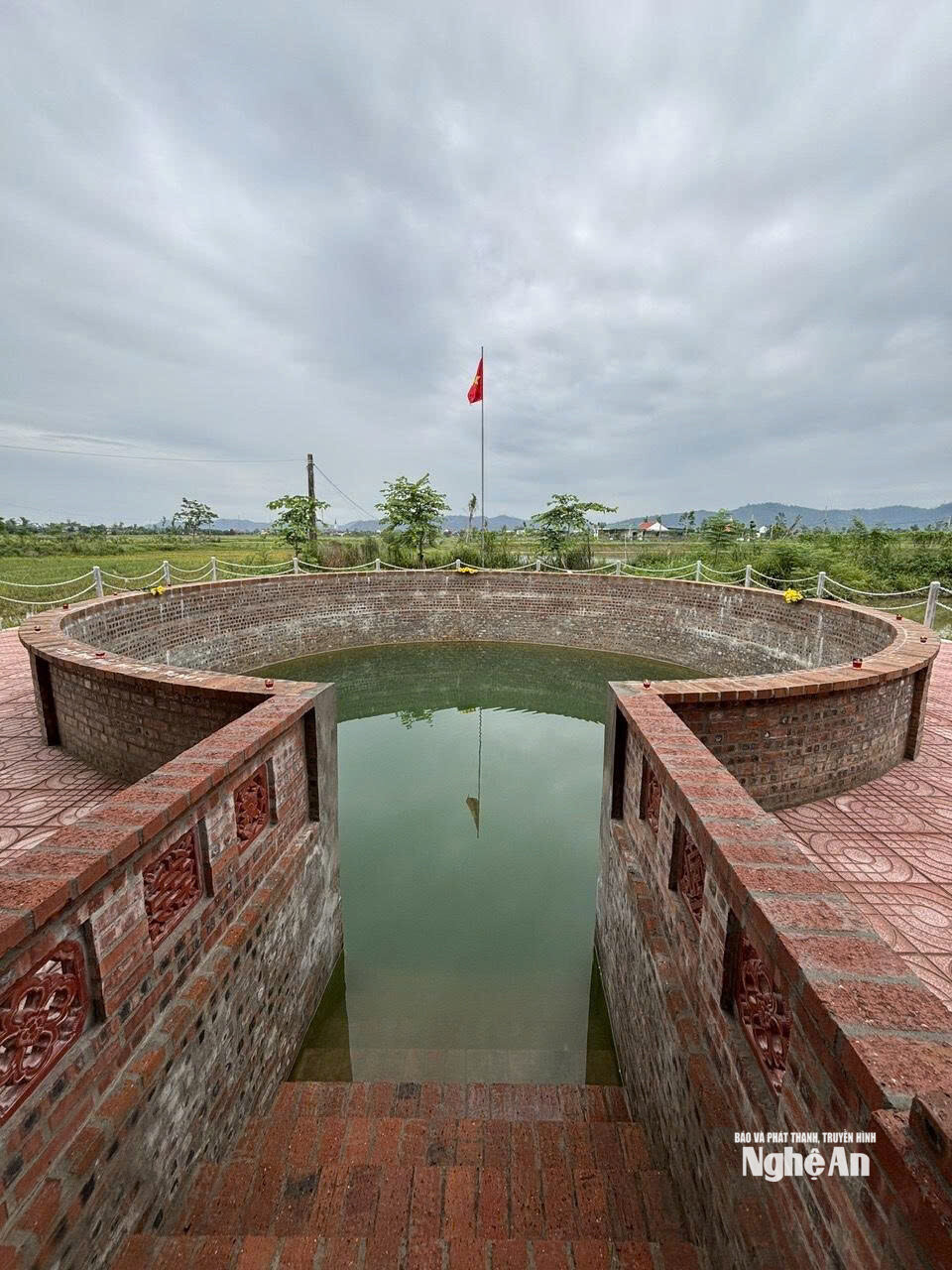
The history of clan development in our country shows that there are prominent and influential families who, in addition to building their status through military achievements and academic success, also left a strong mark on daily life in villages and communities, such as building communal houses, opening roads, planting trees, digging wells, restoring temples, and reviving Buddhism. In other words, they not only brought prestige to their family but also contributed to the cultural and social development of an entire region. The ancestral well of the Hoang Nghia clan in Thinh Lac is one such example.
From Duong Xa to Thinh Lac
Speaking of the Ancestral Well of the Hoang Nghia clan in Thinh Lac, one must first mention the formation process of this branch of the clan in the Nam Dan area. Thinh Lac is the name of an ancient village dating back to the Le Dynasty. According to the genealogy, the person who laid the foundation for the Hoang Nghia clan here was Mr. Hoang Manh, belonging to the 10th generation from the founding ancestor Hoang The Chan in Kim Dong, Hung Yen. Mr. Hoang Manh, from Duong Xa, Hung Nguyen, came to the Thinh Lac area, Nam Duong, to clear land and establish a settlement, around the first half of the 17th century.
The phrase "land reclamation and settlement" may seem simple, but behind it lies a grand journey. It wasn't just a matter of moving house; it was about our ancestors bringing their strength, determination, families, and the future of their descendants to a new land to establish a village. Land reclamation means opening up new land. Settling down a village means building a life. When we talk about opening up land and establishing a village, we can't just think about our own homes and fields; we must also consider the most fundamental things for the community, such as roads, spiritual spaces, and especially water sources.
Mr. Hoang Manh was the ancestor of the Hoang Nghia clan in Thinh Lac. In the 11th generation was Mr. Hoang Ba Do, the son of Mr. Hoang Manh. In the 12th generation was Mr. Hoang Ba Quan. Mr. Hoang Ba Quan's first wife gave birth to two sons: Hoang Ba Quyen and Hoang Ba Can; his second wife gave birth to a son, Hoang Ba To. In the 13th generation, Mr. Hoang Ba To established his family and joined the Hoang Tru branch, which later formed the Hoang Dinh branch.
Mr. Hoang Ba Quyen had three sons. Mr. Hoang Ba Can was childless. Mr. Hoang Ba To had sons who all bore the surname Hoang Dinh. Many of his descendants were educated and respected, including the Confucian scholar Hoang Xuan Duong - the father of Mrs. Hoang Thi Loan and the maternal grandfather of President Ho Chi Minh, belonging to this fourth branch.
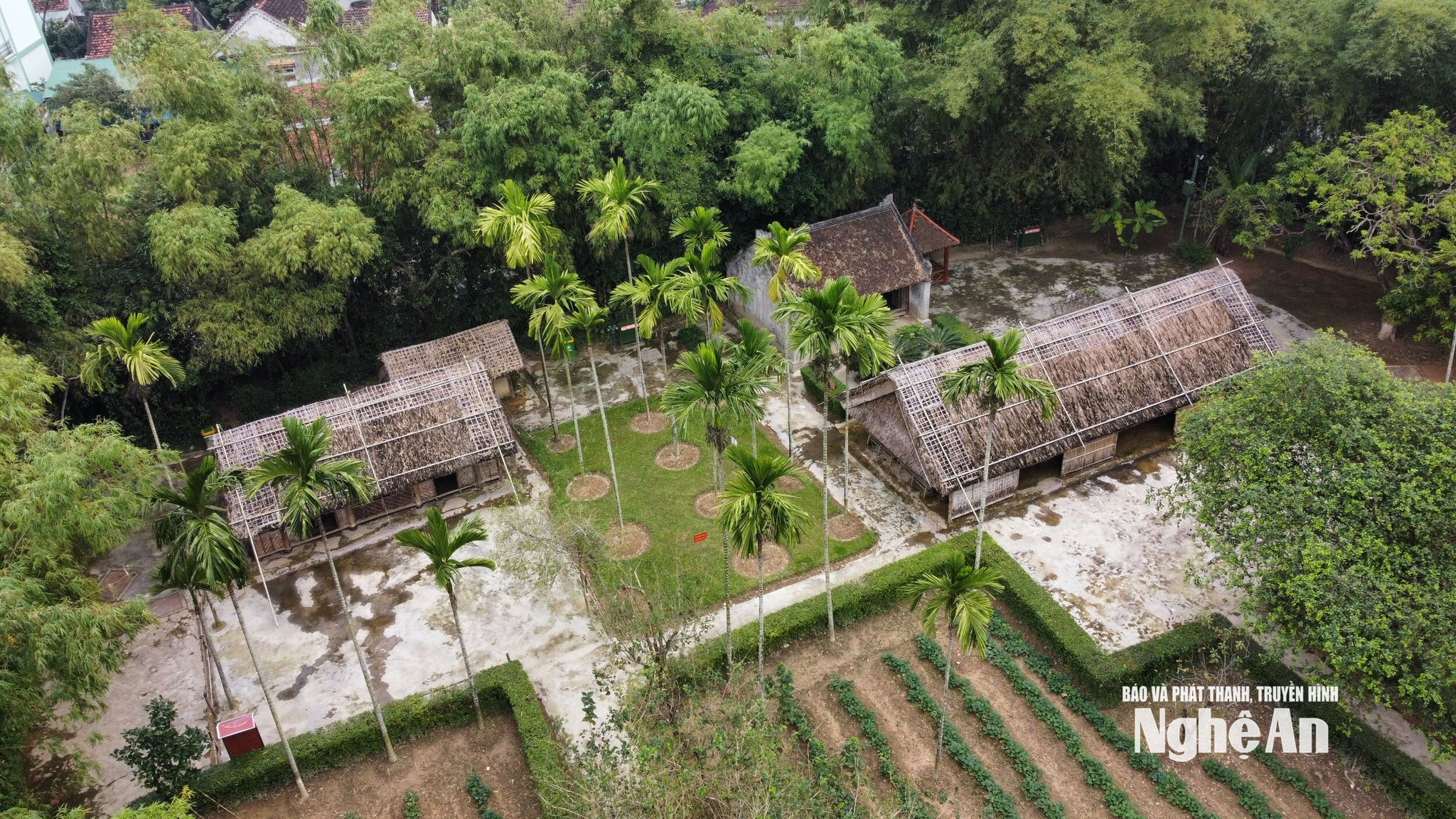
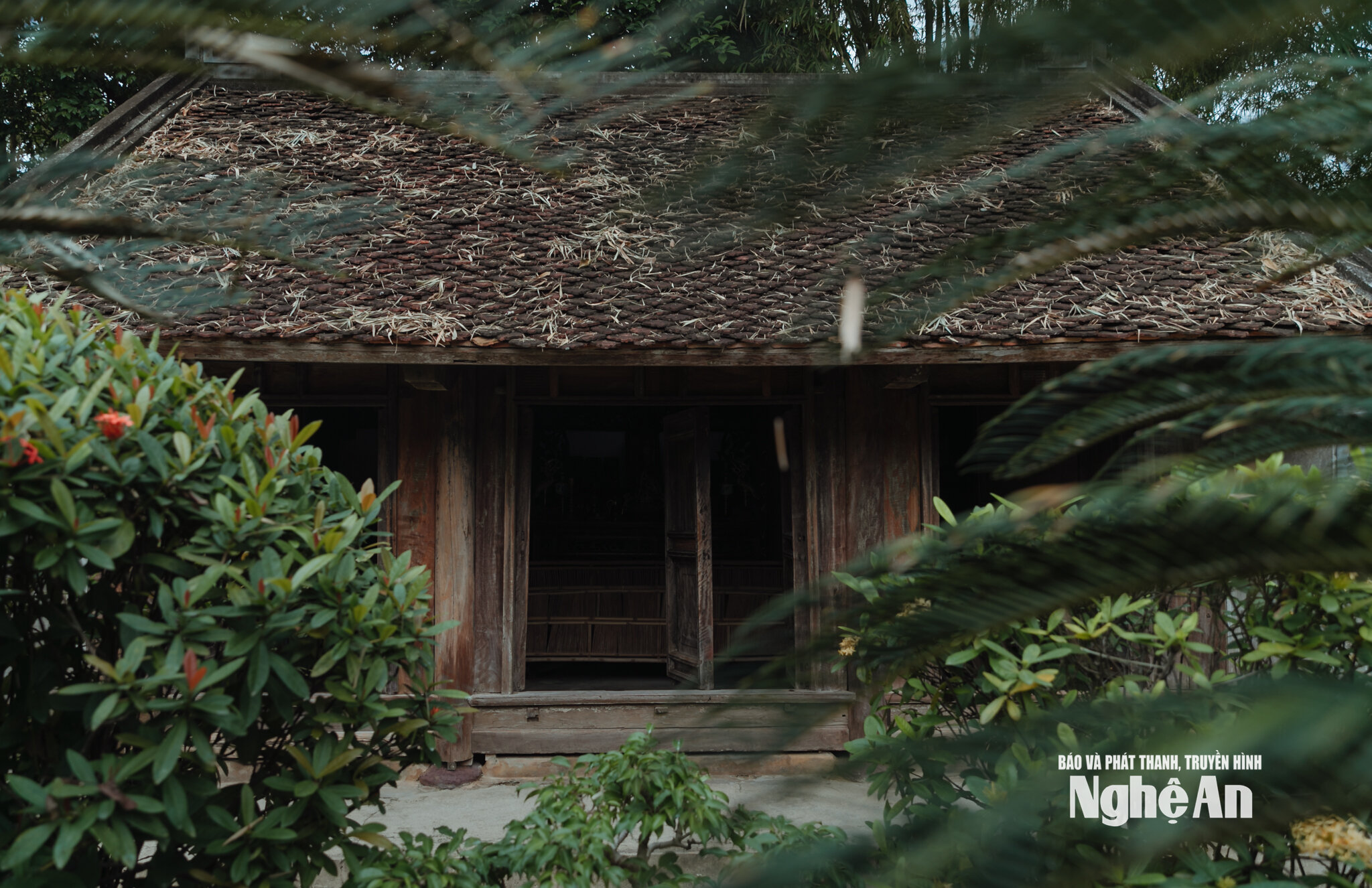
In his ancestral home of Chung Cự, the Confucian scholar Hoàng Xuân Đường built a family temple to worship his ancestors, such as his great-grandfather Hoàng Xuân Mượu, his grandfather Hoàng Xuân Lý, and his father Hoàng Xuân Cẩn. Today, this temple still stands majestically within the grounds of the Kim Liên Special National Historical Site. Notably, in front of the temple are two ancient couplets:
黃雲正氣傅千古
鍾鉅雄聲振億年
Transcription:
Hoang Van's righteous spirit will endure through the ages.
Chung Cự's heroic reputation has resonated for centuries.
Translation:
The righteous spirit of Hoang Van will endure for a thousand years.
The heroic spirit of Chung Cu will resound for all eternity.
This couplet carries a particularly profound meaning. "Hoàng Vân" refers to Hoàng Vân commune, Kim Động district, Khoái Châu prefecture, Sơn Nam province (now Hưng Yên province). "Chung Cự" is a local area in Nghệ An, associated with the Kim Liên - Nam Đàn region. In other words, the couplet beautifully depicts the two ends of the lineage: the ancestral roots in Hoàng Vân - Hưng Yên and the place of development in Chung Cự - Nghệ An. Despite having lived in Nghệ An for many generations, the Confucian scholar Hoàng Xuân Đường always reminded his descendants of their ancestral homeland.
Looking at that family tree, we see that the Hoang Nghia family in Thinh Lac village, starting with a single step of clearing land and digging a well in 1635, later not only formed one branch of the family but also spread and formed four main branches, closely connected to the entire Nam Duong region (present-day Kim Lien commune). Therefore, speaking of the Ancestral Well today is actually speaking of a very specific part of the founding work that the ancestors of the Hoang Nghia family began nearly four centuries ago.
The lifeline of the people in Thinh Lac village.
On the occasion of the inauguration and restoration of the ancestral well of the Hoang Nghia family in Thinh Lac village, we are reminded of the inscriptions on the stele of Dat Pagoda, also known as Bao Quang Pagoda, erected in 1621 in Chung Cu commune, Nam Duong district, Nghe An province, now Kim Lien commune, Nghe An province. The stele indicates that the Hoang Nghia family, in addition to restoring temples and reviving Buddhism, also did many practical things for the community, such as building roads, planting trees, digging ponds, and excavating wells.
Reading this far, one thing becomes very clear: From very early on, the ancestors of the Hoang Nghia family not only focused on achieving merit in battle, but also thought about the lives of the people. They provided water for the people to use, roads for the people to travel, trees for the people to rest, and lakes and ponds for the people's benefit.
In contemporary life, these things might seem perfectly normal, as we live in an era with electricity, roads, running water, and all the conveniences right in our homes. But placed in the context of the early 17th century, when the country had just emerged from years of war, tasks like building roads, digging ponds, and excavating wells were actually very significant and meaningful undertakings. After the war, what the people needed was not only political stability but also a chance to start anew. To start anew, they needed the minimum, essential infrastructure for living and production.
Therefore, a well for the entire village was no small matter. For the people of the past, water was vital, an integral part of village life. The well provided water for drinking, cooking, and daily activities. It was also where villagers met, chatted, and bonded. The well was not just for drawing water; it served as a silent center of community cohesion.
Therefore, the fact that the Hoang Nghia family dug wells very early on to serve their clan in particular and the community in general, and that their descendants are now restoring, preserving, and maintaining them, makes people feel more clearly that the family not only left behind a prestigious name, but also left behind works connected to the real lives of the people in the past.
There are family genealogies that inspire admiration for their records of high-ranking officials and nobles. But there are also traces, like a simple well, that evoke a different kind of sentiment. They remind us that our ancestors lived not only for their own families and clans, but also for their entire community. It is these simple acts of community service that ensure the lasting prosperity of a lineage and the enduring legacy of their ancestors..
Why is it called the "Ancestral Well"?
Many people wonder, "There are only village wells, so why would a clan have an ancestral well?" That's a fascinating question, and the answer is even more interesting!
That's because the Hoang Nghia clan here is a case of "one clan, one village," meaning one clan forms an entire village.
In Vietnamese culture, the village is the most fundamental and enduring nucleus of social life. A country may experience changes in dynasties and governing methods, but the village remains the place that preserves the way of life, customs, language, ancestral traditions, and the lineage of the Vietnamese people. And when a village is formed by a clan, or when a clan takes the lead in establishing and developing the land, the foundational structures of the village are often also the work of that clan.
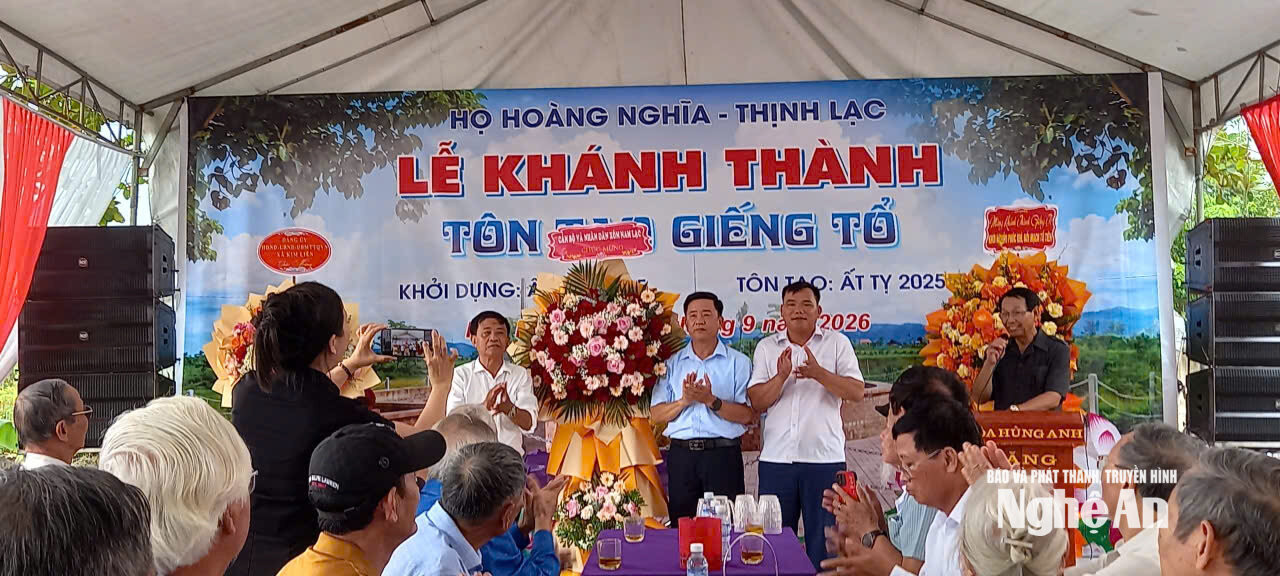
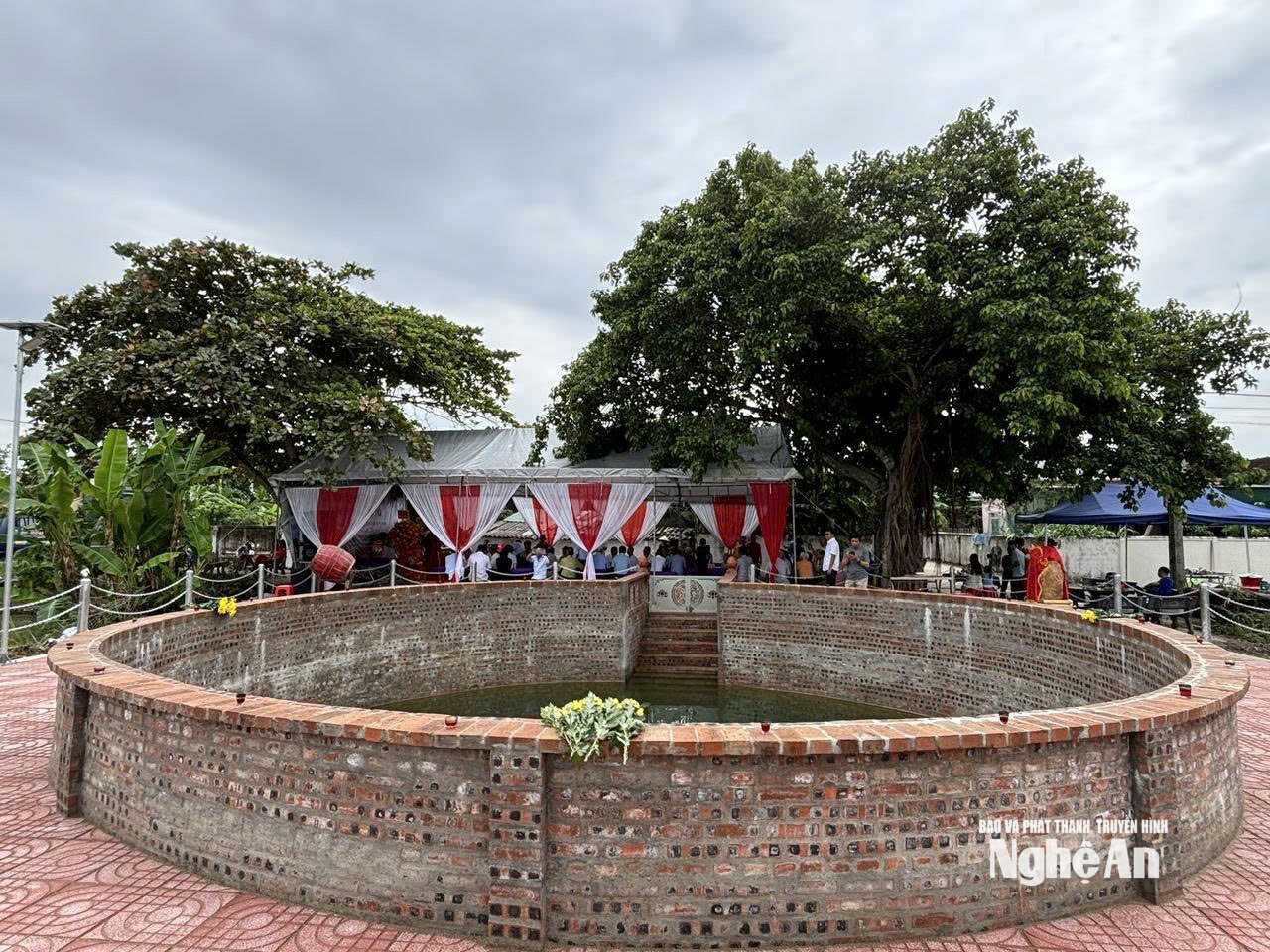
Therefore, the Ancestral Well here should not be understood narrowly as just a private well for family members to use. It is a well associated with the early days of village founding and settlement, linked to the efforts of the ancestors of the Hoang Nghia family in Thinh Lac. It carries both the meaning of the family's origins and the roots of the village.
Therefore, calling it the "Ancestral Well" feels nice and meaningful to everyone. It shows that in the memories of descendants, the well is not simply a civil structure, but a landmark of origin. From the well, the water, the people living there, then came the hamlet, the village, the various clans gathered together, and generations of descendants were born and raised on that land.
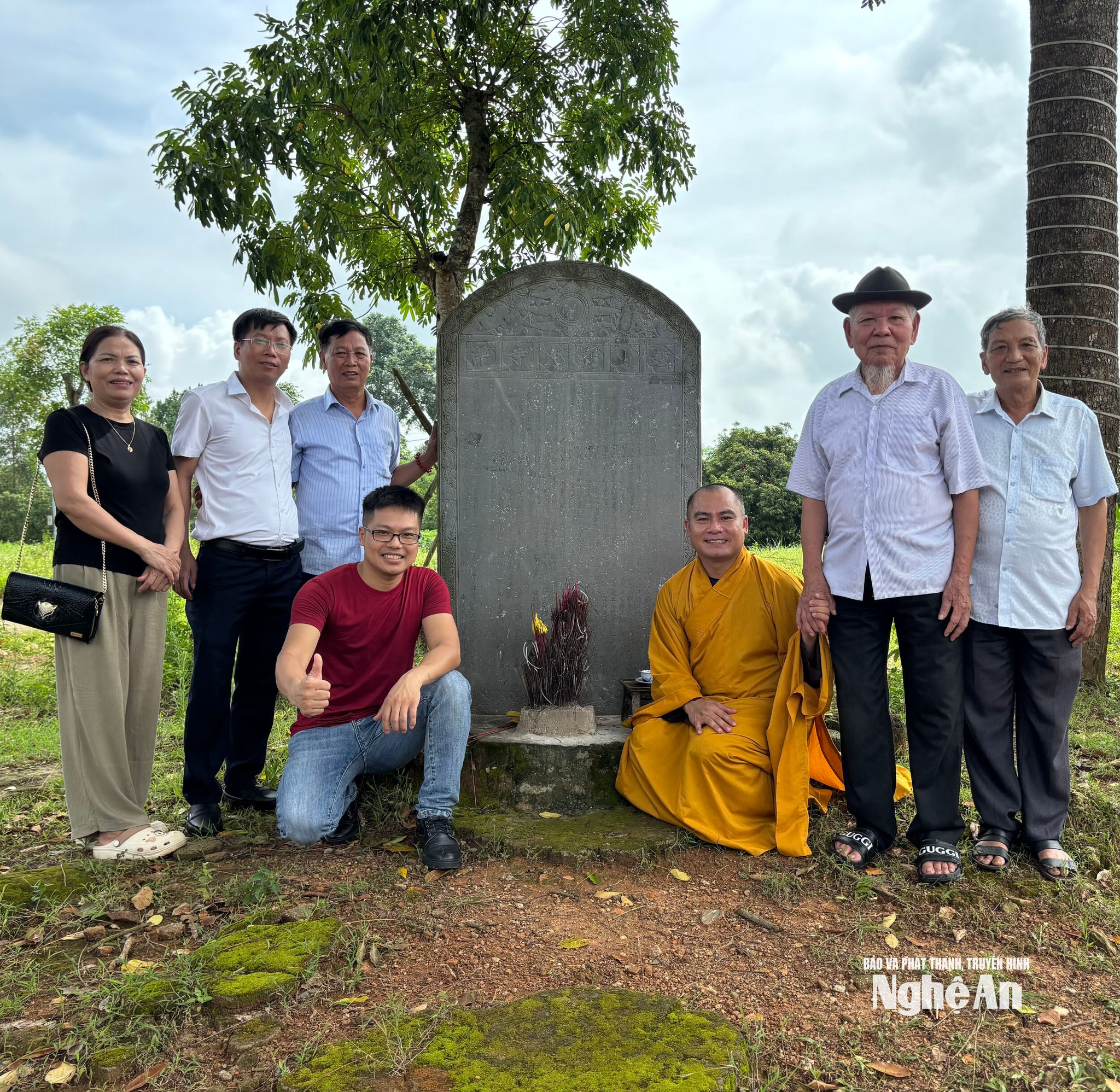
Nearly 400 years have passed, countless generations have come and gone, and many historical changes have taken place, yet the ancient well remains there, silently a witness. It doesn't boast or show off, but quietly reminds us that the ancestors of the Hoang Nghia family left this land not only the reputation of a noble lineage, but also a very real, very close, and very enduring source of livelihood for the people.
And perhaps, that is what truly gives a great family its depth: not only those who rendered meritorious service to the imperial court, but also those who cared about the smallest details of the villagers' lives; not only a beautiful family tree, but also vivid traces of their heritage in their homeland; not only a source to be proud of, but also a lineage for their descendants to trace back to today.
Therefore, today's ceremony by the descendants of the Hoang Nghia clan to inaugurate and renovate the ancestral well of the Hoang Nghia clan in Thinh Lac is not merely about beautifying an old historical site. More profoundly, it is a way to tell our ancestors that, though far removed from the past, future generations still remember where we began. It is also a way to tell future generations that if you want to go far, you must remember your roots; if you want to endure, you must preserve your source.


