
With the arrival of the northeast monsoon, how long will the severe cold weather last in the North?
The strengthening northeast monsoon is causing cold nights in Northern and North Central Vietnam, with temperatures dropping below 16°C in some areas, lasting until October 24th.
On the evening and night of October 22nd, the Northeast monsoon continued to affect many areas in Central Vietnam. The Bach Long Vi area recorded strong northeast monsoon winds of level 7, gusting to level 9; Con Co Island level 6, gusting to level 7; and Ly Son Island level 6, gusting to level 8. Inland, the northeast monsoon winds reached levels 3-5, with some coastal areas experiencing winds of level 6.
Under the influence of typhoon No. 12 combined with the Northeast monsoon, the coastal area from Quang Tri to Da Nang experienced increasingly strong winds reaching level 7, gusting to levels 8-9, and extremely rough seas.
According to the National Center for Meteorological and Hydrological Forecasting, this year's Northeast monsoon tends to be earlier and stronger than the multi-year average.
From December 2025 to January 2026, the Northeast monsoon will continue to intensify, causing severe cold weather in Northern Vietnam, especially in the latter half of December 2025.
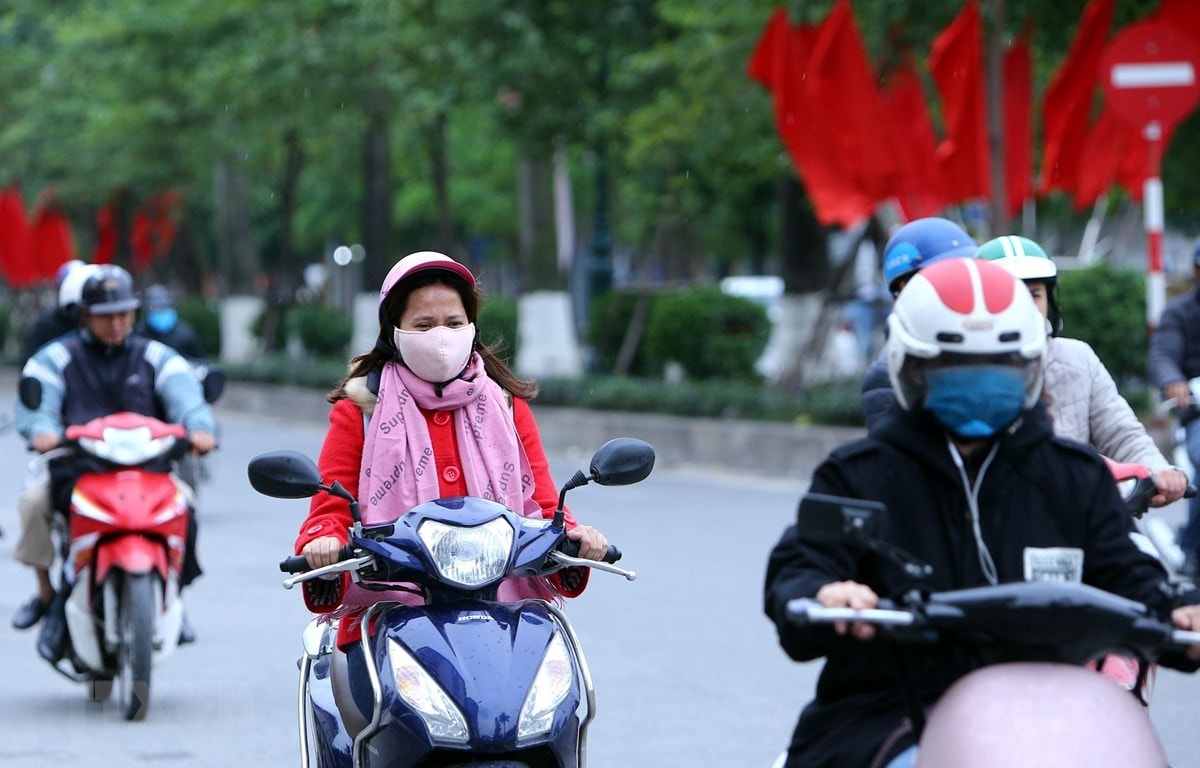
In Northern Vietnam and Thanh Hoa province, the Northeast monsoon has caused a sharp drop in temperature, with distinctly cold nights and mornings, and deep cold in mountainous areas. The lowest temperatures are generally 19–22°C, 17–19°C in the midlands, and below 16°C in some high mountainous areas.
In the Hanoi area, there was no rain, but the night and early morning were directly affected by the Northeast monsoon, resulting in cold temperatures of 19–22°C and high humidity, causing a biting chill when strong winds blew.
At sea, the northeast monsoon combined with the circulation of typhoon No. 12 created strong winds of force 7–10, gusting to force 12 in the northern South China Sea and the Hoang Sa (Paracel) Islands area. Sea waves were 3–7 meters high, and the sea was very rough.
The Gulf of Tonkin also experienced strong northeast monsoon winds of force 7, gusting to force 9, with waves 2–4m high.
The sea area of Quang Tri - Quang Ngai (including Con Co, Ly Son, and Cu Lao Cham) is experiencing strong winds of force 6-8, gusting to force 10, with rough seas, posing a danger to small boats and fishermen fishing far offshore.
Due to the influence of the Northeast monsoon, Typhoon No. 12, and disturbances in the upper easterly wind zone, provinces from Ha Tinh to Quang Ngai are experiencing widespread heavy rain. Thunderstorms accompanied by tornadoes, lightning, hail, and strong gusts of wind may cause damage to agriculture, crops, houses, and infrastructure.
Heavy rainfall also increases the risk of flooding in low-lying areas, flash floods in small rivers and streams, and landslides in hilly and mountainous areas. Urban and industrial areas may experience localized flooding if the rain persists.


