
Google expands AirDrop compatibility across a range of Android phones via Quick Share.
Google has officially confirmed the integration of Apple's transfer protocol into Galaxy and OPPO devices, bridging the gap in data sharing between the two ecosystems.
Google has officially confirmed the expansion of AirDrop compatibility through its Quick Share platform to more Android phone models. This move marks the tech giant's effort to remove the long-standing data sharing barriers between Android and iPhone.
Previously, this connectivity feature had appeared on high-end devices such as the Pixel 10 series and Galaxy S26. Notably, Google revealed that the Pixel 8a and the OPPO Find N6 foldable phone had also quietly supported AirDrop connectivity without any official announcement.
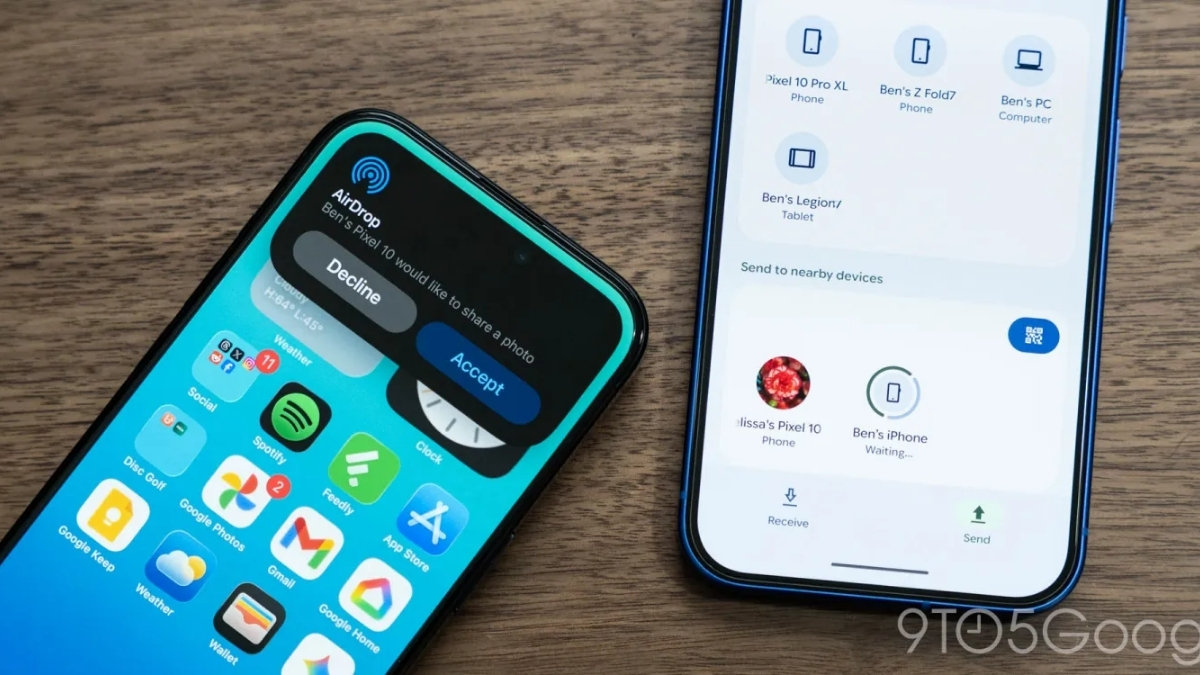
List of devices that are preparing to receive the update.
A range of mobile devices from Samsung, OPPO, and HONOR have been added to the list of devices preparing to receive this cross-platform data transfer feature. The use of the phrase "entire device line" suggests that secondary models like the Galaxy S25 FE are also highly likely to receive the update.
| Trademark | Expected supported models |
|---|---|
| Samsung | Galaxy S25, S25 Plus, S25 Ultra, S24, S24 Plus, S24 Ultra, Z TriFold, Z Fold7, Z Flip7, Z Fold6, Z Flip6 |
| Pra | Find X8, Find X8 Pro |
| OnePlus | OnePlus 15 |
| Honor | Magic V6, Magic 8 Pro |
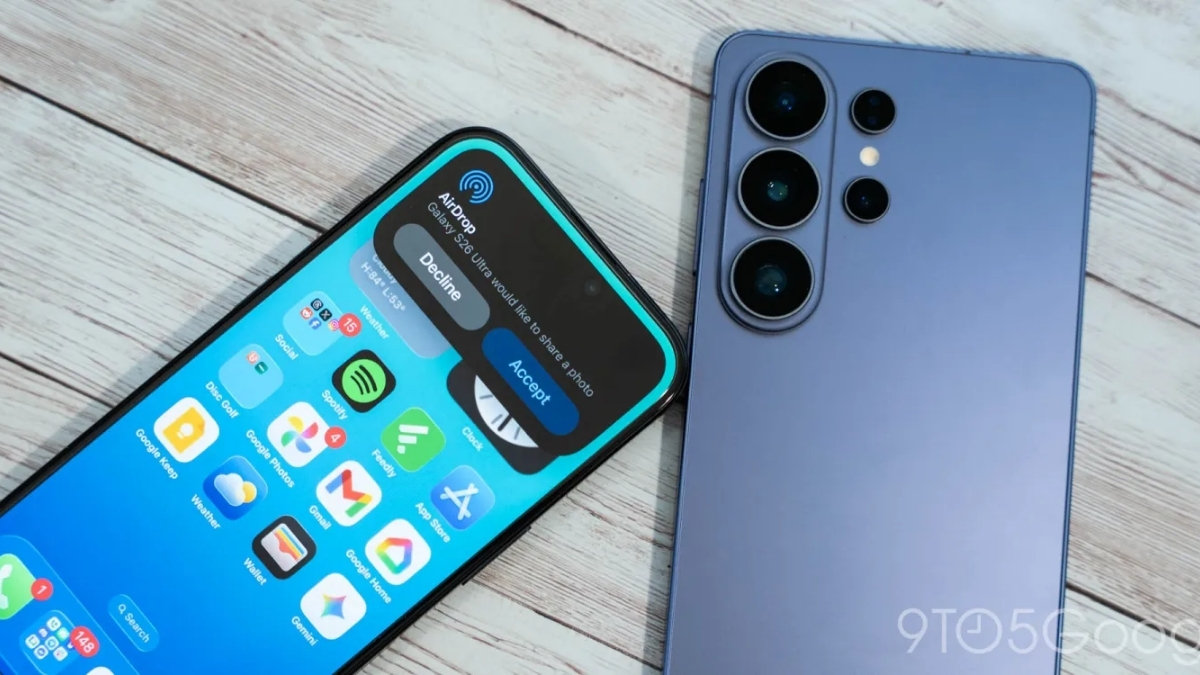
Technical barriers from the AWDL protocol
Although users expect this feature to become widespread across the entire Android ecosystem, it actually requires stringent hardware specifications. Analyst Max Weinbach stated that integrating AirDrop requires the chipset to support the Apple Wireless Direct Link (AWDL) protocol.
This is a specific protocol that allows devices to scan and connect to each other quickly. The biggest challenge currently is maintaining parallel operation between Quick Share and AirDrop to identify nearby devices, requiring complex coordination between the processor and the wireless network modem.
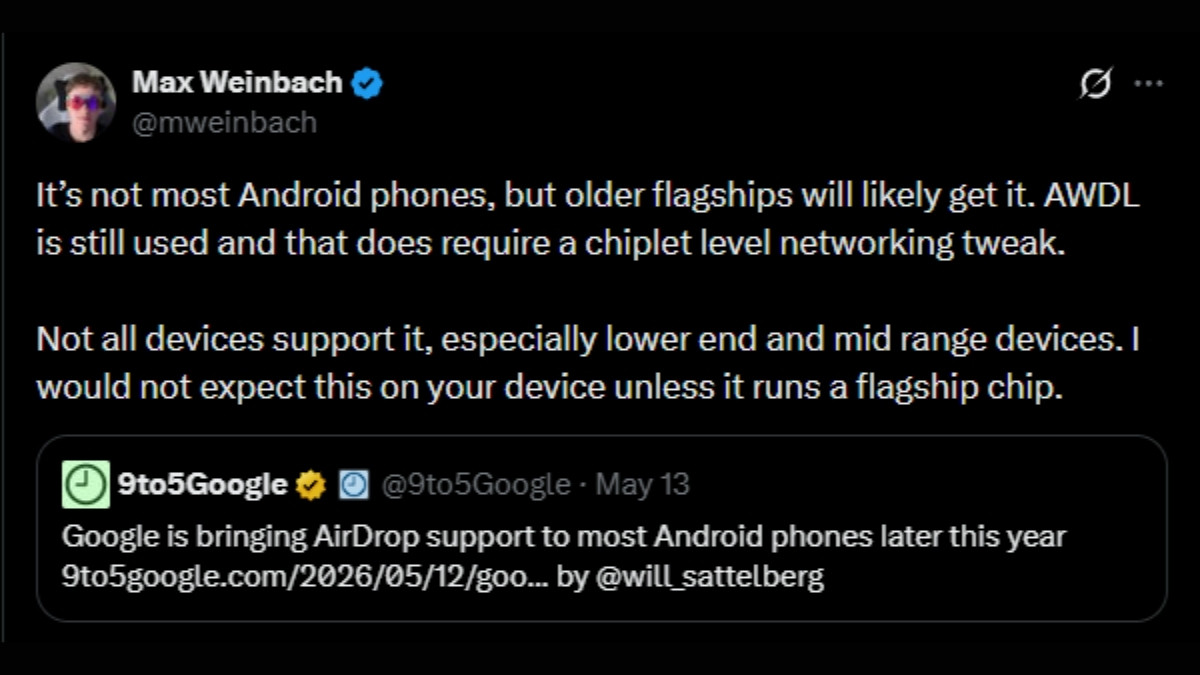
The mid-range and budget phone segments are facing difficulties.
Due to chipset and network modem requirements, devices in the low-cost or mid-range segments are unlikely to experience this feature in the near future. Conversely, some older models with high-end chips have greater compatibility if they receive the appropriate software update.
The widespread adoption of the AWDL network standard on mobile processors is seen as key to making the sending of large amounts of data between Android and iPhone common. Once this network architecture becomes a common standard, the gap between closed and open operating systems will be completely narrowed.


