
Professor Cao Cự Giác: Learning is not about memorizing, but about thinking.
Having dedicated his life to teaching and scientific research, Professor Cao Cự Giác, Vice Head of the Department of Chemistry at the Faculty of Education, Vinh University, is not only a passionate educator but also the driving force behind numerous scientific works and textbooks familiar to teachers and students nationwide. In 2025, he was the only educator in the field of Educational Sciences at Vinh University to be awarded the title of Professor.
On this occasion, Professor Cao Cự Giác shared his thoughts with the Nghe An Newspaper and radio and television.about a journey of more than half a century of dedication to the profession.and thoseConcerned about the current need for fundamental and comprehensive educational reform.
HThe journey of realizing educational ideas.
PV: Dear Professor Cao Cự Giác, I grew up in Hoan Chau, a land rich in traditions of learning and a birthplace of talented individuals who overcame adversity.How did the teacher, who started as a boy catching crabs and tending buffaloes in the fields, come to be a teacher?
Professor.PhDCao Cu Giac:For me, the fields of Hoan Chau are not only associated with my difficult childhood, but also the first "school" that taught me about patience and aspiration. Poverty did not hinder my progress; it only strengthened my will.
My entry into the teaching profession was not a coincidence, but a choice of the heart, when I realized that knowledge is the shortest path to changing the destiny not only of myself but also of the younger generations in this impoverished homeland.
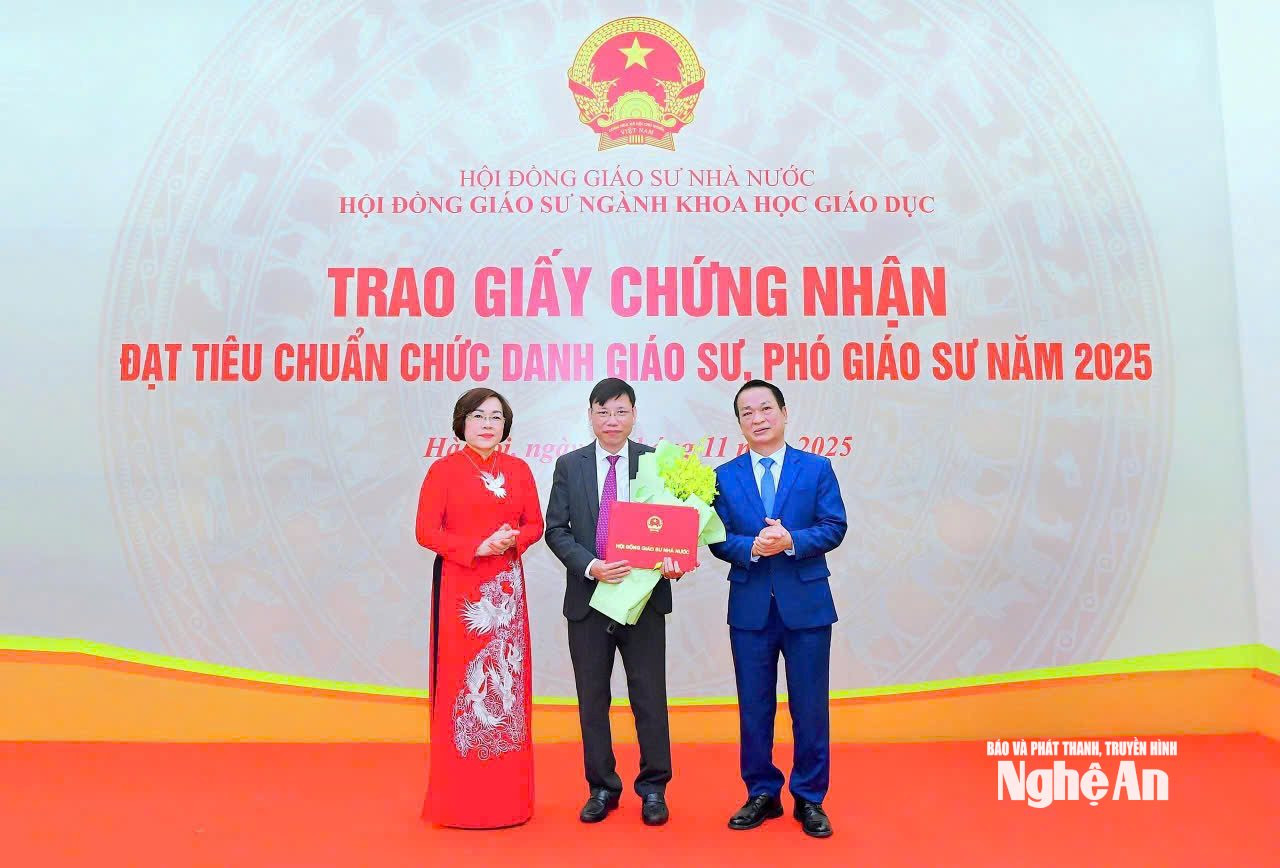
PV:In 2011, at the young age of 37, he was promoted to Associate Professor, becoming the youngest Associate Professor at Vinh University. Behind this success, there were undoubtedly many difficulties and hardships.What is the most important factor that has helped him persevere in pursuing his career in education and scientific research? What special significance does being promoted to Professor this year have for you personally?
Professor.PhDCao Cu Giac:Behind those prestigious titles, for me, the path of education and scientific research has never been a bed of roses. If there's one word to explain my perseverance over the past decades, it's a burning desire to dedicate myself. I've always believed that research isn't meant to be kept in a drawer, but to ignite the flame for practical lectures. Being appointed Professor in 2025 is not just a personal milestone – though it's a source of pride to become the youngest Professor in Vietnam specializing in the Theory and Methodology of Teaching Chemistry.
More importantly, this is a "command" from the heart. As the only professor of this major currently teaching at Vinh University, I consider this a great responsibility to myself towards the field of Chemistry education in particular and the national education system in general.
This academic title reminds me that the pinnacle of science lies not in numbers or milestones, but in the value of knowledge we can share with future generations, thus deserving the prestigious titles bestowed by the State.
Prof. Dr. Cao Cự Giác
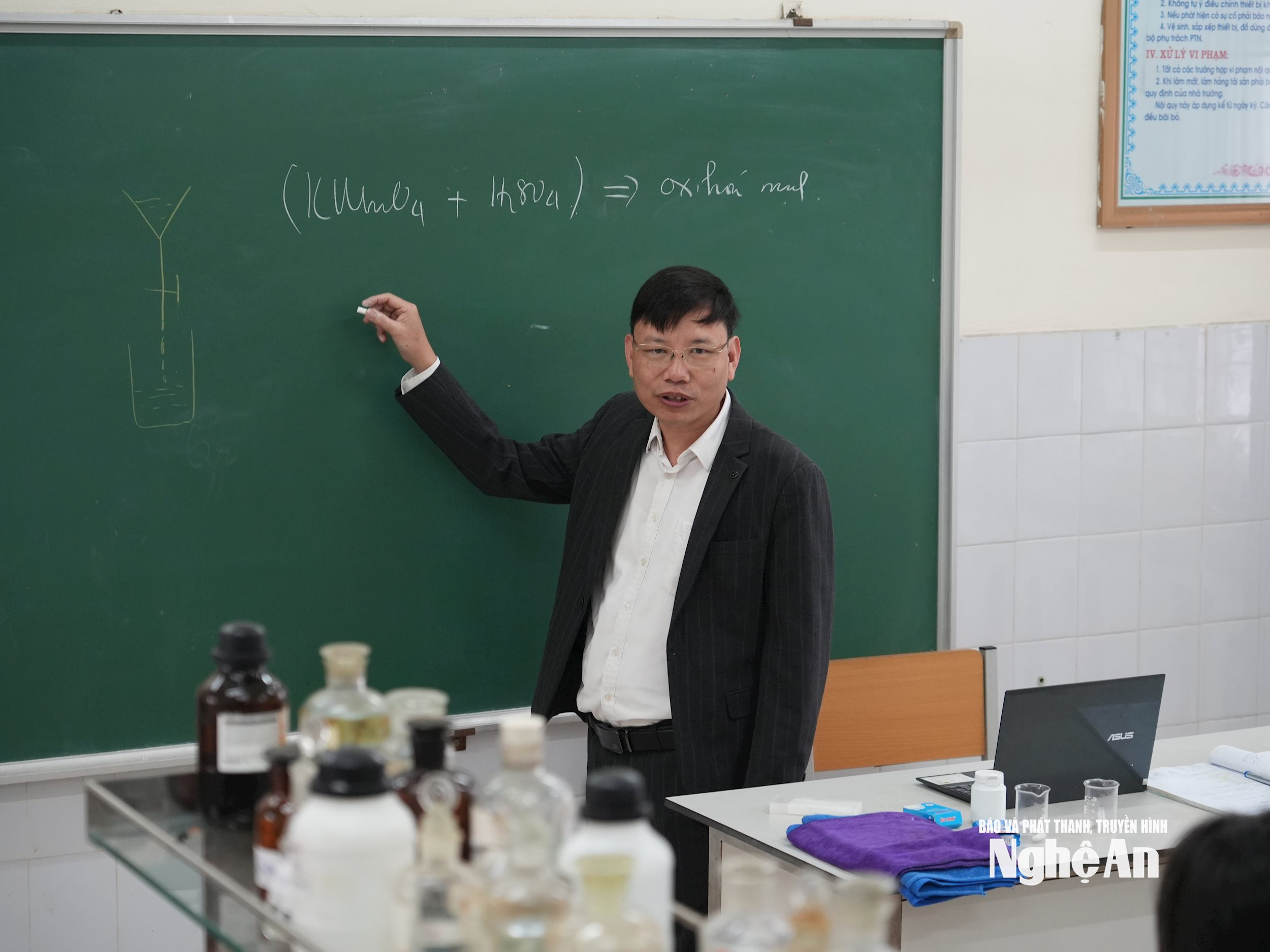
PV:During his years of work, he has published hundreds of prestigious scientific articles domestically and internationally (including dozens listed in the WoS/Scopus database). In addition, he has dedicated more than half of his life to compiling and publishing over 200 textbooks, monographs, and reference books.Of the hundreds of research papers and books you have published, which contribution are you most proud of?.
ProfessorDr. Cao Cự Giác:Throughout my scientific career, every scientific paper or textbook I've published is a "brainchild," a product to which my colleagues and I have dedicated our utmost time and intellect. If I had to choose what I'm most proud of, it would be the journey of realizing modern educational ideas within the global context.
I have always been proud of my years of dedicated research, most notably the integration of Internet of Things (IoT) technology into STEM education. This is not just theory on paper, but an effort to create practical products for Natural Sciences and Chemistry, helping students get hands-on with core technologies in the digital age.
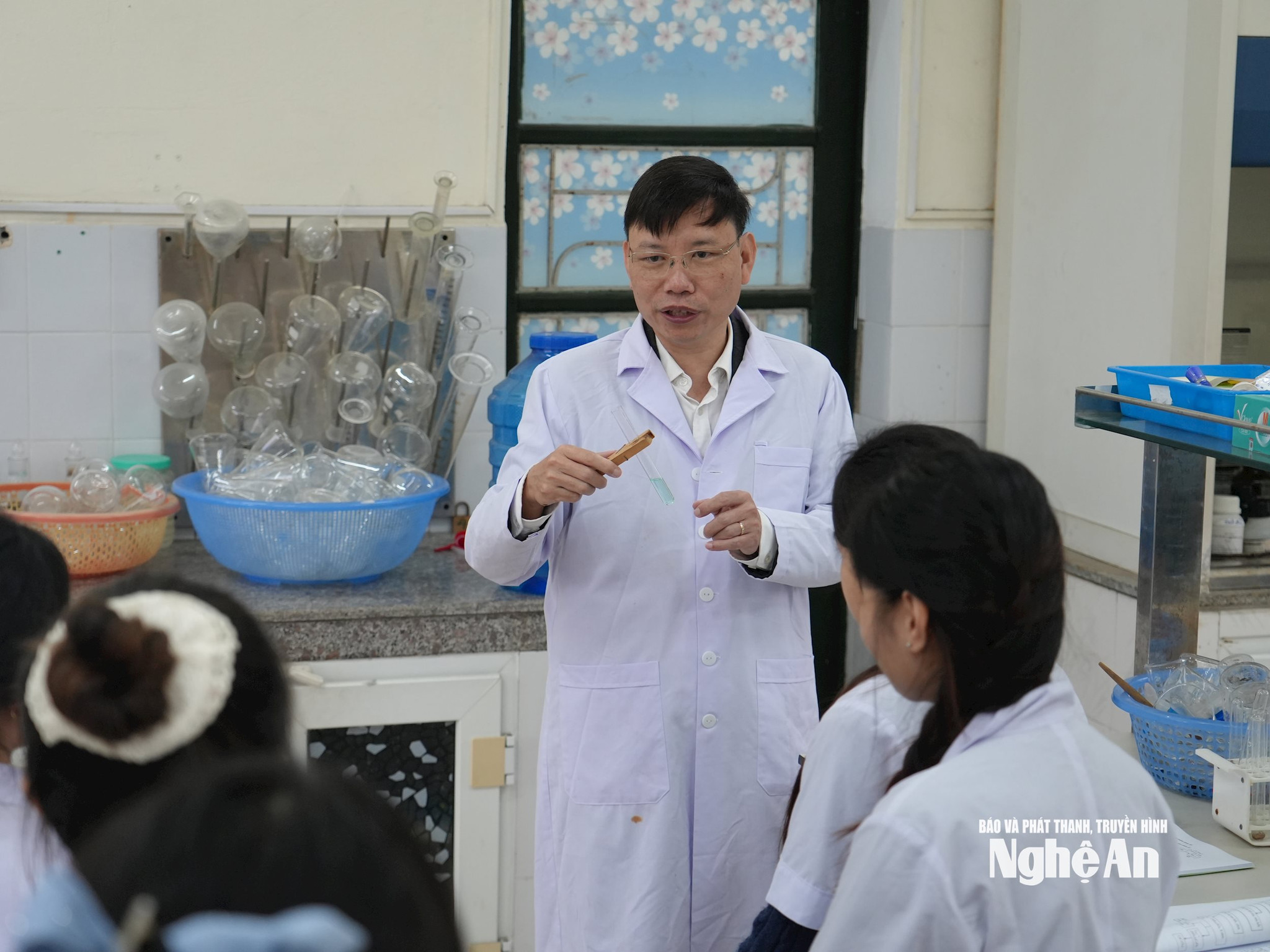
The greatest joy comes when those studies are recognized in prestigious academic arenas, especially when the work is published in a journal.Journal of Chemical Education– a prestigious symbol of the American Chemical Society for over 100 years.
The presence of a Vietnamese intellectual achievement here is not only a testament to the research team's success, but also a confirmation that Vietnamese education can absolutely keep pace with and contribute valuable knowledge to the world.
Knowledge isn't just on paper; it needs to "live" and "breathe" with the students.
PV: textbooksDepartmentnatural scienceand Chemistry textbooks (Creative horizons)The textbooks, which you have compiled as both the General Editor and Editor-in-Chief, have been trusted by many provinces and cities across the country over the years. As the General Editor of the textbooks, could you share some of the pressures you faced during the compilation process?What educational philosophy did the teacher and the team of authors convey in the textbook they assisted?blame andWhat is the most satisfying aspect of this textbook series after more than 5 years of its use in schools?
Prof. Dr. Cao Cự Giác:When I put pen to paper to write books for millions of students, the greatest pressure for me doesn't come from the vast amount of knowledge, but from a nagging question:How can we ensure that letters no longer remain static on paper, but instead 'live' and 'breathe' with children every day?
As Editor-in-Chief, I always stand on a strict line: on one side, the standard, academic rigor; on the other, the closeness and vibrancy of real life. We are not just writing books; we are building a bridge. The philosophy that I and the team of authors steadfastly strive to convey is:Learning is not about memorizing, but about thinking and using knowledge as a key.chemistrySolving life's problems.
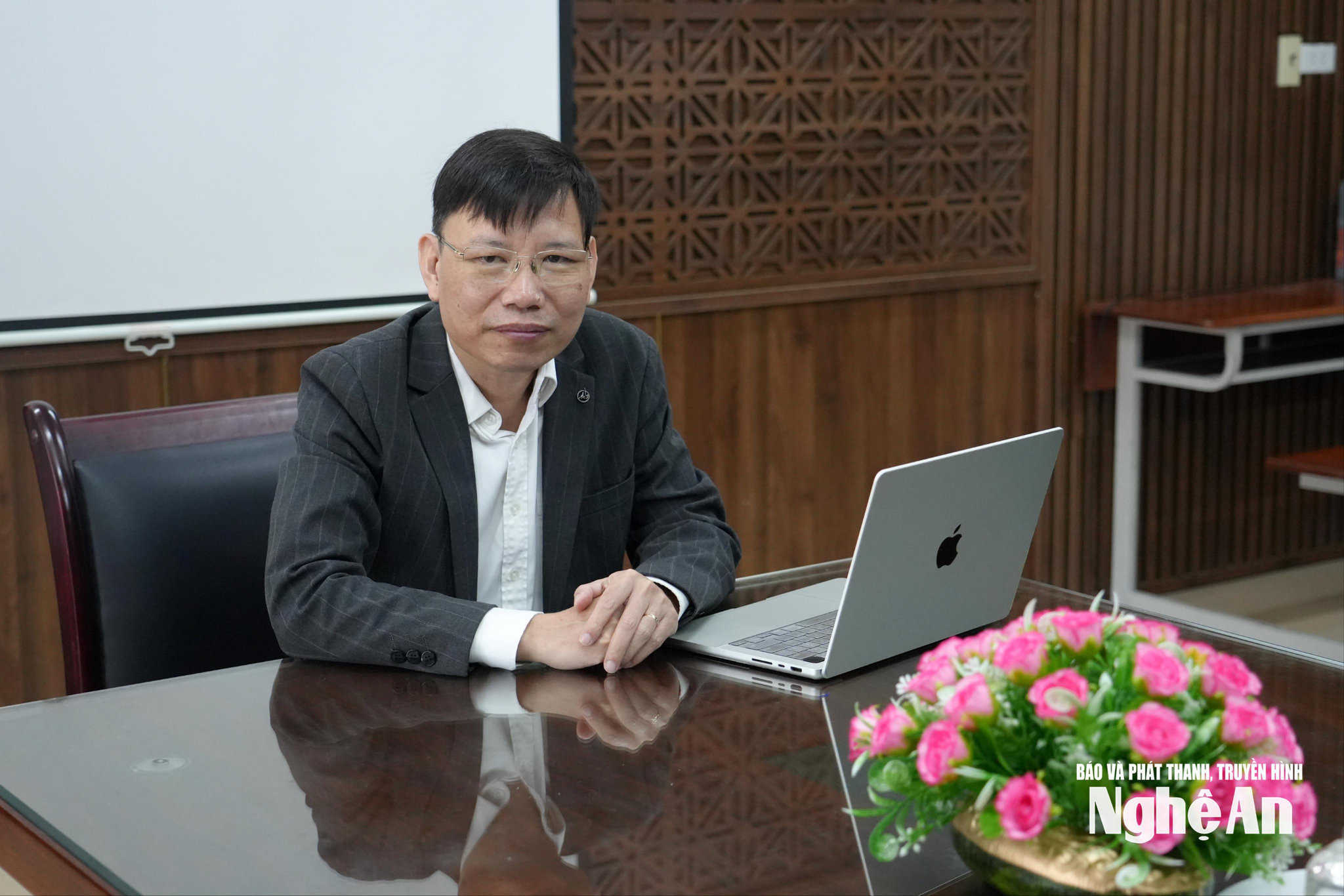
What moves and delights me most after more than five years of the book series being used in schools is seeing that my intellectual creations have not been "forgotten." They have become reliable companions, igniting students' passion for discovery and providing strong support for teachers across the country.
Seeing students become more confident, learn how to self-study, and apply science to understand the world around them – that is the priceless reward, the greatest "sweet fruit" that an educator like me has always longed for.
Prof. Dr. Cao Cự Giác
PV: From 2026, Vietnam will only use one set of textbooks, "Connecting Knowledge with Life." However, in reality, many previous textbooks are still valued and used by teachers and students as reference materials. As we enter a new phase, what core values, in your opinion, should be preserved?The old textbooks will still remain.How are these traditions inherited and further developed in current teaching practices?What are your expectations regarding changes in the teaching and learning of Chemistry and Natural Sciences in the future??
Professor.PhDCao Cu Giac:Textbooks, after all, are not a frozen template but a living entity. Even though from the 2026-2027 school year onwards we will only be using one official set of textbooks, I believe that these "intellectual creations" such asCreative horizonsThey will never lose their value. They will continue to exist quietly but powerfully in the form of valuable reference materials and supplementary perspectives that teachers and students will always cherish.
The core values we inherit are not found in the words themselves, but in...competency-based approachandcreative spiritThere are no limits. These are the foundational building blocks that help teachers confidently break free from authoritarian teaching methods, transforming each lesson into a journey of discovery.
As I enter this new phase, I carry with me great expectations:The change isn't in the book cover, but in the mindset of both the teacher and the student..I yearn to see a generation of students who are no longer intimidated by dry chemistry formulas or abstract natural science laws. Instead, they will embrace them with the curiosity of an explorer, using experiments to understand the world and employing scientific thinking to solve life's challenges.
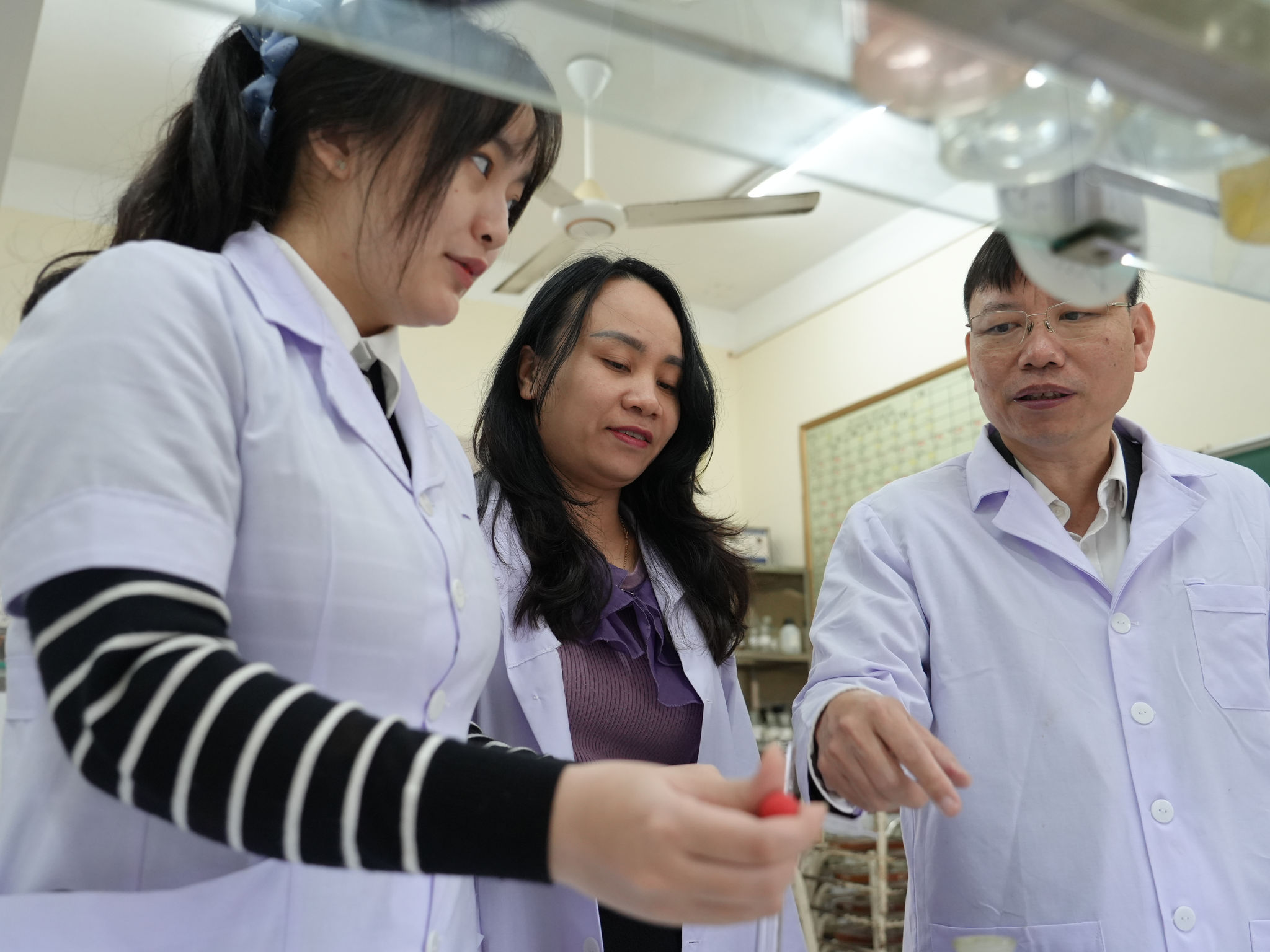
Education is about lighting a fire. And I believe that the fire from these heartfelt textbooks will continue to burn, no matter what stage of Vietnamese educational history we are in.
PV:Sir, in your teaching, you not only impart knowledge but also place special emphasis on cultivating critical thinking skills, character, and abilities in your students. For each student, you have a unique approach and educational philosophy. Could you elaborate on your teaching philosophy and how you apply scientific principles and professional experience to unlock potential, helping students learn better, become more confident, and develop self-learning skills?
Professor.PhDCao Cu Giac:For me, teaching is not just about imparting knowledge, but a journey of intellectual liberation. I always keep this in mind:"Knowledge will eventually be forgotten, but the essence that remains is the method of thinking.”To ignite passion, I turn each lecture into a “intellectual sport”, where the dry laws of chemistry become a lens through which to view life.
I borrowed the principles of thermodynamics to inspire my students:"Let's transform wasted energy into useful energy, because matter is always moving toward a minimum energy level.”For those who are lagging behind, I encourage them using the principles of kinematics:"The reaction rate depends on the slow step.”Because there are no bad learners, only those who don't know how to learn. I even used the Pauli principle to decipher Heraclitus's philosophy:"No one bathes twice in the same river.”.
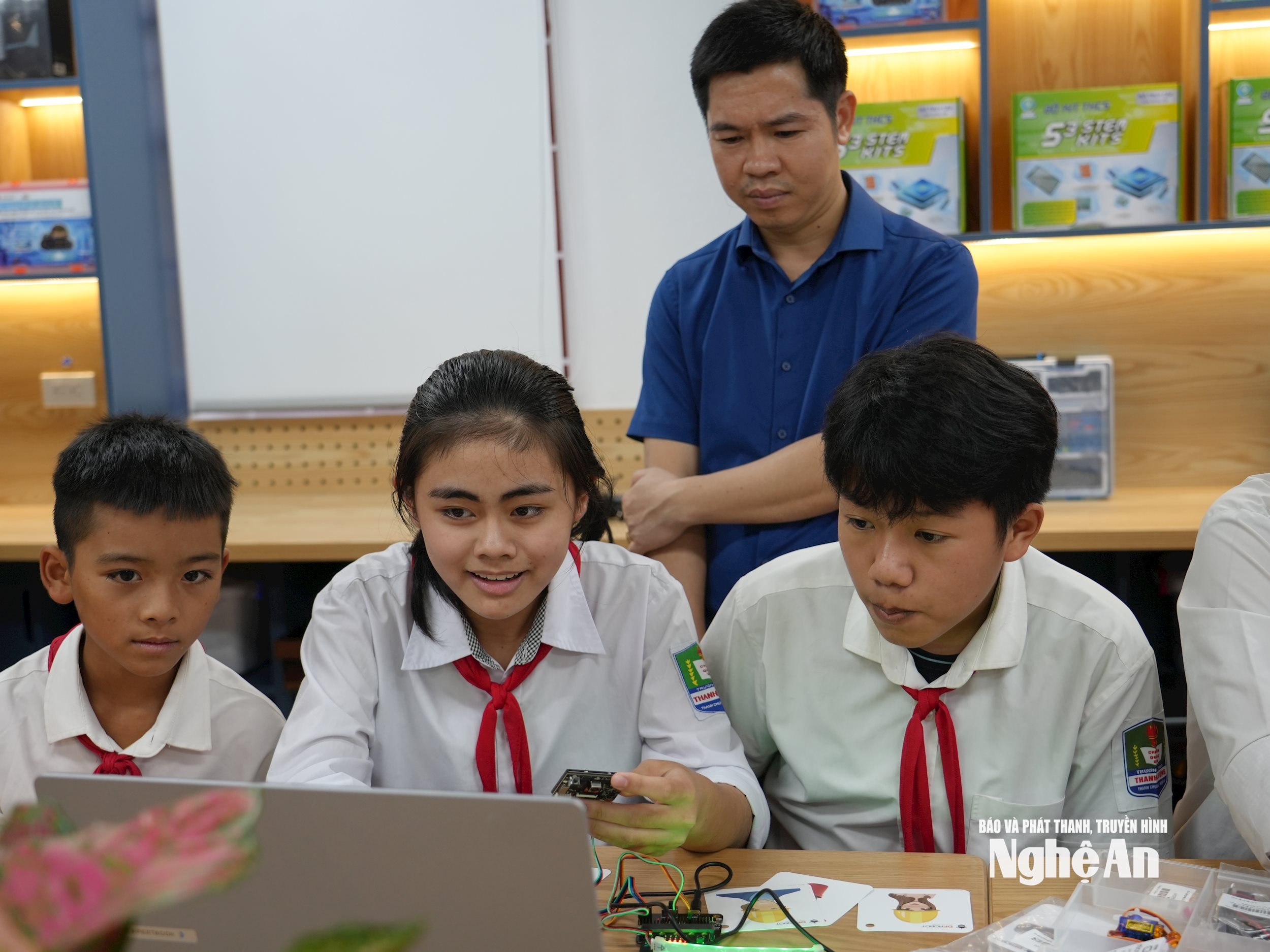
The most challenging task for a teacher is to organize lessons like a dramatic football match, compelling enough to draw students away from their phone screens and into new horizons. When we transform teaching into an art, each class session is no longer a rote learning session, but an explosion of critical thinking and a lifelong desire for self-learning.
Interviewer: Thank you, Professor Cao Cự Giác!


