
Ukrainian hackers threaten to release Kremlin secrets.
Ukrainian hackers claim they will release more emails from Kremlin officials, including a spokesperson for President Vladimir Putin. The emails, whose authenticity has not been verified, reveal Russia's role with separatist forces in Ukraine.
The attack was carried out by Cyber Alliance, a network of hacker groups in Ukraine. This move was in protest against Russia after it instigated a series of conflicts and separatist movements in Ukraine.
In late October, this group launched an attack and released a series of emails allegedly belonging to senior advisors to President Putin.
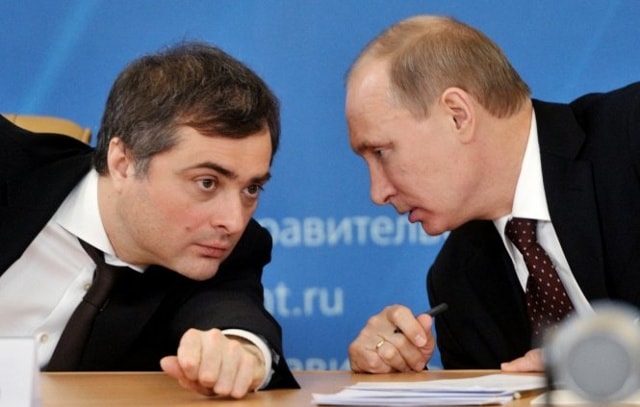 |
| Vladislav Surkov (left), an influential advisor in President Putin's decision-making - Photo: Reuters |
In a private interview with Reuters, two members of the RUH8 group, part of the Cyber Alliance network, said they would not stop as long as the war in eastern Ukraine continues.
“Our friends are holding guns in the trenches. We’re lucky we’re not there; we’re sitting at home, safe and sound with our keyboards. So how could we possibly betray them?” one person said, still wearing a mask to conceal their identity.
"We live in the 21st century, so possessing information, analyzing it, and using it correctly is crucial," this person explained.
Early on November 3rd, Cyber Alliance continued to release a series of other emails that the group claims were taken from an account linked to Vladislav Surkov, an influential advisor in President Putin's decision-making.
The hackers from the RUH8 group said they would release more of Surkov's emails within a week, and also revealed that they possess information related to Kremlin spokesman Dmitry Peskov, which they will release later.
If the leaked emails are authentic, they could reveal the close relationship between Surkov and the separatists. Furthermore, they could shed light on the plans Russia used to stir up unrest in Ukraine.
An email sent to Surkov in April 2015 by a Russian official proposed the formation of a civil society group in the Kharkiv region of Ukraine to “mobilize dissent, offer political criticism of the Kiev government,” and seek greater autonomy.
Another email, sent in December 2015, contained a list and resumes of candidates for leadership positions in rebel-held territory in Luhansk, further raising questions about the Kremlin's close involvement in the internal politics of the self-proclaimed separatist government in Ukraine.
In February 2016, Alexander Zakharchenko, the head of the self-proclaimed Donetsk People's Republic (DPR), thanked Surkov for his help in building an independent state in the Donbass region of eastern Ukraine.
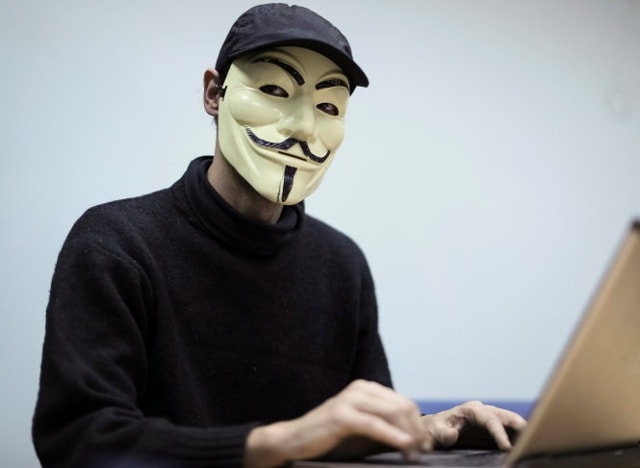 |
| A hacker claiming to be from the Ukrainian group RUH8 wore a mask while being interviewed by Reuters - Photo: Reuters |
"This process could not have been accomplished without the help and support of the Russian people, the leaders, and especially you," the email stated.
The Russian government's press office has not commented on the matter. Previously, the office stated that Surkov did not use email.
The Russian government has consistently denied accusations from Kyiv and NATO that it is playing an active role in separatism and conflict that has killed nearly 10,000 people since 2014.
In an article on Medium, the Atlantic Council's digital research lab stated that evidence suggests Surkov's leaked emails are authentic. However, with over 3,500 emails, it is difficult to verify the authenticity of each individual content.
The hackers from the RUH8 group said they handed over information to Ukrainian security agencies, but did not receive any financial or technical support from them or from Western countries.
"Ukrainian hacker groups are capable of using advanced technology, so they don't need help from the US or other NATO countries," this person said.
According to TTO


