
The US Navy intercepted the Iranian oil tanker M/V Sevan in the Arabian Sea.
The destroyer USS Pinckney successfully intercepted the M/V Sevan oil tanker, part of Iran's shadow shipping network, marking the 37th vessel dealt with since the energy blockade began.
Early on the morning of April 25th, US Navy forces successfully intercepted the Iranian oil tanker M/V Sevan while it was transiting the Arabian Sea. This operation was part of the larger-scale energy blockade that the US is imposing on Tehran.
Details of the USS Pinckney destroyer's interception operation.
The approach was made by helicopter units launched from the USS Pinckney. After approaching and making a request, the M/V Sevan was forced to change course, beginning its journey back to Iran under close surveillance by authorities. The USS Pinckney is an Arleigh Burke-class guided missile destroyer, equipped with the advanced Aegis radar system and specialized helicopter units for patrol, control, and maritime security missions.
The U.S. Central Command (CENTCOM) confirmed the operation was safe, with no gunfire or casualties. The crew of the M/V Sevan demonstrated a cooperative attitude and did not resist throughout the forced turning process.
Tighten the blockade on the dark fleet network.
According to a report from CENTCOM, the M/V Sevan is one of 19 ships that the US Treasury Department added to its sanctions list on April 24. The ship is accused of transporting billions of dollars worth of petroleum products, including propane and butane, to foreign customers.
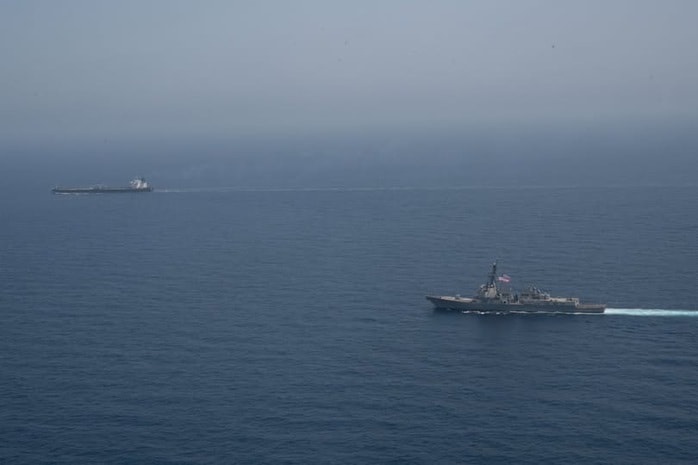
Since the blockade officially took effect on April 13, a total of 37 ships have been forced to divert by US forces. The core objective of this operation is to cut off Iran's foreign exchange earnings from energy exports, which Washington considers the sole source of funding for Tehran's military operations and those of its proxy forces in the region.
The M/V Sevan has been identified as a member of the "shadow fleet"—a group of aging ships that frequently employ sophisticated tactics such as flying false flags, disabling automatic identification signals (AIS), or conducting short-transfers (STS) at sea to circumvent international sanctions. Military experts assess that maintaining a direct naval presence in key waters such as the Indian Ocean and the Arabian Sea has proven more effective than previous sanctions that were merely on paper.
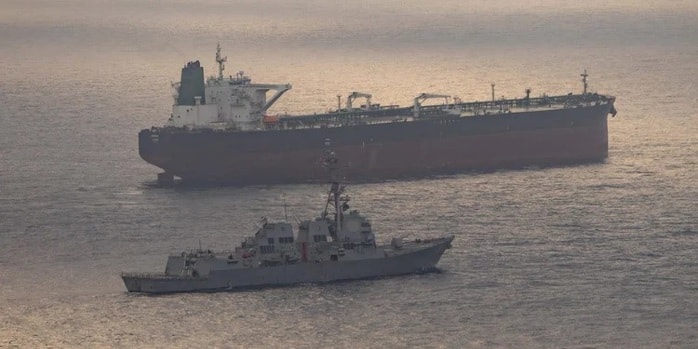
Increased pressure on vital shipping lanes.
The maritime security situation in the Middle East is at a critical level. In addition to intercepting oil tankers, the US Navy is also actively deploying operations to clear mines laid by Iran in the Strait of Hormuz. This is one of the world's most important sea lanes, transporting the majority of crude oil from the Persian Gulf to international markets.
The blockade of the Strait of Hormuz, which restricts most shipping, not only puts direct pressure on the Iranian economy but also creates significant volatility in the global energy market. The US administration insists it will maintain these coercive measures until its strategic security objectives in the region are achieved.


