Two generals from Nghe An in Chinese history
Content:Tran Manh Cuong |Design:Huu Quan
• July 22, 2026
In the history of resistance against the Ming invaders in the early 15th century, Nguyen Canh Chan and Dang Tat were two major pillars of the Later Tran Dynasty. One was from Nghe An, skilled in strategy; the other from Ha Tinh, talented in tactics. Both served Emperor Gian Dinh, contributing to the resounding victory at Bo Co, striking fear into the Ming army. However, few people notice that, before becoming leaders of the resistance against the Ming, their names had already appeared in a very noteworthy record of Chinese history, namely the Viet Kieu Thu by Ly Van Phuong.

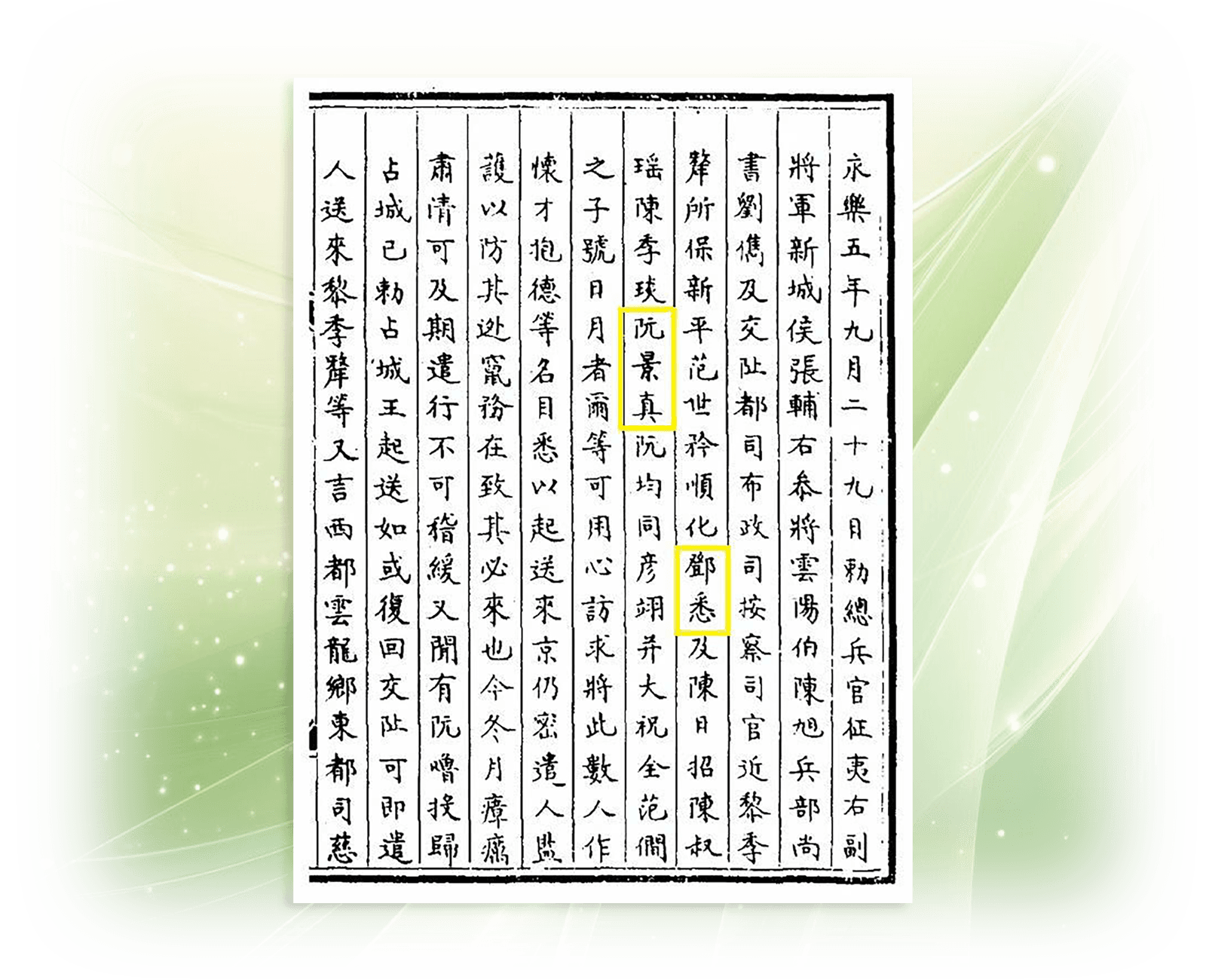
In the book "Viet Kieu Thu," Ly Van Phuong recorded the imperial decree issued by Emperor Ming Chengzu on September 29th, the 5th year of Yongle (1407), addressed to Zhang Fu, Chen Xu, Liu Jun, and other Ming officials who were occupying our country. This decree requested the capture of several talented and influential figures from Dai Viet to be brought to the Ming capital. The original text is as follows:
“近黎季所保新平范世矜、顺化邓悉及陈日招、陈叔瑶、陈季琰、阮景真、阮均同、彦翊,并大祝全、范僩之子号日月者,尔等可用心访求,将此数人作怀才抱德等名目,悉以起送来京,仍密遣人监护,以防其逃窜,务在致其必来也..."
Translation: Recently, Le Quy Ly vouched for Pham The Cang from Tan Binh, Dang Tat from Thuan Hoa, along with Tran Nhat Chieu, Tran Thuc Dao, Tran Quy Diem, Nguyen Canh Chan, Nguyen Quan Dong, Nhan Duc, and several others. You must wholeheartedly search for them, using the pretext of "talent and virtue" to bring them all back to the capital, and secretly assign people to guard them to prevent them from escaping, ensuring that they will definitely come.
This short passage is enough to reveal the true nature of the Ming dynasty's policy. It's not a call to "recruit talented individuals," as phrases like "devotedly search," "secretly monitor," "prevent escape," and "must come" indicate a warrant for their capture. The Ming wanted to gather talented, reputable individuals capable of rallying the people and bring them to Beijing, both to control them and to sever the leadership of any rebellions.
More significantly, that list was supposedly "guaranteed" by Lê Quý Ly, also known as Hồ Quý Ly. At that time, Hồ Quý Ly and his son had already been captured by the Ming army. Regardless of the circumstances, allowing the Ming dynasty to obtain a list of important figures in Đại Việt had very serious consequences. It helped the invaders identify individuals they needed to bribe, monitor, or eliminate.
In that list, the names Nguyen Canh Chan and Dang Tat stand out particularly. Shortly afterwards, they became two key figures in the Later Tran Dynasty's rebellion against the Ming. This shows that the Ming Dynasty was not mistaken: they had quickly recognized these individuals as dangerous to their colonial policy.
The Ming Dynasty not only invaded Dai Viet with swords and spears, but also actively hunted down, controlled, and brought talented individuals from our country to Beijing. This was a sinister tactic aimed at eliminating the leadership of the resistance and hollowing out the nation's resistance from within.
But history also proves something else: The Ming Dynasty could name them in imperial decrees, could hunt them down, but could not subdue them.

Nguyen Canh Chan was born in 1355 in Ngoc Son village. He passed the doctoral examination in the Thai Hoc examination in 1384 during the reign of Tran Phe De, and was subsequently appointed to the Privy Council of the Tran dynasty, where crucial national affairs were discussed. From a scholarly intellectual, he became a visionary military strategist, serving as a military advisor in the Privy Council, and later as the An Phu Su (Governor) of Hoa Chau and Thang Hoa.
Dang Tat was born in 1357 in Ta Thien Loc village. He passed the imperial examination during the Tran dynasty and was appointed as the Prefect of Hoa Chau. According to family genealogies, the Dang and Nguyen families had a close relationship from before, so Dang Tat and Nguyen Canh Chan became even closer and gained great prestige in the region.
When the Ho Dynasty collapsed in 1407, Dai Viet fell under the brutal rule of the Ming invaders. In November of that year, Tran Ngoi declared himself emperor in Mo Do, becoming Emperor Gian Dinh, establishing the Later Tran Dynasty. Initially, their forces were weak and they were defeated by the Ming army, forcing them to flee to Nghe An. However, when Nguyen Canh Chan, Dang Tat, and other patriotic generals joined forces, the Later Tran Dynasty began to grow significantly stronger.
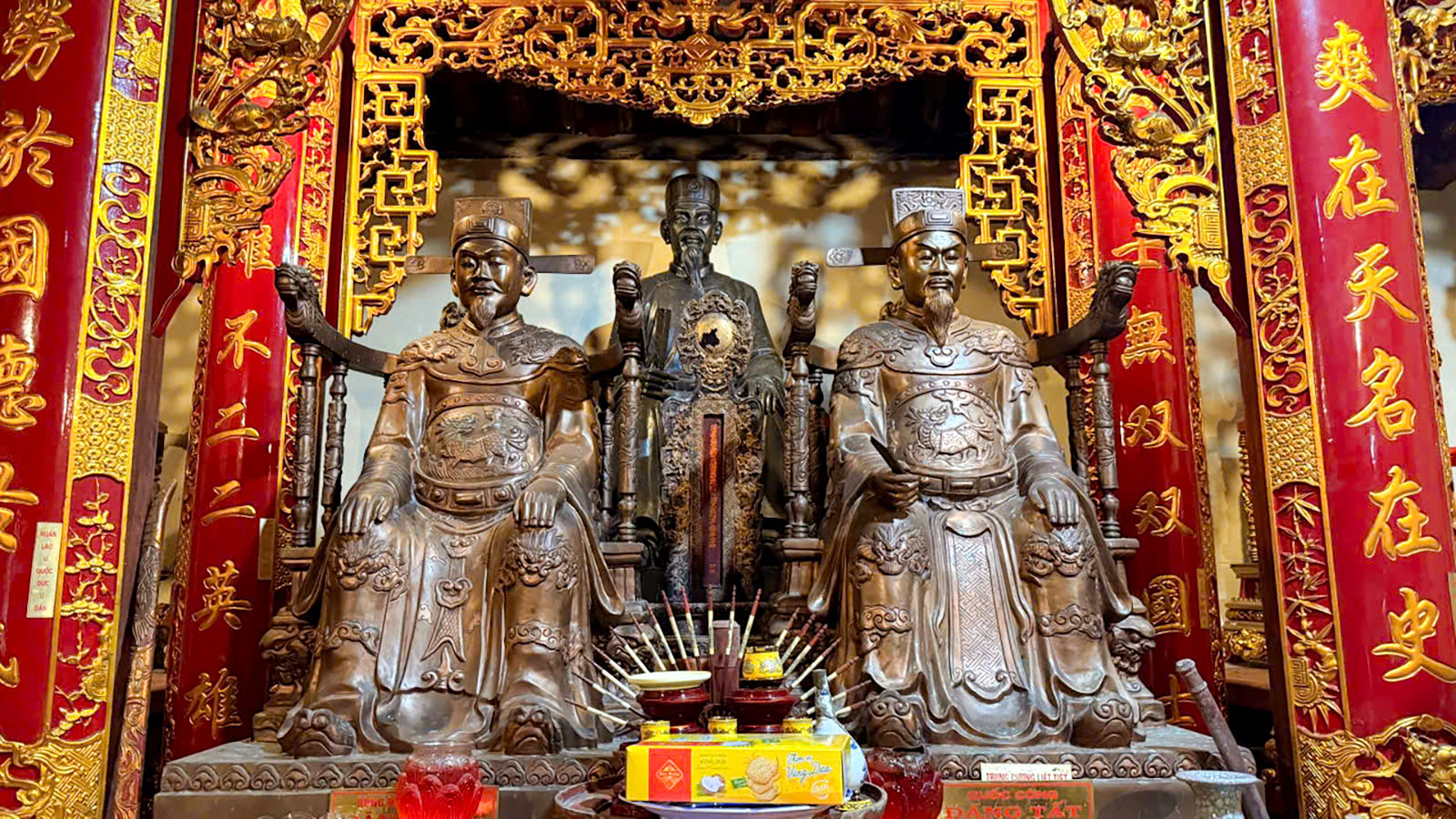
Emperor Giản Định appointed Đặng Tất as Duke of Quốc công and Nguyễn Cảnh Chân as Deputy Commander of the Privy Council, advising on military affairs. From then on, Đặng Tất often directly commanded troops in battle; Nguyễn Cảnh Chân played the role of strategist, planning military tactics. One was the right-hand man in battle, the other the strategic mind. This combination created the greatest impetus for the Later Trần Dynasty in the early years of the resistance against the Ming.
The climax was the Battle of Bo Co at the end of 1408. The Later Tran army mobilized forces from Thanh Hoa to Thuan Hoa, advancing to the Truong Yen region, attacking many important positions, and threatening the outskirts of Dong Quan. The Ming dynasty had to send Moc Thanh and Luu Tuan with troops from Beijing to provide reinforcements.
On December 30, 1408, the Later Tran army launched a major attack at Bo Co Wharf, in what is now Nam Dinh - Ninh Binh province, achieving a resounding victory. Many high-ranking Ming generals were killed by our army, and Moc Thanh had to lead his remaining troops to flee into Co Long citadel.
The Battle of Bo Co was a brilliant flash of light in the early stages of the resistance against the Ming. It proved that the Ming army was not invincible, and at the same time rekindled the belief that although Dai Viet had lost its country, it had not lost its loyal and righteous people.
Judging from the records of the Vietnamese royal court, the victory at Bo Co takes on even greater significance. Those whom the Ming dynasty had wanted to capture and bring to Beijing ultimately remained in Vietnam, leading troops to inflict a crushing defeat on the Ming army. This was the most resolute response from Nguyen Canh Chan and Dang Tat to the Ming dynasty's scheme to eliminate the talented individuals of Dai Viet.

After Bo Co, Emperor Gian Dinh wanted to seize the opportunity to attack Dong Quan immediately. Dang Tat and Nguyen Canh Chan advocated fighting off the remaining Ming troops, consolidating their positions before advancing. From a military perspective, this was a cautious choice. Dong Quan was the center of the Ming occupation, a fortified city; advancing too hastily when the rear was not secure, supplies were insufficient, and the cities were not yet isolated, victory could turn into a risky undertaking.
But it was this difference in strategy that sowed seeds of suspicion. In 1409, when Emperor Giản Định was stationed in Hoàng Giang, his attendant Nguyễn Quỹ and student Nguyễn Mộng Trang secretly reported that Nguyễn Cảnh Chân and Đặng Tất were wielding absolute power in appointing and dismissing officials. Emperor Giản Định, heeding the slander, summoned the two men and had them executed.
The Complete Annals of Dai Viet record:"The king summoned the two men and strangled Tất to death."."He ran ashore, and the strongman chased after him and killed him."This was one of the most heartbreaking tragedies of the Later Tran Dynasty. Two men, once hunted by the Ming Dynasty to be brought to Beijing, and once the great hope of the resistance, did not die at the hands of the enemy but died due to the suspicion of the very king they had wholeheartedly served.
Historian Ngo Si Lien offered a very harsh critique. He argued that Emperor Gian Dinh had the talent of Dang Tat and his son as generals, and Canh Chan and his son as strategists, enough to restore the dynasty and establish a new era. Yet, simply because he listened to the slander of the eunuchs, the emperor simultaneously killed two of his loyal ministers, so how could he possibly succeed?
The deaths of Nguyen Canh Chan and Dang Tat were not merely personal losses. They were a fatal blow to the chances of restoration for the Later Tran Dynasty. A dynasty desperately needing its most talented individuals had single-handedly severed its two greatest pillars. If the Ming Dynasty intended to capture them to suppress resistance, the internal suspicion within the Later Tran Dynasty accomplished what the enemy desired.
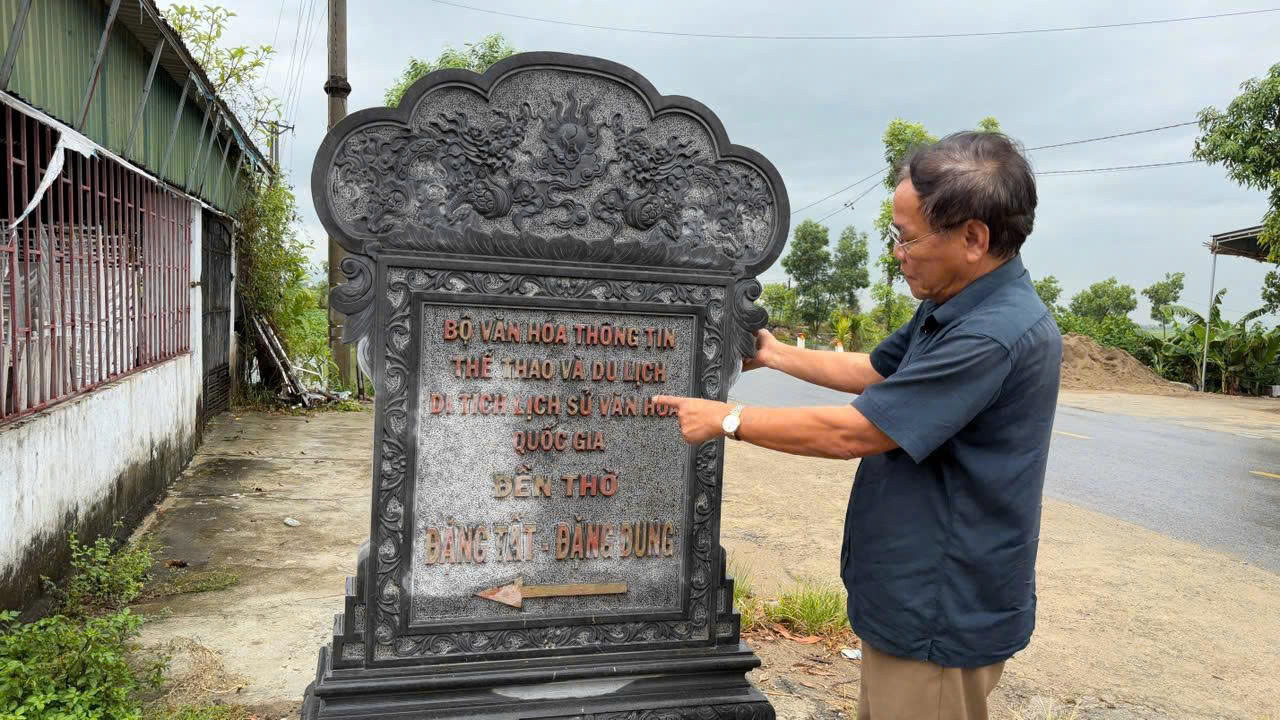

But that line of loyalty did not die out. After the unjust deaths of Nguyen Canh Chan and Dang Tat, their two sons, Nguyen Canh Di and Dang Dung, rose up again. They led troops to escort Tran Quy Khoang to the throne, who became Trung Quang Emperor, marking the end of the Later Tran Dynasty. The Complete Annals of Dai Viet record:
“On the 17th of March, the king ascended the throne in Chi La, changing the reign name to Trung Quang. He appointed Nguyen Suy as Grand Tutor, Nguyen Canh Di as Grand Guardian, Dang Dung as Deputy Minister, and Nguyen Chuong as Commander. Emperor Gian Dinh defended Ngu Thien citadel against the Ming army. Suy and his group launched a surprise attack and captured them.”
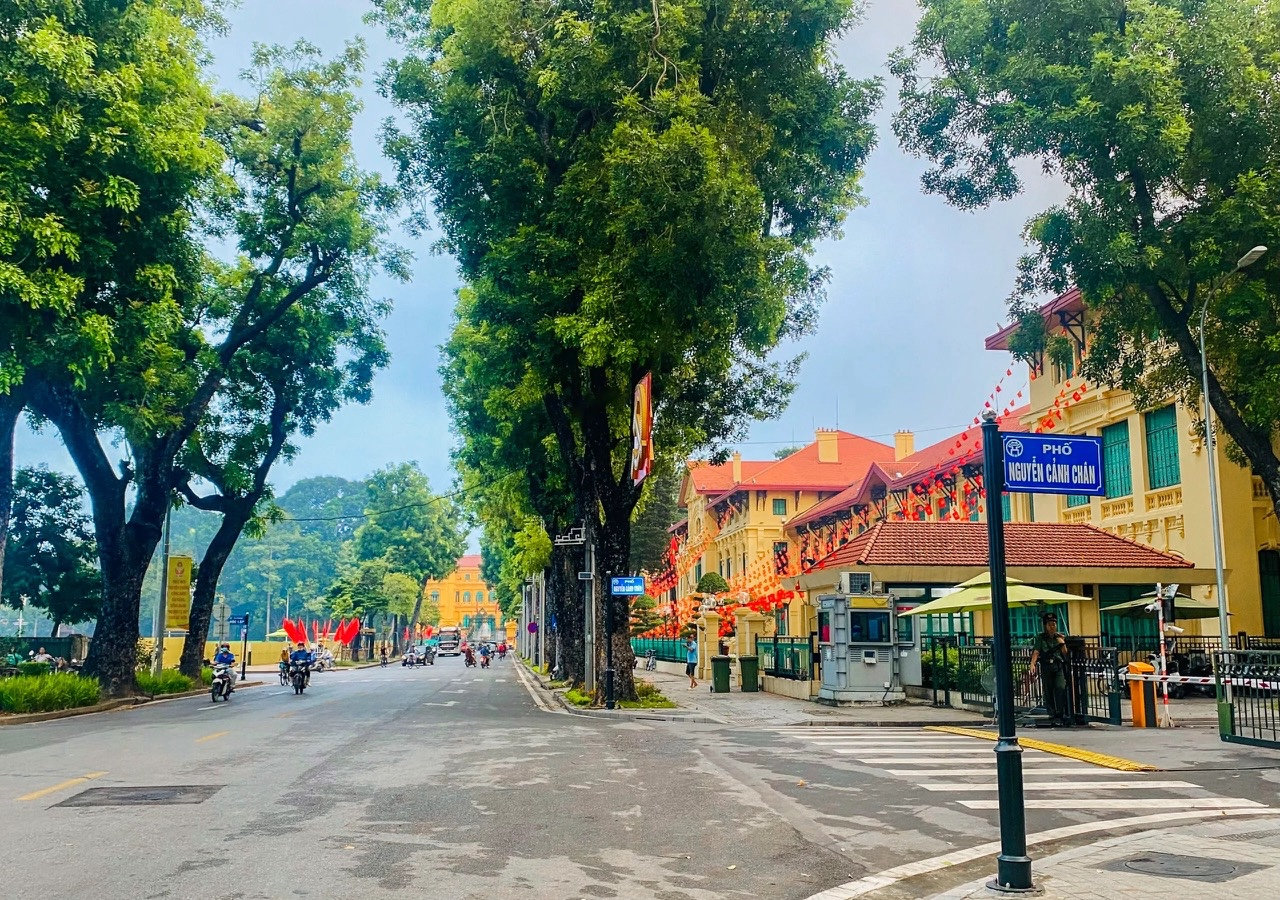
Nguyen Canh Di was appointed Grand Tutor, and Dang Dung was appointed Minister of State. This shows that they were not only sons burdened with the revenge for their father's death, but also true pillars of the Trung Quang dynasty. Their father was unjustly killed, yet the sons remained loyal to their country. This is what creates the tragic beauty of the Nguyen Canh and Dang families in the history of the nation during the resistance against the Ming invasion.
In 1410, Emperor Trùng Quang, along with Nguyễn Cảnh Dị, advanced to La Wharf and Hạ Hồng, defeating the Ming army, then proceeded to Bình Than, burning almost all of the enemy's ships and camps. News of the victory spread, and heroes from many places responded. Despite their limited forces, these battles were not only of military value but also kept the banner of the Later Trần dynasty alive. By 1413, when the situation had completely tilted in favor of the Ming army, Nguyễn Cảnh Dị and Đặng Dung continued to fight. The Đại Việt sử ký toàn thư (Complete History of Đại Việt) records the final, fierce section:
“In November, Nguyen Canh Di and Dang Dung were captured alive by Zhang Fu of the Ming dynasty. Canh Di immediately cursed Fu to his face: 'I intended to kill you, but you captured me instead,' and kept cursing Fu. Fu was furious, killed Canh Di, and ate his liver. The king fled to Lao Qua. Fu sent men to hunt him down and brought him to the army's gate. The people of Thuan Hoa all surrendered. Thus, the Tran dynasty fell.”
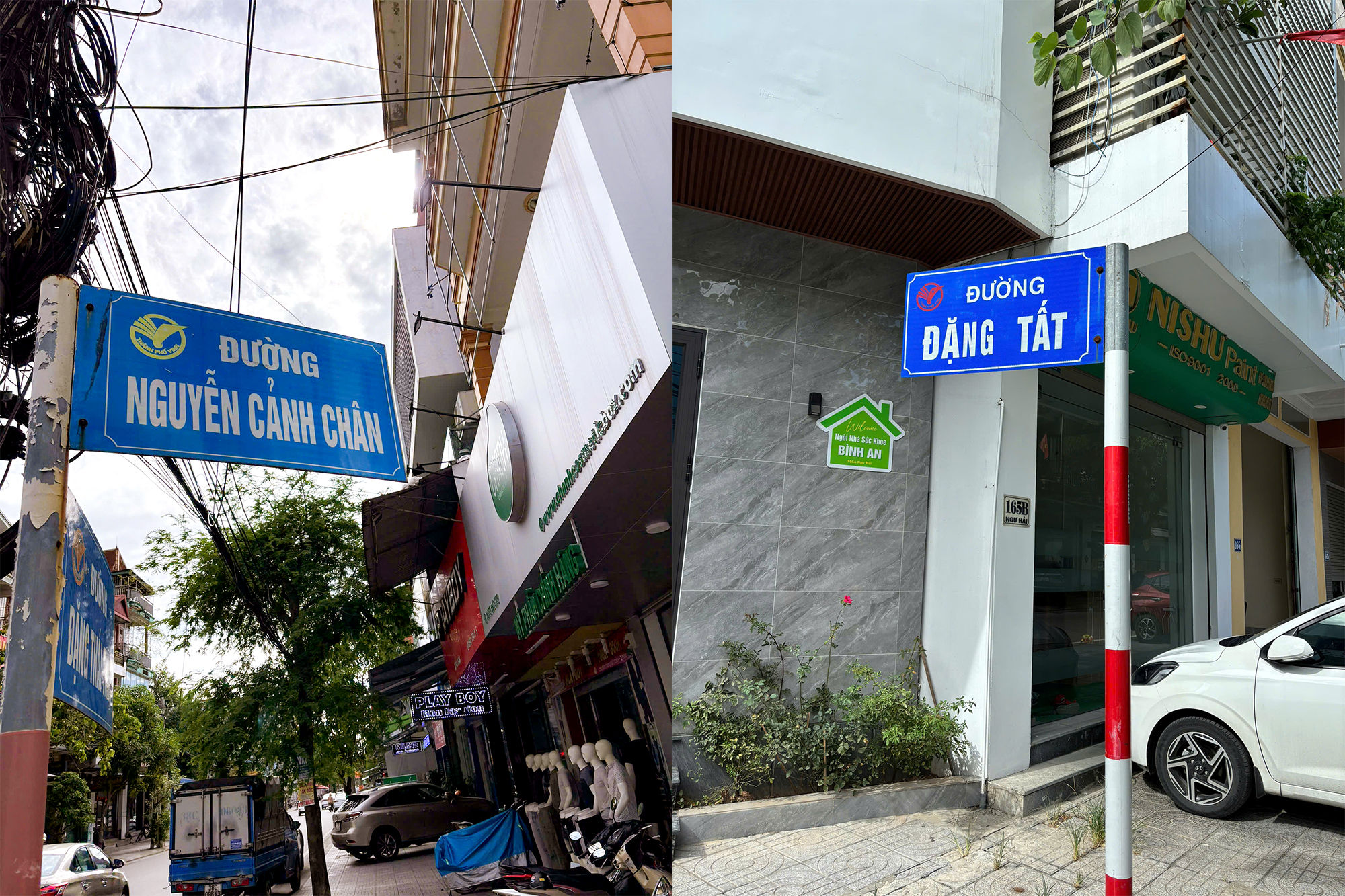
Nguyen Canh Di's death was tragic but heroic. Dang Dung, in historical memory, is a hero associated with unwavering loyalty, the pain of the times, and an indomitable spirit in the face of the Ming army. These two sons truly followed in their father's footsteps: the father fought against the Ming, the son continued the fight; the father fell for the nation's destiny, the son rose again for the nation's destiny.
After the Lam Son resistance movement achieved complete victory in 1428, King Le Thai To posthumously bestowed upon Dang Tat and Nguyen Canh Chan eight golden words: "Loyal and steadfast – Loyal and filial son." This was not only a tribute to the two deceased, but also a restoration of historical justice for those who had kept the flame of resistance against the Ming dynasty burning during the early days of national subjugation.
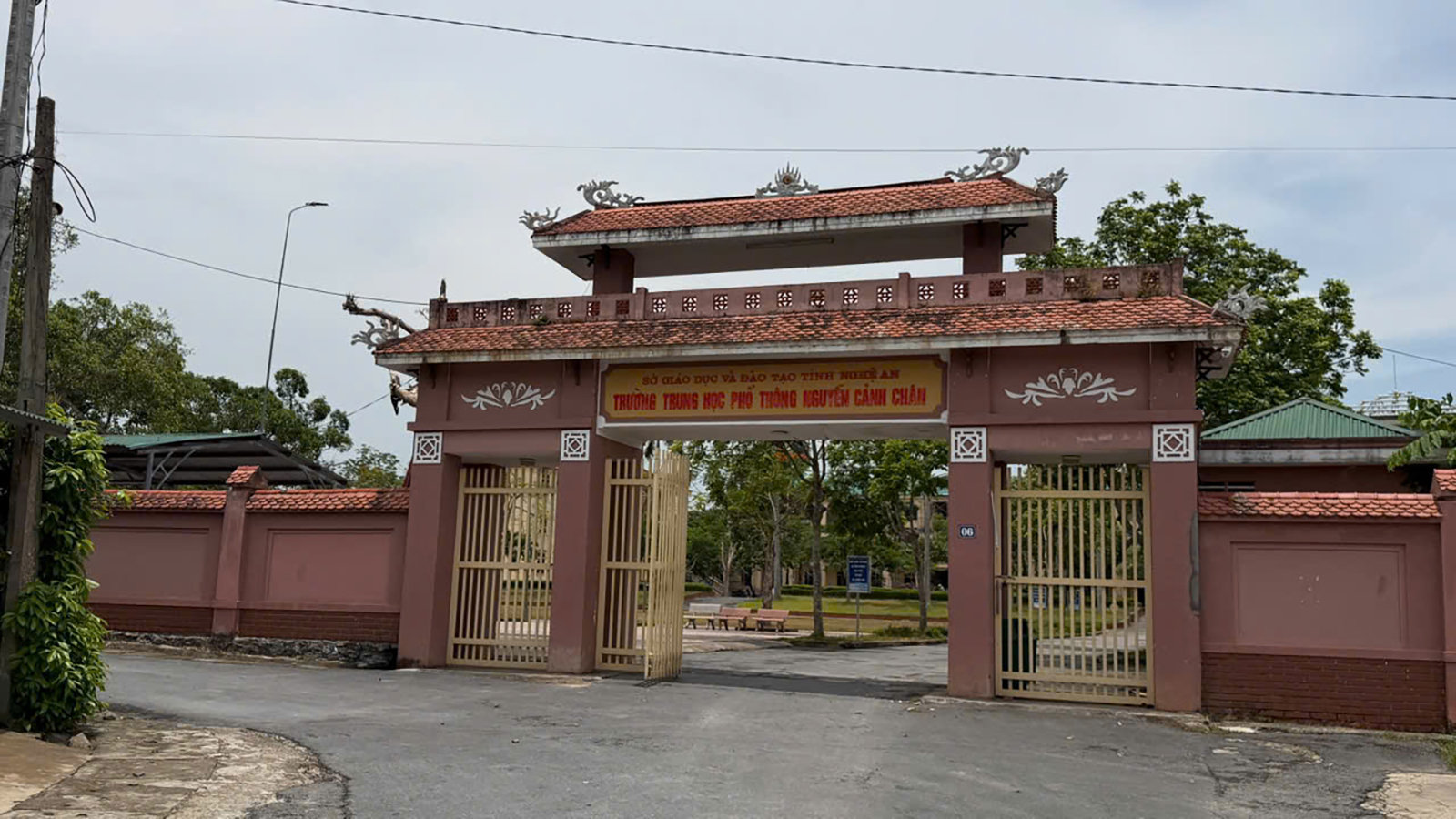
Looking back at the passage in the Viet Kieu Thu, the story of Nguyen Canh Chan and Dang Tat becomes even more remarkable. The Ming Dynasty had once wanted to bring them to Beijing under the pretext of their "talent and virtue." But they did not follow that path. They remained in Dai Viet, supported the Later Tran Dynasty, led troops to fight the enemy, and achieved the glorious victory at Bo Co. After them, their two sons, Nguyen Canh Di and Dang Dung, continued their father's legacy, keeping the flame of resistance burning until the very end.
The Ming Dynasty could seize fortresses, establish a colonial administration, and issue decrees to hunt down talented individuals from Dai Viet and bring them to Beijing for house arrest. But there was one thing they could not seize: the integrity of those who placed their country above their own lives, and the two heroes Nguyen Canh Chan and Dang Tat are the clearest examples of this.
The four heroes: Nguyen Canh Chan - Nguyen Canh Di, Dang Tat - Dang Dung could not save the Tran dynasty from collapse, but they saved the honor of the era. They could not retain the throne, but they preserved the integrity of Dai Viet in the face of the invading Ming army.