
Hakeem Jeffries and the historic turning point on Capitol Hill
On November 18, Democratic members of the U.S. House of Representatives nominated Hakeem Jeffries as their candidate for Speaker of the House for the 120th Congress. With 251 votes in favor and 11 against, the 56-year-old politician moved closer to becoming the first African American to hold this position. This event not only marks a personal milestone for Jeffries but also reflects profound shifts within the Democratic Party and the American political landscape at the end of President Donald Trump's term.
The Democratic Party's new strategic position and the nomination vote.
The Democratic Party's victory in the midterm elections in early November 2026 reversed the balance of power in the House of Representatives, paving the way for the party to regain control of the legislature and bringing Hakeem Jeffries closer to the Speaker's gavel. In the closed-door vote on November 18th, both re-elected and newly elected members participated, and Jeffries' overwhelming support with 251 votes in favor demonstrated his dominant position and significant influence within the Democratic Party after years of leadership.
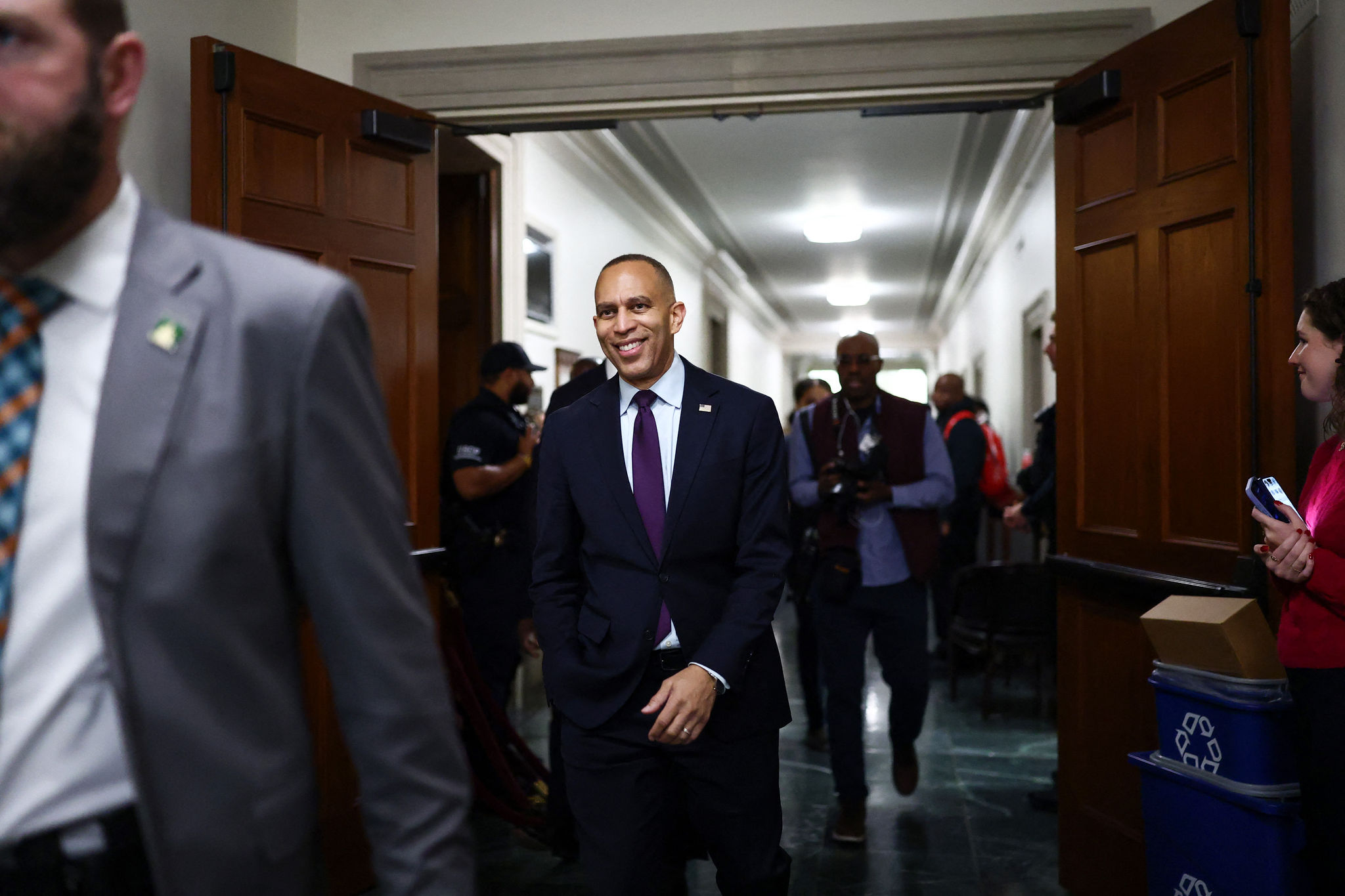
Since succeeding Nancy Pelosi as minority leader in 2022 and becoming the first African American to lead a political party in Congress, Jeffries has gradually developed a cautious, disciplined, yet astute leadership style. During the 118th Congress, when the Democratic Party was still in the minority, Hakeem Jeffries played a key role in numerous bipartisan agreements – from addressing the public debt crisis under the Fiscal Responsibility Act of 2023 to navigating the internal turmoil within the Republican Party following the impeachment of former Speaker Kevin McCarthy in October 2023. In that context, he helped push through budget packages to prevent a government shutdown, reauthorized the FISA monitoring act, and directed the Democrats to postpone the impeachment motion against House Speaker Mike Johnson in 2024. Beyond Congress, he is also a major fundraiser for the party through the Democratic Congressional Campaign Committee (DCCC) and the House Majority PAC.
Entering the 119th Congress, as the Democratic Party continued to face a second term under President Donald Trump, Jeffries formulated a counter-strategy that combined legal and budgetary measures with a display of congressional resilience. In early February 2025, House Minority Leader Hakeem Jeffries announced a 10-point plan for the Democratic Party to counter the Trump administration's federal cuts and restructuring, including preventing unauthorized interference with the Treasury Department's payment system, blocking spending freezes, and pursuing legal action. In April 2025, Jeffries and Senator Cory Booker staged a sit-in protest lasting over 12 hours on the Capitol steps against cuts to healthcare and social security programs. He set a record for speaking continuously for 8 hours and 44 minutes to oppose the Republican Party's large tax and spending bill.One Big Beautiful Bill ActHe will run for Speaker of the House in July 2025, and persistently focus on extending the ACA health insurance tax credit throughout the 43-day government shutdown in 2025 before bringing the bill to extend the health insurance subsidy through the House in January 2026. This accumulation of experience allows him to enter the race for Speaker of the House with the mindset of someone accustomed to high pressure.
Courage from Brooklyn Street to Capitol Hill
Born in 1970 in Brooklyn, Hakeem Sekou Jeffries grew up in the Crown Heights neighborhood amidst the turbulent era of street culture, the rise of rap music, and complex social changes in New York. He was raised in a family where his father was a state addiction counselor and his mother a social worker, where discipline and a strong emphasis on education were paramount, with his father's principle being that, regardless of career path, one must at least earn a master's degree.
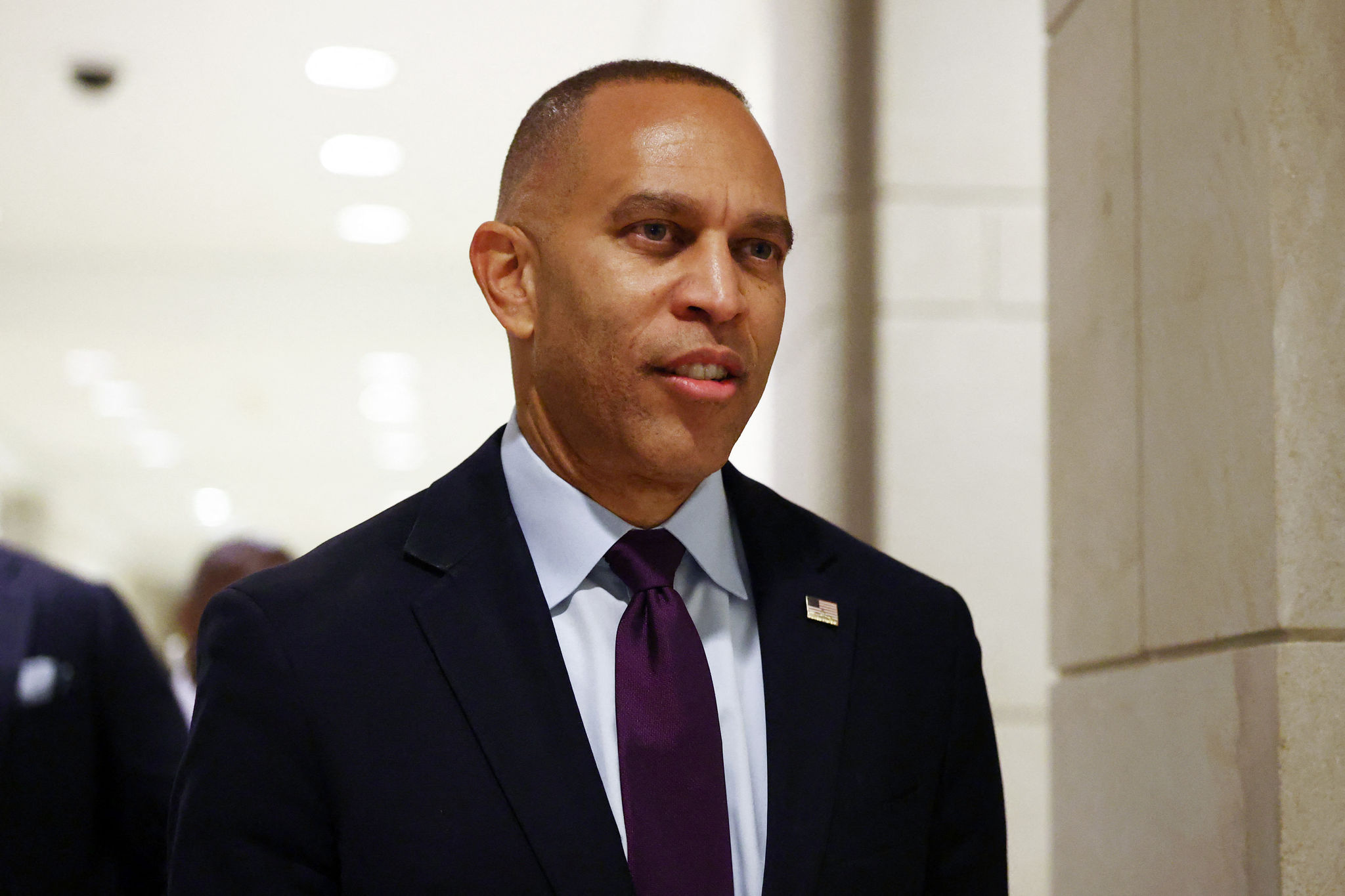
From a young boy in a ceremonial robe and white gloves delivering the welcome address at Cornerstone Baptist Church, he studied political science at Binghamton University, earned a Master's degree in Public Policy from Georgetown University, and graduated with honors from New York University School of Law in 1997. After working as a court clerk, practicing law privately at Paul, Weiss, and as a corporate litigation lawyer for Viacom, CBS, he entered New York State politics. Having twice failed in his bids for state legislature in 2000 and 2002 against veteran opponent Roger Green, he persevered before winning a seat in the New York State House of Representatives in 2006 (serving 2007-2012).
In the state legislature, his mark is tied to issues of justice, policing, and representative equity, notably the law restricting police from storing personal information of individuals stopped for searches but not prosecuted, and the law ending the counting of prison populations in northern states to electoral districts. In 2012, he was elected to the U.S. House of Representatives (term beginning in 2013), and subsequently served as Speaker of the House Democratic Bloc. He then succeeded Nancy Pelosi as Minority Leader in late 2022, becoming the first African American to lead a political party in Congress. In the legislature, he stands out for his restraint and ability to blend rigorous legal language with everyday relevance. A prime example is how he concluded his impeachment trial of President Donald Trump in 2020 with the classic rap line from The Notorious BIG:"And if you didn't know already, now you do.".
Tests conducted before January 3, 2027
Although the November 18 nomination vote gives him a significant advantage before the final House vote on January 3, 2027, the 11 dissenting votes serve as a stark reminder of the divisions within the Democratic Party that need to be mended. As he transitions from a minority to a majority, Jeffries's coordination task becomes far more complex.
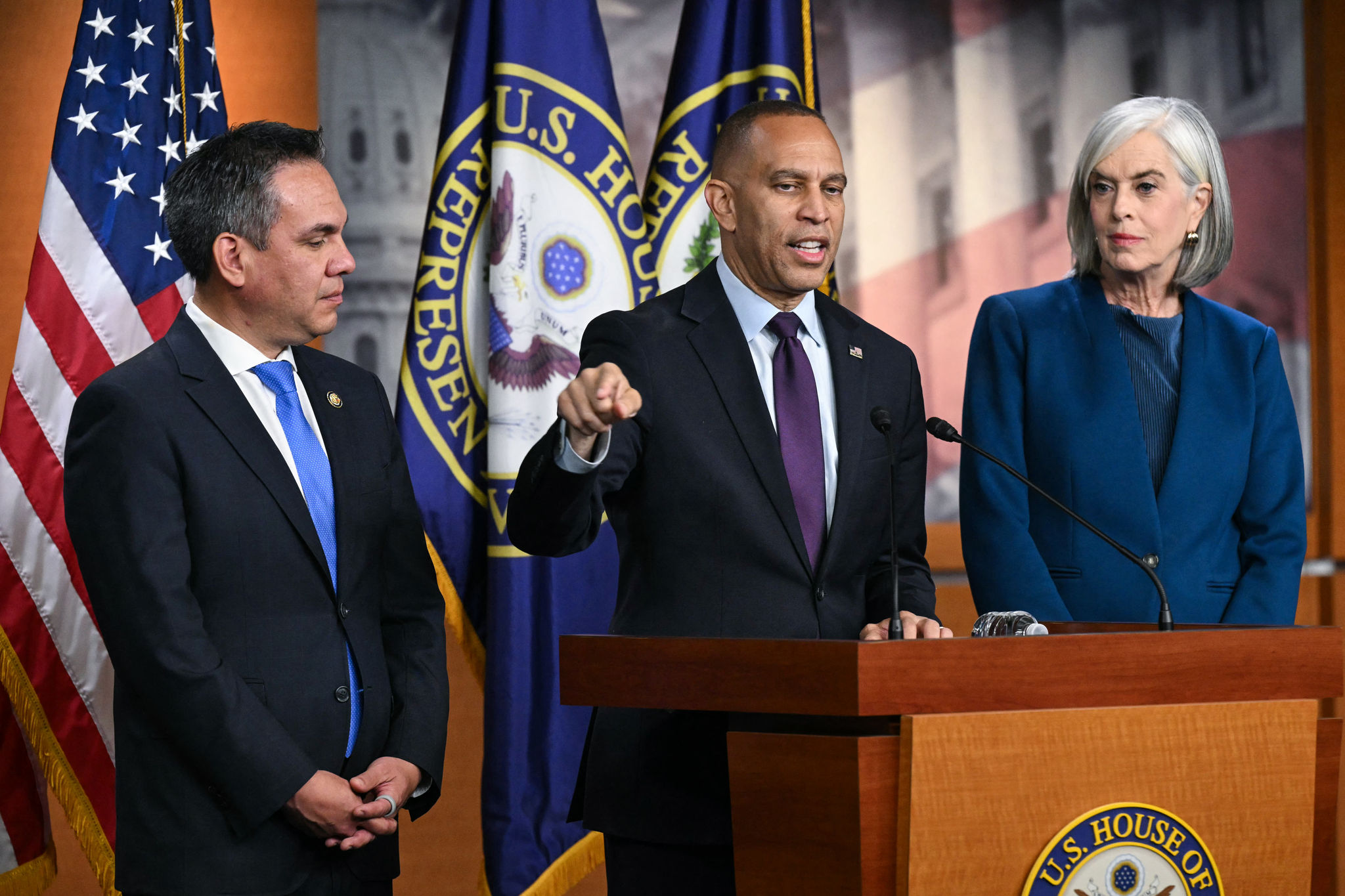
Speaking at a press conference after the vote, Jeffries emphasized that the Democratic Party's task is not to engage in infighting but to confront MAGA (Make America Great Again) extremism and deliver tangible results for the people. He argued that voters are demanding radical, groundbreaking changes and profound transformation, and affirmed that the status quo cannot continue. He also stated that reducing the cost of living will be one of the main focuses of the new House of Representatives. However, finding a balance between the progressive wing demanding drastic change and the moderate faction valuing stability, while also finding a legislative solution in the face of a Republican president holding a veto, will be the most crucial test of their capabilities.
January 3, 2027, will usher in a new chapter on Capitol Hill, where history may record the first African American Speaker of the House. But for Hakeem Jeffries, this historic step is just the beginning of a challenging journey in office, where his balancing act will determine whether the Democratic majority can translate its political promises into concrete results.


