
South Korea sets presidential election date for June 3rd.
The South Korean government has approved June 3rd as the date for an early presidential election, after President Yoon Suk Yeol was impeached last week for briefly declaring martial law.
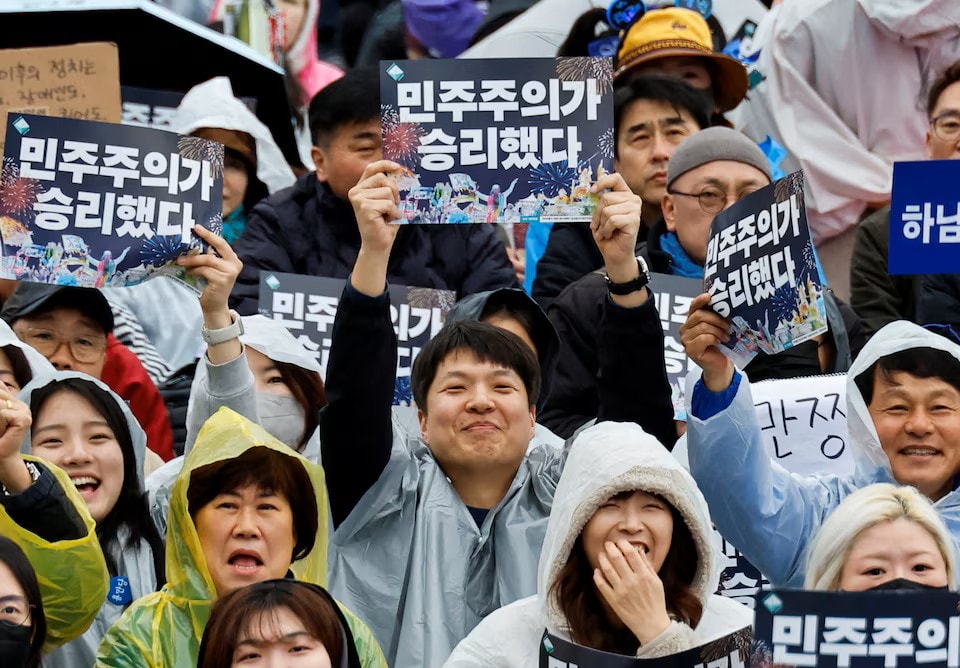
The South Korean cabinet unanimously chose Tuesday as the election date, following discussions with the National Election Commission, which needed to approve a public holiday to hold the election.
Mr. Yoon was removed from office by the Constitutional Court for violating his official duties by issuing a martial law decree on December 3, 2024, and deploying the military to disrupt the functioning of the National Assembly.
By law, a new presidential election must be held within 60 days if the presidency becomes vacant.
South Korea has experienced months of political instability after Yoon stunned the nation with his declaration of martial law, leading to his impeachment by the National Assembly, along with incumbent Prime Minister and acting president Han Duck-soo.
The impeachment of Mr. Han was subsequently rejected by the Constitutional Court, and he will continue to serve as acting president until the election.
The power vacuum at the top of the South Korean government has overshadowed Seoul's efforts to manage its relationship with the administration of U.S. President Donald Trump, amid rising U.S. tariffs and slowing growth in Asia's fourth-largest economy.
Lee Jae-myung, the populist leader of the Liberal Democratic Party who narrowly lost to Yoon in 2022, is currently the leading candidate, but he is also facing a series of lawsuits, including allegations of election law violations and bribery.
Meanwhile, the conservative camp still lacks a standout candidate, with several contenders vying for the top spot in the race.
According to a Gallup poll released on April 4th, 34% of respondents supported Lee as the next president, 9% supported Labor Minister Kim Moon-soo (conservative), 5% supported former ruling party leader Han Dong-hoon, 4% chose Daegu mayor Hong Joon-pyo, and 2% supported Seoul mayor Oh Se-hoon.


