
South Korea releases video of Hyunmoo-5 missile launch with 8-ton warhead; Ukraine tests FP-7 ballistic missile.
The global military noted South Korea's release of a video showcasing the Hyunmoo-5 missile with an 8-ton warhead, Ukraine's live-fire demonstration of the FP-7 ballistic missile, and the US deployment of three carrier strike groups to the Middle East.
The international military situation has seen several notable technological developments and troop deployments: South Korea has released its first video of a test of the Hyunmoo-5 strategic ballistic missile, Ukraine has put its domestically produced FP-7 ballistic missile into combat, while the US Navy is planning to deploy three aircraft carriers simultaneously in the Middle East.
Hyunmoo-5: South Korea's bunker-busting ballistic missile.
South Korea has just released rare footage of the test launch of the Hyunmoo-5, a conventional ballistic missile with a warhead weighing up to 8 tons. Released to mark the 78th anniversary of Army Day on October 1st, the video shows the missile being ejected vertically from its launch tube before the main engine activates, then deploying its stabilizing fins to accelerate. This method is called a cold launch, which helps to eliminate the negative impact of heat jets on the self-propelled launch vehicle.
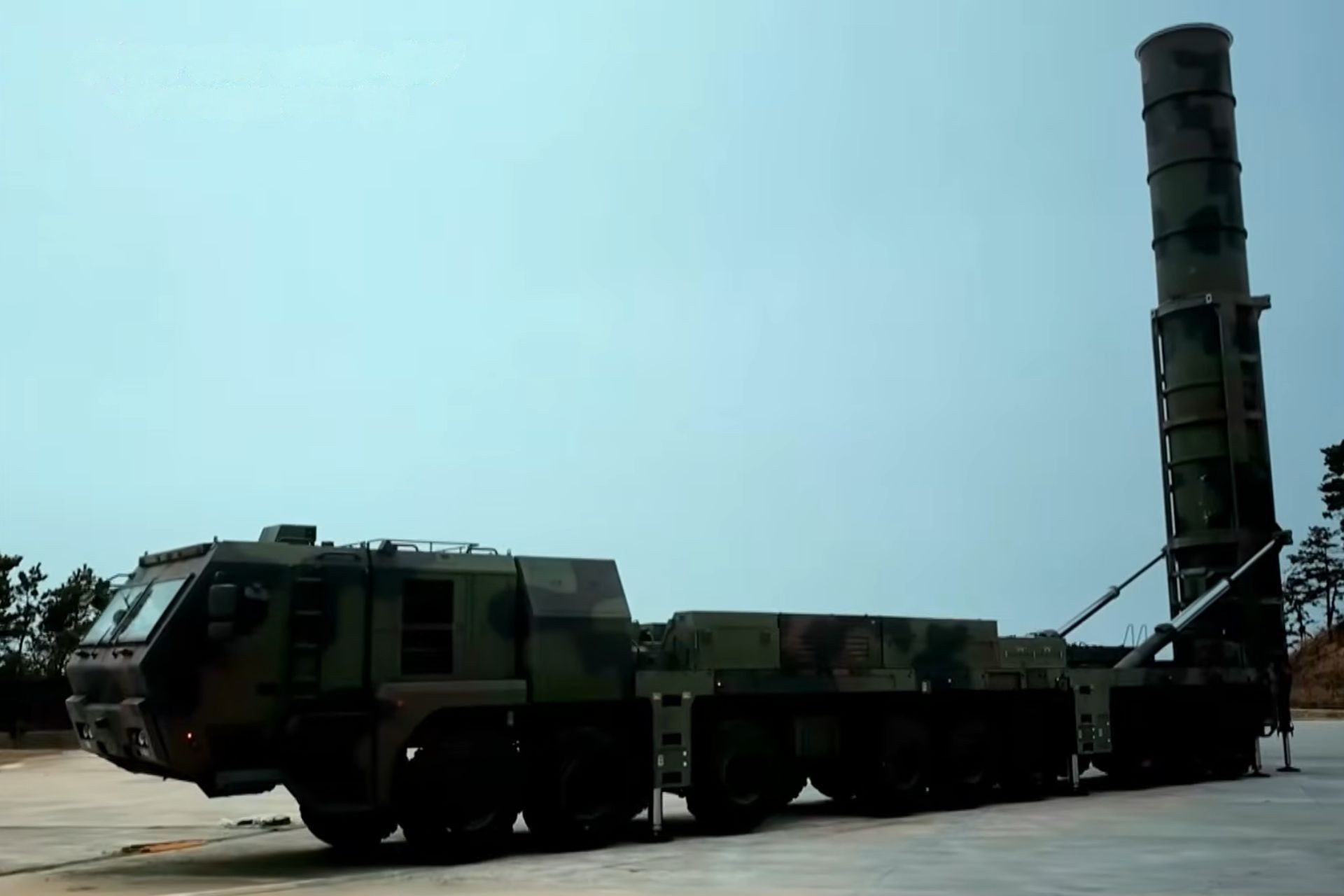
The Hyunmoo-5's core technical characteristic lies in its enormous conventional warhead mass. While the South Korean Ministry of Defense keeps most details secret, the Yonhap news agency confirmed that the weapon is optimized to destroy command structures and fortified underground bunkers. Thanks to the combination of its massive warhead mass and steep descent velocity in the final stage, the weapon generates immense kinetic energy to penetrate layers of rock and reinforced concrete before detonation.
According to open-source analyses, the Hyunmoo-5 has a launch weight of approximately 36 tons, a length of approximately 16 meters, and is powered by a two-stage solid-fuel engine. The Janes Research Foundation estimates that the actual range will vary depending on the weight of the integrated warhead; estimates ranging from several hundred to thousands of kilometers, as reported in the media, have not yet been officially released by the South Korean military. This missile is a core component of the "KMPR" (Konjaw Massive Retaliation) strategy, part of Seoul's three-axis defense system. Following deliveries beginning in late 2025, Seoul is currently mass-producing and planning to deploy hundreds of these missiles in the long term.
Ukraine confirms combat use of FP-7 ballistic missiles.
On the Eastern European battlefield, President Volodymyr Zelensky announced that Ukraine had used the FP-7 tactical ballistic missile for the first time in real combat conditions. The information, accompanied by a launch video, was released on October 1st, marking a step towards industrial production, although details of the launch location and target were not disclosed.
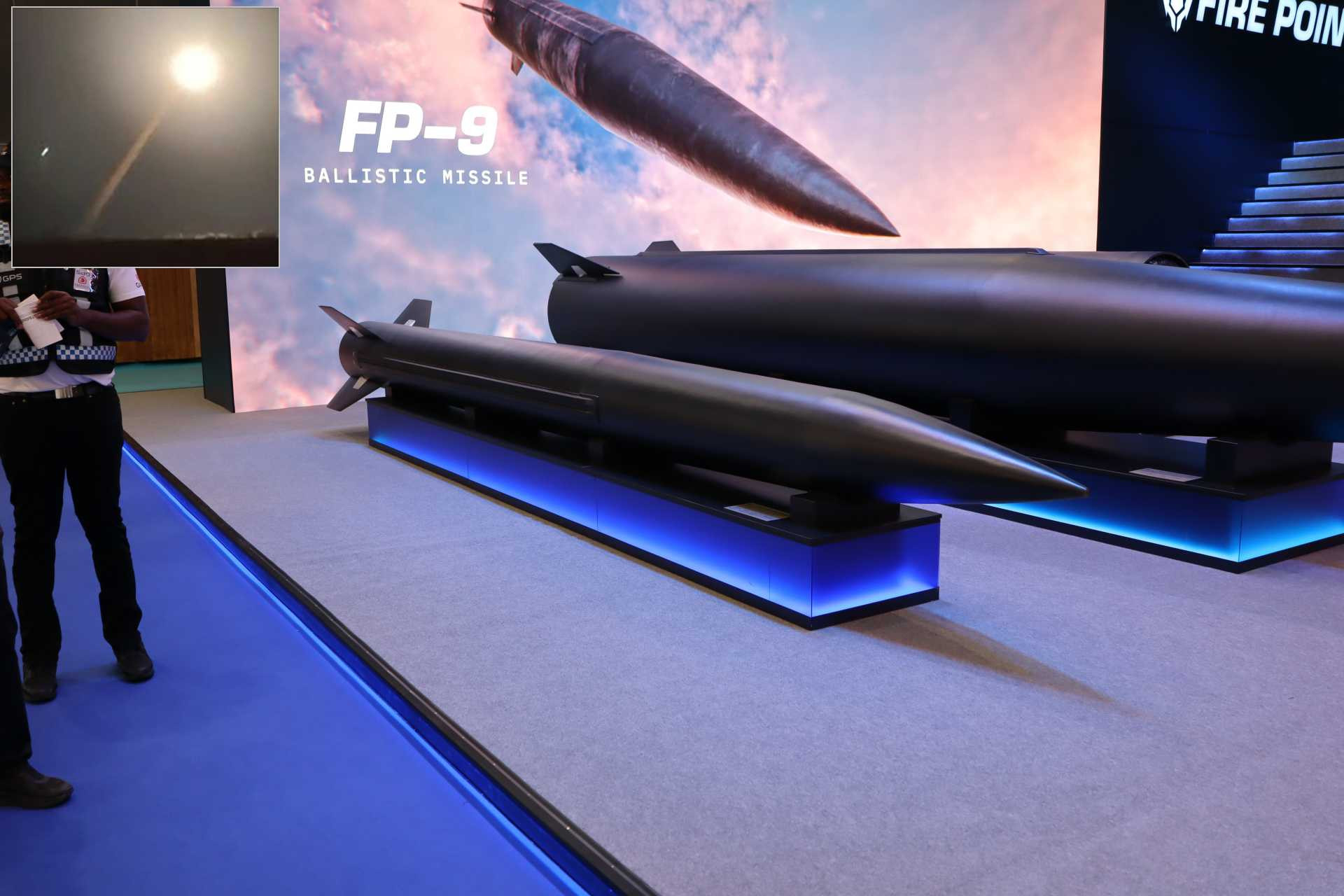
Developed by the private defense company Fire Point, the FP-7 completed its flight cycle from its first test flight in late February 2026 to combat deployment in just seven months. According to the manufacturer, the missile has a maximum range of 250 km, carries a 200 kg warhead, has a ceiling of 60 km, a maximum speed of 1,500 m/s, and a Circular Error Probability (CEP) of approximately 14 m. Aerodynamically, the FP-7 is similar in shape to the 48N6 anti-aircraft missile of the S-300/S-400 system, but is constructed with a composite body, a new generation control circuit, and a solid-fuel engine specifically designed for ground attacks. Fire Point is also researching the FP-9 missile, which has a range of 850 km and an 800 kg warhead.
The US is considering options for maintaining three aircraft carriers in the Middle East.
In addition to missile developments, the US Navy is stepping up its troop concentration in the Middle East. The aircraft carrier USS Theodore Roosevelt departed San Diego on September 27th to head to the Arabian Sea, where the USS George Washington and USS George HW Bush were already stationed. The Pentagon is preparing for a scenario where all three supercarriers will be present simultaneously during the handover period.
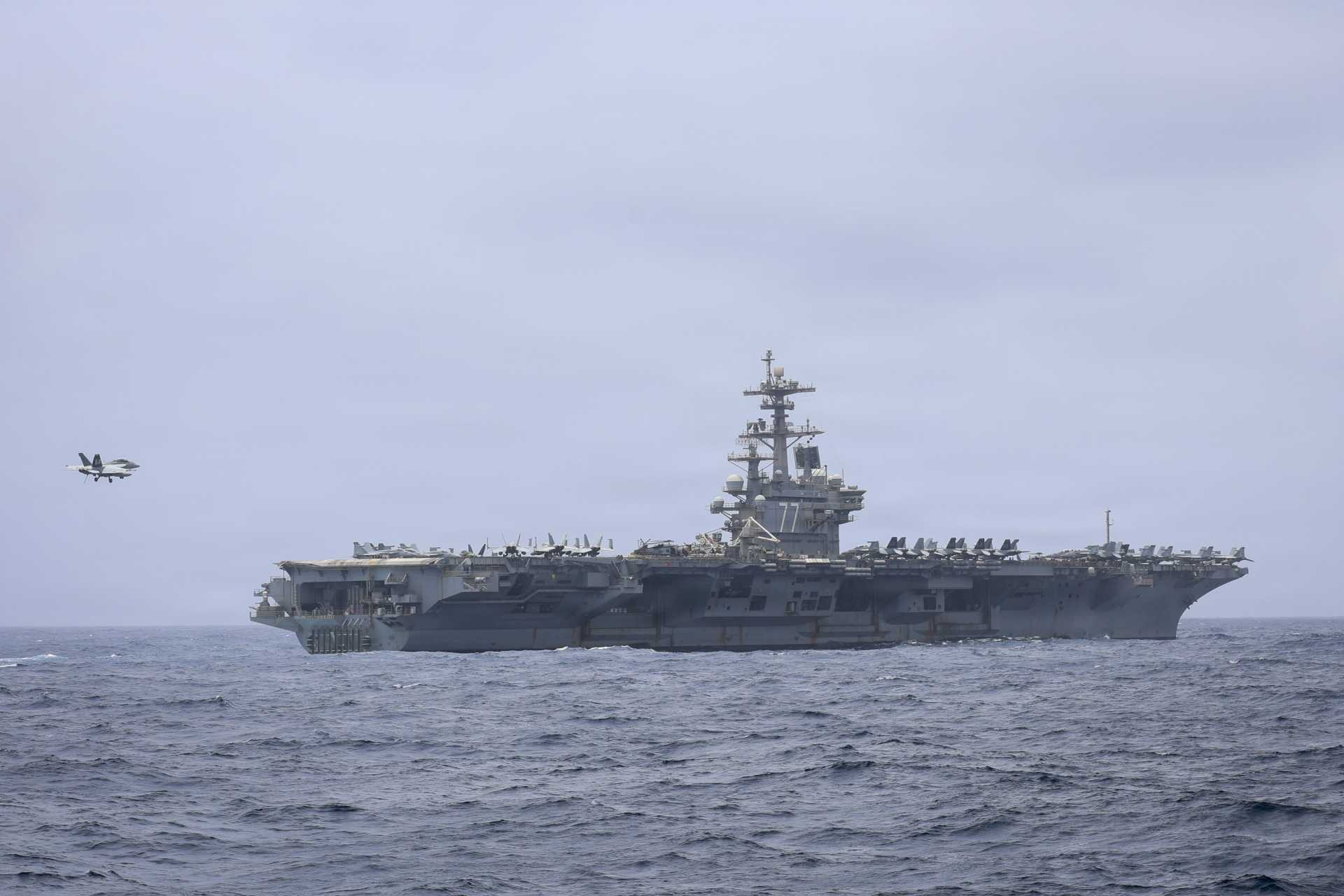
The USS Theodore Roosevelt strike group, equipped with Carrier Air Wing 11 (including F-35C stealth fighters, F/A-18E/F Super Hornet, EA-18G Growler electronic warfare aircraft, and E-2D Hawkeye early warning aircraft), moved alongside the cruiser USS Chosin and the destroyer squadron. Simultaneously, the Makin Island Amphibious Ready Group (USS Makin Island, USS Anchorage, USS John P. Murtha), carrying the 13th Marine Expeditionary Unit, also received orders to proceed to the Middle East, increasing the scale of operations in conjunction with the USS Boxer amphibious group already present in the area.
This heavy military presence is taking place amidst ongoing negotiations between Washington and Iran that have yet to reach a consensus. However, US defense officials insist that the increased military equipment is primarily aimed at maintaining flexible response options for operational leaders and does not reflect a decision on a new military offensive.


