
South Korea supplies tanks and fighter jets to NATO.
South Korea is emerging as a major arms exporter in Asia: Hanwha with the K2, K9, K239, and Redback; KAI sells the FA-50 to Poland and is developing the KF-21; aiming to be among the top four by 2030.
South Korea became the first Asian country to simultaneously supply tanks and fighter jets to NATO members. Amidst surging rearmament needs in Europe and global hotspots, the South Korean defense industry has emerged as a leader thanks to its diverse range of ground-and-air products, high level of technological autonomy, and compatibility with NATO standards.
Overview
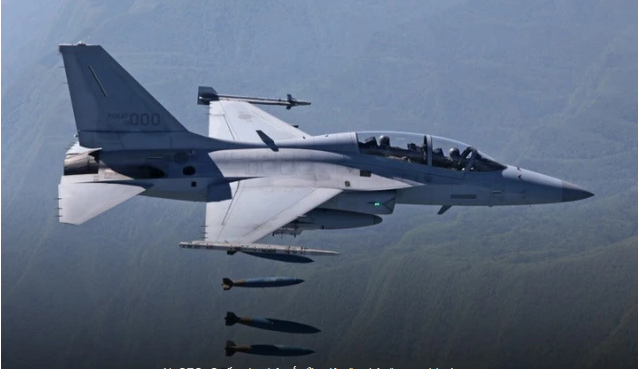
Hanwha Aerospace and Korea Aerospace Industries (KAI) are the two pillars driving this growth. Hanwha has secured major contracts for the K9 Thunder self-propelled howitzer, the K239 Chunmoo multiple rocket launcher, the Redback infantry fighting vehicle, and the K2 Black Panther main battle tank in numerous markets including Poland, Finland, Norway, Romania, India, and Australia. In the aerospace sector, KAI exports FA-50/TA-50 aircraft to many countries, including Poland – marking the first time an Asian nation has supplied fighter jets to NATO.
KAI is also developing the KF-21 Boramae – a 4.5-generation multirole fighter jet, aiming for 5th-generation standards. Indonesia is a project partner, holding a 7.5% stake and has ordered 48 aircraft.
Technical analysis: product range and availability
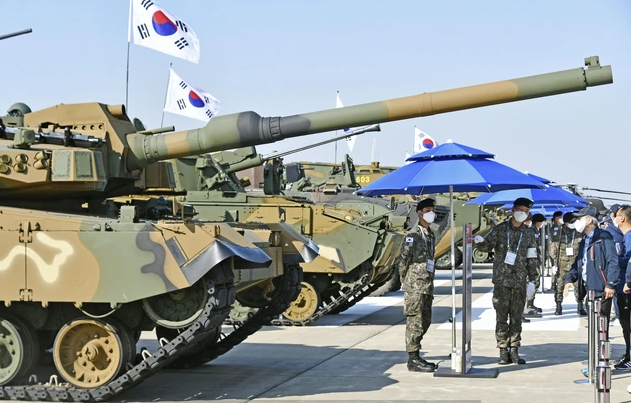
Hanwha's ground weapons arsenal ranges from indirect fire (K9 Thunder), long-range concentrated fire (K239 Chunmoo) to armored personnel carriers (Redback) and main battle tanks (K2 Black Panther). In the air, the FA-50/TA-50 addresses light combat and training needs, while the KF-21 aims for a multirole role with its modern, standard-guided electronic systems and configuration.
| Platform type | Product line | Note |
|---|---|---|
| Main battle tank | K2 Black Panther | Export development is underway; attracting interest from European countries. |
| Self-propelled artillery | K9 Thunder | Contracts in Europe and Asia |
| Rocket artillery | K239 Chunmoo | Expanding market presence |
| Infantry fighting vehicle | Redr | Options for modernizing the army |
| Training and combat aircraft | FA-50/TA-50 | Exported to Poland, marking a milestone with NATO. |
| Multirole fighter aircraft | KF-21 Boramae | A 4.5-generation project, aiming for 5th-generation standards. |
Technological self-reliance: engines, avionics, and supply chains.
Hanwha has manufactured over 10,000 aircraft engines in half a century, equipping platforms such as the South Korean Air Force's F-15K and T-50. The company manufactures domestic engines for the KUH Surion helicopter and collaborates with GE Aviation to develop integrated engines for the KF-21.
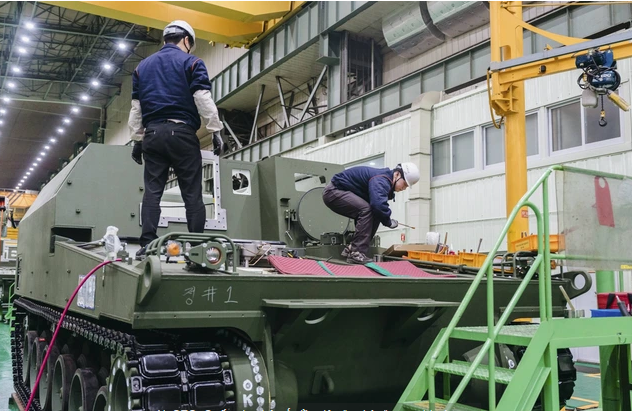
At the systems level, Hanwha is deeply involved in the aviation supply chain: aviation electronics, multi-function display screens (SMFDs), intercom systems (ICS), and ACCTVs digital cameras. This level of self-reliance reduces dependence on imports while creating a competitive advantage over Western suppliers.
Operational and deployment capabilities: NATO compatible, cost-effective and efficient.
Korean products are highly regarded for their reliability and NATO standard compatibility, helping to shorten integration, training, and logistics time for European forces. In the context of American aircraft often coming with political strings attached and French aircraft being expensive, the KF-21 is expected to be an affordable yet powerful option for developing countries. The FA-50 for Poland demonstrates a rapid deployment roadmap and aligns with the need for additional capabilities.
On the ground, flexible contract models, coupled with phased technology transfer, are a plus as Europe rushes to bolster its firepower. The success of the K9 and K2 in Poland demonstrates South Korea's role as a "safe bridge" between Western technology and competitive pricing, making it Warsaw's second-largest supplier of strategic weapons, after the United States.
Regional competition: Quality advantage over price pressure
China remains a direct competitor due to its price advantage and customer network in Africa and the Middle East. However, South Korea's superior quality, reliability, and NATO compliance are increasing its appeal in Europe. If it maintains its growth momentum and expands its product portfolio, South Korea could surpass China to become Asia's leading defense exporter.
Outlook: Aiming for a Top 4 finish by 2030
Seoul aims to become one of the top four global arms exporters by 2030, after the US, France, and Russia. Exports increased from $7.25 billion (2021) to nearly $15 billion (2024), demonstrating a clear market expansion. With its domestic technology base, complete supply chain, and contracts in Europe and Asia, this goal is within reach.
Strategically, the focus will be on maintaining quality, ensuring delivery schedules, and continuing to demonstrate compatibility with NATO standards. These are core elements for South Korea to strengthen its position in European rearmament programs and meet the cost-performance balance needs of developing countries.


