
South Korea recorded its hottest day in over 100 years.
On August 2nd, the Korea Meteorological Administration (KMA) announced that the country had just recorded its highest temperature since it began collecting weather data more than a century ago.
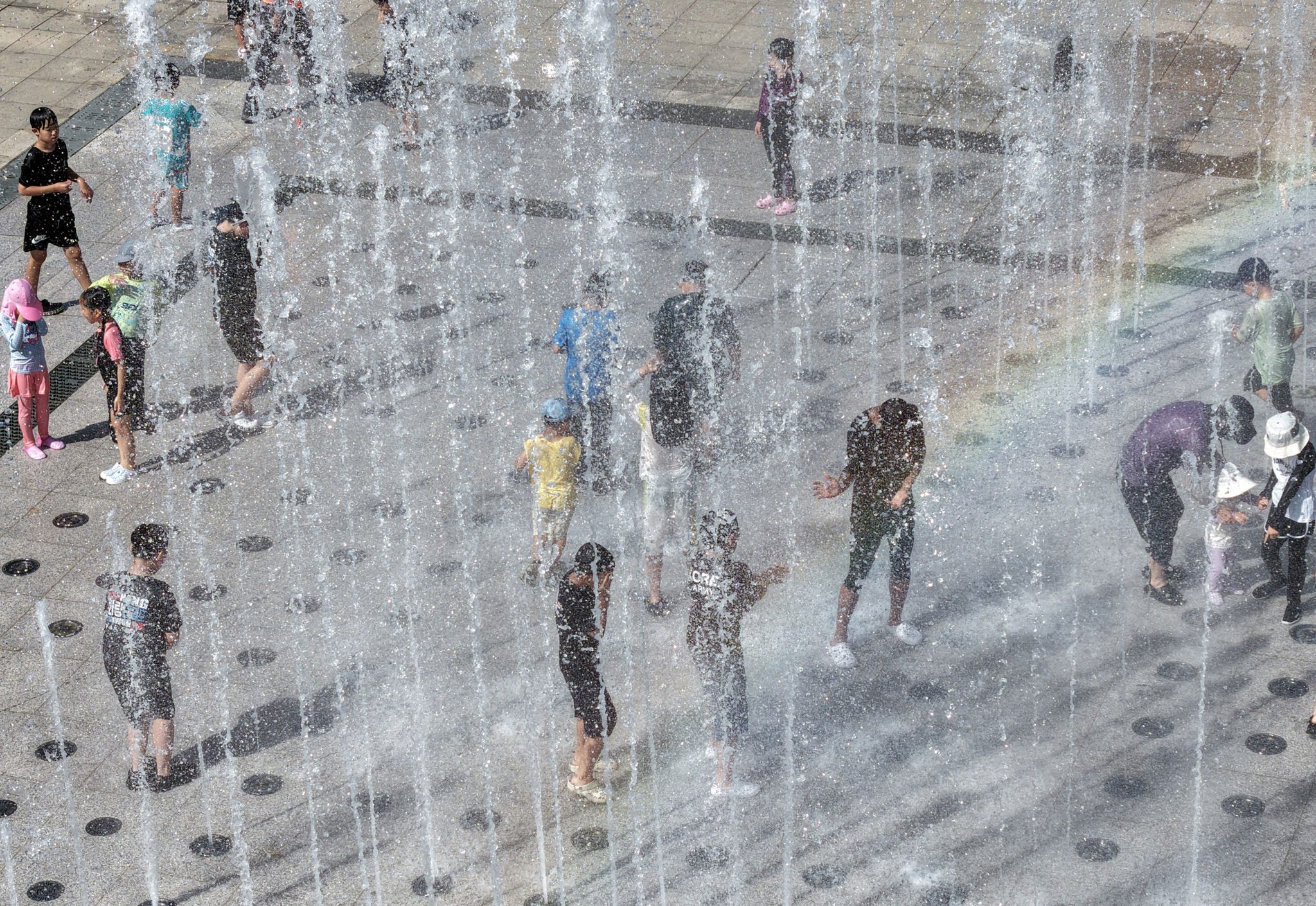
According to an announcement on the official website of the KMA, the city of Yangsan in southeastern South Korea recorded a temperature of 42.5 degrees Celsius at 1:26 PM on August 2nd (local time).
Yangsan is currently considered a "furnace" and the epicenter of the ongoing heatwave. Notably, this is the fifth consecutive day the city has experienced extreme temperatures exceeding 40 degrees Celsius.
Currently, much of South Korea is under a heatwave alert, with many major cities recording temperatures close to 40 degrees Celsius.
Due to the extreme weather conditions, on August 2nd, more than 20 localities in South Korea issued an "Emergency Heatwave Warning." This is a completely new warning level, implemented by South Korean authorities this year to respond more promptly and effectively to the unusually high temperatures.
According to regulations, this emergency alert level will be triggered when the predicted perceived temperature reaches 38 degrees Celsius, or when the actual temperature reaches and remains at 39 degrees Celsius for a day.
Statistical data from the KMA paints a worrying picture of global warming trends. The average number of hot days per year in South Korea has more than doubled, reaching 19 days/year in the last five years. This figure was only 8 days/year in the 1970s.
In South Korea, a "hot day" is defined as a day with a maximum temperature of 33 degrees Celsius or higher, while a "tropical night" is when the nighttime temperature does not drop below 25 degrees Celsius.


