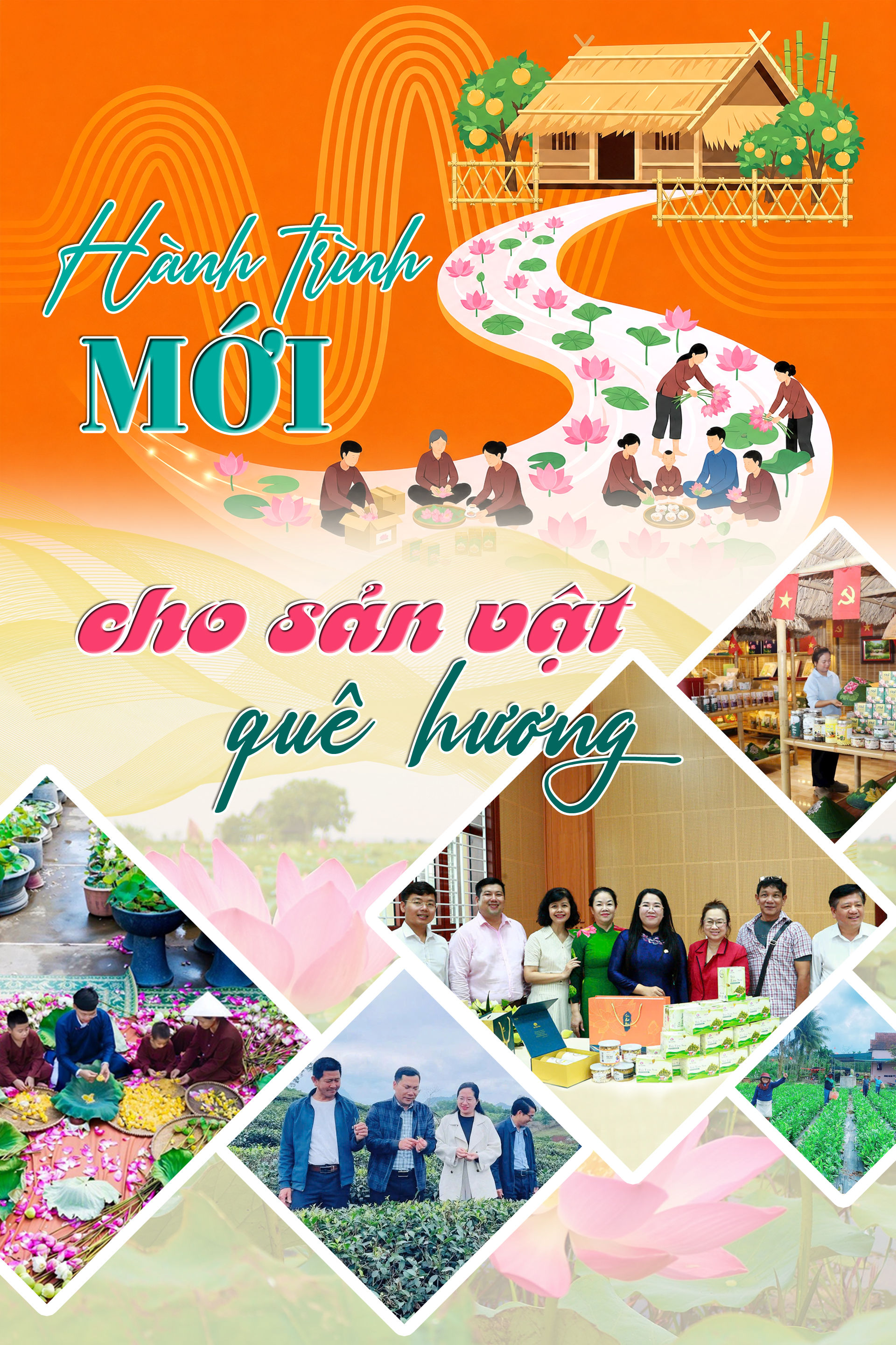
A new journey for local produce.
Nghe An province has long been known for its distinctive regional products, nurtured by the unique soil, climate, and diligent hands of its people over generations. Building on these familiar agricultural products, many localities in Nghe An are seeking to further exploit the raw material sources, expand the value proposition, link production with culture and experiential tourism, and promote their products on digital platforms.
Thanh Quynh/Present:Hong Toai• September 3, 2026
*****
Nghe An province has long been known for its distinctive regional products, nurtured by the unique soil, climate, and diligent hands of its people over generations. Building on these familiar agricultural products, many localities in Nghe An are seeking to further exploit the raw material sources, expand the value proposition, link production with culture and experiential tourism, and promote their products on digital platforms.
These approaches not only open up new markets but also introduce a new direction: not just selling products, but adding value to them; not just selling raw materials, but gradually participating more deeply in the value chain.
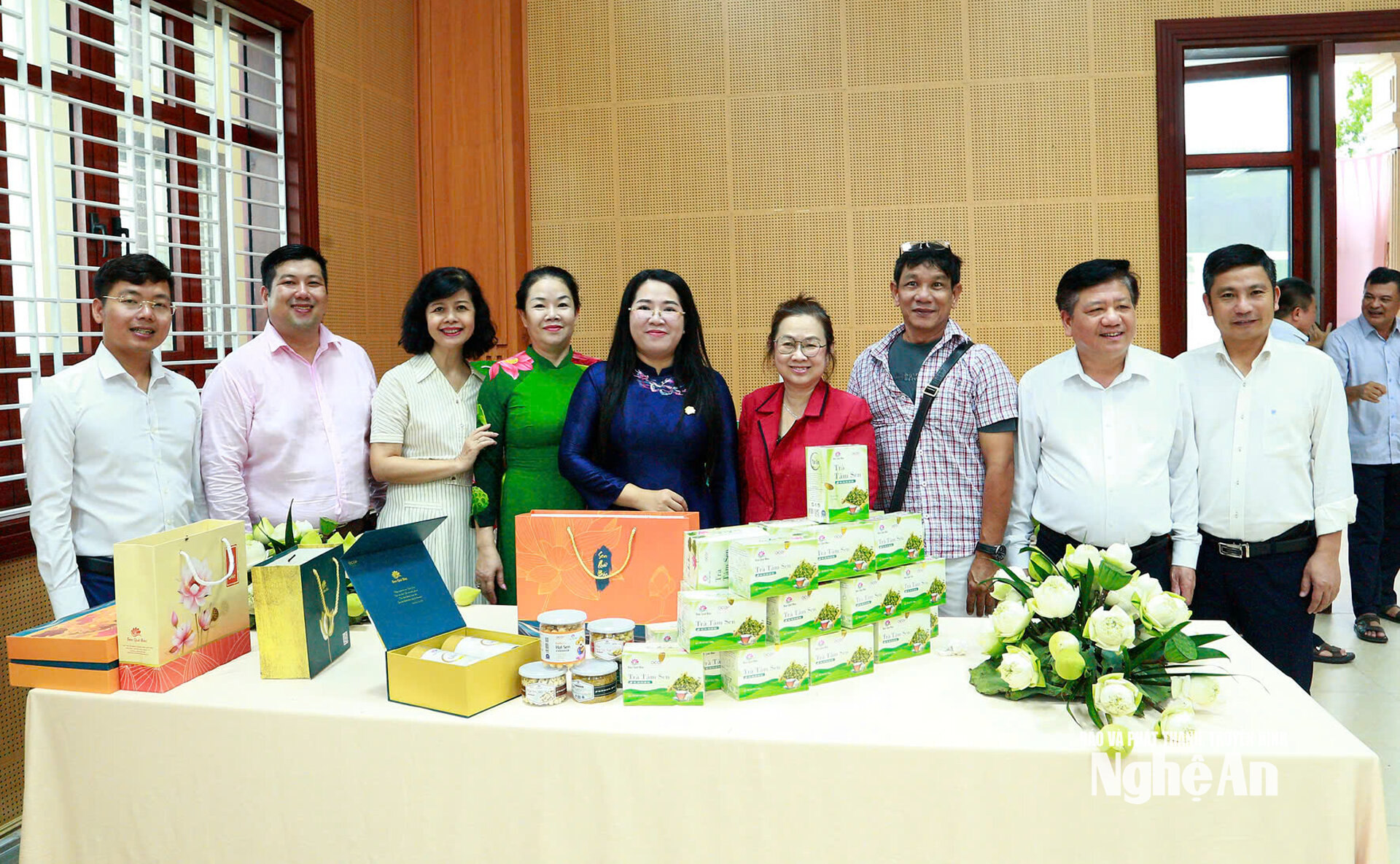
In late August, the Kim Lien lotus crop gained a new direction for development when the Que Bac Lotus Cooperative and the Dong Thap Lotus Industry Association, with 165 members, signed a cooperation agreement.
.jpg)
According to the agreement, the two sides will strengthen connections and support each other in introducing and promoting products. Specifically, products made from lotus from President Ho Chi Minh's hometown will be included in the booths and exhibition spaces of the Dong Thap Lotus Industry Association. Notably, the cooperation also aims at training, research, and development of handicraft products made from lotus.
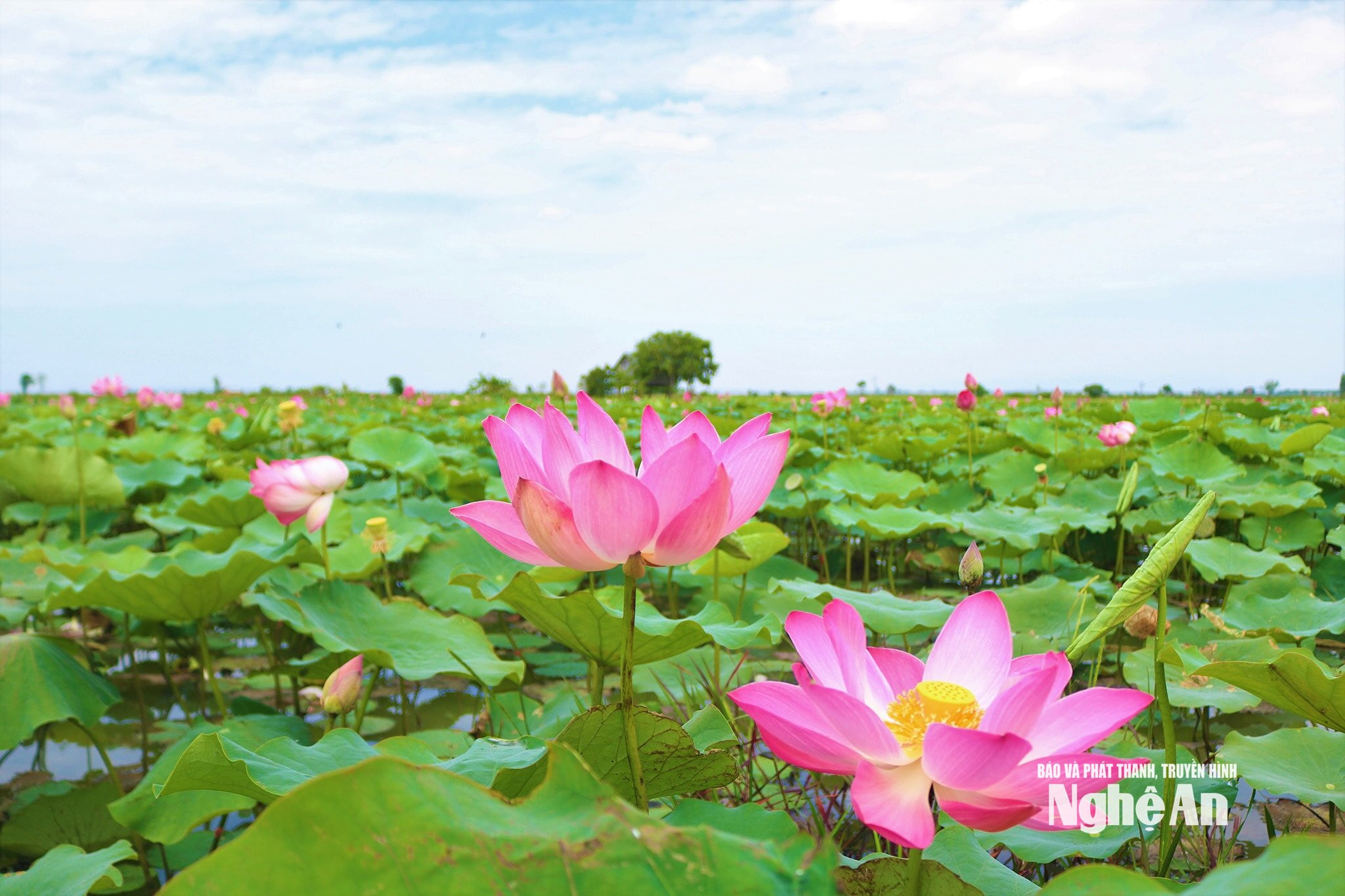
This can be seen as a promising direction for more fully exploiting the value of the vast lotus growing area of over 60 hectares in Kim Lien commune. For a long time, when people think of lotus, they only think of its scenic beauty, the flowers that are cut and sold, lotus tea, or food products made from lotus.
Those are important values, but they don't represent the full potential of the lotus plant.
From a product perspective, lotus can also be involved in many other fields such as handicrafts, gifts, fashion, decoration, and artistic products.
Lotus leaf paintings, calligraphy on lotus leaves, handcrafted lotus flowers, handbags, products made from lotus fibers, or souvenirs bearing the mark of the land and people of Nghe An province can open up a new space for the value of the lotus plant.
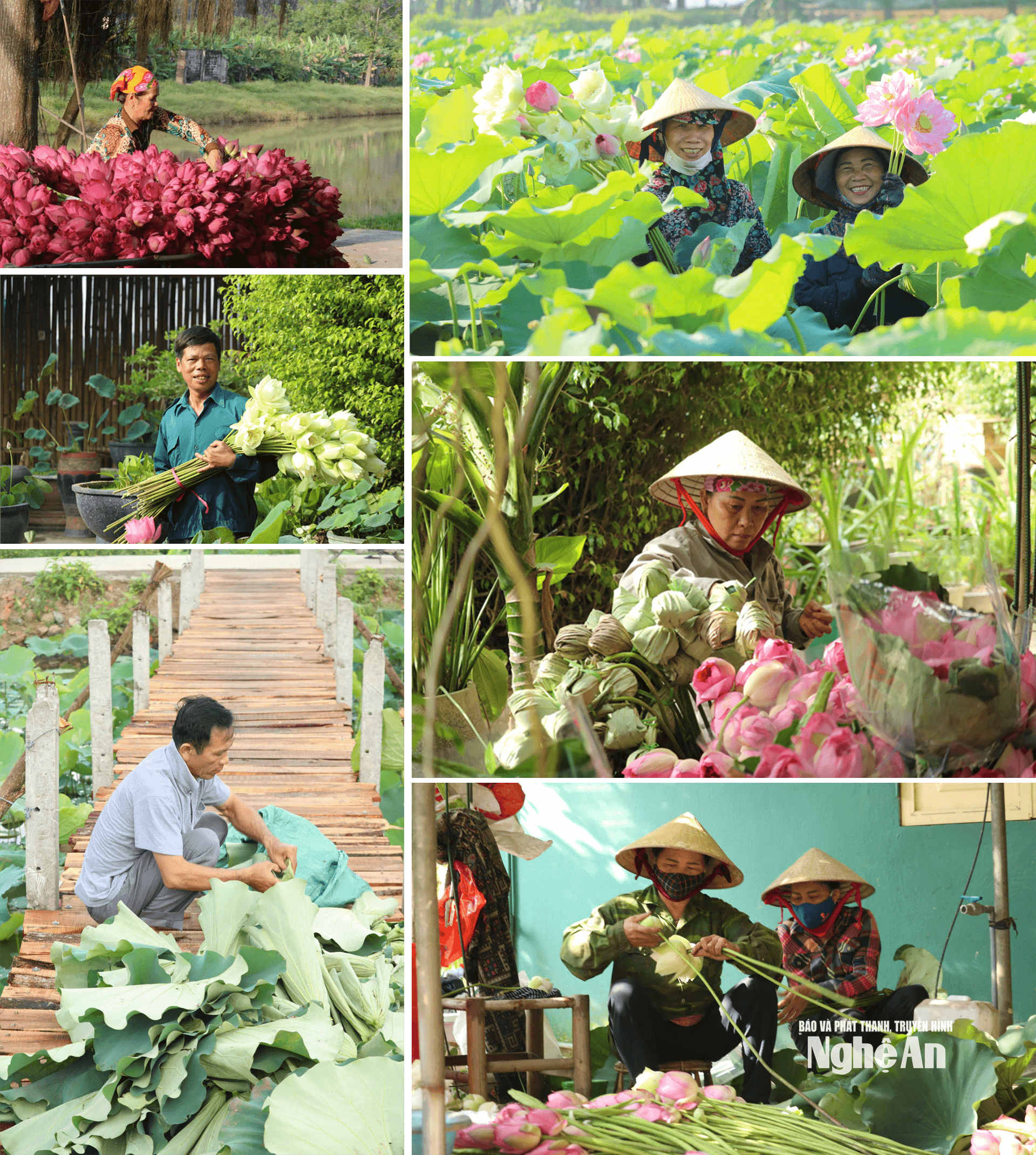
According to Pham Kim Tien, Director of the Sen Que Bac Agricultural Cooperative, cooperation with the Dong Thap Lotus Industry Association will expand the development of handicrafts in addition to the fields of food processing, cosmetics, souvenirs, and tourism.
The orientation is not just to create more products, but to aim for a "lotus economic ecosystem," in which OCOP products are linked with processing, tourism, healthcare, and creative economy, all complementing each other.
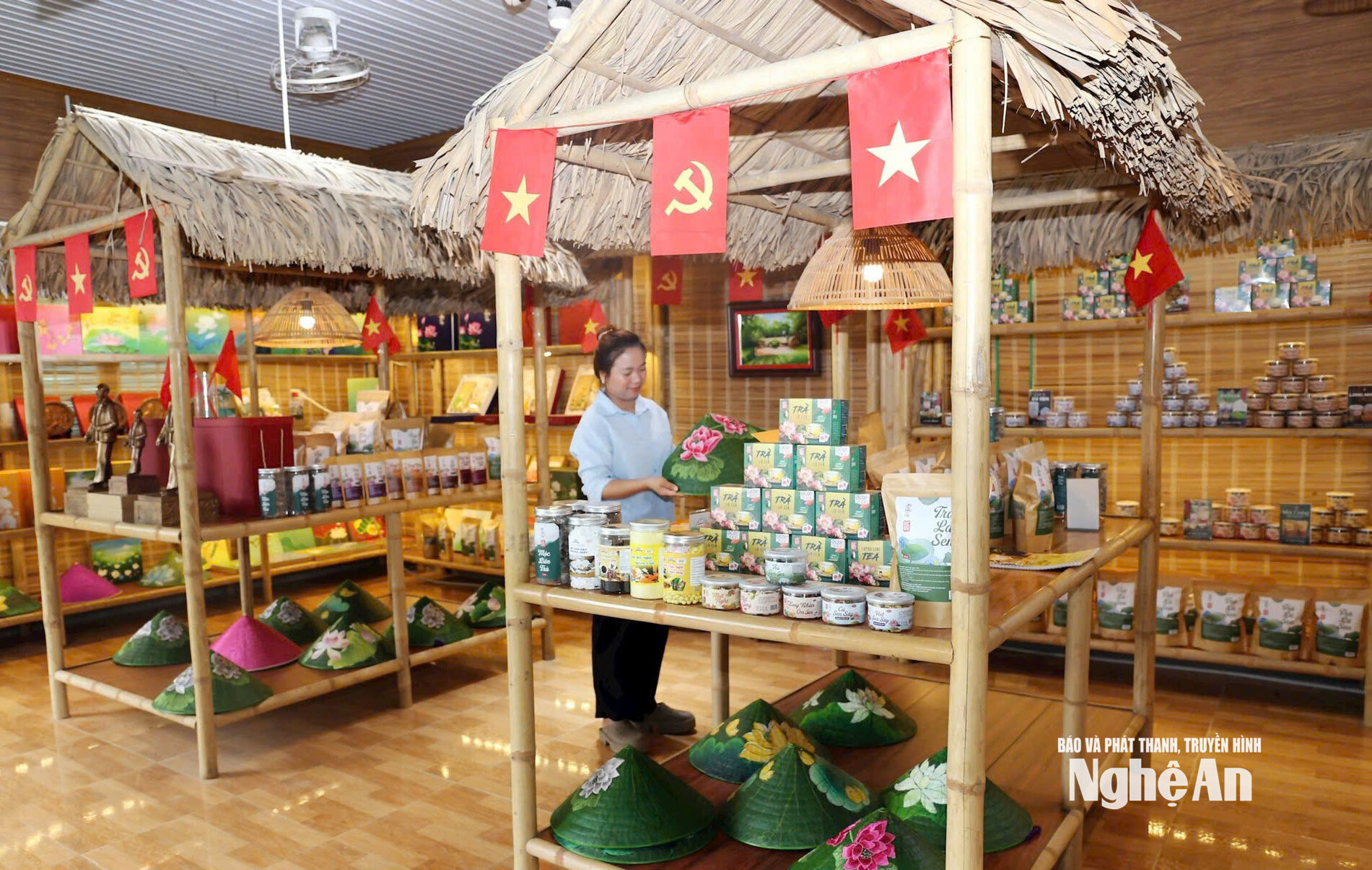
For Kim Lien commune, this direction is even more significant because the lotus plant here is not just an agricultural crop. The lotus is associated with memories of President Ho Chi Minh's hometown and is an image that many tourists seek out when visiting Kim Lien commune.
The Sen Que Bac Cooperative has also built a solid foundation over the years by investing in deep processing, developing raw material areas in collaboration with local people, and creating many products that meet OCOP standards. If implemented systematically, handicrafts could open up another "life" for the lotus plant after the flowering season.
According to Nguyen Thi Phuong Thuy, Secretary of the Party Committee of Kim Lien commune, many steps are needed to progress from producing a few experimental products to forming a craft, or even a craft village. First, it's necessary to create a stable source of raw materials and establish appropriate collection and processing procedures. Next, it's crucial to train craftspeople, standardize designs, improve product durability, build a brand story, design packaging, and most importantly, find a market.
When handcrafted products are integrated into a complete value chain, people not only sell the raw materials but can also benefit from the added value of the crafting process.
In addition, tourism in Kim Lien could be expanded to include experiences related to lotus flowers. The journey could begin with admiring the lotus ponds, listening to locals tell stories about the lotus flower in President Ho Chi Minh's hometown, learning how to infuse tea, and enjoying dishes made from lotus; followed by experiencing handicraft production and choosing souvenirs with clear origins to take home.
Even after the lotus season ends, these activities can continue through hands-on experiences such as tea brewing workshops, cooking with lotus, learning about the process of making handicrafts, or visiting the lotus growing areas during the next season.
When the value of the lotus plant is exploited year-round in various ways, the flowering season will no longer be the end of a production cycle, but can become the starting point for a new value chain and livelihood. This is also a direction consistent with the thinking of green and circular economies, while opening up opportunities to connect agricultural values with cultural values, gradually forming products linked to the heritage economy.
Leaving President Ho Chi Minh's hometown and heading up to the highlands of Tuong Duong, the challenge of increasing the value of local products is being approached from a new direction: bringing agricultural products onto digital platforms.
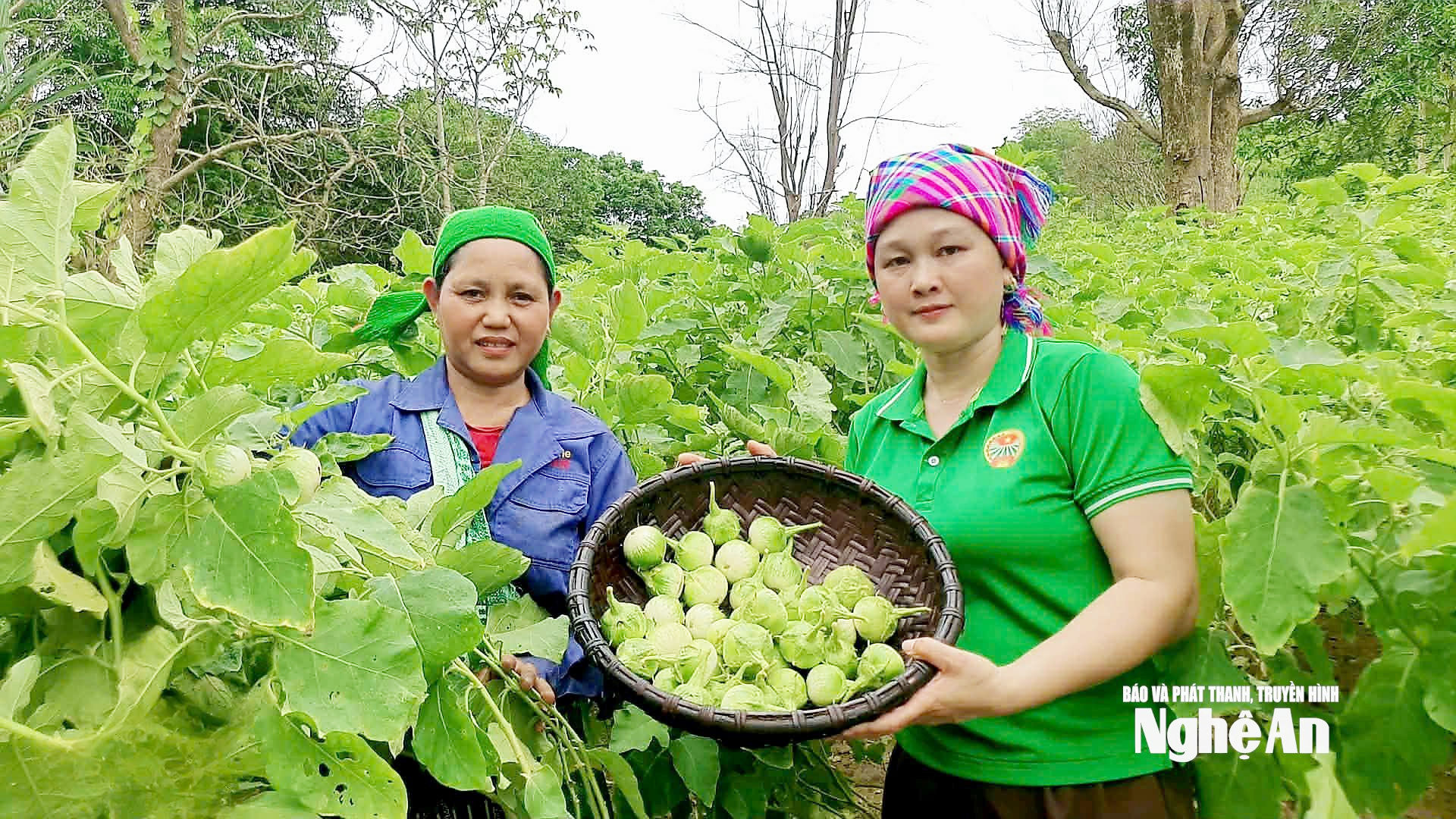
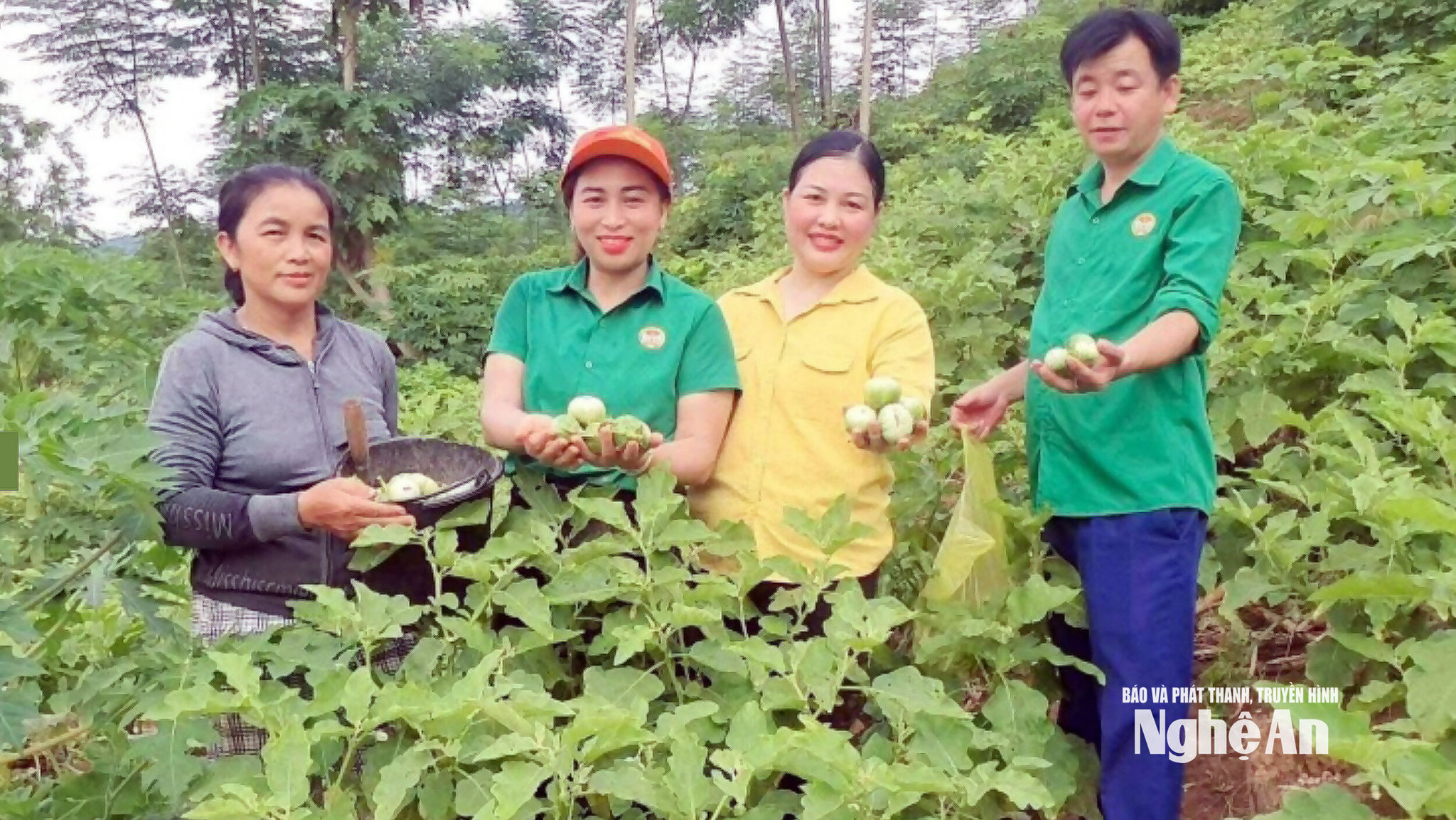
It was impressive to watch the live streams of farmers and officials from the Fatherland Front and the Farmers' Association of Tuong Duong commune right from the fruit-laden eggplant fields of Khe Ngau.
The phone is placed in the middle of the field. The livestreamer holds freshly picked tomatoes, introduces their color, flavor, and growing methods, and then directly tastes them so viewers can get a clearer picture of the product.
.jpg)
The story of agricultural products is told right from where they are produced, through the voices and experiences of the growers themselves. This is also a way to bring the specialties of the Thai people from their fields closer to consumers.
Besides maintaining connections with traditional traders, Tuong Duong commune is utilizing Facebook, Zalo, and TikTok to promote Khe Ngau sweet coffee, gradually bringing the product to customers and distribution channels outside the area.
According to Lo Thi Lan, Vice Chairman of the Vietnam Fatherland Front Committee of Tuong Duong commune and Secretary of the Youth Union of the commune, Khe Ngau sweet eggplant in Khe Ngau village has been VietGAP certified and recognized as a 3-star OCOP product since 2021. Currently, the entire commune has 35 households growing sweet eggplant with a total area of about 31 hectares.
The challenge for coffee growers is that the product is seasonal and the harvesting period is short. In this context, bringing agricultural products to digital platforms opens another door for growers.
More importantly, this approach helps farmers become familiar with a new role. They not only produce, harvest, and deliver goods to traders, but also learn how to promote their products, interact with customers, receive orders, and connect with new distribution channels.
To support the local people, the Farmers' Association of the commune has planned to organize training on online business skills, connect businesses and cooperatives, expand markets, and gradually form a linked chain from production to consumption of Khe Ngau sweet coffee.
Looking at the entire commune, besides the specialty Khe Ngau sweet eggplant, other products such as wild bamboo shoots, dried beef, and glutinous rice wine have also been actively promoted on social media platforms. Although the effectiveness of agricultural product consumption through digital platforms is not as high as expected, these new approaches are opening up another way to access the market for highland products.
The goal is not just to sell the product, but to gradually transform Khe Ngau sweet coffee into a competitive commodity, contributing to increasing the income of people in this remote area.
Leading us on a tour of the lush green tea hills in Yen Xuan commune, Mr. Pham Van Toan, Secretary of the Party Committee and Chairman of the People's Council of Yen Xuan commune, said that changing production methods, improving the quality of agricultural products, building brands, and finding markets for local produce are being diligently implemented by the people and the local political system.
The story of Gay tea in Cao Son is a prime example. From a situation where locals mainly broke branches and bundled tea leaves to sell to traders, a different path is emerging as growers become more deeply involved in the value chain, from processing to building high-quality tea products.
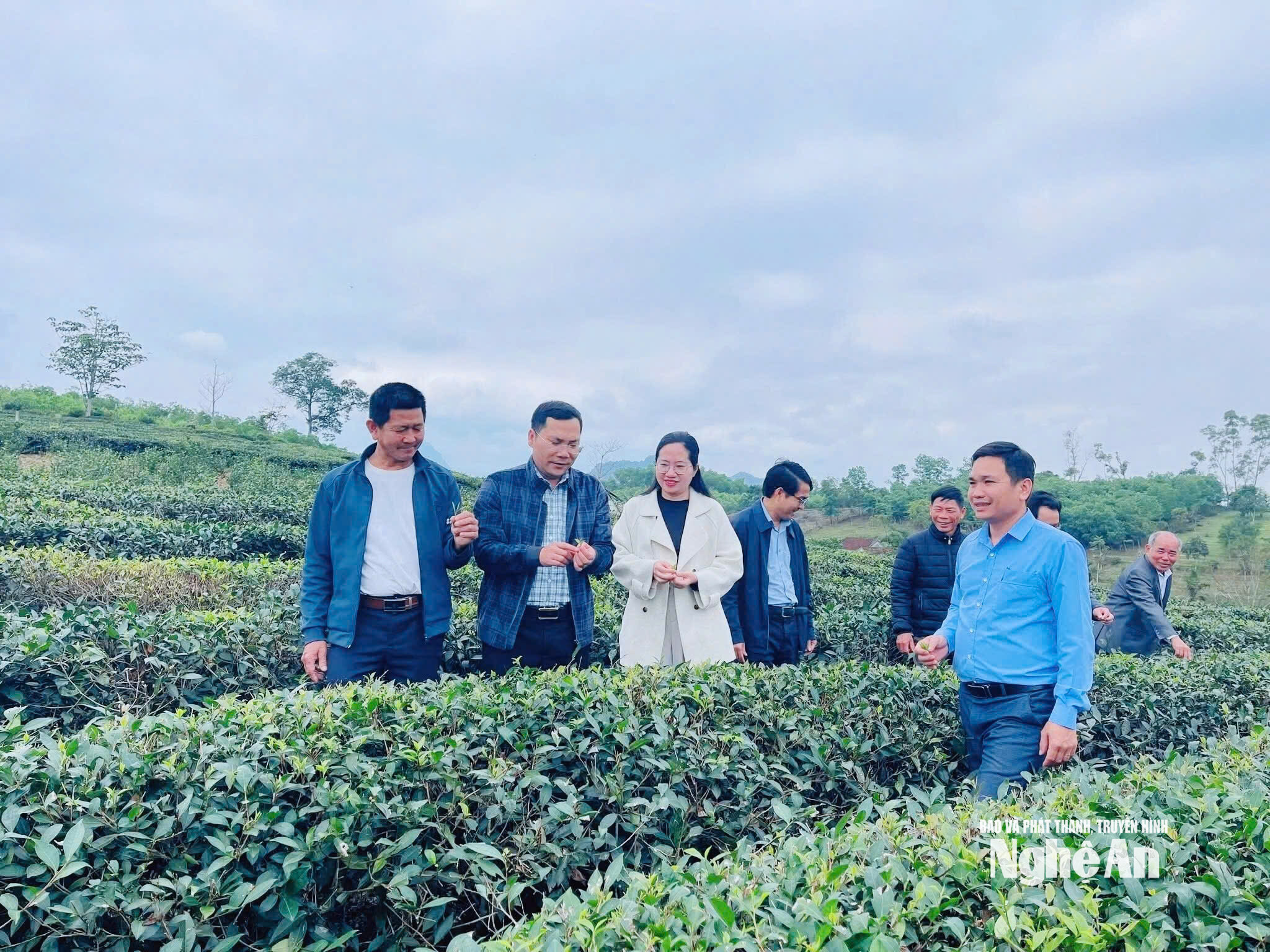
At the same time, Gay tea is being introduced into a new space – the space of "tea appreciation" culture. Selected tea buds undergo various processing stages to create "green tea," "black tea," and "white tea" varieties, each with its own unique flavor from the Cao Son region. During tea ceremonies, tea drinkers not only enjoy a cup of tea but also hear stories about the tea-growing region, the land, the climate, and the craftsmanship of the tea makers.
Instead of simply trying to sell more, product creators seek ways to make buyers willing to pay more for quality, identity, and experience.
Following this approach, the locality will not only have more high-quality tea products but can also gradually form a tea region with its own unique identity. Tea plantations will be linked to tea-drinking experiences, stories of tea growers, and local culture; the value of the product will therefore no longer be limited to the place of production but will be further enhanced through processing, branding, culture, and experience.
That is also the goal the locality is aiming for in the process of enhancing the value of its local products.
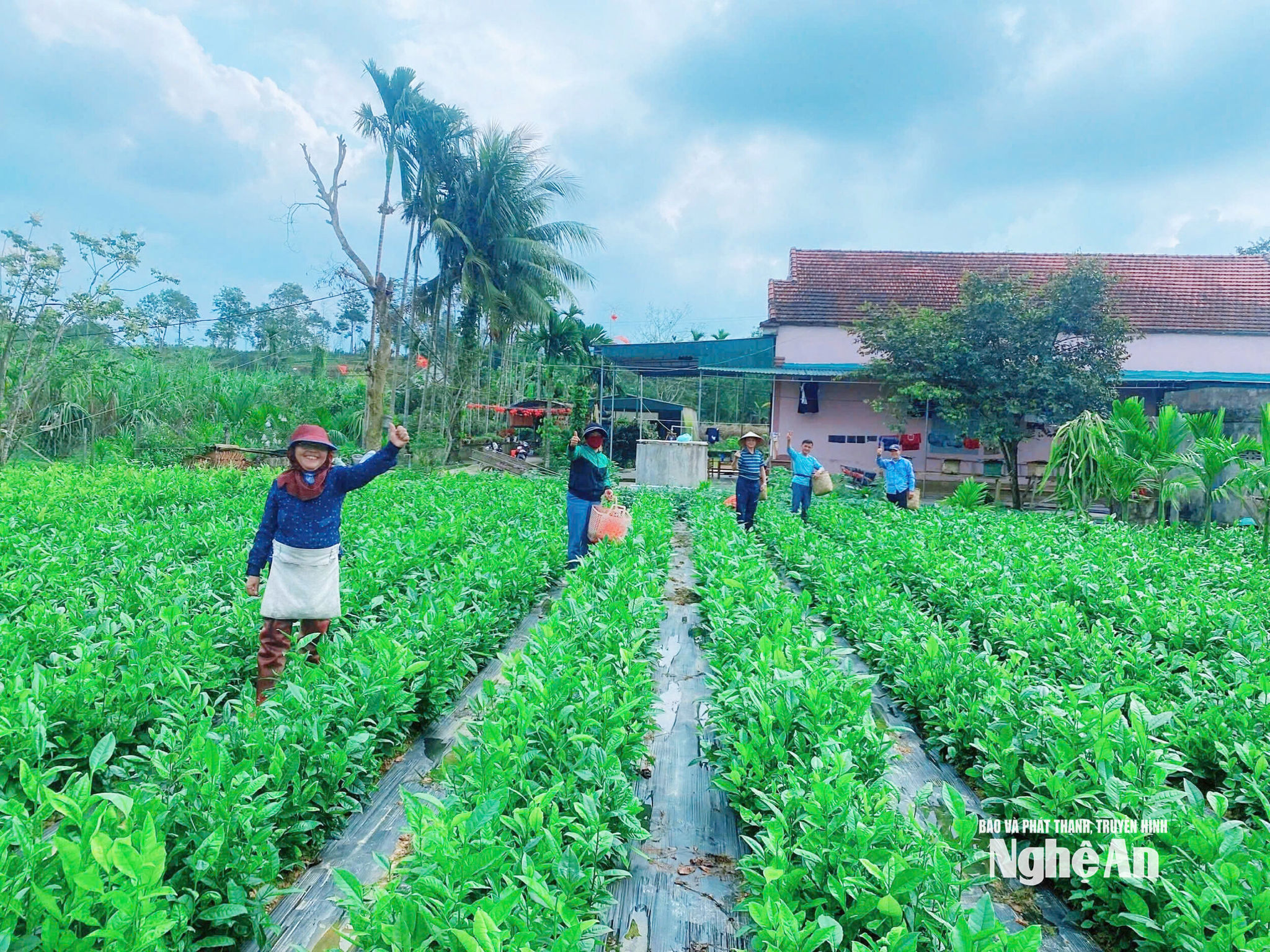
Addressing this issue, Mr. Le Van Luong, a member of the Provincial Party Committee and Secretary of the Party Committee of Tuong Duong commune, stated that for local products to reach a wider market and create stable livelihoods, it is crucial to help people change their production mindset and become more proactive in bringing their products to market. In the current trend, people also need to learn how to tell the story of their agricultural products to connect directly with buyers.
The question of how to ensure that local products are not only consumed but also generate more value for the producers themselves is a pressing issue for many localities. The answer may not lie in a single formula. However, what is essential remains proactively creating value and seeking markets for one's products.
When products carry the story of the land, are made with care, and find the right market, the distance to larger markets will no longer be so great.
Reaching further doesn't mean leaving one's homeland, but rather about making the values of one's homeland more widely known, about creating more value from the land and the hands of its people, and about ensuring that those who produce these products have a better life in their homeland.
Mr. Le Van Luong - Member of the Provincial Party Committee, Secretary of the Party Committee of Tuong Duong Commune.