
The journey of restoring memory and the mission of gratitude of a nation.
July is not just a month to remember. July is a month to act, to act to restore the names of those who fell for the independence and freedom of the Fatherland; to keep the flame of gratitude burning brightly.
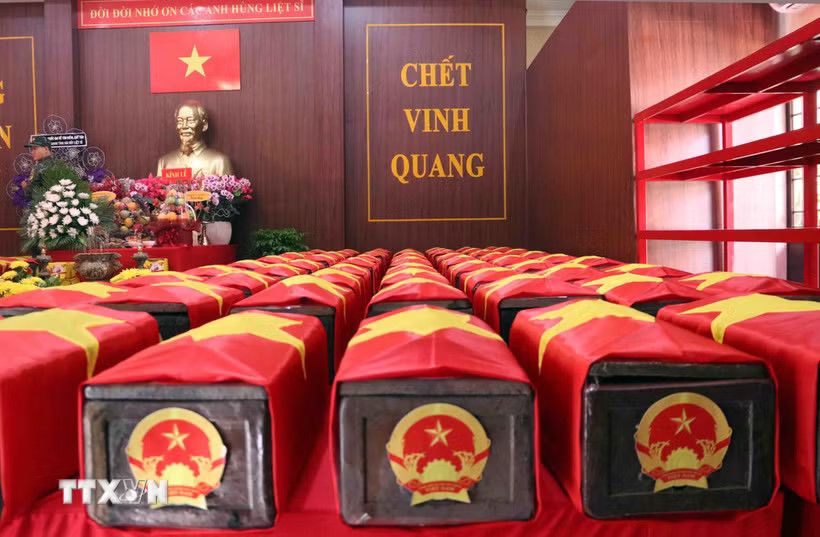
July has arrived again, not with fanfare, but deeply ingrained in the hearts of every Vietnamese person. Across the S-shaped land, incense smoke rises from the martyrs' cemeteries, from the misty dawn to the twilight sun.
On rivers once ablaze with fire, the water still flows, carrying the messages of countless young soldiers. On hillsides, ferry crossings, crossroads, caves, and forests once ravaged by bombs and bullets, the green of peace has covered the scars of war, but in the hearts of many families, the war never truly ended.
The war is not over as long as there are altars that only hold certificates of recognition from the nation, without a handful of soil from their homeland to embrace the deceased. The war is not over as long as there are mothers who have lived their entire lives without knowing where their children are buried.
The war is not over yet, as the gray-haired wives of fallen soldiers still maintain the habit of anxiously awaiting news of their husbands, like waiting for their husbands to return from a long journey.
The war is not over when children, now in their fifties or sixties, have never once had the chance to call out "Father!" before a grave bearing their name and birthplace.
Commemorating the 79th anniversary of the Day of War Invalids and Martyrs, and looking forward to the 80th anniversary of the nationwide tribute to those who contributed to the revolution, we should not stop at offering incense, wreaths, and memorial ceremonies. Today's tribute must be translated into concrete actions: searching for, collecting, and identifying the remains of martyrs; providing better care for those who contributed to the revolution; preserving historical memory; and educating the younger generation to look to the past so they can build the future with their heads held high.
It is the mission of the entire political system, of every family, every clan, every locality, and also the sacred responsibility of revolutionary journalism to keep the flame of gratitude burning brightly.
July - from memory to action
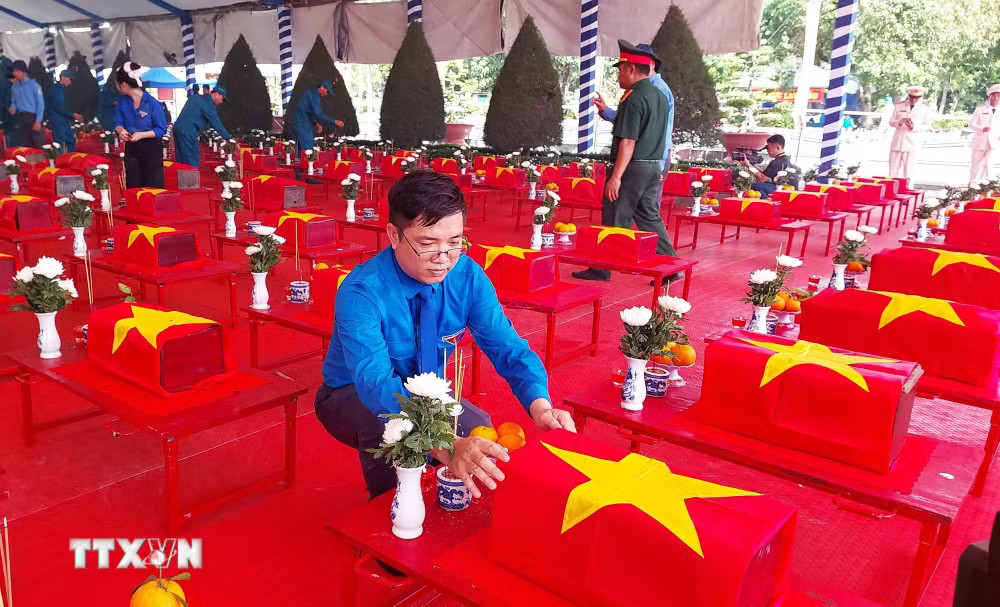
July 27th originated in the early years of the resistance war, when the country was still facing numerous difficulties, yet the Party, President Ho Chi Minh, and the State still chose a day for the entire nation to express their gratitude and respect to wounded soldiers, sick soldiers, martyrs, and the families of those who rendered meritorious service.
From Dai Tu, Thai Nguyen in 1947, that date has become ingrained in the nation's spiritual life as a reminder, deeply etched in our hearts: today's independence, freedom, unity, and happiness did not come about naturally. It is the result of bloodshed, sacrifice, youth, and the long waits of many generations.
Seventy-nine years have passed, yet the principle of "drinking water, remembering the source" remains timeless. The further we move away from war, the more we appreciate the value of peace. The wide, open roads we see today were once used by convoys braving bombs to reach the front lines. The brightly lit schools today were once where young men and women left their books to brave the gunfire. The peaceful cities we see today were built on the sacrifices of those who remained forever young. Every inch of our homeland, every bountiful harvest, every child's voice going to school—all contain a part of the blood and flesh of those who have become immortal.
But gratitude cannot be merely a seasonal emotion. Gratitude must be a national organizational capacity, a political resolve, a program of action measured by concrete results. As long as there are still fallen soldiers whose remains have not been found, still graves whose identities remain unknown, still records that do not match with their relatives, and still relics lying dormant in the ground, July must remain a month of action, of returning to old battlefields, of reviewing records, of collecting and matching DNA samples with hope.
The two words "Compatriots" and the promise not to let anyone be forgotten.
Perhaps few nations address each other with a term as intimate and sacred as "compatriots." In the Vietnamese consciousness, this term originates from the legend of Father Lac Long Quan and Mother Au Co, from the hundred eggs that hatched into a hundred children. Therefore, "compatriots" is not just a way of referring to people of the same nationality. It is a memory of a shared origin, a shared sense of camaraderie, and a shared responsibility to support each other in times of hardship.
During the war, the two words "compatriots" gave strength to countless sons and daughters to go to war, to the home front to share food and clothing with the front lines, and to mothers who bid farewell to their sons while hiding their tears.
In peacetime, those two words continue to resonate in seemingly small but significant events: a citizen providing information about an old burial site; a veteran trembling as he recounts the coordinates of his comrade's burial place; a family preserving a yellowed letter; a young man helping his grandparents digitize death certificates, diaries, and old photos; a stranger giving up their turn to provide a DNA sample to the relatives of a fallen soldier whose remains have just been discovered.
Therefore, showing gratitude cannot be just a movement. It is a great debt to time and history. No amount of effort can ever be enough, because nothing can compensate for the youth sacrificed for the country, and no medicine can fully heal the emotional wounds of the mothers, wives, and children who have waited so long.
But each collected biological sample, each reconstructed artifact, each digitized record, each recorded account, each verified coordinate is a concrete offering of incense, a step closer to bringing them home.
The 500-Day Campaign: When morality meets science, memory becomes living data.
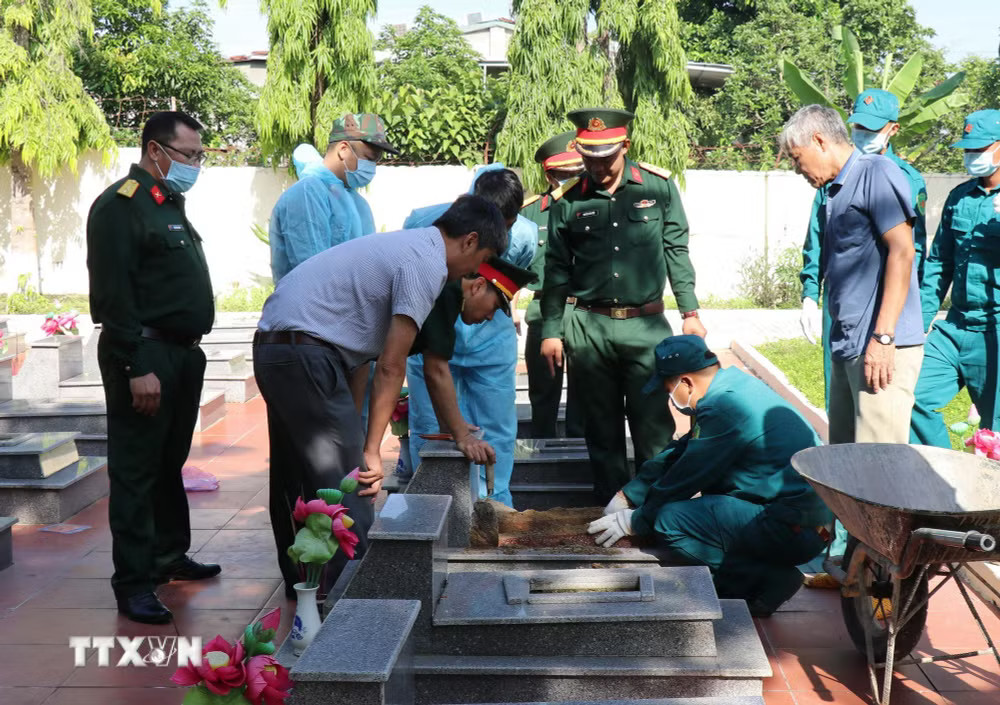
The "500-day campaign to intensify the search, collection, and identification of the remains of fallen soldiers" will be implemented from March 15, 2026, to July 27, 2027, in commemoration of the 80th anniversary of the Day of War Invalids and Martyrs.
This is the most comprehensive and large-scale campaign ever undertaken to create a breakthrough in the search, collection, and identification of the remains of fallen soldiers whose identities are still unknown.
The campaign aims to locate and collect approximately 7,000 remains of fallen soldiers; complete sample collection from about 230,000 unidentified graves of fallen soldiers; conduct DNA testing on approximately 18,000 samples of fallen soldiers' remains; build and operate a genetic database of fallen soldiers' relatives; and complete the work of clearing mines and unexploded ordnance in key areas to facilitate the search and collection efforts.
From a national governance perspective, these are major targets that require synchronized coordination among the Ministry of National Defence, the Ministry of Interior, the Ministry of Public Security, local authorities, specialized agencies, forensic institutes, bomb disposal forces, local governments, and the people.
But viewed from the perspective of each family's anticipation, those numbers are far from dry and meaningless. A DNA sample can reconnect father and son, brother and sister, soldier and his hometown. A piece of paper with unwritten words can reveal a person's identity. A story can lead the recovery team to the exact stream, hillside, garden, or old cemetery where a comrade from the past lies.
Data updated as of July 26, 2026
The search and recovery efforts have resulted in the discovery and collection of 1,491 remains of fallen soldiers, including 467 remains in Vietnam, 174 remains in Laos, and 850 remains in Cambodia.
Ten mass graves of fallen soldiers have been discovered and collected; in Tuyen Quang province alone, five mass graves containing approximately 23 remains were found; and in Le Thi Rieng Park, Ho Chi Minh City, 104 remains of fallen soldiers were discovered, along with five sets of mass remains containing approximately 13 individual remains of fallen soldiers.
Thirty-two search and recovery teams, comprising 1,541 people, were mobilized, including 13 domestic teams and 19 teams operating abroad, comprising 8 teams in Laos and 11 teams in Cambodia.
Thirteen memorial and burial ceremonies have been held, receiving and interring the remains of 735 fallen soldiers.
Samples of remains have been taken from 80,882 martyrs' graves; of which 56,425 graves met the criteria for sampling, reaching 69.76%.
93,464 DNA samples from relatives of fallen soldiers have been collected; 53,036 samples have been analyzed and synchronized into the database for matching purposes.
15,729 samples of martyrs' remains have been received, stored, and preserved from various localities; the Military Forensic Institute has received 13,231 samples from 15 out of 17 provinces and cities participating in the program and has conducted examinations on 130 samples.
Mine and unexploded ordnance clearance work has reached 8,462.16 hectares out of a total of 22,725 hectares, equivalent to 37.24% of the plan; specifically in the core area of Vi Xuyen, Tuyen Quang, it reached 3,566.7 hectares out of a total of 4,460 hectares, or 79.97% of the plan.
These results demonstrate that the gratitude of the nation today is being expressed with both heart and intellect: through incense and technology, through the memories of witnesses and digital data, through the hands of soldiers collecting remains and modern equipment searching underground, through solemn spiritual rituals and rigorous scientific procedures. This is the meeting point between age-old moral principles and the modern capabilities of the nation.
The Call from the Depths of the Earth: Le Thi Rieng Park
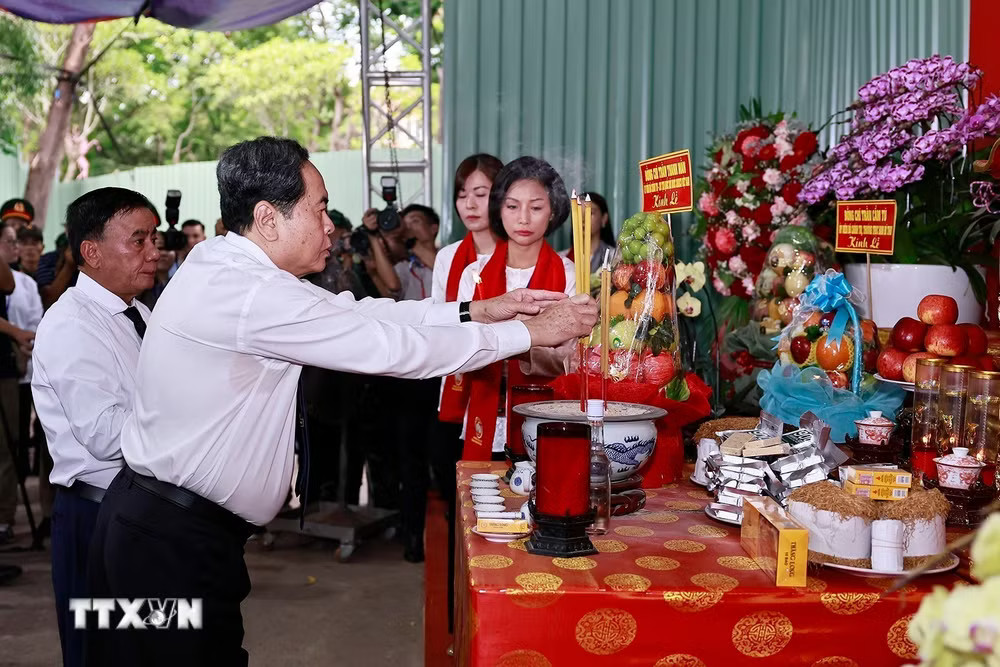
Amidst the bustling city of Ho Chi Minh, Le Thi Rieng Cultural Park emerges as a peaceful green oasis. Beneath the tree-lined paths and the daily chatter of locals, few can imagine that this was once the site of the old Metropolitan Cemetery, also known as Chi Hoa Cemetery, steeped in the tragic memories of the Tet Offensive of 1968. Nearly six decades have passed, yet the earth still silently embraces those who fell in the flames of war.
The search operation at Le Thi Rieng Park was a meticulous and respectful reconstruction of memories. From historical records, documentary photographs, military maps, domestic and international archives, and witness accounts, to ground-penetrating radar surveys, resistivity measurements, and geophysical analysis, the authorities gradually pinpointed the locations of unusual signals underground.
It's not just a technical maneuver; it's how today's generation bows its head to listen to the voice of its motherland, to listen to the unspoken words of their comrades from the past.
When the mass grave trench was opened, layer after layer of soil was slowly and meticulously peeled away. The soldiers collecting the remains not only dug the earth, but also carefully handled each bone fragment, each decaying canvas sheet, each bullet, each wallet, each piece of paper faded by time. Some remains lay side by side, as if in their final moments before falling, the soldiers still leaned on each other with the oath of the soldiers of Vi Xuyen from yesteryear: "Live clinging to the rocks to fight the enemy, die becoming immortal stone." They fought together, sacrificed together, lie together, and now return together to the embrace of their homeland.
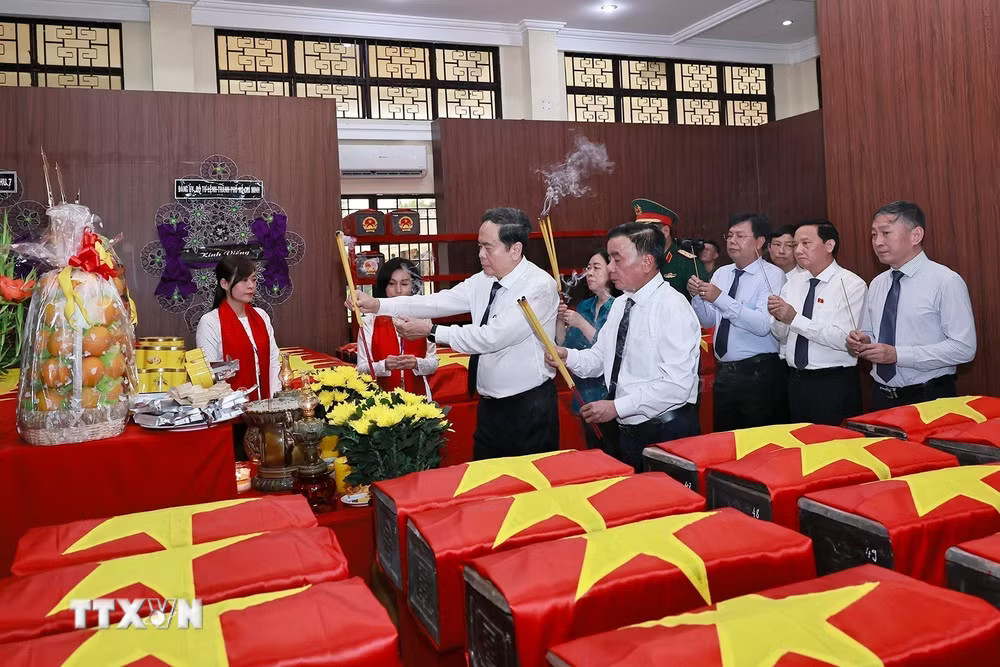
Particularly moving were the artifacts related to martyr Huynh Van Quen. On one piece of paper, the phrases "South Vietnam Liberation Army," "Decision of the Battalion Command," "Comrade Huynh Van Quen," and the unit's designation were still legible.
Through cross-referencing of the unit designation and historical documents, authorities have initially identified this as martyr Huynh Van Quen, a soldier of the 1st Long An Battalion of the Southern Liberation Army, a unit that participated in the battle at the Y-shaped bridge area in 1968.
Although rigorous DNA matching is still necessary for scientific confirmation, his name resonated in mid-July like a call to return after nearly sixty years.
From the initial discovery of just a few sets of remains, by July 26, 2026, the Le Thi Rieng Park area had yielded 104 sets of remains of fallen soldiers, along with 5 sets of mass remains, approximately 13 sets of remains of fallen soldiers, and numerous artifacts.
Each discovery here not only adds data to a specific search; it also awakens in the urban memory a layer of history obscured by time, allowing the city today to better understand the price of the peace it currently enjoys.
From Minh Duc, Tuyen Quang to our neighboring countries Laos and Cambodia.
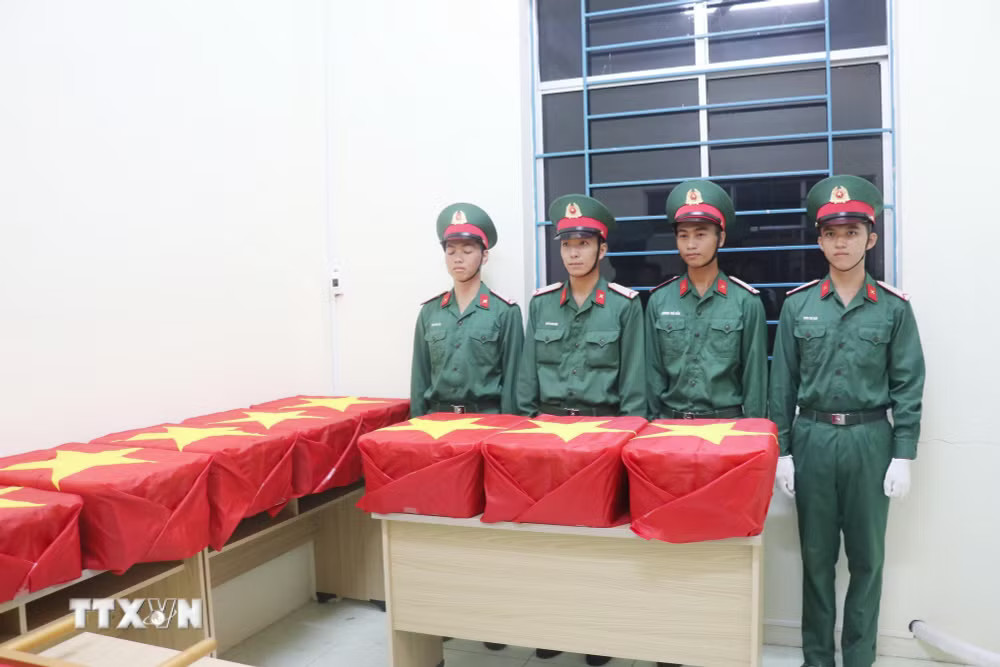
Beyond Le Thi Rieng Park, this year's July search operation has expanded to many new locations. In Minh Duc commune, Dong Nai city, search and recovery efforts have been carried out in an area that witnessed many fierce battles during the 1967-1975 period.
The area where the remains were discovered is located on the northwestern slope of Hill 74, Dong Dau hamlet, which was once the center of the "Minh Duc Search and Blockade" operation in November 1969. By July 20, 2026, authorities had discovered 21 sets of remains along with many artifacts belonging to fallen soldiers.
In Tuyen Quang, including the core area of Vi Xuyen, where fierce battles took place to defend the northern border, the work of clearing mines and unexploded ordnance and searching for mass graves has been accelerated. Five mass graves containing approximately 23 remains of fallen soldiers have been discovered.
That number once again reminds us that the war to defend the homeland after 1975 also left behind unhealed wounds, soldiers who have not returned, and mountain peaks, ravines, and high points that still hold many secrets of their comrades.
In neighboring Laos and Cambodia, search teams continue to silently traverse forests and streams, following every clue. The rainy season, malaria, treacherous terrain, fading witness memories, and unexploded ordnance all make the search even more difficult. But pure international solidarity and a promise to their comrades keep their steps from faltering.
Each remains of a Vietnamese volunteer soldier and expert brought back to their homeland is an occasion for the entire nation to bow in respect to their sacrifices that transcended geographical borders, for the noble cause of international duty, and for the unwavering solidarity between nations.
We can measure the results of the campaign by the number of remains recovered, the number of DNA samples collected, and the number of hectares of landmines cleared. But there is something that cannot be measured by numbers: the peace of mind of mothers, wives, and children after decades of waiting, when loved ones have another chance to be called by their rightful names. It is the serenity of comrades when the promise "as long as we live, we will find each other" is continued by the responsibility of today's generation.
Historical landmarks and unforgettable stories.
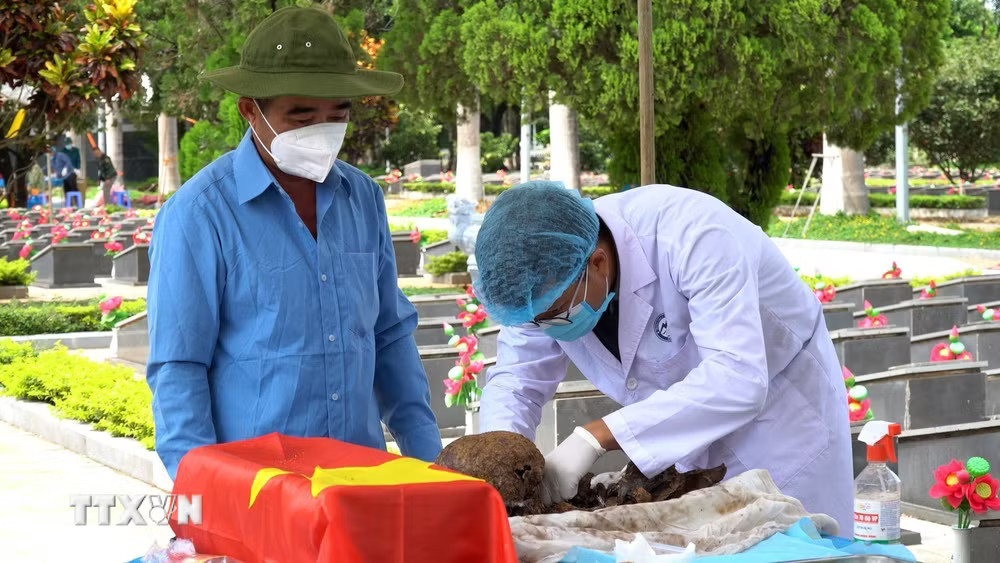
On the map of Vietnamese memory, there are places whose very names evoke a sense of profound sadness. Dong Loc Crossroads is where ten young female volunteer soldiers of Squad 4, Company 552, sacrificed their lives on July 24, 1968. Amidst the rubble, the call from Yen Thanh's poem "Cuc ơi!" still echoes: "Cuc ơi! Where are you? Why haven't you come to join the assembly?" This is not just the call of a comrade, but the call of the entire nation searching for its fallen daughters.
At Truong Bon, in the early morning of October 31, 1968, just hours before the US announced a halt to bombing in North Vietnam, 13 out of 14 young volunteers of the "Steel Squad," Company 317, sacrificed their lives while filling bomb craters and keeping the line open. Eleven girls and two boys, the youngest only 17 years old, some already holding their university acceptance letters, did not live to see the threshold of peace. When Pham Phuong Thao's song "Lullaby for You in the Truong Bon Land" asks, "Is this land you?", listeners understand that there are sacrifices so great that the land itself becomes a form, a relic, a homeland embracing its children.
On Highway 20 Quyet Thang in Quang Binh, the Eight Girls' Cave bears witness to the tragedy of November 14, 1972. Eight young volunteers were buried after a bomb collapsed the cave entrance. Their comrades outside heard their cries for help fading away but were unable to break through the massive rock. The cave became a mass grave and a testament to ultimate sacrifice.
In Hoang Mai, Nghe An, the Rocket Cave remains a war scar in the rocky mountains. On April 28, 1966, 33 young volunteer soldiers from Team 4, Unit C271, Team 27 bravely sacrificed their lives while on duty ensuring transportation during the resistance war against the US. Sixty years later, that memory still reminds us that some roads were built by the youth, and some trains were able to pass through because so many people had fallen.
And then there's Quang Tri Citadel, Truong Son National Martyrs' Cemetery, Highway 9 Cemetery, the Thach Han River, Tam Co Cave, Gac Ma, Vi Xuyen… These “red addresses” not only mark victories. They are pages of history written in blood and bones, places where the nation bows before those who have gone to earth so that the Fatherland can rise again. Along the Thach Han River, each rowing stroke today seems slower, gentler, because beneath the water lies the blood and bones of countless young soldiers in their twenties during the days when Quang Tri Citadel was engulfed in flames.
"Boat going up the Thach Han River, row gently!"
My friend still lies at the bottom of the river.
In their twenties, they become like waves on the water.
"The shores will remain calm for a thousand years."
The deeper we delve into the campaign, the more deeply today's generation understands that behind every statistic lies a bloody life story, a family's sleepless nights, and a wait that spans generations.
Some soldiers died at a very young age, without even having time to leave a final letter or a commemorative photograph. Others lie buried deep in the vast wilderness, like martyr Nguyen Van Hung in the Kon Plong forest, Kon Tum province, who succumbed to a severe bout of malaria during a march in 1974. He voluntarily stayed behind in a hammock strung between two small trees so as not to hinder the unit's advance.
For 25 long years, those two small trees have grown into towering giants, cradling the soldier's sleep high above the blue sky. The image of the hammock hanging 15 meters above the ground in the vast, ancient forest not only tugs at the heartstrings of those still alive but also serves as a stern reminder to today's generation: beneath every peaceful inch of land, beneath every silent canopy of forest, there may lie a soldier, quietly waiting to be called.
Science cannot replace compassion, but it can give compassion added strength.
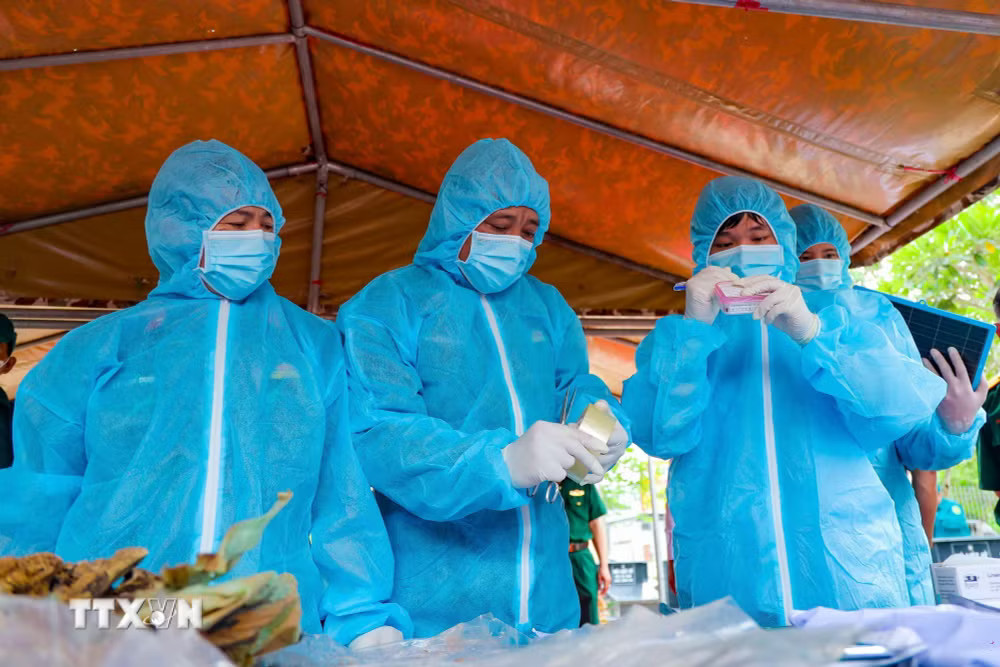
In the work of searching for, collecting, and identifying the remains of fallen soldiers, science and technology are not something alien to spirituality and morality. On the contrary, science provides more basis for gratitude, more means for hope, and allows fragmented memories from many sources to be connected into comparable data.
Ground-penetrating radar, resistivity measurement, satellite imagery, digital maps, software for managing fallen soldiers' data, databases of relatives' genes, next-generation DNA technology, artificial intelligence in data analysis and exploitation—all are contributing to shifting the search effort from isolated experiences to a more systematic, accurate, and transparent process. Behind each of these technical operations lies a humanitarian goal: restoring the names of these heroes.
However, we must not be under the illusion that technology can solve everything immediately. Remains buried for many years often weather, and the quality of the samples deteriorates. Records, grave diagrams, and unit designations are often incomplete or inaccurate. The terrain and landmarks of the old battlefields have changed. Historical witnesses are becoming increasingly scarce. DNA testing capabilities, although being enhanced, still face a huge workload. Therefore, the requirement is to work cautiously and meticulously, only proceeding as far as is certain; each sample taken must be protected as a rare opportunity for reunion.
In this journey, the press plays an irreplaceable role. The press must both promptly reflect the results and clarify the humanistic, scientific, and legal aspects of the search efforts; it must disseminate moving stories while verifying information, avoiding exaggeration, inaccurate data, and the transformation of grief into mere sentimentality. The press must be a bridge between policy and the people, between authorities and the families of fallen soldiers, and between dry data and the vivid memories of the community.
The appeal from July
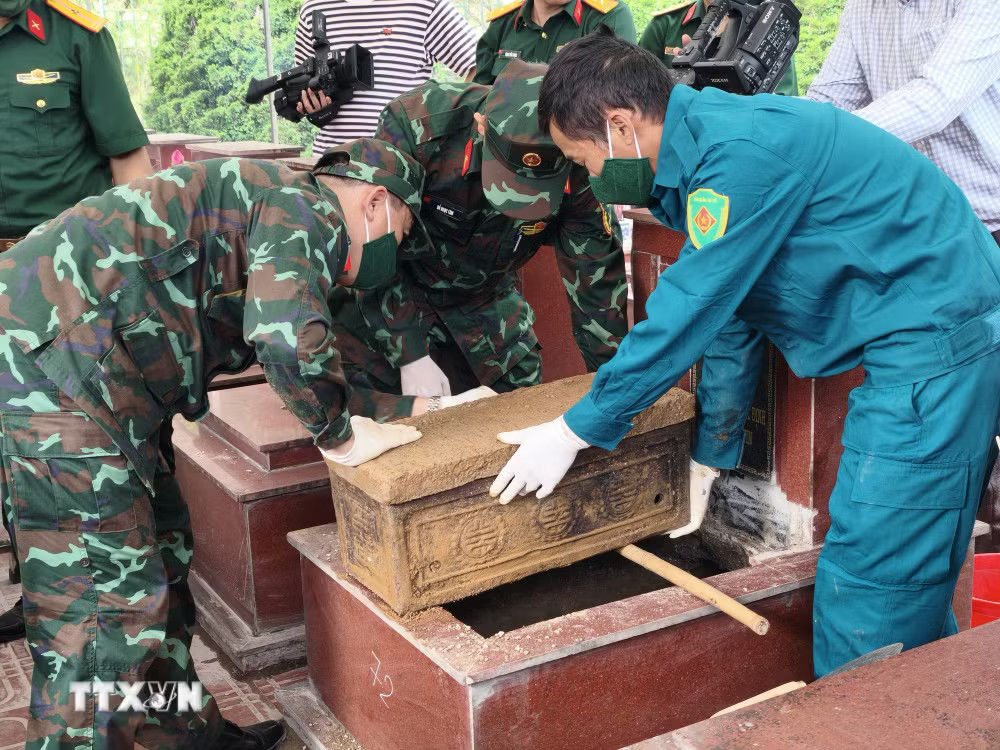
The 500-day campaign is not just a task for the authorities. It is a call for responsibility from the entire society. Families who still possess death certificates, handwritten letters, diaries, burial diagrams, old photos, mementos, unit information, or accounts from comrades, please do not let these documents be lost over time.
Localities implementing DNA sampling for relatives of fallen soldiers are urged to cooperate wholeheartedly. Young people in each family and lineage should help their grandparents and parents digitize their memories: photograph documents, record stories, preserve information, and connect with relevant authorities when necessary.
Sometimes, what makes a reunion possible isn't a large file, but just a small detail: the name of a stream, a unit designation, a marching date, a fellow villager, a faded photograph, a piece of paper folded in a soldier's wallet. Each clue preserved is a beacon on the journey to find comrades. Each DNA sample collected is an opportunity for an unidentified fallen soldier to have their name restored.
The Prime Minister emphasized the need for the utmost effort and determination to search for, collect, and identify the remains of fallen soldiers; he also requested that the work be carried out cautiously, systematically, scientifically, meticulously, and safely, in accordance with the national cultural traditions. This is not just an administrative order. It is an order from the heart of a nation that always upholds its moral principles.
From Vietnam's peace to humanity's aspiration for peace.
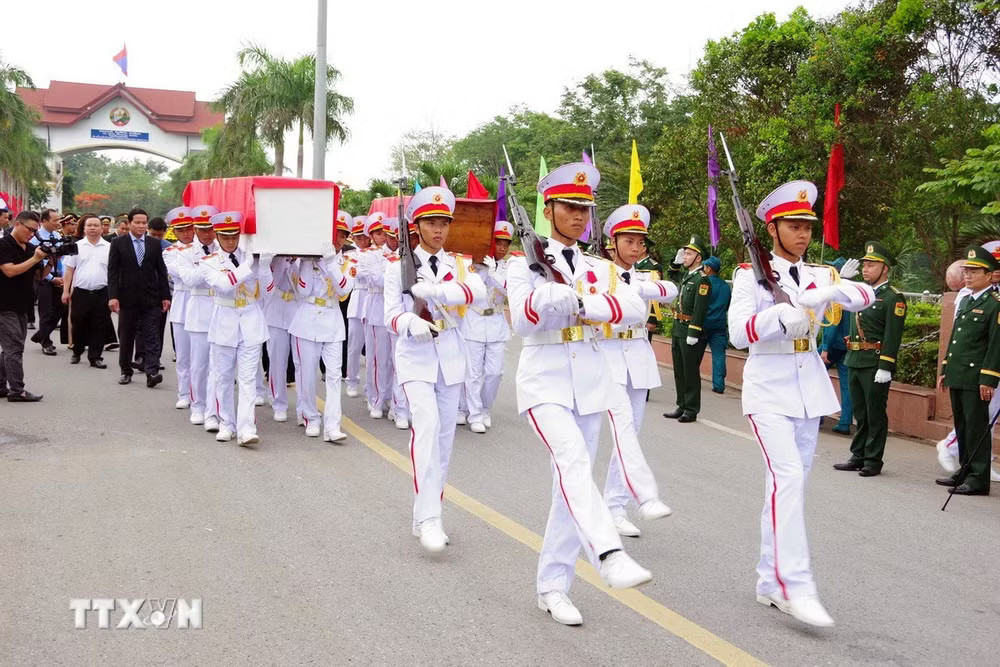
Commemorating the 79th anniversary and looking forward to the 80th anniversary of the Day of War Invalids and Martyrs, we bow our heads in respect to the war invalids who left a part of their bodies on the battlefield; we express our heartfelt gratitude to the martyrs who dedicated their lives to the Fatherland; and to the Heroic Vietnamese Mothers, the wives of martyrs, and the families of those who silently endured the longest period of suffering during the war. But along with this bow, we must also make a promise: that no sacrifice will be forgotten, that the relatives of martyrs will not be left alone in their search, and that those who have fallen will not forever remain merely listed as "unidentified."
From the mass graves recently opened in Le Thi Rieng Park, from the remains returned from Laos and Cambodia, from mass graves in Tuyen Quang, from search sites in Dong Nai and many other localities, Vietnam wants to send a simple yet profound message to humanity: war leaves behind irreparable losses. No victory can erase the tears of a mother who has lost her child, no medal can replace a family meal without a father, and no tombstone is large enough to contain all the years of youth cut short.
Therefore, preserving peace is not a distant slogan. It is a shared duty of humankind. In a world facing increasingly numerous non-traditional disasters such as natural disasters, earthquakes, climate change, epidemics, humanitarian crises, food insecurity, water security, cybersecurity, etc., nations need to be friendly, cooperative, and respectful of one another. Humanity cannot heal the earth if it continues to harm each other through war and armed conflict. It is impossible to overcome natural disasters, epidemics, and climate change together if more cemeteries continue to spring up.
July is not just a month to remember. July is a month to act—an act to restore the names of those who have fallen. An act to better care for war heroes and their families. An act to educate the younger generation to love peace, to cherish independence, to look to the past and build the future with their heads held high. An act so that every Vietnamese person, whether at home or abroad, contributes to the journey of searching for, collecting, and identifying the remains of fallen soldiers.
One day, not too far in the future, before the rows of tombstones in war cemeteries, those who remain will no longer have to sadly light incense for unnamed graves, but can choke back tears and call out their loved ones' names. And from the incense offered in July in Vietnam, the world will hear a reminder: Preserve peace, because after every war, what remains longest is not the sound of gunfire, but the search for loved ones that spans generations.
.


