
Most cars don't need expensive gasoline.
The American Automobile Association says the country wastes $2.1 billion simply because drivers use premium gasoline when it's not really necessary.
With new cars costing over $33,000, Americans often want to do everything they can to preserve their investment. And what better way to do that than by spending a little extra per liter of fuel with premium gasoline?
But don't do it, the New York Times advises, according to a report from the American Automobile Association (AAA). Unless someone wants to enrich the gas companies, there's no reason to buy expensive gasoline when your car only needs regular gasoline. But that's what 16.5 million drivers did in 2015, at least once a month, wasting a total of $2.1 billion.
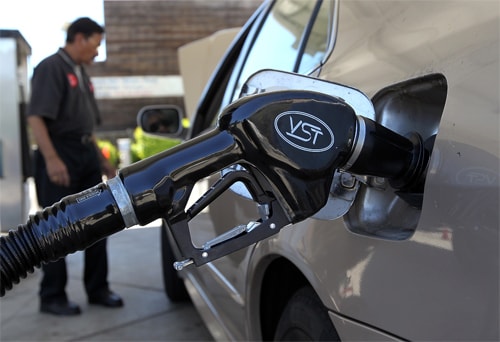 |
Filling your tank with gasoline that has a higher octane rating than what's specified in the owner's manual doesn't offer the benefits many drivers believe. Photo: Fortune. |
Using fuel with a higher octane rating than recommended in the owner's manual "does not improve fuel economy, performance, or reduce emissions," said Greg Brannon, AAA's Director of Mechanical Engineering.
Unless you're driving a high-performance model, like the BMW M3 or Jaguar XF, whose engine is designed to require higher octane gasoline, also known as premium gasoline, the engine will immediately tell you if regular gasoline isn't good enough.
How? It's the sound of metal clanging together or the popping noise when you accelerate. If that doesn't happen, feel free to use cheaper gasoline. "Unless the engine makes a sound, buying higher octane gasoline is a waste of money," the U.S. Federal Trade Commission website states.
Gasoline sold in the US typically comes in three octane ratings: regular gasoline with an octane rating of 87, medium octane at 89, and premium octane ranging from 91-93.A higher octane rating means better resistance to knocking.
Decades ago, using low-octane gasoline could cause engine noise because the fuel ignited prematurely. This knocking noise was undesirable as it could cause internal engine wear.
In the 1960s, even one oil company, Sunoco, offered eight octane ratings, along with charts to help drivers visualize which type their vehicle needed.
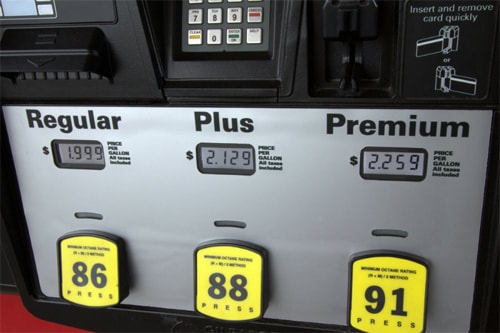 |
Three different octane gasoline grades and their prices per gallon at a gas station in the US in August 2015. Photo: Eastside-vw. |
However, modern car engines incorporate new technology that recognizes the octane rating of the fuel and adjusts the ignition timing to prevent damage. A car's owner's manual also specifies the type of fuel needed to achieve the correct performance.
However, the owner's manual may also mention that premium gasoline is "recommended." But if it's just a recommendation, there's no reason to use it instead of regular gasoline, according to Jake Fisher, the magazine's test director.Consumer Reports emphasizes this point.This renowned magazine has tested and found that cars "recommended" to use premium gasoline do not accelerate faster or save more fuel compared to those using regular gasoline.
At Ford, all models are designed to use regular gasoline, except for high-performance models like the Mustang Shelby GT350 and Focus RS, which have engines with higher compression ratios and therefore use premium gasoline.
At GM, premium gasoline is only specified for models like the Chevrolet Camaro ZL1 and Corvette Z06 with their 6.2-liter supercharged V8 engines. Even massive vehicles like the Cadillac Escalade are recommended, but they don't require premium gasoline.
For drivers who want to preserve their investment, as mentioned earlier, octane rating doesn't help; it depends on the quality of the gasoline. This, in turn, depends on the components used to create the fuel before it reaches the gas station.
According to VNE


