
Legal consequences of overreacting to traffic violations.
From initial traffic violations, in many cases, offenders have resisted and attacked law enforcement officers during inspections and enforcement, leading to particularly serious legal consequences. Regarding this issue, reporters from Nghe An Newspaper and Radio & Television interviewed Dr. Nguyen Trong Hai, Lawyer and Director of Trong Hai & Associates Law Firm.
PV: Dear Dr. Nguyen Trong Hai, recently there have been continued cases ofviTraffic offenders fail to comply with inspection and control requests, and some even resist law enforcement officers.How does he view this situation?
Dr. Nguyen Trong Hai, MD, PhD:Traffic police officers frequently interact directly with violators during patrols, inspections, and enforcement actions. While most citizens comply strictly, a segment of the population still exhibits a tendency to evade or refuse cooperation, particularly during alcohol breath tests or other offenses with high penalties.
Initially, the behavior often stopped at procrastination, refusing to present documents, arguing, or trying to get away with the violation. However, in some cases, when law enforcement officers firmly enforce regulations, violators lose control of their behavior, leading to obstruction or resistance to law enforcement. This is a worrying situation because it not only affects law enforcement but also poses a risk of injury, or even threatens the lives of law enforcement officers.

PV: Some argue that many incidents stem from errors.viA seemingly ordinary traffic violation ultimately turned into a criminal case.Why did such a transformation occur, sir?
Dr. Nguyen Trong Hai, MD, PhD:The core of the issue lies in the behavior that arises after being inspected and processed. A common traffic violation only results in an administrative penalty. However, when the offender obstructs, uses force, or threatens to use force against the officer performing their duty, the legal nature of the case changes completely.
It can be said that in many cases, individuals do not face criminal liability for the initial traffic violation but for their subsequent acts of resistance. Just a moment of anger or lack of self-control can lead to much harsher penalties than the initial offense.

PV: MRecently, authorities in Nghe An province have initiated legal proceedings against Phan Van Thoi for the crime.viResisting a law enforcement officer. According to reports, after being issued a citation for drunk driving, the suspect used a hammer, approximately 30cm long with a metal head, to repeatedly strike a traffic police officer on the head. He then fled and continued to resist arrest during the pursuit. How would you assess the nature and severity of this act?viThis?
Dr. Nguyen Trong Hai, MD, PhD:This is an extremely serious act, clearly demonstrating a blatant disregard for the law. Using a hammer, a highly lethal weapon, to directly attack the head of a law enforcement officer can lead to very serious consequences, even life-threatening ones.
Notably, the behavior was not limited to a single moment but extended over time, from attacking the officer who was writing the report, to fleeing and then continuing to resist when pursued. This demonstrates a reckless, impulsive nature and a clear disregard for the law.
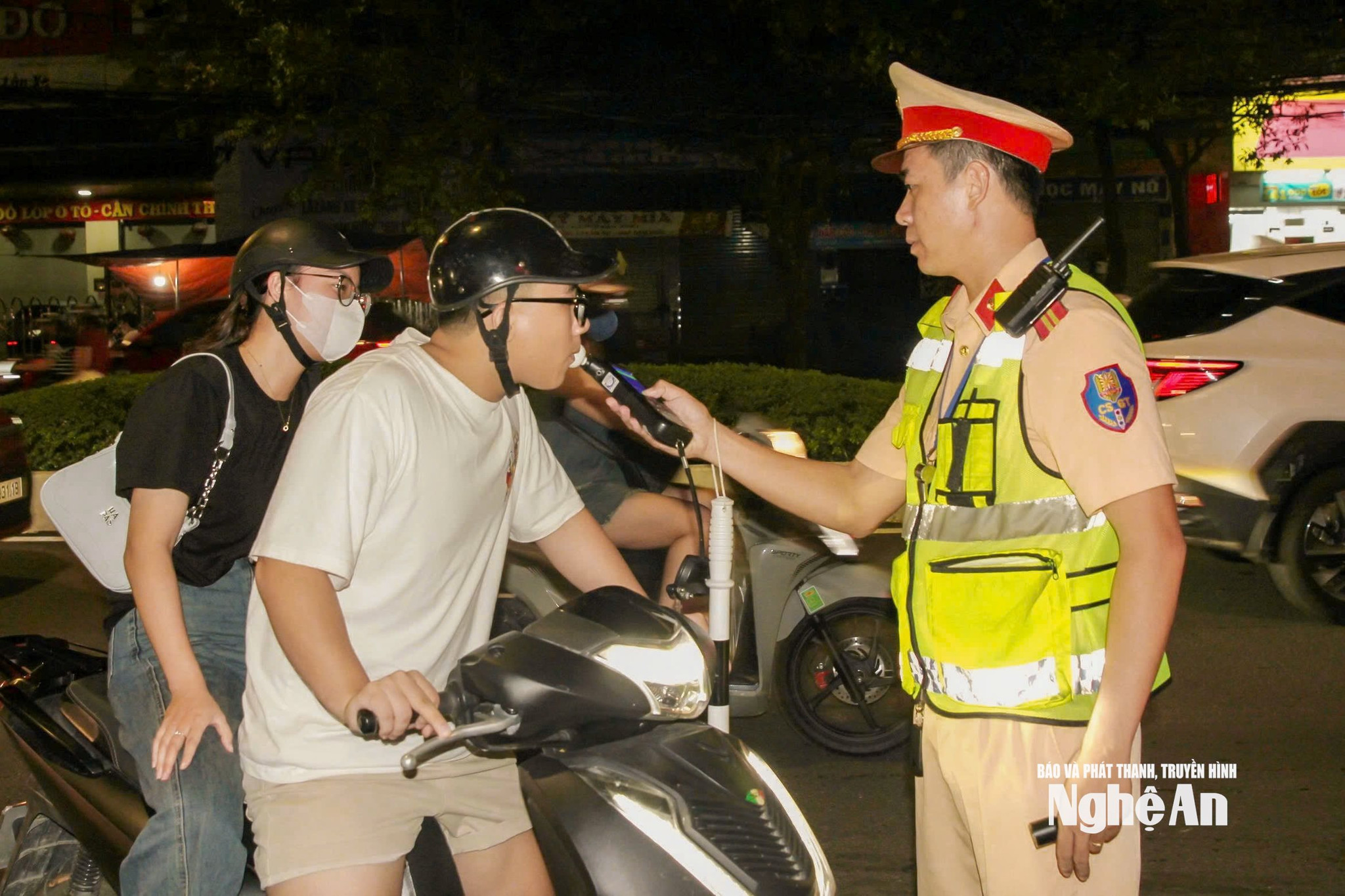
PV: In cases where road users fail to comply with inspections or controls, or engage in other behaviors...viWhat legal measures are prescribed for obstructing law enforcement?
Dr. Nguyen Trong Hai, MD, PhD:Article 73 of the Law on Road Traffic Order and Safety provides quite comprehensive regulations on this matter.
Accordingly, first and foremost, law enforcement officers must explain to the offender the nature of the violation, their rights and responsibilities; and at the same time, request them to cease any obstruction or resistance and to comply with the inspection and control.
If the offender still refuses to comply or obstructs the process, the authorities are authorized to apply preventive measures as prescribed by law.
In cases of resistance against law enforcement officers using force or engaging in dangerous behavior, depending on the circumstances, nature, and severity of the act, law enforcement officers may use force, support tools, or weapons as prescribed to prevent the violation and exercise their legitimate right to self-defense.
Furthermore, if the driver fails to comply with the order to stop and flees, law enforcement officers have the right to pursue and apprehend them, and handle the case according to regulations.
PV: For cases involving the use of weapons or violent acts.viWhat legal consequences might offenders face if they act dangerously to resist law enforcement?
Dr. Nguyen Trong Hai, MD, PhD:In serious cases, if all the elements constituting a crime are present, the offender may be prosecuted for the crime of resisting a public official in the performance of their duties under Article 330 of the Penal Code, with a maximum penalty of up to 7 years imprisonment.
For particularly dangerous acts such as using weapons, driving vehicles into law enforcement officers, or performing acts where the offender is clearly aware that they could cause serious consequences to the health or lives of others, the prosecuting authority will comprehensively assess the circumstances of the case to consider the corresponding criminal liability in accordance with the law.
It is important for people to understand that resistance does not change the initial outcome of the violation but only makes the legal consequences more severe.

PV: According to him, what needs to be done to reduce instances of resistance to law enforcement officers in the traffic sector in the future?
Dr. Nguyen Trong Hai, MD, PhD:First and foremost, it is necessary to continue promoting the dissemination of legal information so that people understand their rights and obligations, as well as the legal consequences of resisting law enforcement officers.
Furthermore, typical cases need to be handled strictly and publicly to increase deterrence and general preventive education. For cases involving hooliganism, reckless behavior, and the use of weapons to attack law enforcement, it is necessary to resolutely prosecute the right people for the right crimes, in accordance with the law.
On the part of law enforcement agencies, it is necessary to continue improving professional skills, situational handling abilities, and safety measures for officers and soldiers during the performance of their duties. When public awareness campaigns and enforcement of violations are carried out in a coordinated manner, the situation of resisting law enforcement will be gradually and effectively curbed.
PV: We sincerely thank Dr. Nguyen Trong Hai!


