
Military implications of weaponizing low-orbit satellites.
Low-orbit satellites as strategic infrastructure: ASATs create debris, satellite internet supports warfare, and orbital position disputes increase the risk of escalation.
Low Orbit (LEO) satellites are becoming a key space infrastructure of the 21st century and a new front of strategic competition. The rapid expansion of SpaceX's Starlink, along with China's Qianfan and Russia's Rassvet projects, shows that LEOs are no longer solely for meteorological missions. As nations view LEOs as weapons, security risks and geopolitical instability increase significantly.
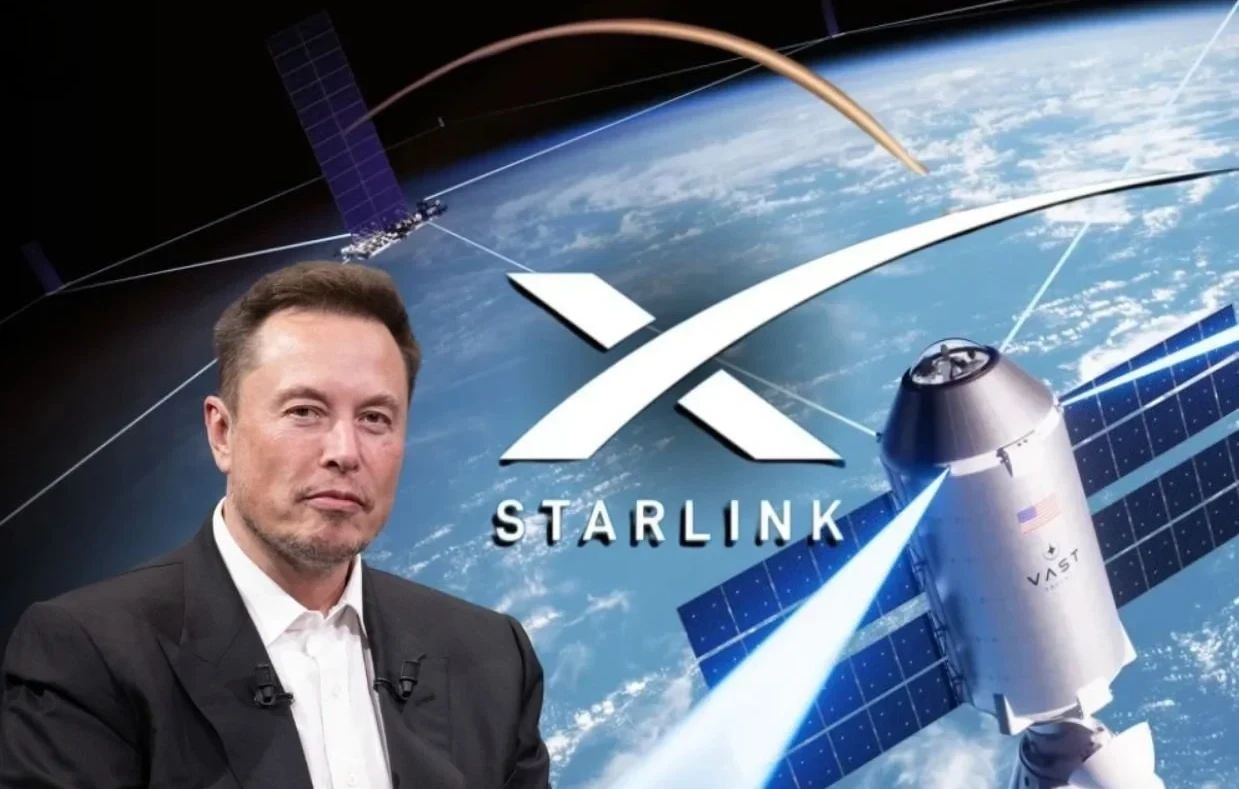
Overview of the leading LEO satellite constellations in the race.
Large-scale LEO systems are reshaping information and surveillance infrastructure. The table below summarizes data by source:
| System | Number of active satellites | Final plan | Note |
|---|---|---|---|
| Starlink | Over 8,810 satellites | 12,000 - 42,000 satellites | The world's largest, with near-global coverage. |
| Qianfan (Thiên Phàm) | 100 test/initial satellites | 1,296 - 13,000 satellites (depending on the phase) | Deployed by China SatNet and CASC |
| Rassvet | Under development | 250 satellites by 2027, nearly 1,000 by 2035 | Limited by budget and capabilities. |
Technical risks: anti-satellite weapons and orbital debris.
Anti-satellite weapons (ASATs) can destroy satellites using missiles, lasers, or cyberattacks. Each destruction creates thousands of fragments traveling at speeds of tens of thousands of kilometers per hour, increasing the risk of chain collisions. A scenario of a widespread debris cloud on LEO, also known as Kessler syndrome, could halt rocket and satellite launches for decades. The damage from debris far exceeds the value of each destroyed satellite.
Satellite internet as a tool for warfare and information.
Controlling LEO networks offers advantages in information warfare and electronic warfare. The use of Starlink in Ukraine demonstrates how this infrastructure supports battlefield communications, UAV guidance, fire coordination, and humanitarian aid. Recognizing this role, nations are motivated to develop countermeasures such as ASAT, jamming, or cyberattacks against satellites and ground stations. A vicious cycle of "defense-retaliation" easily forms and escalates.
Orbital position disputes: limited resources, collision risk.
LEOs are not infinite in terms of effective position. Favorable orbital planes and altitudes contribute to effective coverage and reduced latency. When a system deploys thousands of satellites, concerns about dominating space resources and limiting the operation of other systems increase. Competition for space in the same orbital plane increases the risk of near-collision and puts pressure on space coordination capabilities.
LEO also houses strategic reconnaissance and communications satellites. Actions such as new launches, orbital adjustments, or maneuvers to approach could be interpreted as hostile signals, increasing the risk of misunderstandings and chain reactions.
Extended cyberattack surface on LEO systems
LEO systems rely on orbiting satellites, interspace links, and ground station networks. If compromised or infiltrated, the consequences can include the leakage of sensitive data, navigation disruptions, widespread loss of connectivity, navigation errors, and information manipulation. Because these networks connect millions of devices, cyberattacks are not just a technical issue but a strategic risk affecting national security, the economy, and military operations. Therefore, securing and defending satellite networks has become a priority for several nations.
The driving force behind the arms race in space.
LEOs serve both civilian (Internet, telecommunications) and military (command-control, surveillance). When ownership and control of satellites are considered vital, nations tend to increase investment to avoid falling behind in the space technology race. Competition is not only about the number of satellites but also about defensive capabilities and the ability to counter satellites.
Risk of strategic instability
In modern conflict, information and communication are crucial. An incident or impact on a LEO satellite—from physical attacks and cyberattacks to technical malfunctions—could be interpreted as an act of war. This risk of misunderstanding increases the likelihood of escalation as parties seek to protect their strategic infrastructure. The potential consequences could extend far beyond the impact of ground warfare, affecting both civilian and military spheres simultaneously.
Conclude
Weaponizing LEOs creates a chain of interconnected risks: orbital fragmentation, positional competition, cyberattacks, and an arms race dynamic. Managing stress and ensuring operational transparency within LEOs becomes crucial to mitigating misunderstandings and strategic instability.


