
S-500 Prometheus system: A new step forward in Russia's defense network.
The new S-500 Prometheus system recently deployed by Russia is attracting attention for its ability to intercept hypersonic weapons and protect targets outside Earth's atmosphere.
Russia has officially put into active service the first of its advanced S-500 Prometheus air defense and missile defense systems. This is a strategic weapon system designed to intercept new generation threats, particularly hypersonic weapons. This move not only expands Moscow's defense capabilities but also marks a fundamental shift in how it intercepts high-altitude flying targets.
The ability to conduct operations beyond the atmosphere.
Developed by Almaz-Antey Corporation, the S-500 Prometheus is considered a bridge between traditional air defense systems like the S-400 and fixed missile defense systems. According to military expert Alexei Leonkov, the S-500 simultaneously meets both air defense and space defense requirements, a capability that no similar system currently possesses.
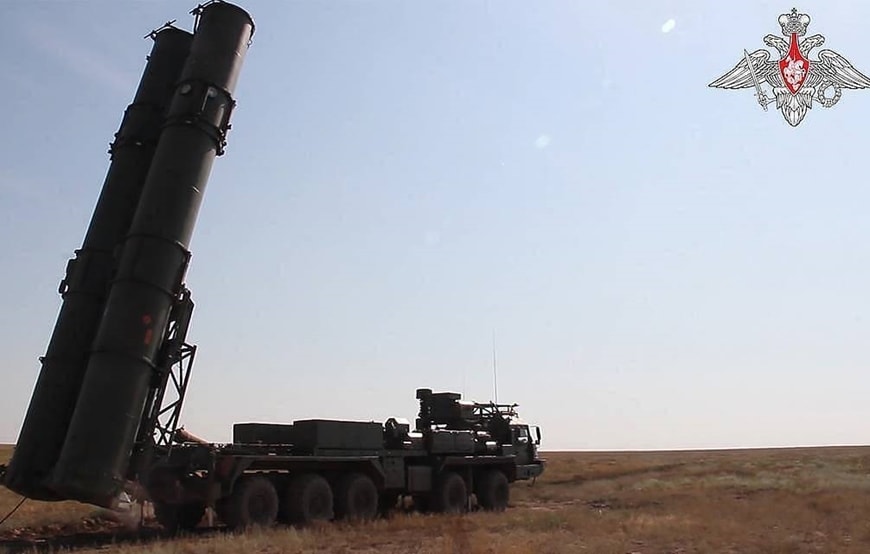
Technically, the S-500 is capable of creating a "protective umbrella" with a radius of up to 600km, 1.5 times larger than the S-400 system. The system can intercept targets at altitudes up to 200km, including cruise missiles, intercontinental ballistic missiles (ICBMs), and targets operating in low Earth orbit. Notably, the head of the Russian Aerospace Forces claims the system can simultaneously engage 10 targets with extremely short reaction times.
Advanced kinetic energy collision technology
The biggest difference between the S-500 and previous generations of Soviet and Russian missiles lies in the operating principle of the 77N6-N and 77N6-N1 missiles. Instead of using a guided fragmentation warhead, these new missiles employ a kinetic impact (hit-to-kill) method, similar to the US THAAD system.
With interceptor missiles reaching speeds of up to 7 km/second, the S-500 is theoretically capable of intercepting hypersonic targets with complex maneuvering trajectories. Military observer Mikhail Khodarenok stated in Gazeta.ru that the system has sufficient potential to counter the most advanced hypersonic weapons currently under development in the West.
Challenges and skepticism from the West
Despite its impressive specifications, international military experts, particularly The National Interest magazine, still raise many questions about the S-500's actual capabilities. Due to the classified nature of a strategic weapon, very little information about its real-world testing has been publicly released.
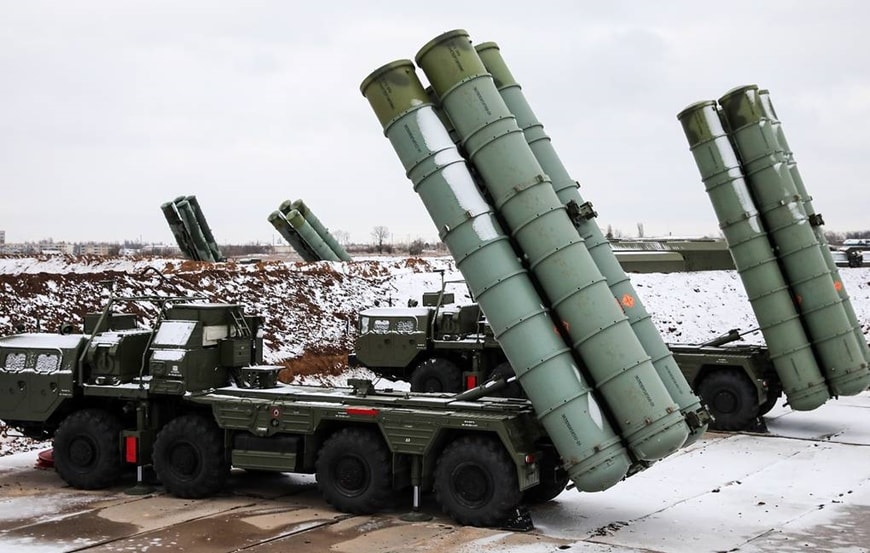
Western experts compare the progress of the S-500 to the US THAAD system – which took over 10 years to develop with numerous technical failures – to express skepticism about the system's level of perfection when put into combat. Furthermore, Russia's delay in producing new missile types means the S-500 may still be using older missiles from the S-400 system, significantly limiting its combat effectiveness.
Furthermore, although Russia claims the S-500 possesses encrypted communication channels and radar capable of random frequency hopping to counter electronic countermeasures, these features have yet to be verified in actual combat. Overall, the S-500 Prometheus remains a major technological enigma, playing a crucial strategic deterrent role in Russia's defense doctrine.


