
The last nuclear agreement between the US and Russia has expired.
The final nuclear disarmament treaty between Russia and the United States is coming to an end. When this agreement expires, it will put an end to a mechanism that has existed for decades to control the nuclear arsenals of the superpowers.
Time is running out.
The New Strategic Arms Reduction Treaty (New START) between the US and Russia was set to expire at the end of the day on February 4th (Eastern Time), which is 12 noon on February 5th in Vietnam. Prior to this date, many world leaders had publicly called for extending or maintaining the agreement.
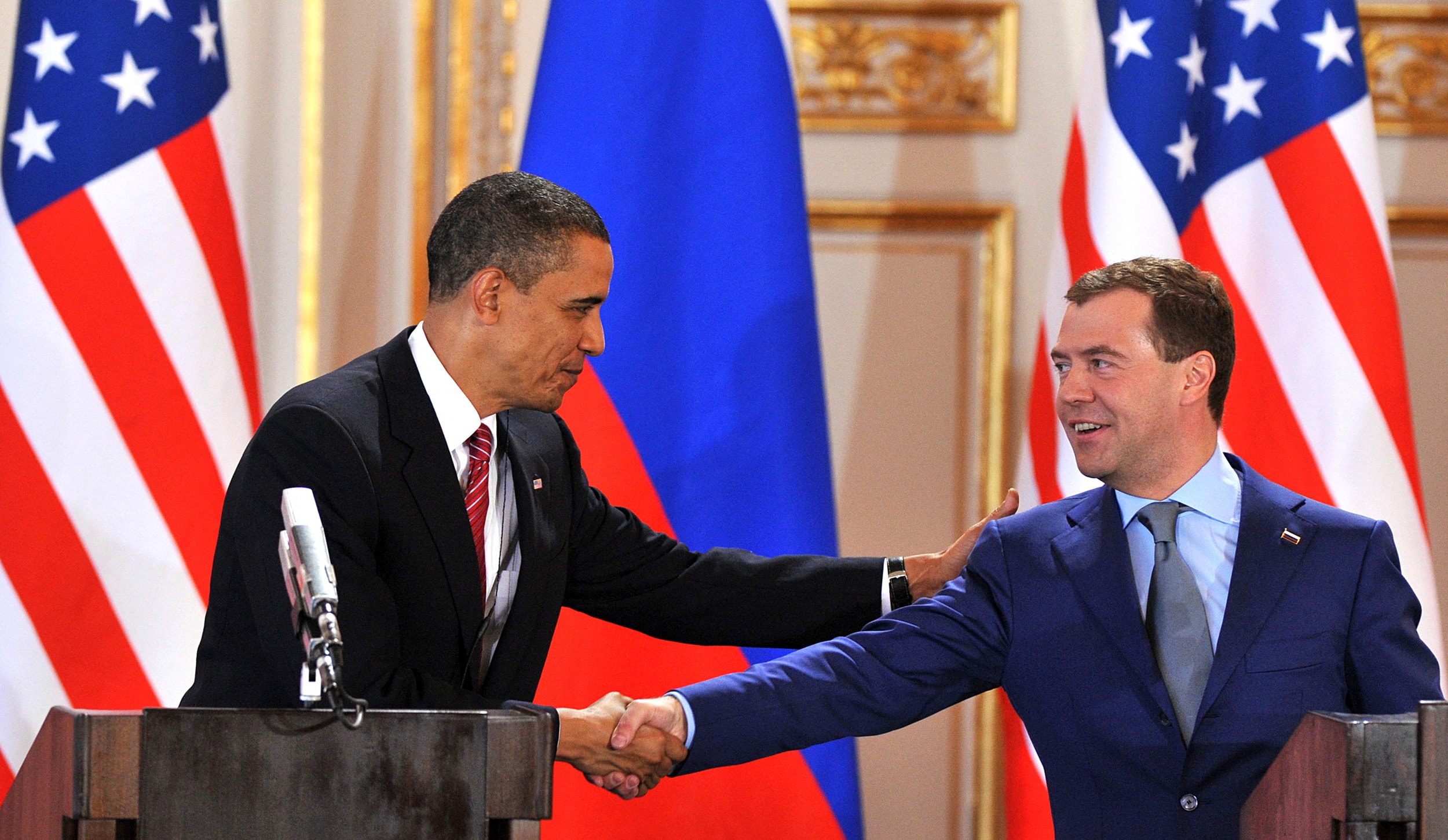
New START is the last bilateral nuclear arms reduction treaty between the two countries, signed in 2010 by US President Barack Obama and Russian President Dmitry Medvedev. Prior to that, the first such agreement was the Strategic Arms Limitation Treaty (SALT-I), signed in 1972.
Specifically, New START limits: the number of deployed strategic nuclear warheads to 1,550 for each side; the number of strategic launch vehicles (such as heavy bombers, intercontinental ballistic missiles (ICBMs), and submarine-launched ballistic missiles (SLBMs)) to 800; and provisions for mutual inspections to verify compliance with the treaty.
Prior to New START, history recorded START I and START II. START I was initiated by US President Ronald Reagan during the Cold War and signed by his successor, President George H.W. Bush, and Soviet leader Mikhail Gorbachev. The treaty was in effect from 1994 to 2009. START II was agreed upon in 1993 but never came into effect due to escalating tensions between Moscow and Washington at the time.
In 2010, the New START treaty was signed and ratified with the hope that, as its name suggests, it would be a "new beginning." Initially, the treaty had a term of 10 years, until February 2021. At that time, US President Joe Biden and Russian President Vladimir Putin agreed to extend it for another 5 years, bringing its validity to the current 2026 deadline.
What happens when the agreement expires?
When the treaty expires, the world's two largest nuclear powers will no longer be bound by any caps on their strategic arsenals.
This is extremely bad for global security.
Kremlin spokesman Dmitry Peskov speaks at a press briefing on February 3.
Without intervention, the world could face an uncontrolled nuclear arms race. The end of the treaty also ushers in a new era of uncertainty, as the agreement's goal was to promote transparency through inspections and data exchange. This mechanism was designed to prevent one side from launching a preemptive nuclear attack based solely on misinformation about the other.
In September 2025, Putin proposed that Russia would unilaterally abide by the agreement for another year to allow more time for renegotiation. At the time, US President Donald Trump commented that the proposal "sounds like a good idea," but did not make a firm commitment.
However, Trump's stance seems to have changed. In an interview with the New York Times in January 2026, he said of New START: "If it expires, let it expire," adding that he expected "we will make a better deal."
Trump believed that China—the world's fastest-growing nuclear power—needed to be included in this bilateral agreement. During his first term, he also unilaterally canceled several arms control agreements with Russia and proposed bringing China in, but without success.
Relations between Moscow and Washington plummeted to near-freezing levels after Russia launched its military campaign in Ukraine in 2022. Six months after the war, Russia banned US inspections of strategic military sites. In 2023, Moscow announced its suspension of participation in New START, citing US support for Ukraine, although it continued to adhere to the limits on the number of warheads.
Looking back at history, the START I treaty had special provisions that compelled Ukraine to transfer Soviet-era nuclear warheads to Russia in exchange for security guarantees from Russia, the United States, and the United Kingdom.
When the first START treaties were signed, Russia and the United States were unrivaled nuclear powers. However, China has now risen to become a military and economic superpower. Beijing currently possesses an estimated 600 nuclear warheads, and that number continues to grow.
In 2023, a US congressional committee warned that, for the first time in history, the US faced the challenge of deterring two equally powerful nuclear adversaries simultaneously. However, China rejected calls to limit its arsenal, arguing that its stockpiles remained modest compared to those of the US and Russia.
What are the chances of saving New START?
The likelihood of extending or renewing the New START treaty seems very low. On the Russian side, they have developed and deployed weapons systems outside the scope of the New START treaty, such as the Oreshnik hypersonic ballistic missile or the Poseidon nuclear-armed drone.
From the US perspective, Trump's proposal for a space-based nuclear missile defense system called the "Golden Dome" is seen as an attempt to undermine the principle of nuclear power balance: deterrence through certain mutual destruction (MAD).
Russian Deputy Foreign Minister Sergei Ryabkov also stated on February 3rd: If the US deploys a missile defense system in Greenland, Russia will respond with military measures.
The expiration of New START is causing concern in Europe, and Trump's statements have raised doubts about whether the US "nuclear umbrella" will continue to unconditionally protect Europe.
A debate is underway regarding the formation of a separate European nuclear defense system. The idea being put forward is that the two European nuclear powers – France and the UK – would extend this protection to other countries, such as Germany. German Chancellor Friedrich Merz confirmed that negotiations are ongoing, but acknowledged that "the time is not yet ripe."
The problem is complicated by this: Who will be the one to press the nuclear button? Furthermore, Russia wants to include the arsenals of Britain and France in any new treaty, arguing that both are allies of the United States.
On social media platform X, former President Obama urged the US Congress to act to protect New START, arguing that allowing the treaty to expire would "senselessly erase decades of diplomacy and could trigger a new arms race that would make the world less safe."
Meanwhile, Medvedev, the Deputy Chairman of the Russian National Security Council, warned that the end of the treaty was a "wake-up call for everyone," and that the lack of alternative provisions would only accelerate the "Doomsday Clock."


