
How to understand "no stopping" and "no parking" signs to avoid fines?
Many drivers have been fined for parking in prohibited areas. Sometimes the reason isn't intentional violation, but rather a misunderstanding of the meaning of parking prohibition signs.
In reality, many newly licensed drivers or those with little driving experience don't clearly distinguish between "No Parking" and "No Stopping/Parking" signs. Therefore, some still mistakenly believe that if they only stop for a few minutes, turn on their hazard lights, and don't leave the driver's seat, they can stop anywhere. This leads to many people receiving traffic tickets without realizing it.
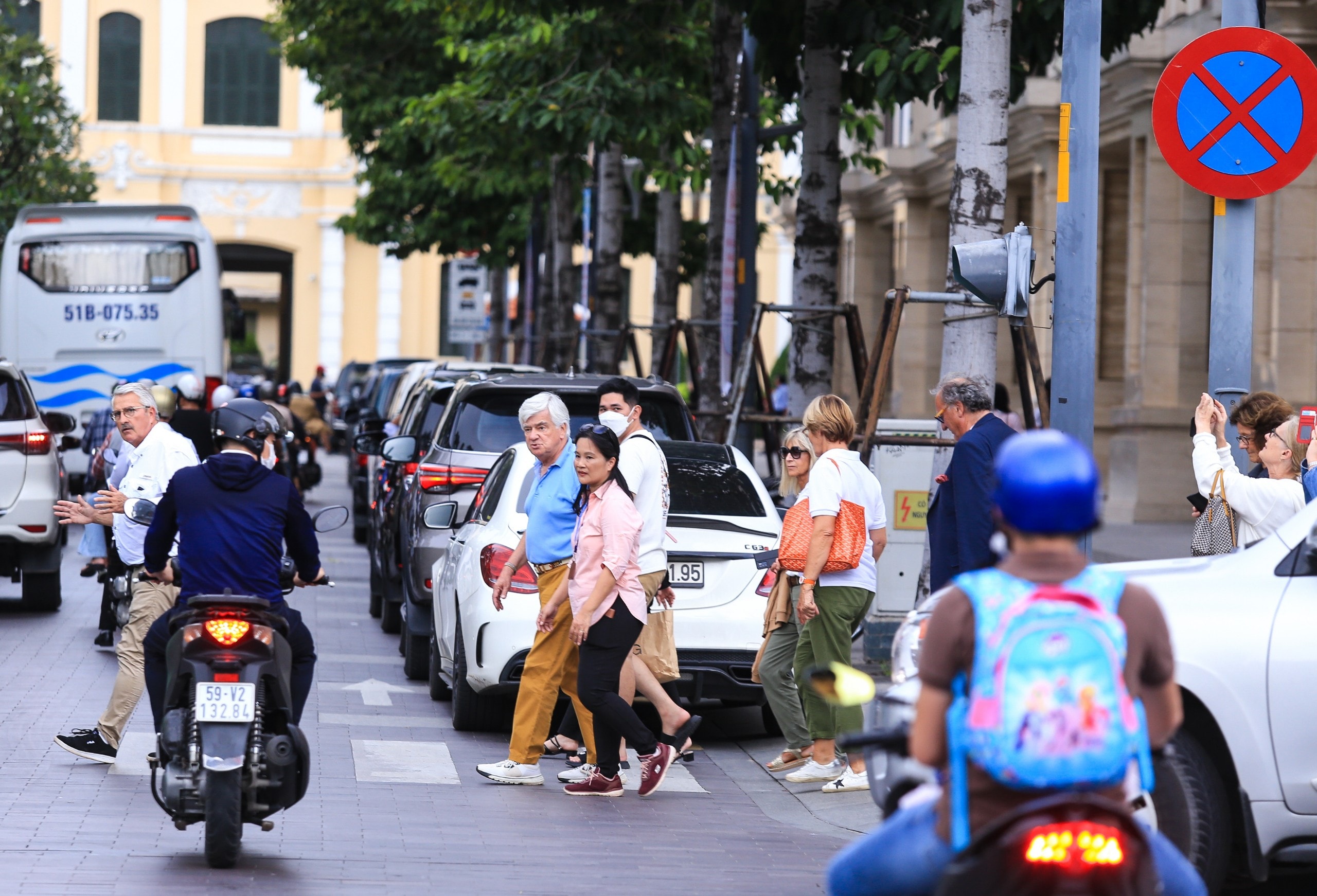
Interview with the reporter.Adolescent,Mr. D.MH, residing in Go Vap District, Ho Chi Minh City, stated that he recently had to pay a parking fine for parking in a "No Parking" zone on Nguyen Van Troi Street, Phu Nhuan District, Ho Chi Minh City. Mr. H. shared: "I only stopped for about 4-5 minutes to wait for a friend; the car was still running and I was still inside." However, the authorities explained that Mr. H.'s actions violated regulations regarding the placement of "no parking" signs, even if only for a short time.
The 2024 Law on Road Traffic Order and Safety clearly defines two states: stopping and parking.
According to Clause 1, Article 18 of this law, a vehicle is considered to be temporarily stationary for a short period of time, sufficient for passengers to board or alight, load or unload goods, perform technical checks, and carry out other actions. During this stationary period, the driver must not turn off the engine or leave the driver's seat except in necessary cases such as opening the vehicle door or loading/unloading goods, but must still ensure safety measures such as applying the brakes.
Meanwhile, Clause 2, Article 18 of the Law on Road Traffic Order and Safety also clearly explains that parking is defined as a state of being stationary without time limit. The driver may turn off the engine and leave the vehicle, but must first engage the handbrake or take other safety measures. In addition, when parking on a slope, the driver needs to steer towards the roadside or use wheel chocks to prevent the vehicle from rolling away.
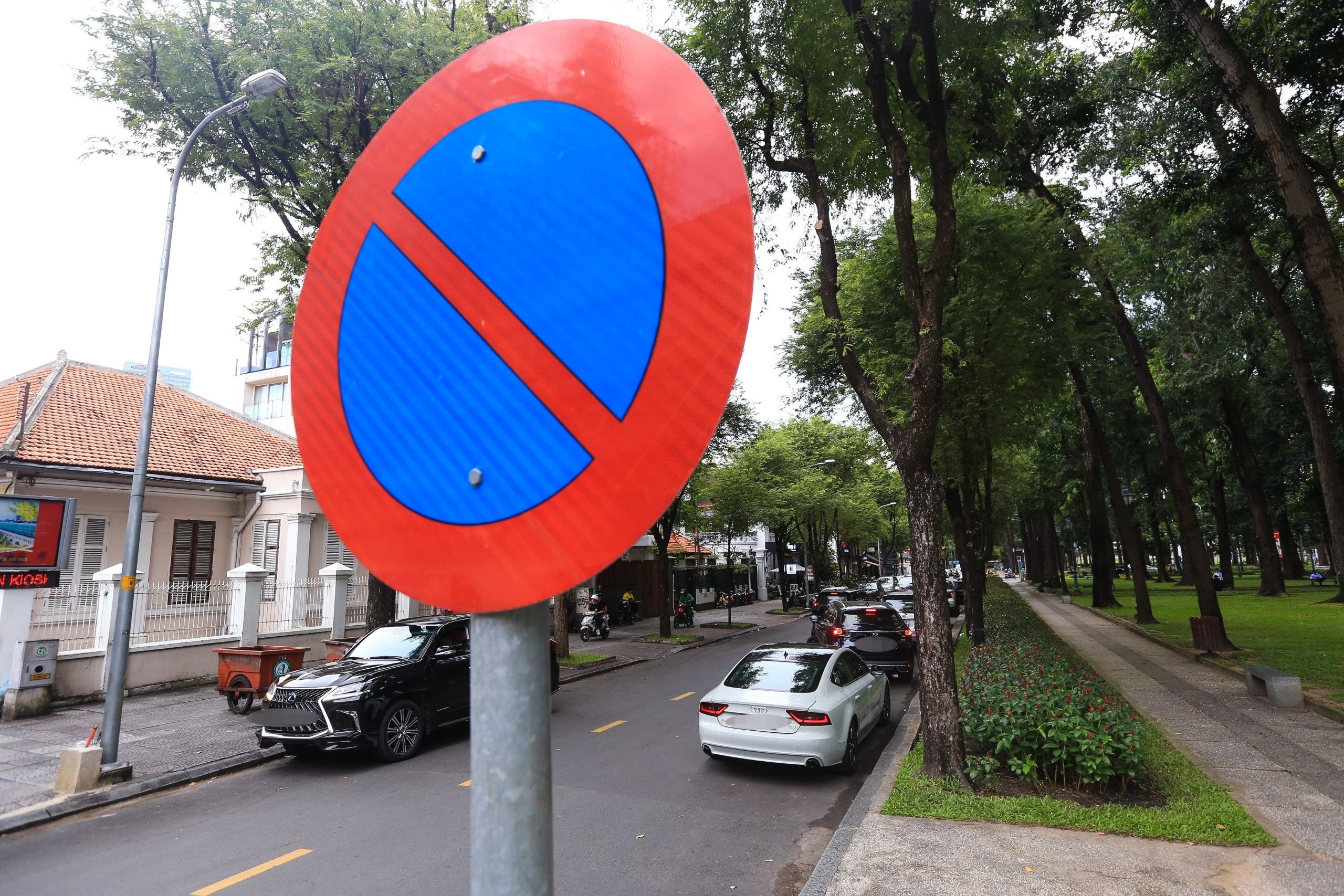
Corresponding to these two concepts are two types of traffic signs that are clearly visible but often overlooked and confused by many drivers: the "No Stopping and Parking" sign (P.130) and the "No Parking" sign (P.131).
According to Circular 51/2024/TT-BGTVT and National Standard QCVN 41:2024/BGTVT, sign P.130 prohibits all stopping and parking in the area where the sign is placed, except for priority vehicles. The sign is effective from the location of the sign to the intersection or until a "End of all prohibitions" sign appears.
Meanwhile, sign P.131 only prohibits parking, but still allows temporary stopping, provided the driver does not leave the vehicle and complies with safety regulations.
What are the penalties for illegal parking?
The penalties for violating "no stopping, no parking" signs are also clearly stipulated in Point e, Clause 3, Article 6 of Decree 168/2024/ND-CP (Decree 168).
Specifically, drivers who park in areas marked with "No Parking" or "No Stopping or Parking" signs will be fined between 800,000 and 1,000,000 VND.
Meanwhile, for illegal parking that causes traffic congestion, the fine will increase to 4-6 million VND and the driver will have 2 points deducted from their driver's license. The penalties are clearly stated in Point k, Clause 5, Article 6 of Decree 168.
In reality, many people mistakenly believe that simply "parking briefly" or "being in the car is fine" is sufficient, but current regulations are not based on subjective feelings. Understanding the difference between "stopping" and "parking," along with correctly observing the signs in the parking area, will help drivers avoid penalties.


