
Ho Chi Minh and the formation of revolutionary journalism in Vietnam.
(Baonghean.vn) - Looking back at President Ho Chi Minh's revolutionary career, he recognized early on that the press was a powerful weapon for the revolution. He thoroughly, skillfully, and incisively utilized the press as a means of fighting for the cause of national liberation.
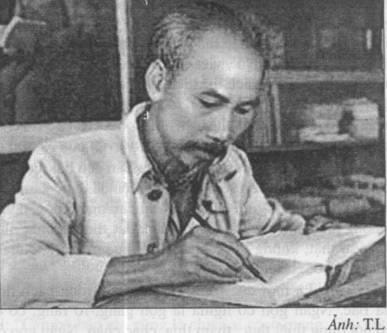 |
| President Ho Chi Minh – A great journalist of Vietnamese journalism. |
Throughout nearly 60 years of revolutionary activity, President Ho Chi Minh's journalistic career was immense, with over 2,000 articles of various kinds, nearly 300 poems, and nearly 500 cartoons and essays. He co-founded nine newspapers: Le Paria (1922), the International Peasant Newspaper (1924), the Youth Newspaper (1925), the Workers and Peasants Newspaper (1925), the Revolutionary Soldiers Newspaper (1925), the Beloved Newspaper (1928), the Red Magazine (1930), the Independent Vietnam Newspaper (1941), and the National Salvation Newspaper (1942)...
After the August Revolution, he continued to collaborate, organize, and launch several new newspapers. On September 7, 1945, President Ho Chi Minh instructed the establishment of the National Radio Station (now the Voice of Vietnam). On September 19, 1945, the National News Agency (now the Vietnam News Agency) was also established. After the Second National Party Congress in February 1951, the newspaper Sự Thật (the predecessor of Nhân Dân newspaper) was founded.
In his journalistic career, he used 150 pseudonyms, wrote articles in many languages such as English, French, Russian, Chinese, Vietnamese, etc., and published them in numerous newspapers and magazines both domestically and internationally.
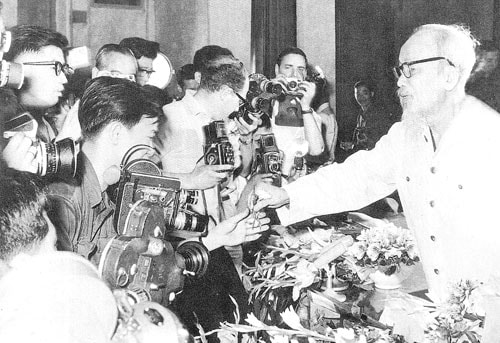 |
| During his lifetime, President Ho Chi Minh paid great attention to the press. |
From 1919 to 1930, his journalistic activities focused on two main themes: denouncing and condemning the corruption, injustice, and inhumanity of colonialism and its rule over colonized countries, including Vietnam. He wrote "The Vietnamese People's Petition," published in the newspaper L'Humanite. In 1921, he organized the "Union of Colonial Peoples" and founded the newspaper "Le Paria" (The Pariah).
From 1930 to 1945, his journalistic activities went underground. His articles were published under various pseudonyms. In August 1941, he founded the newspaper "Vietnam Independence," abbreviated as Viet Lap, to propagate, mobilize, and organize the people of Cao Bang, Bac Can, and Lang Son provinces into national salvation organizations of the Viet Minh Front. This period marked a crucial milestone in the birth of an independent nation. In 1945, amidst the victorious atmosphere of the August Revolution (August 19, 1945), on September 2, 1945, he wrote and read the "Declaration of Independence," giving birth to the Democratic Republic of Vietnam and proclaiming its independence to the world.
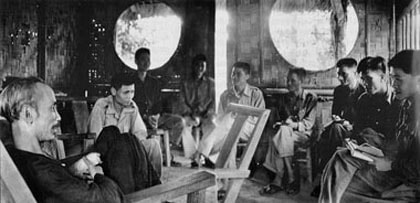 |
| Uncle Ho worked with the newspaper Sự Thật (Truth) in Việt Bắc. |
From 1945 to 1954, Ho Chi Minh's journalistic activities were closely linked to the protracted resistance war against French colonialism from 1946 to 1954. His works are numerous and diverse in genre. He wrote books such as "Revising Working Methods" (1947) and "Diligence, Frugality, Integrity, and Righteousness" (1949). He also wrote over 135 articles for the newspaper Cuu Quoc – the propaganda and mobilization organ of the Viet Minh General Headquarters. From 1947 to 1950, Uncle Ho wrote about 24 articles for the newspaper Su That (now Nhan Dan).
From 1954 to 1969, he wrote hundreds of articles published in newspapers and magazines both domestically and internationally, primarily in the Nhan Dan newspaper (under the pen names Tran Luc, Chien Sy...). During this period, he also wrote several works for Soviet newspapers such as "The Victorious Proletarian Friendship," "Thirty Years of the Party's Activities," "Lenin, the Great Teacher of the Vietnamese Revolution," and many others.
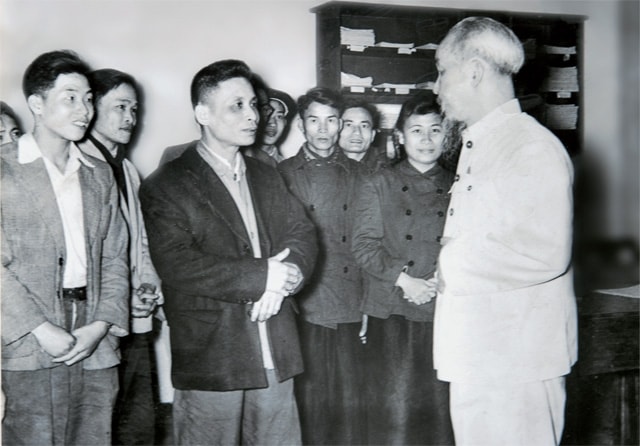 |
| President Ho Chi Minh visited and extended New Year greetings to the staff and reporters of Nhan Dan Newspaper in 1957. |
In 1960, he wrote the article "Thirty Years of the Party's Activities," published in a magazine to commemorate the 30th anniversary of the Party's founding. During this period, he also wrote many articles for newspapers published in the Soviet Union and several other countries.
Ho Chi Minh dedicated his entire life and career to revolutionary Vietnamese journalism. In his speech at the Second Congress of the Vietnam Journalists Association on April 16, 1959, Ho Chi Minh considered himself destined for journalism, a destiny rooted in the purpose of: "Fighting colonialism and imperialism, fighting feudalism and landlords, and propagating national independence and socialism."
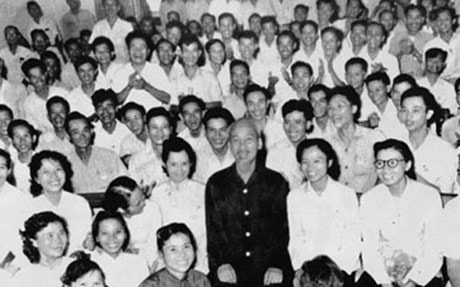 |
| President Ho Chi Minh at the 3rd Congress of the Vietnam Journalists Association (September 1962) |
Throughout his revolutionary life, President Ho Chi Minh left behind a system of views and ideas on humanity, revolution, the era, the people, economics, politics, culture, security, national defense, and other areas of social life. His journalistic legacy is no exception. This legacy also demonstrates the extraordinary character of a great revolutionary journalist. This is precisely "Ho Chi Minh's thought on Vietnamese revolutionary journalism."
Peace(Synthetic)


