
Supporting socio-economic development in ethnic minority and mountainous regions.
The specific policy to support socio-economic development in ethnic minority and mountainous regions for the period 2017-2020 has just been approved by the Prime Minister with the specific goal of contributing to reducing the poverty rate in ethnic minority and mountainous regions by 3% to 4% per year.
In addition, the plan aims to address the issue of agricultural land and provide vocational training for over 80% of poor ethnic minority households and poor households in particularly difficult areas lacking agricultural land; and to fundamentally resolve the shortage of clean water for poor ethnic minority households and poor households living scattered in particularly difficult areas.
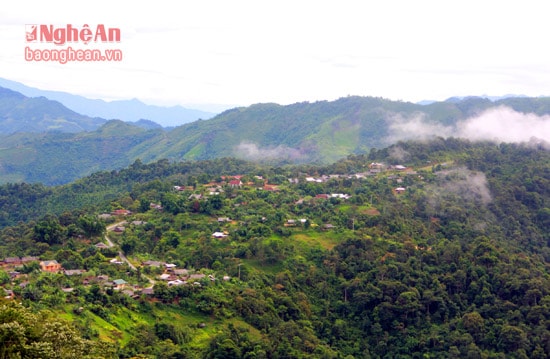 |
| People in mountainous areas will receive support for socio-economic development. (Photo: Archival image) |
The principle of implementation is to provide direct support to poor ethnic minority households; poor households in communes classified as Category III, and particularly disadvantaged villages and hamlets. It ensures transparency, accountability, and that the support reaches the intended beneficiaries; households receiving support must use the funds for their intended purpose.
Support for housing land, production land, and clean water.
Providing support for housing land, production land, and decentralized water supply for poor ethnic minority households and poor households in communes in Zone III, and particularly disadvantaged villages and hamlets, who live by farming and forestry and lack housing land and production land according to the local average, and lack access to clean water; and who have not yet benefited from policies supporting housing land, production land, and decentralized water supply.
The People's Committees of provinces and centrally-administered cities shall proactively allocate budgets and create land funds to provide land for households to build houses. The amount of residential land allocated to households shall be determined by the People's Committees of provinces and centrally-administered cities in accordance with the local reality.
Households without land for production, if they have a need, will be directly allocated land by the local government or receive direct financial support of up to 15 million VND/household from the state budget, and can borrow capital from the Social Policy Bank to create land for production.
In cases where local authorities cannot allocate land for production, households without land or with insufficient land for production will receive support from the state budget for vocational retraining, up to a maximum of 5 million VND per household, and can borrow capital from the Social Policy Bank to engage in service industries or other occupations to increase their income.
The aforementioned individuals are only eligible for one of the two support policies: support for agricultural land or support for vocational retraining.
Poor ethnic minority households; poor households in communes classified as Area III, and particularly disadvantaged villages and hamlets lacking access to clean water will receive an average of 1.5 million VND per household to create a water source for daily use.
Support for preferential credit loans
Households lacking land for production as stipulated above, and poor ethnic minority households living in communes in Zone III, and particularly difficult villages and hamlets, are eligible for preferential credit loans.
Specifically, the lending method is implemented according to Government Decree No. 78/2002/ND-CP dated October 4, 2002, on credit for the poor and other policy beneficiaries; the purpose of the loan is to create land for production, provide services, or engage in other occupations to increase income and achieve sustainable poverty reduction.
The loan amount shall not exceed the maximum loan amount applicable to poor households in each period; the maximum loan term is 10 years; the interest rate shall be 50% of the interest rate for loans to poor households in each period.
The Social Policy Bank provides loans and may delegate some tasks to socio-political organizations at the commune level. Eligible households are members of savings and loan groups.
Furthermore, arrangements for the stable settlement of ethnic minority households still practicing nomadic farming will be implemented. Specifically, the policy and plan for settled farming and permanent settlement for nomadic ethnic minority communities will continue to be implemented according to Decision No. 33/2007/QD-TTg dated March 5, 2007, Decision No. 1342/QD-TTg dated August 25, 2009, and Decision No. 33/2013/QD-TTg dated June 4, 2013, of the Prime Minister: Continue to invest in projects according to the approved plan at concentrated settled farming and permanent settlement sites; allocate funds to pay for infrastructure projects at settled farming and permanent settlement sites that have been completed and put into use but still lack funding; and disburse support payments as stipulated in Decision No. 33/2007/QD-TTg dated March 5, 2007, of the Prime Minister.
According to Hoang Dien/chinhphu.vn


