
Downhill assist, a useful feature often overlooked by new drivers.
The Downhill Assist Control (DAC) system helps control the vehicle's speed when descending steep slopes, contributing to driver comfort… but in reality, many new drivers often forget about or don't know how to use this feature.
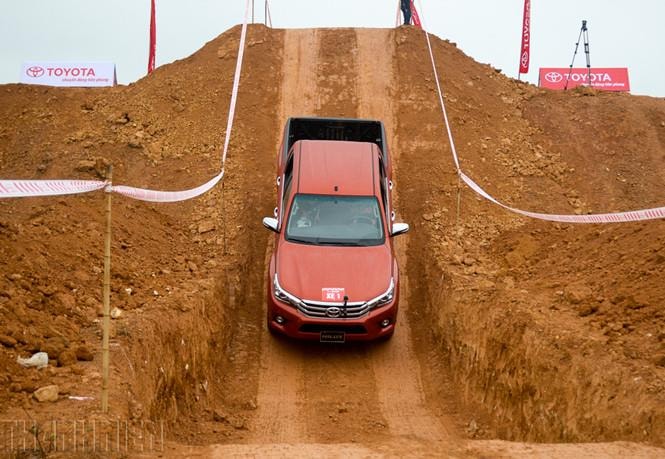 |
The hill descent control system helps to manage the vehicle's speed. |
As the name suggests, the Down Hill Assist Control (DAC) system equipped in cars is designed to control the vehicle's speed when descending a slope, contributing to safety and reducing the risk of brake failure caused by the driver frequently applying the brakes.
Many pickup trucks, SUVs, and even sedans are equipped with hill descent control systems. |
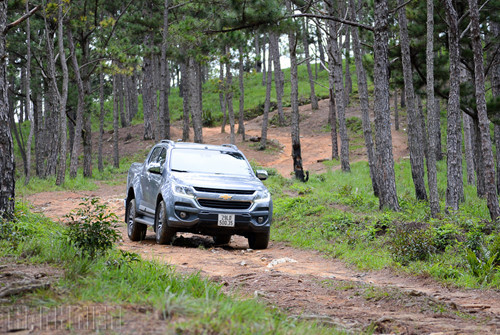
Previously, DAC was only equipped on some pickup trucks and off-road vehicles. However, nowadays, the Hill Descent Control (HDC) system, also known as Hill Descent Assist, has appeared on many SUV, Crossover, and even high-end sedan models.
How does downhill assist work?
When the vehicle is descending a slope and the DAC system is activated, sensors or gyroscopes will detect the vehicle's incline angle. The collected data will be processed by the ECU (Electronic Control Unit) to control the clutch, braking system, and engine torque distribution to the wheels. From there, the system will automatically adjust the vehicle's speed to match the slope, eliminating the need for the driver to apply the brakes.
The button to turn the hill descent assist system on/off on the Nissan X-trail. |
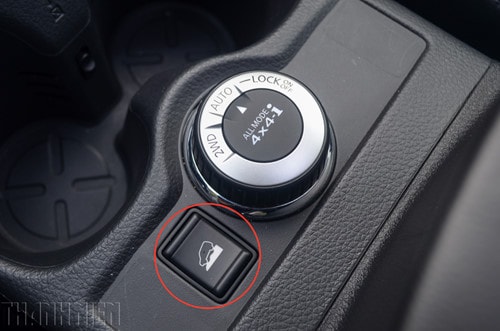
Typically, when DAC is active, it works in conjunction with the ABS braking system, traction control system, and engine, to adjust the speed of each wheel, in order to prevent the vehicle from skidding when going downhill.
How to use the downhill assist system
In reality, many car users, especially new drivers, are unfamiliar with the workings of the hill descent assist system, leading to a lack of confidence in using it and even causing them to forget about this feature when driving on steep roads or challenging terrain.
The driver doesn't need to apply the brakes; the vehicle's speed remains controlled when going downhill. |
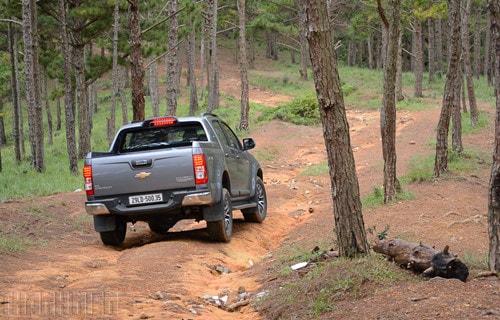
Having owned a gasoline-powered Hyundai Tucson for only two months, Mr. Duc Hieu from Lam Dong shared: “When I first bought the car, the salesperson explained this feature to me. However, in reality, I rarely activate the hill descent assist system, even though I frequently drive on hilly and mountainous terrain, because I don't feel confident enough to release the brakes when the car is going downhill.”
Many novice drivers, when driving automatic cars on steep mountain roads, often have the habit of leaving the car in D mode and frequently applying the brakes to control the speed when descending. However, according to automotive experts, frequently applying the brakes while descending a slope will cause the brakes to overheat and easily lead to brake pad burnout and brake failure. Therefore, when descending long, steep slopes within the speed limit, drivers should get into the habit of using semi-automatic shifting mode or features such as hill descent assist… to utilize engine braking to slow the car down.
The downhill assist system is activated via a control button. |
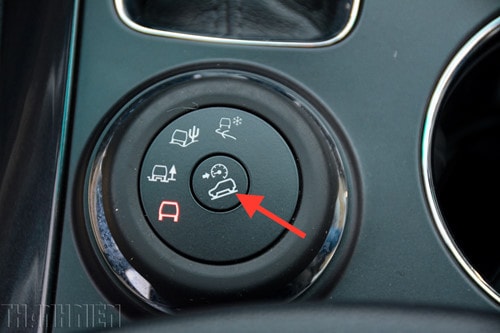
The Downhill Assist Control (DAC) or Hill Descent Control (HDC) system integrated into modern cars is very easy to use. When driving downhill, the driver simply activates the system via a button usually located on the center console or near the gear shift lever.
When the hill descent assist system is activated, the driver does not need to apply the brakes; they can simply focus on observing and adjusting the steering wheel.
On steep inclines, if the vehicle's speed increases due to inertia, the system automatically applies additional braking force to maintain a suitable speed. The system will deactivate when it detects the driver pressing the accelerator or when the vehicle is moving on a level road.


