
Ho Tung Mau - A courageous and steadfast revolutionary.
(Baonghean.vn) - Nearly 30 years of revolutionary activity, Comrade Ho Tung Mau made many contributions to the Vietnamese revolutionary cause. The life and name of Ho Tung Mau will forever be a shining example of revolutionary ethics, extraordinary will, self-sacrifice, and dedication to the cause of national liberation.
Ho Tung Mau was born on June 15, 1896, in Quynh Doi village, Quynh Luu district, Nghe An province, with the birth name Ho Ba Cu, into a scholarly family with a tradition of patriotism. In 1916, Ho Tung Mau left his family and taught in Thanh Chuong and Anh Son districts (Nghe An province) hoping to find like-minded friends.
In 1927, Ho Tung Mau was imprisoned three times by Chiang Kai-shek's army, the longest imprisonment lasting five months, but he was eventually released along with several others.
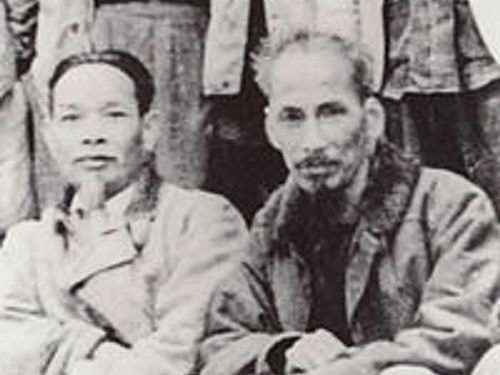 |
| Mr. Ho Tung Mau and President Ho Chi Minh. Photo: Archival. |
In August 1928, he was arrested again and imprisoned until November 1929. Afterward, Ho Tung Mau went to Hong Kong and joined the Overseas Branch of the Annam Communist Party. During this time, the French colonial authorities held a trial in Nghe An to try him in absentia and sentenced him to death on charges of "mobilizing to establish a Communist Party, inciting people to leave the country, and plotting rebellion."
On February 3, 1930, in Hong Kong (China), Ho Tung Mau was one of seven members attending the founding conference of the Communist Party of Vietnam, chaired by Nguyen Ai Quoc on behalf of the Communist International. Ho Tung Mau and Le Hong Son attended the conference as "leading cadres from overseas." This is the most memorable milestone in his revolutionary career.
On June 6, 1931, upon learning that Nguyen Ai Quoc had been arrested by British secret agents in Hong Kong, Ho Tung Mau promptly reported the matter to the Eastern Bureau of the Communist International, enlisting the help of lawyer Lozeby to force the British authorities to release Nguyen Ai Quoc. However, on June 30, 1931, Ho Tung Mau was arrested by the British colonial authorities, taken to Shanghai, and released into the French concession to be sent back to Vietnam, thus ending Ho Tung Mau's arduous revolutionary activities abroad.
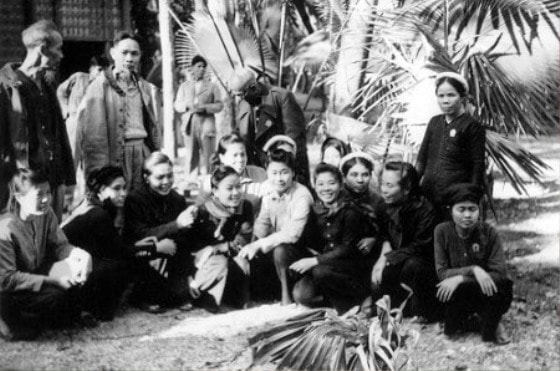 |
| President Ho Chi Minh and Comrade Ho Tung Mau meeting with delegates attending the Second National Party Congress (March 1951) - Archival photo |
The French colonialists sent Ho Tung Mau to various notorious prisons with the harshest regimes. These included Hoa Lo Prison (Hanoi), Vinh, Lao Bao, Kon Tum, Buon Ma Thuot, and Tra Khe.
Following the success of the August Revolution, Ho Tung Mau unexpectedly received orders to go to Hanoi. There, he met Le Thiet Hung, who had come from Lang Son. The two were invited to meet President Ho Chi Minh. After inquiring about each other's health, the President said: "I know you have both endured many hardships, but the revolution has just succeeded, and we are not yet allowed to rest. Currently, Military Zone IV is in great need of leading cadres. The Central Committee and I have discussed this carefully and decided to appoint Comrade Mau there as Political Commissar and Comrade Suu (i.e., Le Thiet Hung) as Zone Commander…"
When the French colonialists launched their aggression in Southern Vietnam, Ho Tung Mau was also the Director and Political Commissar of the Nhuong Ban Military Political School in Cam Xuyen, Ha Tinh. In 1947, he was appointed Chairman of the Resistance Committee of Inter-Region IV and was simultaneously elected as a Standing Committee member of the Inter-Region Committee.
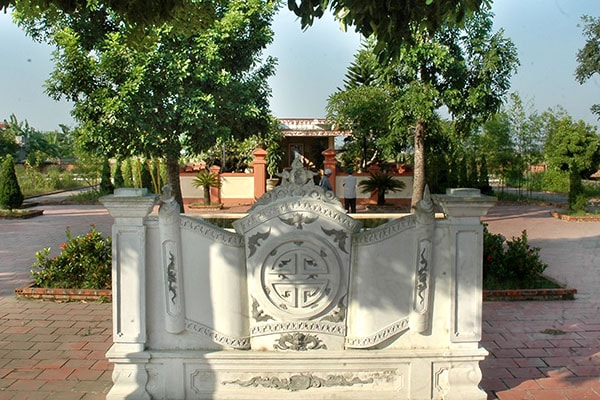 |
| The tomb of Ho Tung Mau is located in Quynh Doi commune (Quynh Luu district). |
On December 18, 1949, President Ho Chi Minh signed a decree establishing the Government Inspectorate and appointed Mr. Ho Tung Mau as its Chief Inspector. In early 1950, the Vietnam-China Friendship Association was established, with Mr. Ho Tung Mau as its first president. At the Second National Congress of the Party (February 1951), Mr. Ho Tung Mau was elected as an alternate member of the Central Committee of the Party.
At 5 PM on July 23, 1951, while on a work trip, upon reaching the Cong intersection in Tinh Gia district, Thanh Hoa province, Mr. Ho Tung Mau was killed by gunfire from a French aircraft.
Throughout his life dedicated to the revolution, Ho Tung Mau transformed from a patriot into a communist fighter. Regardless of his position, he always demonstrated integrity, loyalty, and a high sense of responsibility, working selflessly with a warm, simple, and straightforward demeanor, earning great prestige among the people. Until his last moments, Ho Tung Mau remained worthy of the trust placed in him by the people, the Party, and President Ho Chi Minh.
Peace
(Synthetic)
| RELATED NEWS |
|---|


