
Syrian peace talks: Stuck in a deadlock
(Baonghean) - Despite strenuous efforts to continue negotiations with mediators after the opposition withdrew from Geneva, Switzerland last weekend, the Syrian government's negotiating delegation, led by Bashar Ja'afari, also returned home on April 25th. With the "abandoning" of the two most important forces in the Syrian civil war, the highly anticipated Syrian peace talks have once again reached a deadlock.
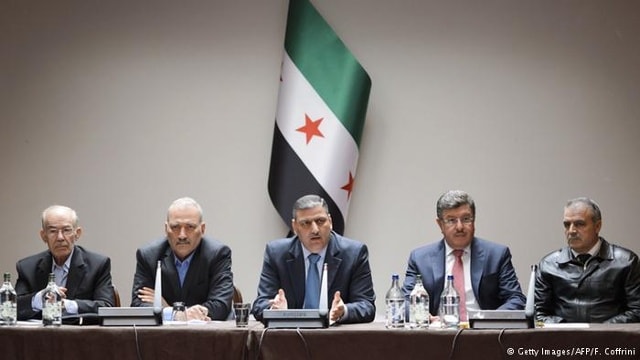 |
| The High Negotiation Committee (HNC) was the first to leave Geneva. Photo: AFP. |
It's his fault, it's her fault.
The latest round of negotiations in Geneva, Switzerland, began on April 13th and is considered to have the most favorable context compared to all previous negotiations on Syria. At the request of the Syrian government, Al Nusra Front and the Daesh group are not allowed to participate in the talks.
With the ceasefire, still under the auspices of Russia and the US, in place since February 27th, and with the narrowing of differences between the two powers regarding the political future of Syrian President Bashar al-Assad, and with the urgent need to address thorny issues such as the humanitarian crisis in Syria and the migration crisis in Europe, it was hoped that the parties involved in the Geneva talks could make some progress in finding a political solution to the civil war in Syria, now in its sixth year. However, despite all expectations, the Geneva talks are once again deadlocked, as they have been many times before.
While negotiations had yet to make significant progress, on April 22, members of the High Negotiation Committee (HNC) representing the opposition left Geneva, Switzerland, protesting the deteriorating security and humanitarian situation on the ground. On April 25, the Syrian government's negotiating team followed suit, leaving Syria. Besides protesting the opposition's attacks in Aleppo, the head of the Syrian government delegation accused the HNC of including terrorists and stated that the Syrian government opposed their participation in the Geneva peace talks. Each side blamed the other, and in reality, neither side was unfairly accused.
According to the Syrian Observatory for Human Rights, on April 19, at least 44 civilians were killed in government airstrikes targeting two markets in the northwestern Idlib province, controlled by the Al-Nusra Front. By April 25, at least 19 more civilians had died in shelling of government-controlled districts in Aleppo. These clashes seriously threaten the ceasefire brokered by the US and Russia.
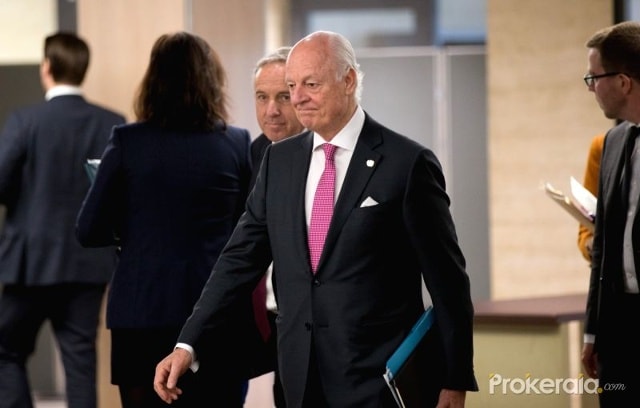 |
| UN envoy Staffan De Mistura still hopes to resume negotiations. Photo: Xinhua. |
Complex chessboard
Although details of the negotiations in Geneva, Switzerland, over the past month have not been released, some sources indicate that the two sides remain at odds over President Assad's political future: the Syrian government's negotiating team has stated it will not negotiate or make concessions on this issue, while the opposition insists that Assad's departure is a prerequisite.
Nevertheless, public opinion suggests that the positions of the Syrian government and the opposition at the negotiating table reflect the views of Russia and the United States. With sufficient intervention from these two superpowers, the conflict between the two sides is not insurmountable.
Therefore, the breakdown of these negotiations on Syria raises questions about other forces seeking to derail the discussions in Geneva.
Suspicion is now falling on Türkiye and Saudi Arabia – countries believed to be trying to overthrow the regime of Syrian Bashar al-Assad, or at least unwilling to see the stability of a Shiite government in the region.
Furthermore, there are speculations that the US is playing a "double game" in Syria: publicly expressing goodwill towards peace negotiations for Syria, while secretly manipulating opposition forces to leave Geneva. This would allow the US to shift its negotiations with Russia. Instead of discussing the future of Syrian President Bashar al-Assad, they would discuss establishing a "zone of jurisdiction for combat operations against terrorism in Syria," jointly monitoring compliance with the ceasefire, with the aim of increasing the effectiveness of the fight against ISIS – essentially proposing a territorial division of Syria.
While many questions remain about the true intentions of Russia and the US in Syria, at least for now, the breakdown of the Syrian peace talks is not what either country desires. Therefore, while Russia insists that the current talks in Geneva are not "frozen," the US also declares that it "still sees a way forward."
To demonstrate their efforts, immediately after the government and opposition negotiating teams parted ways, Russian Foreign Minister Sergey Lavrov and US Secretary of State John Kerry held a telephone conversation. During this call, both sides particularly emphasized urging all parties in Syria to respect the ceasefire and extend the timeframe for restarting the process of seeking a political solution.
However, what is happening shows that the efforts of Russia and the US are insufficient, and no one can say for sure whether the Geneva talks can be resumed as desired by UN Special Envoy De Mistura.
Diep Khanh
| RELATED NEWS |
|---|


