
Artist Ngo Xuan Khoi: AI is no match for painters.
The trend of using AI to design book covers and illustrate literary works is sparking much debate in the creative community. Supporters see it as an irresistible trend; opponents argue that it is an abuse of technology, eroding the identity and visual memory of reading culture. Regarding this issue, a reporter from Nghe An Newspaper and Radio and Television had a conversation with artist Ngo Xuan Khoi (from Nghe An province) – who has been involved in book cover design for nearly 30 years.
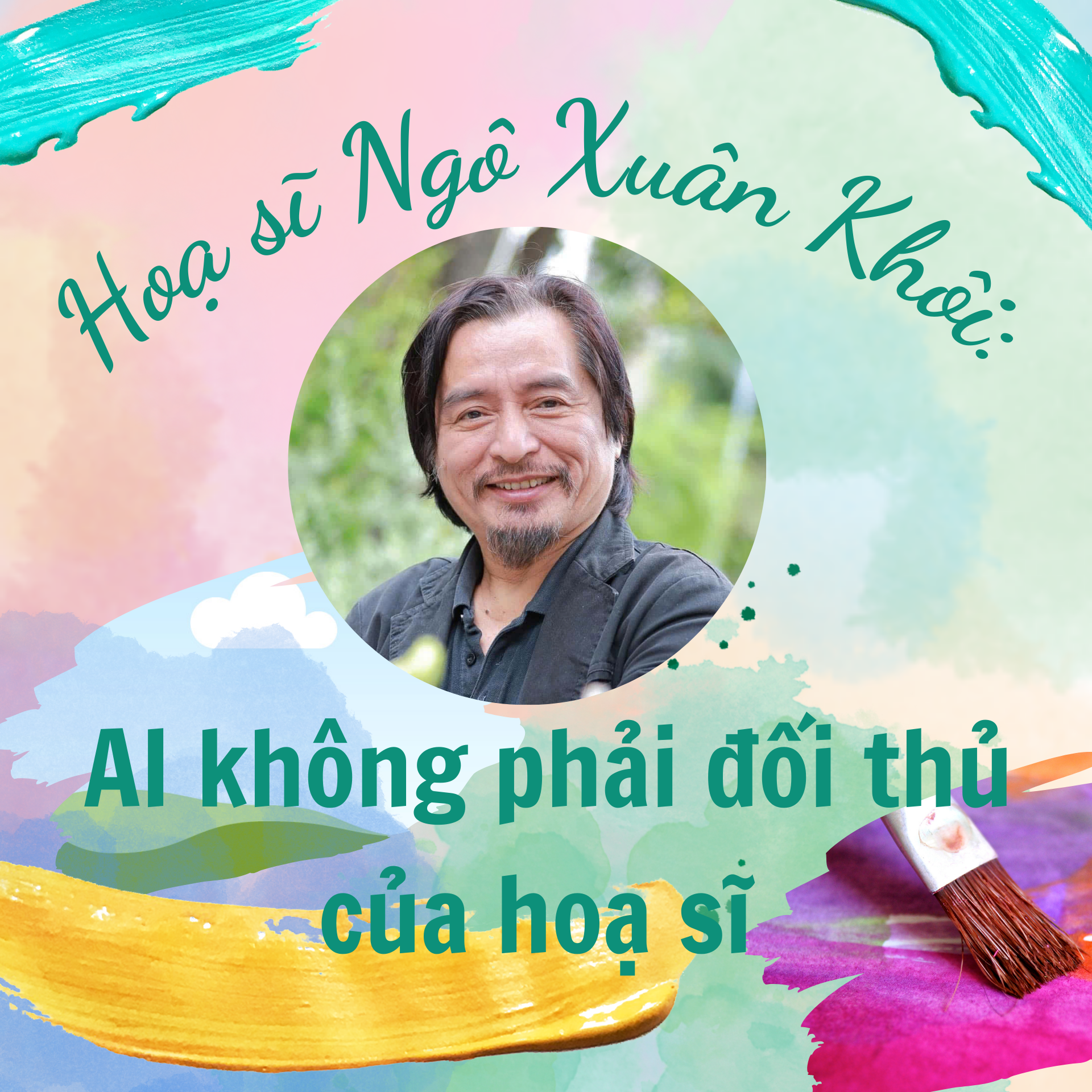
The trend of using AI to design book covers and illustrate literary works is sparking much debate in the creative community. Supporters see it as an irresistible trend; opponents argue that it is an abuse of technology, eroding the identity and visual memory of reading culture. Regarding this issue, a reporter from Nghe An Newspaper and Radio and Television had a conversation with artist Ngo Xuan Khoi (from Nghe An province) – who has been involved in book cover design for nearly 30 years.
Phuong ChiDecember 12, 2025
---------------o0o---------------
A successful book cover should be beautiful and multi-layered.
PV:When did you start drawing book covers and illustrating literary works? What led you to this work?
Artist Ngo Xuan Khoi:I started designing book covers when I worked at The World Publishing House, back in 1996. Back then, computers and information technology weren't as widespread as they are now. The first book covers were still sketched by hand, then the sketches were taken to the computer lab for technicians to create according to the artist's vision.
The computer room at the publishing house back then was a special room. It was the only one in the entire office with air conditioning, and the staff wore white lab coats. Not everyone was allowed into the computer room (to avoid infection and the spread of viruses?). Making book covers back then involved many steps and processes, and materials and supplies were scarce. To minimize costs, the front cover was printed using four-color film, while the back cover was printed on tracing paper. The cover's refraction through so many processes made it nerve-wracking, but the first cover wasn't very impressive because it was purely computer-generated text.
Regarding illustration, I first got to illustrate for a local newspaper while I was a student. The feeling was exhilarating and proud when my drawings were published, even though they misspelled my name. The joy of sharing was still genuine, and the dormitory buzzed with excitement…

PV:Looking back on your journey in creating illustrations/book covers, how do you see your skills and creative thinking changing?
Artist Ngo Xuan Khoi:When I studied at art school, my specialization was mural painting, monumental paintings, meaning large drawings associated with architecture. However, after graduating and starting work, I ended up working on book covers and drawings that were sometimes as small as a matchbox. Everything is difficult at the beginning; everything is clumsy and naive. It took a process of self-learning, observation, and reflection to perfect myself, to adapt, and to meet the demands of the job. Learning to use and operate a computer might take weeks or months, but understanding what is beautiful and what is aesthetic is not something that happens overnight; it can take a lifetime.
The data in the computer is exactly the same, but one person's work is better, another's is worse. Thus, machines are merely tools, instruments; the decision still rests with humans, with their aesthetic sense. During the subsidy period, when printing technology was rudimentary, cover designers or illustrators would separate colors themselves by drawing with ink on tracing paper, one color per sheet. The printing house had a team of skilled engravers who would paste the drawings onto engraving boards and engrave accordingly. All were flat surfaces, so the products were usually simple in shape and composition, with limited color.
For a time, when creating book covers, artists would cut out images from magazines that matched the book's content and add text. Since Vietnam joined the Berne Convention (the copyright protection convention), book cover design has required adherence to international regulations. Book covers are increasingly becoming more specialized.
For me personally, nearly 30 years in the profession has been a process of learning, perfecting, honing skills, and fostering creativity. This process has evolved over time, driven by advancements in tools, technology, and materials in the publishing industry. Working as a book cover designer allows me to immerse myself in a literary atmosphere, access manuscripts early, and get to know many writers – a source of great happiness. As one gains experience, expertise, and mastery in the profession, it also means one is getting older, becoming less experienced, and the door to embracing new and unfamiliar ideas becomes increasingly closed and limited. That's the natural order of things.
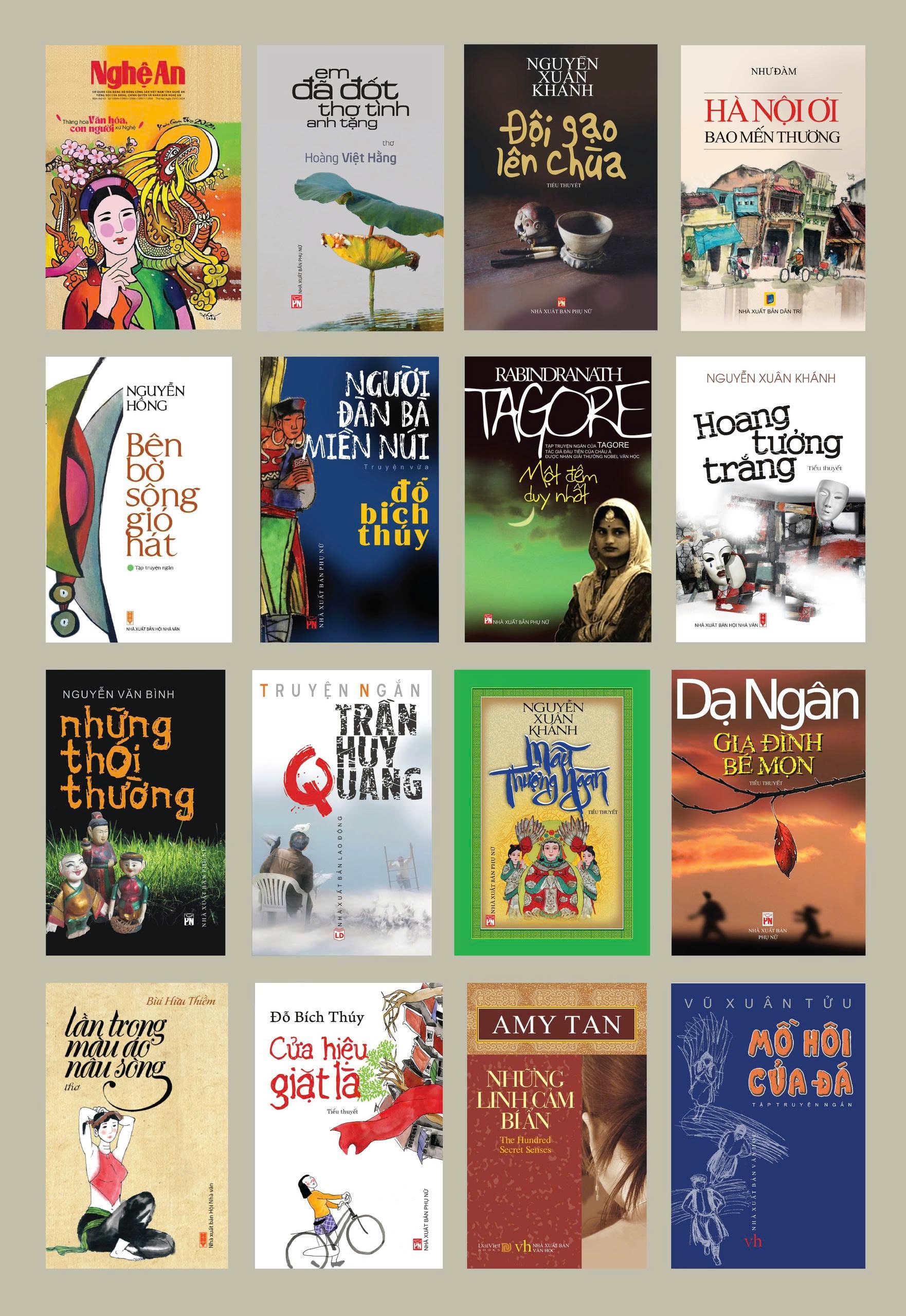
PV:In your opinion, what criteria are used to judge a "good" or "beautiful" book cover: visual aesthetics, depth of message, or its integration with the content of the work?
Artist Ngo Xuan Khoi:I believe that a beautiful book cover is not just "visually appealing." It must be beautiful on many levels.
The first level is visual aesthetics: The composition of images and text must be clear, the colors must reflect the spirit and tone of the artwork, and the text must be treated as part of the image, not just placed there for the sake of it.
The second level is the depth of the message. A good book cover doesn't just tell the story, but hints at the soul of the work. A viewer only needs a second to sense the atmosphere and the main spirit of the book. I once said in a newspaper: "A good book cover with beautiful illustrations can hold the reader's attention and draw them to a literary work."
And finally, there's the element of harmony. A beautiful cover that doesn't relate to the content is still a failure. I like the feeling when readers finish reading, look back at the cover, and say:"Ah, so the cover had been telling me all along."That's the moment every professional artist aspires to.
The more technology becomes available, the more cherished hand-drawn book covers become.
PV:What do you think are the biggest pressures that book cover artists/illustrators are facing today?
Artist Ngo Xuan Khoi:There's a lot of pressure, and each one is enough to make those in the profession "keep the fire burning." Meeting deadlines is a pressing issue. The current publishing market is quite difficult; the number of publications released is decreasing due to market share being shared with other formats.
The competition among publishing houses also makes the race against time even more intense. Some books are delivered within days, not weeks. This forces illustrators to work almost in an industrial environment, making it very easy to run out of steam.
Funding is a rather sensitive issue, and very few artists openly discuss it. The current design fees in Vietnam do not adequately reflect the research, sketching, and experimentation involved in cover design.
Market trends also put pressure on artists. Trends change as quickly as fashion. Artists must both keep up with trends and maintain their own identity. Chasing after them easily leads to conformity, while remaining stagnant is seen as outdated. Publishers prioritize commercial success, while artists want to create art for the sake of professional honor. Only those who have worked in publishing houses understand this difficult-to-reconcile conflict.
.jpg)
PV:Have you noticed that current book cover styles tend to look very similar, as some opinions on social media forums suggest? If so, why is this happening?
Artist Ngo Xuan Khoi:I think this is a real phenomenon, and not just in Vietnam, but all over the world. Why is that? Partly because the market is at play. Seeing that cover A sells well, many companies want covers B, C, etc., to be similar, just for safety.
Furthermore, tight deadlines leave artists with little time to research unique ideas. Social media algorithms like Pinterest, Instagram, and Behance prioritize trending styles, unconsciously influencing professionals, which is another reason. There isn't a large number of professional, specialized cover design teams. Many publishers and bookstores commission the same artist.
And finally, it's because the ideation phase isn't adequately compensated. When the most crucial part isn't invested in, professionals are forced to resort to searching online for information or relying on AI.
PV:What are your thoughts on some publishers starting to use AI to create book covers and illustrations instead of hiring artists? Do you think AI can completely replace human artists in book cover design?
Artist Ngo Xuan Khoi:The use of AI by publishers is an inevitable trend: it's fast, inexpensive, and can generate dozens of options in an instant. I don't object to that. But AI cannot completely replace book cover artists. AI doesn't read the work, doesn't understand the writing style, and doesn't sense the depth of literature. AI also can't handle typography and fonts in a truly professional way.
And most importantly, AI has no professional responsibility: It has no copyright liability, no understanding of cultural boundaries, and no experience in handling printing. AI will replace cheap labor and mass-production jobs. But it cannot replace the true creative artist – the one who knows how to tell the story of the book through visual language.
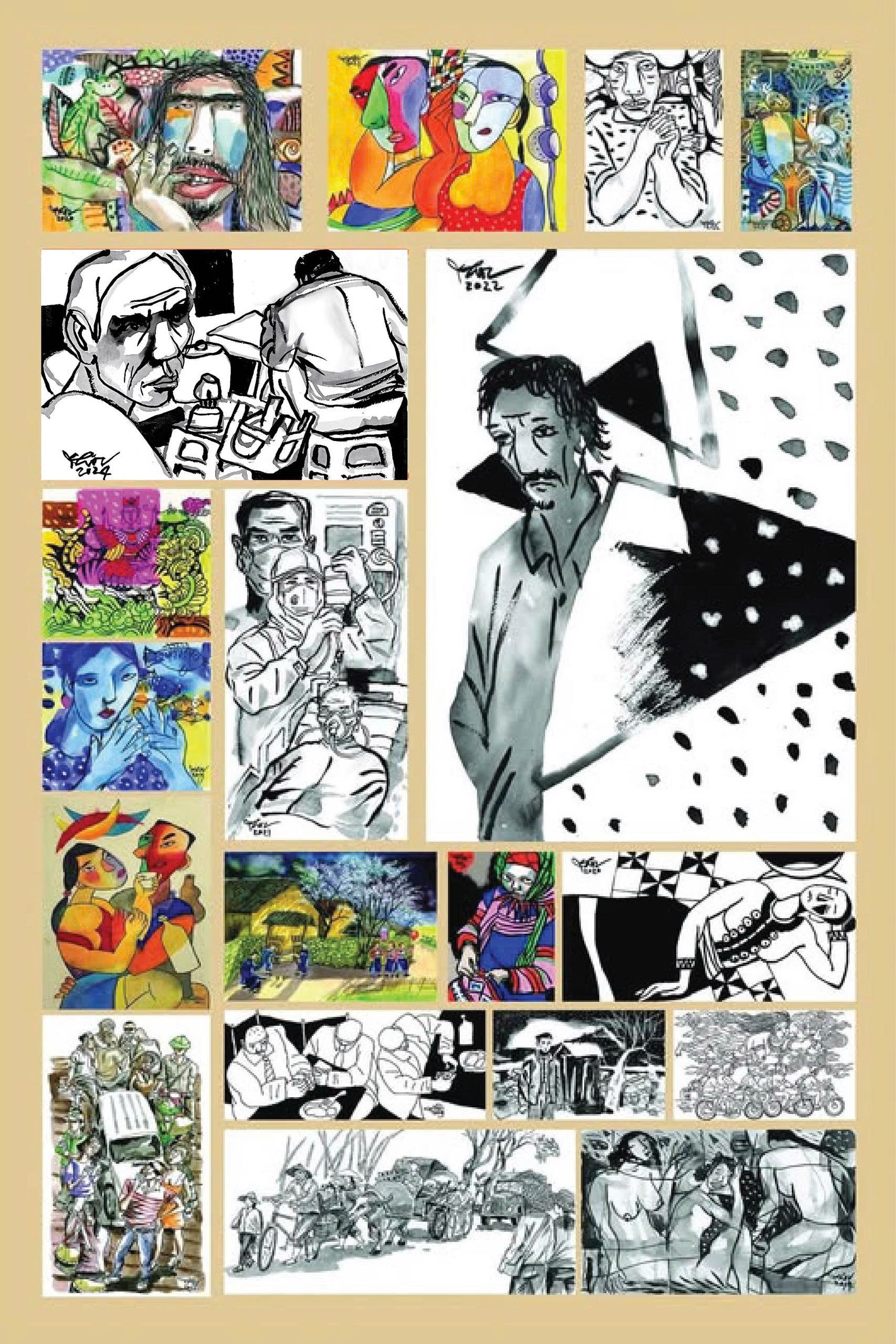
PV:What aspects of book cover design does AI struggle with, or fail to do, from your perspective as someone with many years of experience in the field? Do you think AI could become a tool to assist artists rather than a threat?
Artist Ngo Xuan Khoi:I think the biggest limitation of AI lies in the fact that it is not alive, it lacks emotions, and it has no experience. It can create beautiful images, but it cannot create images with soul. AI doesn't understand the sadness in a poem, it doesn't understand the cultural depth of a land, and it doesn't know how to use visual symbols to evoke rather than crudely illustrate.
In my view, AI is not a threat, but a tool. In the past, when photography emerged, people thought fine art would be doomed, but each art form has increasingly asserted its own value through its unique language. It's like the advent of Photoshop; initially, many were apprehensive, but eventually, everyone used it. Artists who know how to combine AI will become stronger, not weaker. AI is a tool, a companion to the artist, not an adversary. As we become more civilized and technologically advanced, handmade items become more valuable and cherished. The same applies to hand-painted book covers.
PV:In your opinion, what role does a book cover play in shaping readers' emotions and expectations before they even open the first page? When designing a cover for a literary work, which element do you usually prioritize: the spirit of the original work, personal feelings, or market trends?
Artist Ngo Xuan Khoi:The book cover is the first point of communication between the work and the reader. It shapes initial feelings, expectations about the genre, and even the tone of the book. A good cover makes the reader want to pick it up; an excellent cover makes them want to open the first page.
When designing covers for literary works, I always prioritize three things, in order: the spirit of the original work – capturing some of the spirit and message of the literary work, evoking the cultural context of the story; personal emotion – this element is often brought to the artist by the literary work itself; the author's stature, the work, one's life experiences, and personal experiences resonate to create inspiration; and market appeal – necessary but secondary. A cover that caters too much to the market will lose its identity, its personal touch, and it will quickly become outdated. A cover that is purely artistic and ignores the reader may be difficult to sell.
The artist's task is to maintain balance between these three elements, like walking on a tightrope. And it is this balance that creates the unique beauty of the craft.
PV: We sincerely thank artist Ngo Xuan Khoi for sharing his honest thoughts on this important issue in the field of artistic creation today.


