
Learning music at an early age makes you smarter.
Learning to play a musical instrument can have unexpected positive effects on the intellectual development of both children and adults.
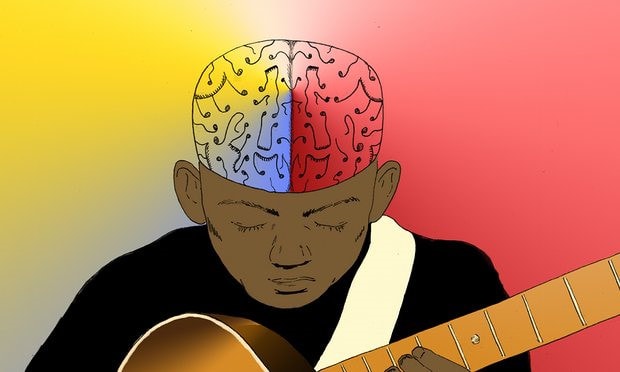 Learning to play a musical instrument has a profound impact on brain development. Learning to play a musical instrument has a profound impact on brain development. |
The brain-training game industry on tablets and smartphones is facing a backlash from the public. In October 2014, a group of over 100 scientists and leading experts in neuroscience and psychology wrote a letter warning that "brain-training games are often exaggerated and misleading." Earlier this year, Lumosity—a leading provider of brain-training and memory games—was fined $2 million and ordered to compensate thousands of customers for false advertising claims that its products could enhance mental performance and slow down neurodegeneration. Recent studies have also shown no evidence that the brain-boosting games prevalent on tablets and smartphones actually provide any real benefits to players.
Major changes in brain structure
While machines and technology have proven "powerless" in training the human brain, there is another solution that parents can choose to enhance their children's mental performance. More importantly, this method has been recognized and proven by scientists to have lasting effects even as we age.
That means learning to play a musical instrument.
Numerous studies have shown that playing any musical instrument offers significant benefits to both children and adults; it can even aid in the recovery process for patients who have suffered brain injuries.
"Music stimulates the brain very powerfully because human emotions are linked to it," says Catherine Loveday, a neuroscience professor at Westminster University.
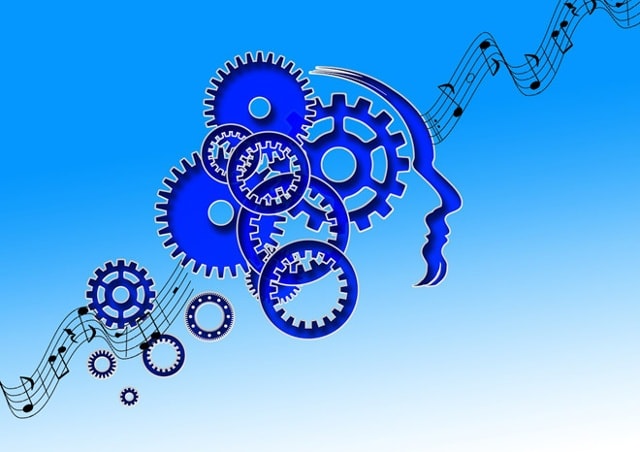 |
| People who study music will experience significant positive changes in their brain structure. |
Playing a musical instrument is a holistic, emotionally charged experience, a synthesis of sensory information such as hearing, sight, and touch; it also demands subtle movement—and the process of achieving this creates lasting changes in the human brain.
Previous brain studies have shown significant differences in brain structure between musicians and non-musicians of the same age. For example, the corpus callosum – the organ connecting the left and right hemispheres of the brain – is always much larger in musicians than in others. The brain regions associated with movement, hearing, sight, and spatial awareness are also larger than average in pianists. And in professional violinists, the brain region controlling left-hand movement also increases significantly in size.
Long-lasting effects
More importantly, scientists have demonstrated that changes in the brains of musicians are closely related to the age at which they began learning music and the intensity of their training. Those who started learning at a very young age experienced the most significant brain changes.
 |
| The earlier children start learning music, the stronger and longer-lasting the impact on their brain development. |
According to recent scientific findings, children who learn to play music for 14 months show clear changes in brain structure and function, such as an expansion of gray matter in many brain regions and increased connections between these regions. In addition, learning music helps develop vocabulary memorization, analytical skills, and expressive abilities – superior characteristics of professional musicians compared to the average person. Unlike brain-training games that only develop individual skills, learning music has a much more comprehensive and long-lasting impact on the brain; it even enhances other unrelated abilities.
“Music can access parts of the brain that other things can’t,” Loveday explains. “It’s a cognitive stimulant, which makes the brain develop in a very special way; and there’s evidence that learning music can significantly enhance memory and language skills.”
According to Toquoc.vn
| RELATED NEWS |
|---|


