
High-scoring students are choosing vocational schools in a "contrarian" trend.
Instead of pursuing a university education, an increasing number of high school graduates are proactively seeking vocational training at vocational schools. With shorter training periods, practical programs, and high employment demand, vocational training is becoming a popular choice for many students and parents seeking early employment and a stable life.
Getting a perfect score of 10 is still possible.not going to university
A week before universities announced their admission results, Pham Viet Thanh, a former student of class 12A3 at Phan Dang Luu High School, decided to enroll in the Automotive Technology program at the Vietnam-Korea Technical College.
Right from the start of the application process, Thanh's application attracted the attention of the admissions officers because in the 2026 high school graduation exam, he achieved quite high scores: Math 10, Physics 8, and Literature 7.25. These scores gave Thanh many opportunities to enter universities. However, Thanh decided to choose vocational training because it was both a field he loved and suited his family's circumstances.
Thanh said that both his parents are farmers, so supporting a child through university with a monthly cost of 8-10 million VND is too difficult. Therefore, he chose to study a vocational course because it's close to home, offers reduced tuition fees, and allows him to earn an income while still in school.

Having just graduated from high school, Nguyen Quoc Tuan, a former student of Nguyen Truong To High School (Yen Trung commune), decided to enroll in a Welding Technology program, even though he scored over 25 points in the entrance exam.High school graduation exam.The male student also stated that he did not apply for university admission but instead enrolled directly in a vocational school. He had thoroughly researched the field he was studying and believed that with Welding Technology, job opportunities after graduation were quite broad, especially given the increasing demand for skilled labor in industrial zones, mechanical engineering, manufacturing, and construction companies. Graduates could work for domestic and foreign businesses.
According to Ms. Hoang Thi Kim Dung, Deputy Director of the Admissions and Business Support Center at the Vietnam-Korea Industrial Technical College, this year's admissions season sees a continued surge in interest from students in engineering, mechanics, and technology fields.
Among these, Control and Automation Engineering Technology is one of the most attractive majors, and the school stopped accepting applications early due to exceeding the enrollment quota. Besides that, Automotive Technology remains a popular choice with a large enrollment scale. This is also a major that many students are interested in because of its relatively broad job opportunities, aligning with the development trends in the fields of mechanics, repair, and automotive technical services.
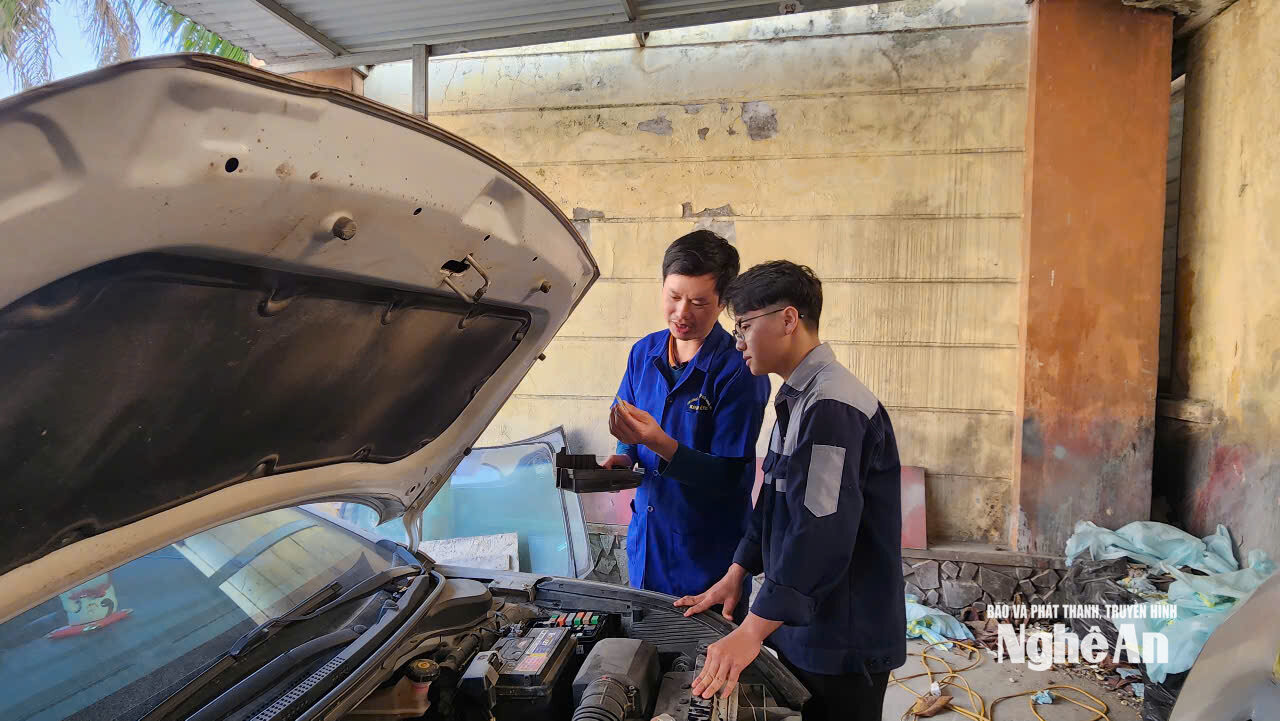
Several other fields, such as Chinese language, have also seen an increase in student numbers, forcing schools to adjust and supplement enrollment quotas at both the intermediate and college levels. Notably, technical fields such as welding, mechanics, and refrigeration are also attracting student interest. These are professions that are eligible for tuition fee support policies, significantly reducing the cost of education for students.
Today's students and parents are more practical when choosing a career. They are concerned about what jobs they can get after graduation, whether businesses are hiring, and what the income will be after starting work.
Ms. Hoang Thi Kim Dung - Deputy Director of the Admissions and Business Support Center - Vietnam-Korea Industrial Technical College
Many "open" paths are available for vocational school students.
Beyond focusing on traditional occupations, higher education and vocational training institutions in Nghe An are expanding into new training programs, targeting fields that meet the demands of the digital economy, green economy, circular economy, and high technology. This also provides a foundation for schools to gradually change their training programs towards a more practical approach, prioritizing students' professional skills and adaptability to the labor market.
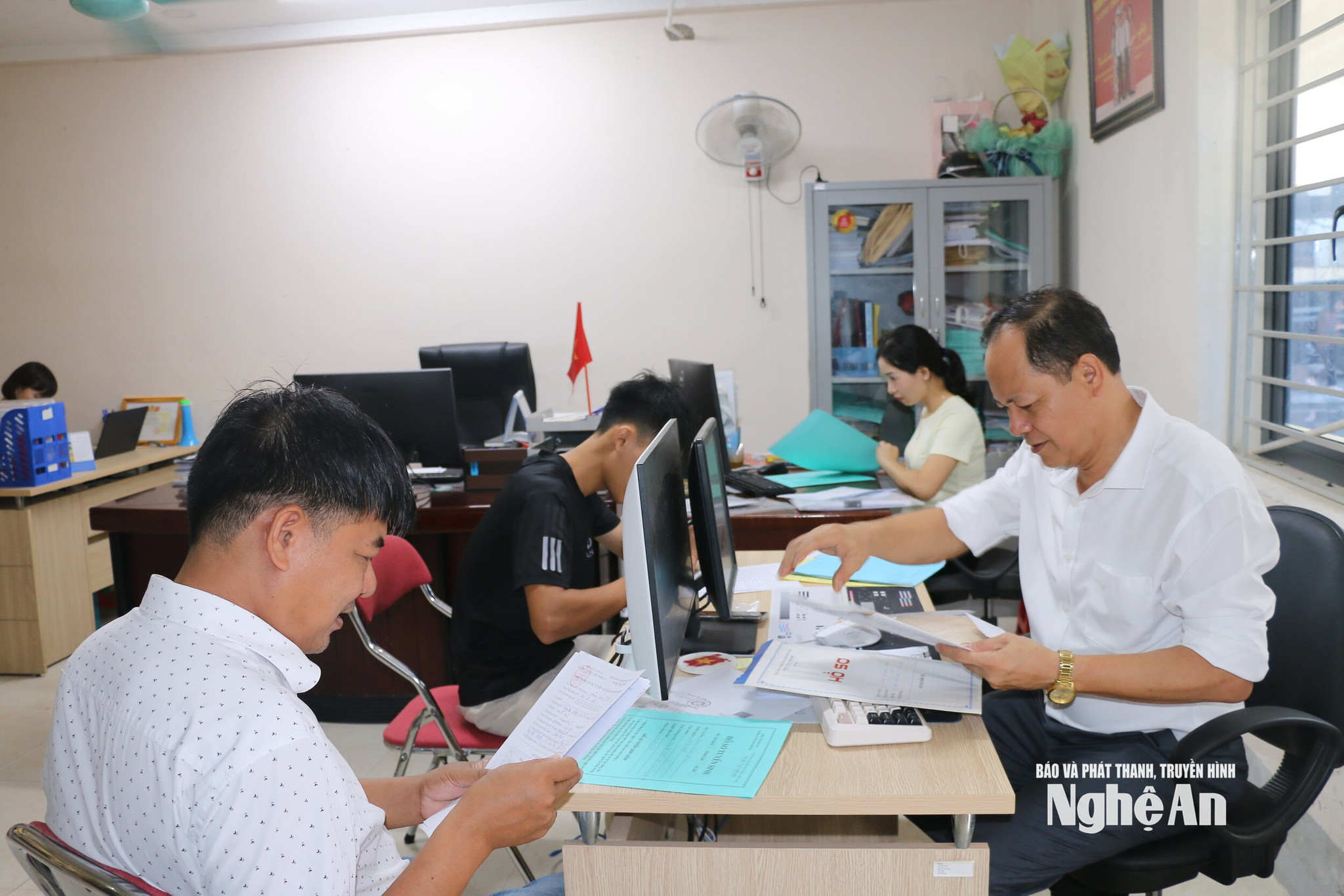
Besides the reasons mentioned above, career development opportunities for vocational school students are also expanding. Nguyen Van Ba, a student of the Vinh Continuing Education and Vocational Training Center, graduated in 2026. In addition to his general education, during his three years at the Continuing Education Center, he also enrolled in an industrial electrical engineering program and obtained a vocational diploma. After graduation, instead of choosing to work, he decided to pursue a college degree at the Viet-Duc College with the hope of obtaining an engineering degree and later being able to work abroad. Ba also mentioned that in his class of 42 students, a small number have gone on to university, while 23 students have enrolled in college. Many of these students, even while still in vocational school, found employment after completing internships at businesses in the Bac Ninh Industrial Park.
This year, the Vietnam-Germany College of Nghe An has been allocated a total enrollment quota of 670 students at the college and vocational levels. To date, the school has received nearly 1,000 applications.
In recent years, the number of students choosing vocational training has been increasing. One of the important reasons is the significant change in students' and parents' perceptions of job opportunities after graduation. Instead of focusing solely on a university degree, many students are now more interested in professions with high recruitment demand, suitable training durations, and stable job and income opportunities.
Furthermore, the demand for skilled labor from businesses is increasing, especially in industrial zones in Nghe An province. The labor markets in countries like Japan, South Korea, and Taiwan also offer more opportunities for students after graduation. These factors make vocational training an increasingly attractive option.
Mr. Cao Anh Tuan - Vice Principal of Viet-Duc College of Nghe An
According to a report on vocational education in Nghe An province, in recent years, vocational training institutions have gradually shifted towards linking training with the actual needs of businesses and the labor market. Schools focus on developing and adjusting training programs, emphasizing technical and technological fields and areas with high demand for human resources; while increasing the time spent on practical training, honing vocational skills, soft skills, and industrial work ethics for learners.
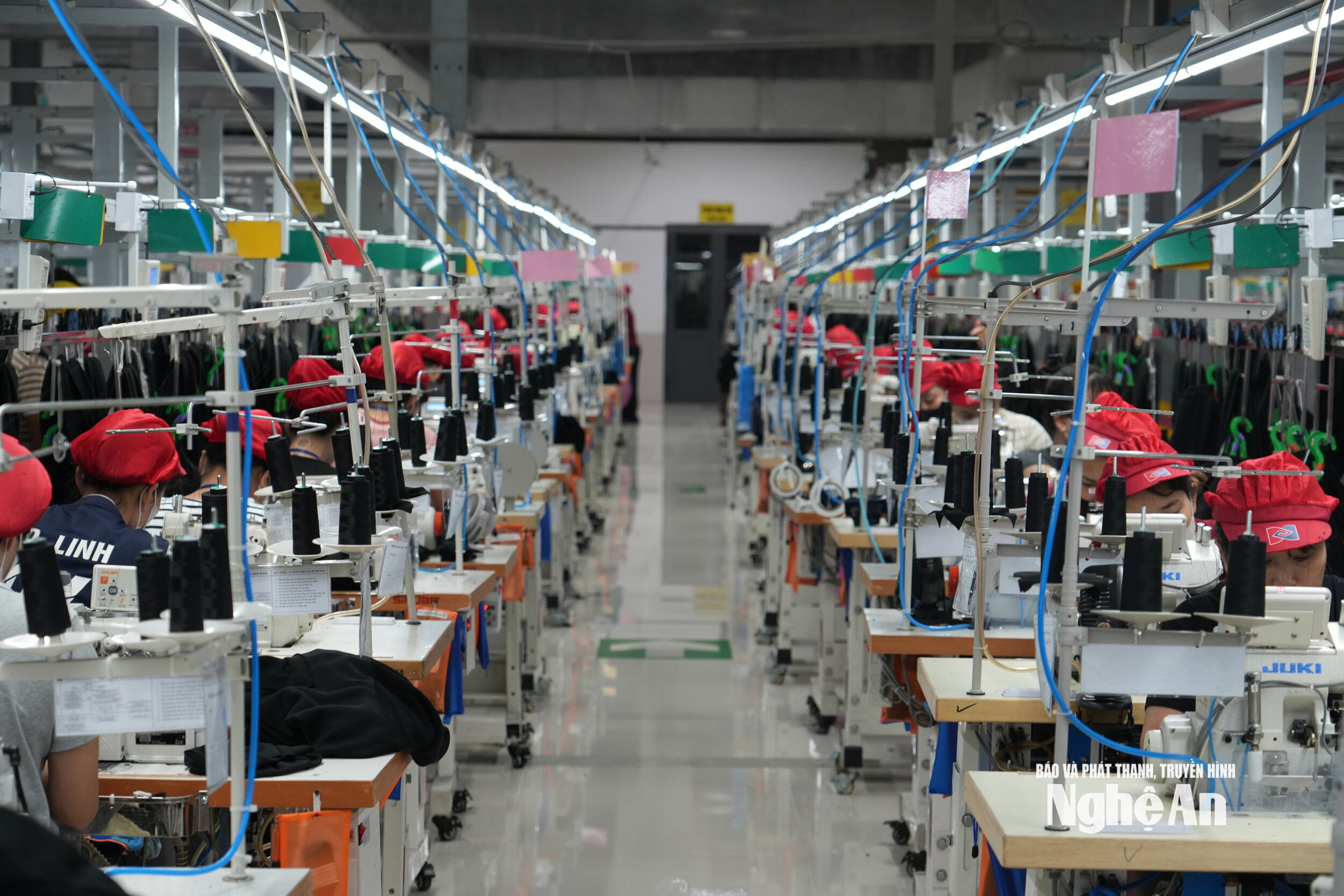
Notably, the link between schools and businesses is expanding. To date, 187 companies and businesses have collaborated with vocational education institutions in the province in retraining, advanced training, supporting students with practical training and internships, and recruiting them after graduation. Through this collaboration, vocational education institutions have contributed to creating jobs for more than 40,000 students, with an average salary of approximately 7-10 million VND per person per month.
The employment rate for graduates after training is approximately 81%. At the college and vocational school levels, this rate exceeds 96.2%. These figures show that the gap between vocational training and employment needs is gradually narrowing as businesses become increasingly involved in the training process, from practical training and internships to recruitment. This is also why, this year's enrollment season, a significant number of academically strong students have proactively chosen vocational training instead of the single path to university as in the past.


