
Today, the Politburo is considering the proposal to merge provinces.
The Politburo today considered a plan to reorganize administrative units at all levels and establish a two-tiered local government system, including a plan to merge several provinces, abolish the district level, and merge many communes.
Thus, just one month since February 14th – when the Politburo issued Conclusion 126 on some contents and tasks to continue restructuring and streamlining the organizational apparatus of the political system in 2025 – the plan to merge provinces, abolish districts, and merge communes has been finalized.
Each commune is a small district.
At the first meeting of the Steering Committee for the reorganization of administrative units at all levels and the construction of a two-tiered local government model yesterday, Minister of Home Affairs Pham Thi Thanh Tra stated that currently, the country has 10,035 commune-level administrative units, which will be reorganized to only about 2,000 units. At that time, each commune will be "almost like a small district."
Deputy Prime Minister Nguyen Hoa Binh also informed that, in the proposal the Government submitted to the Politburo today, when the district level is abolished, 1/3 of the tasks of the district level will be transferred to the province, and 2/3 will be transferred to the commune (grassroots level).
Previously, at a meeting on March 11th, Prime Minister Pham Minh Chinh stated that the Standing Committee of the Government Party Committee had agreed to submit a plan to the competent authorities proposing a reduction of approximately 50% in the number of provincial-level administrative units and 60-70% in the number of grassroots-level administrative units after the reorganization compared to the current situation.
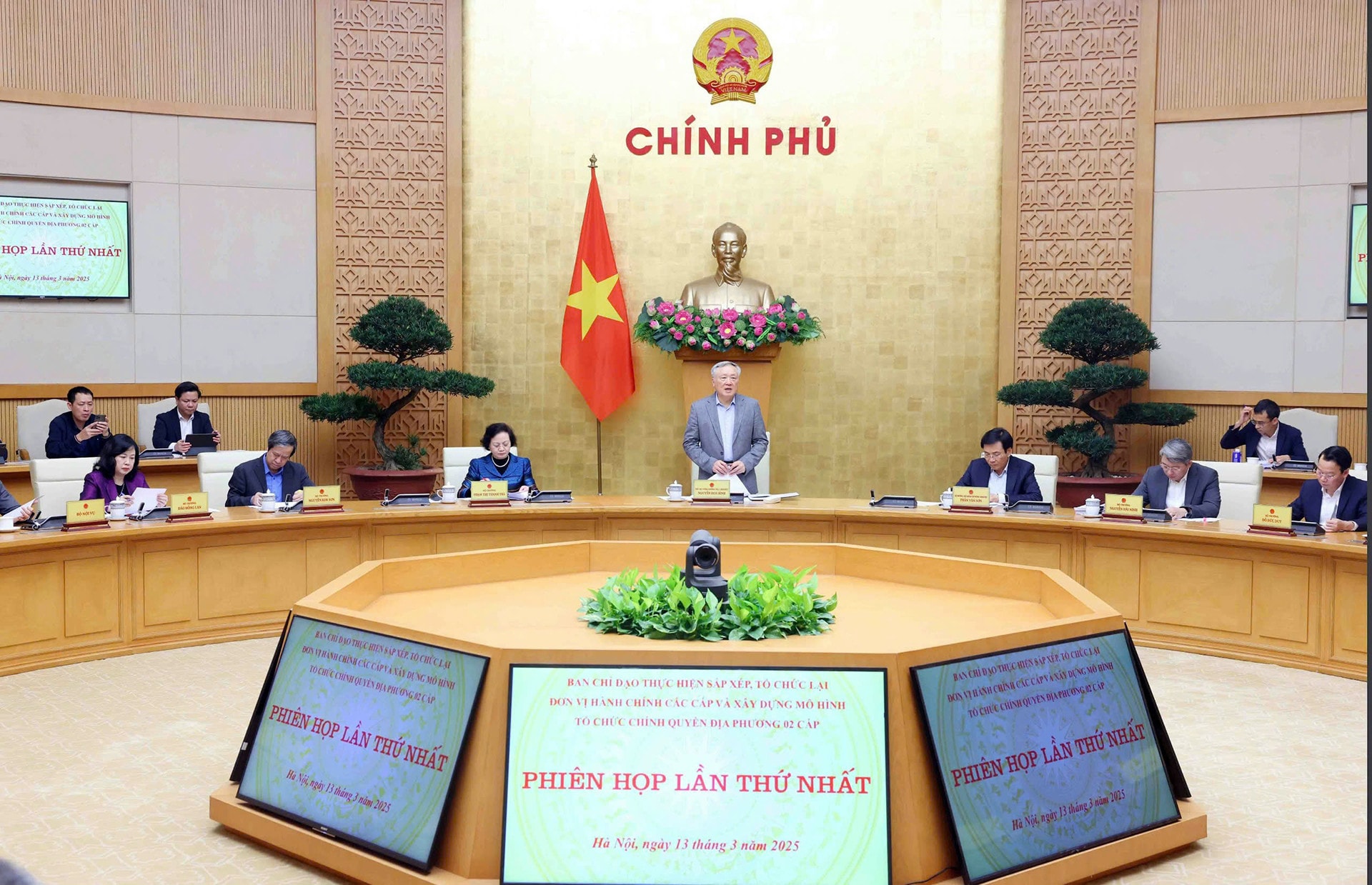
The proposal submitted by the Government to the Politburo suggests a two-tiered local government model consisting of provincial and commune (local level), eliminating the district level. This would involve merging several provinces, resulting in approximately 30 provinces and cities and around 2,000 communes nationwide, instead of the current 63 provinces and cities and 10,035 communes.
Looking back at the preparations over the past month, it can be affirmed that there was the highest level of political determination, and implementation followed the "running while queuing" approach of the Politburo, the Secretariat, and the Government.
A month ago, the Politburo and the Secretariat issued Conclusion 126, assigning the Party Committee of the Government to preside over and coordinate with the Central Organization Committee, the Party Committee of the National Assembly, and relevant Party committees and organizations at all levels to study the direction of continuing to reorganize and abolish intermediate administrative levels (district level); to develop a plan for continuing to reorganize the commune level in accordance with the new organizational model, proposing the organizational structure, functions, tasks, powers, and responsibilities of the commune level; and at the same time, to orient the merger of some provincial-level administrative units.
Two weeks later, on February 28th, the Politburo and the Secretariat issued Conclusion 127 on conducting research and proposing further restructuring of the political system's organizational apparatus.
Specifically, the Politburo requested research into the direction of merging some provincial-level units, eliminating district-level organizations, and merging some commune-level units; implementing a two-tiered local model (party organization, government, and mass organizations) to ensure efficiency, effectiveness, and efficiency.
The Party Committee of the Government was tasked with developing a plan to submit to the Politburo regarding the merger of several provincial-level administrative units, the elimination of district-level units, and the continued merger of commune-level administrative units.
"A golden opportunity"
The policy of reorganizing administrative units at all levels was set forth in Resolution 18, 6th Conference of the 12th Party Congress in 2017 (on some issues concerning the continued reform and reorganization of the political system's organizational structure to be streamlined, effective, and efficient).
One of the specific tasks and solutions to achieve the goals of streamlining the organizational structure, as clearly stated in Resolution 18, is: “Gradually rearrange, consolidate, and reorganize administrative units at the district and commune levels that do not meet the standards prescribed by law; encourage mergers and increase the scale of administrative units at all levels in areas where conditions permit to improve management and operational capacity and strengthen local resources.”
Resolution 27/2022 of the 6th Plenum of the 13th Central Committee on continuing to build and perfect the socialist rule of law state of Vietnam in the new period also clearly states: “Continue to reorganize administrative units at the district and commune levels; study and pilot the reorganization of provincial-level administrative units in accordance with the overall planning of administrative units of the nation and each locality.”
In line with this policy, from 2017 to the present, the whole country has carried out two rounds of reorganization of district and commune-level administrative units in 2019-2021 and 2023-2025.
As a result, the number of district-level administrative units decreased from 713 to 696; the number of commune-level administrative units decreased from 11,162 to 10,035.
Regarding provincial-level administrative units, the number of provinces and cities has remained unchanged at 63 for over 7 years. Fifty-seven provinces and six centrally-governed cities, including Hanoi, Ho Chi Minh City, Da Nang, Can Tho, Hai Phong, and Hue, were upgraded at the end of 2024.
Associate Professor Dr. Nguyen Viet Thong - former Secretary General and Standing Member of the Central Theoretical Council - believes that the government's plan to reduce the number of provinces by about 50% and the number of commune-level units by 60-70% is entirely feasible.
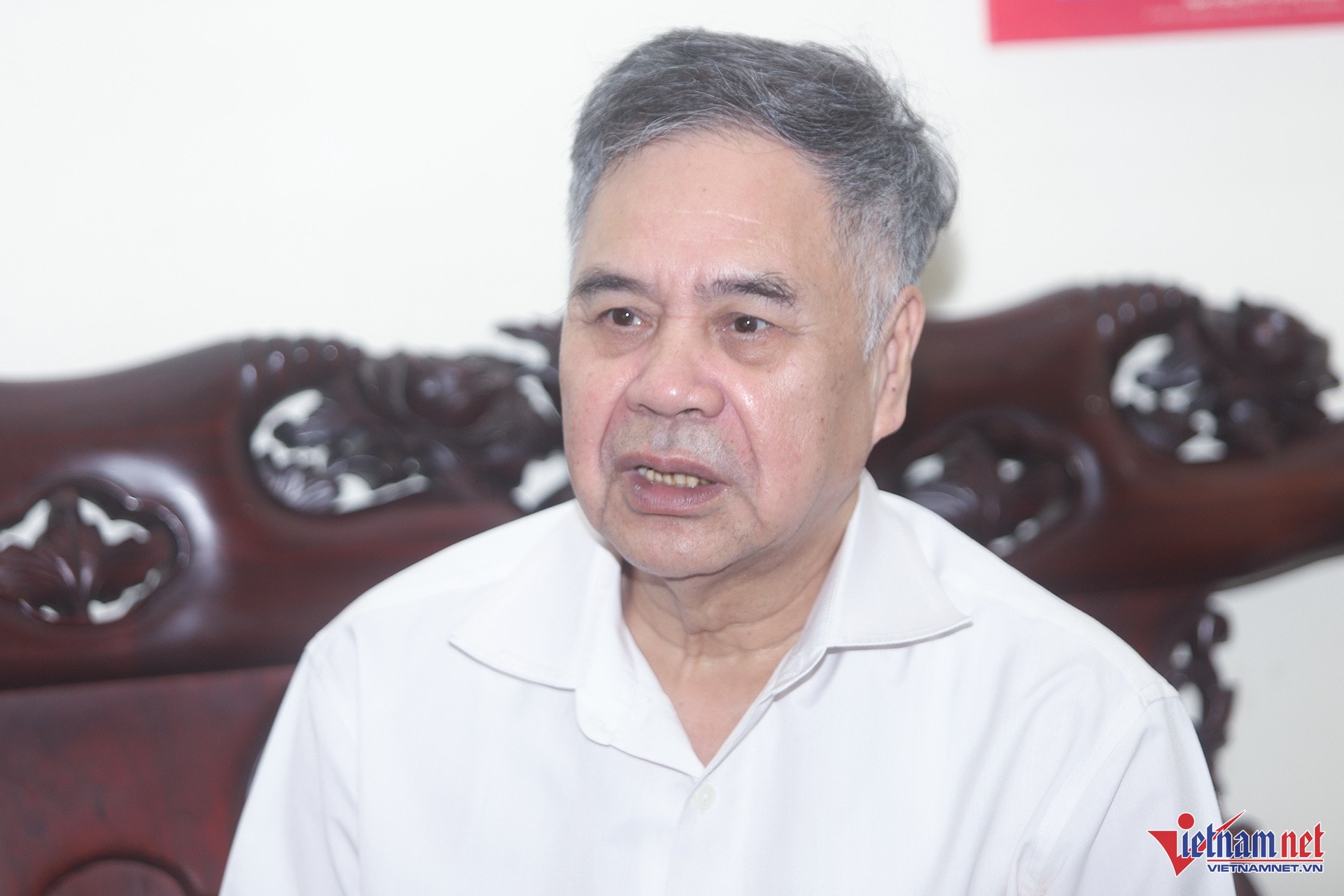
According to him, historically, even during the feudal era, Vietnam only had 31 provinces and cities. By 1975, the country had 72 provinces and cities, but by 1976 (after the 4th Party Congress), many provinces and cities were merged, leaving 38 provinces and cities with 400 districts, likened to 400 fortresses, and approximately 6,000 communes. Through several reorganizations, Vietnam currently has 63 provinces and cities; 696 districts and 10,035 communes.
According to Mr. Thong, the reorganization of administrative units at the commune, district, and even provincial levels has been clearly outlined in the documents of the 13th Party Congress as well as in the Party's resolutions, but the direction to completely abolish the district level is a new policy.
Explaining why the Party is now proposing to abolish the district level, Mr. Thong stated that there have been many studies and ideas raised about this in the past, which also identified the district level as an intermediate level.
However, after much discussion, there were still dissenting opinions, so this content was not mentioned in the Party's resolutions, and the local government continued to operate under the three-tiered model of province, district, and commune.
In reality, as well as studies of the experiences of many countries, the two-tiered local government model is consistent with global progress. Many countries currently implement this model, with Japan being a prime example.
"This time, we boldly abolished district-level administrative units, merged some provinces, and streamlined commune-level administrative units. In my opinion, this is 'building on past successes' as the entire Party and people have supported the recent streamlining of the political system's organizational structure, which we have done very well with incredible speed," Mr. Thong emphasized.
Given the recent achievements, Associate Professor Dr. Nguyen Viet Thong believes there is no reason why we shouldn't abolish the district level and continue to reorganize and merge the provincial and commune levels.
"This is a golden opportunity we must seize to successfully implement the streamlining of the apparatus before the 14th Party Congress, a decisive moment to usher the country into an era of national progress," Mr. Thong said.



