
Over 5 billion iPhone and Android devices are at risk from a new cybersecurity threat.
A new security study warns that more than 5 billion iPhone, Android, Windows, and macOS devices could be vulnerable to attacks via AirDrop and Quick Share if users enable sharing with everyone.
Over 5 billion devices are at risk of being exploited via AirDrop and Quick Share.
Apple's AirDrop and Android's Quick Share have long been familiar features, allowing users to share photos, videos, and files with nearby devices in seconds without needing a Wi-Fi connection, pairing, or creating an account. This speed and seamlessness makes data sharing more convenient than ever.
However, according to new research from security experts at the CISPA Helmholtz Centre for Information Security (Germany), the very "automatic" operation of these two features could become a weakness that hackers can exploit.
Researchers say that AirDrop and Quick Share's background services actively search for and communicate with nearby devices without requiring prior user approval. This creates an excessive level of trust between devices, opening the door to potential attacks if security vulnerabilities are found.
Six vulnerabilities affect iPhone, Android, Windows, and macOS.
According to the research findings, experts have discovered a total of six security vulnerabilities that could potentially affect multiple popular platforms.
Of these, three vulnerabilities relate to AirDrop on iPhones and Macs, while the remaining three affect Quick Share on Android, as well as the connection mechanism between Android phones and Windows computers.
For AirDrop, the main issue lies in the background process – the component responsible for running many features of the Apple ecosystem such as AirDrop, AirPlay, Universal Clipboard, Continuity Camera, and Handoff.
Meanwhile, Quick Share vulnerabilities relate to the data transfer mechanism between Android phones and Windows computers, allowing attackers to exploit weaknesses in the connection establishment process.
The good news is that all the vulnerabilities have been reported to Apple and Google. Two vulnerabilities have been fixed with patches, while the other four are still being investigated by the two companies, and updates are being developed to address them.
Hackers only need to stand a few meters away to carry out the attack.
What particularly worries experts is how AirDrop and Quick Share are designed to deliver a "contactless" experience.
To achieve this, the background services of both systems are constantly listening for signals from surrounding devices and processing data even when the user has not yet agreed to receive the file.
According to the research team, if the device is set to be discoverable by "Everyone," an attacker only needs a laptop with Wi-Fi and standing within a range of about 3-4 meters to begin sending malicious data packets.
With AirDrop, this data can overload and completely crash the sharing process, stopping AirDrop and related features like Continuity Camera or Universal Clipboard from working.
Quick Share also poses even more serious risks.
According to the researchers, Quick Share has a more complex vulnerability in the connection establishment process.
Typically, devices must exchange security keys before transmitting data. However, Quick Share allows the first three data frames to be sent and received before authentication takes place.
Notably, these three data frames were not encrypted.
Even if the connection is terminated, the session key still exists, creating an opportunity for an attacker to reopen the connection and exploit any remaining vulnerabilities.
This vulnerability also affects Windows, where experts discovered a bug that uses memory after it has been freed – a type of bug that can lead to unintended system behavior if exploited.
Users should change their AirDrop and Quick Share settings to minimize risks.
Although tech companies have begun implementing remedial measures, experts believe users should still proactively mitigate risks.
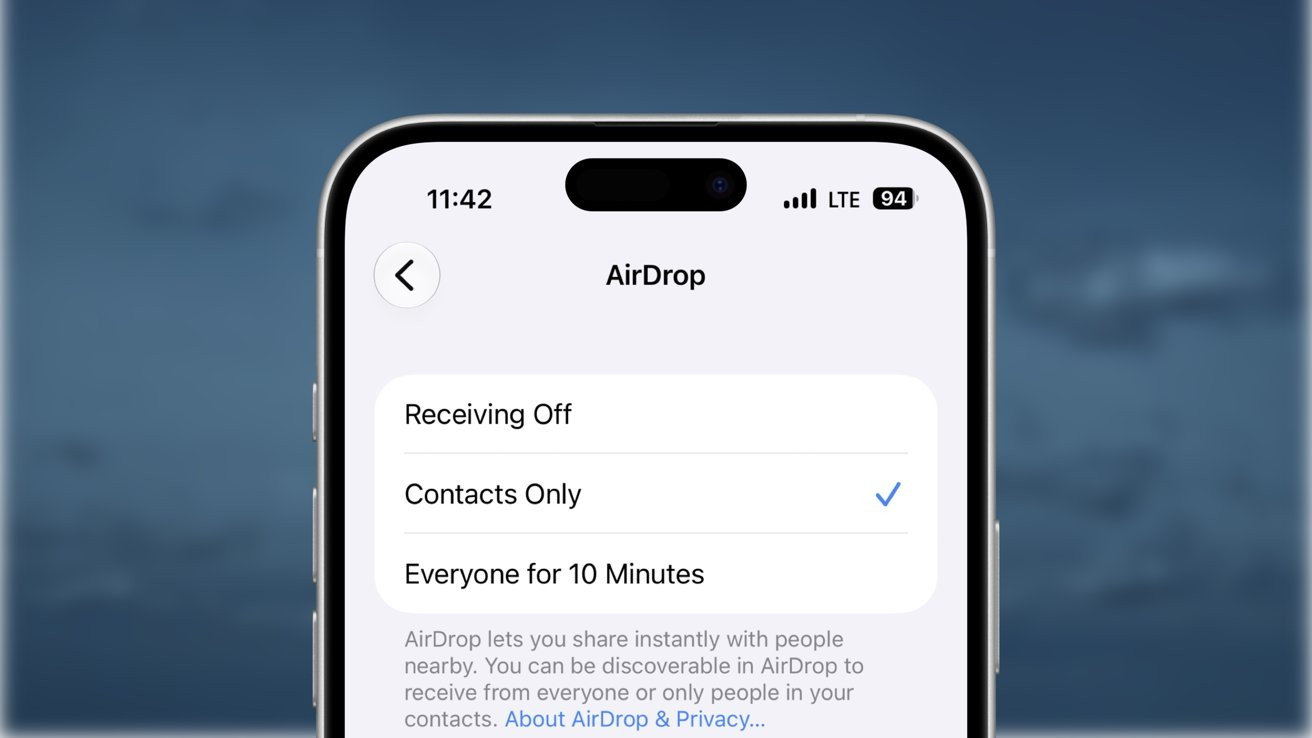
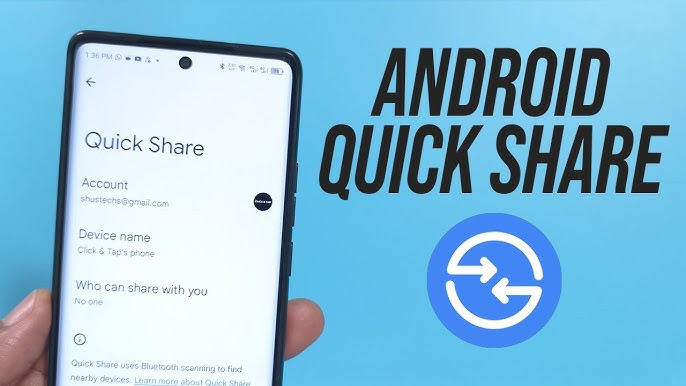
AirDrop and Quick Share both allow you to choose the sharing scope, including: Do not allow anyone to find the device; Only allow contacts; or Allow everyone.
To ensure safety, users should switch to "Nobody" or "Contacts Only" mode, and only enable sharing with everyone when it's absolutely necessary to transfer files.
This can make the data sharing process less convenient, especially when sending many photos or files. However, in return, the device will avoid the risk of being connected by strangers nearby.
Experts also emphasized that, although current vulnerabilities do not allow hackers to directly steal data, restricting the devices visible to everyone remains an effective defense measure.
In the context of constantly evolving attack methods, proactively adjusting security settings will significantly reduce the risk of becoming a target of future attacks.


