
The island is used for nuclear bomb testing.
Bikini Atoll in the central Pacific Ocean was the site of 23 nuclear bomb tests in the middle of the last century.
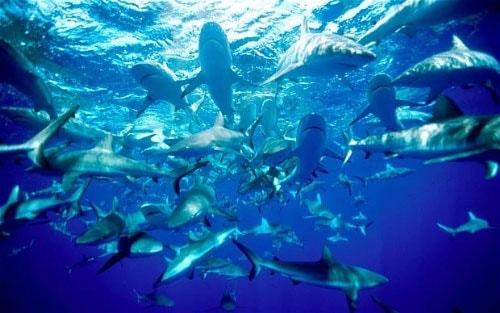 |
| Nuclear radiation and sharks are two of this island's "specialties." |
According to IFL Science, scientists from Columbia University in the US measured gamma-ray radiation levels on six islands in the Marshall Islands, including Bikini Atoll. The last time a nuclear bomb was tested on the island was 58 years ago. The primary source of radiation is cesium-137, produced by the bombs, which has a half-life of 30 years.
According to research findings, radiation levels are low at the Enewetak atoll, home to almost all of the current inhabitants of the archipelago.
However, the average amount of radiation a person absorbs if living on Bikini Atoll is 184 millirems per year. The area on the island has much higher radiation levels than the offshore area. This number can be multiplied many times and reach dangerous levels if you eat fish or fruit from the island.
For comparison, the research team measured the amount of radiation absorbed in Central Park in New York, USA. The radiation level of 100 millirems/year there was higher than all the islands tested, except for Bikini Atoll. "The gamma-ray radiation in the environment is quite high due to the abundant granite resources in the park," the researchers said. Granite often contains radioactive elements such as thorium.
Efforts to resettle people on Bikini Atoll have been halted because radiation levels remain a significant health risk. Under an agreement between the U.S. and local authorities, resettlement will not take place until radiation levels absorbed by the human body fall below 100 millirems per year.
According to VNE
| RELATED NEWS |
|---|


