
What direction should the circular economy take in Nghe An?
(Baonghean.vn) - Circular economy is a general development trend of the economy, in which all activities from design and production to service provision aim at reuse and minimizing negative impacts on the environment.
The barriers
Simply put, the circular economy is a production cycle where waste is recycled back into raw materials for production, thereby reducing negative impacts on the environment and protecting ecosystems and people's health.
The circular economy offers four benefits through maximizing resource utilization, including resource conservation, environmental protection, economic development promotion, and social benefits. However, in reality, in Nghe An province, the implementation...ensuring an environment conducive to economic development.There are still many shortcomings.
According to the planning, Nghe An province has 10 industrial parks, of which 8 are under construction and operational, with a total of 130 businesses. The average occupancy rate of the operational industrial parks is approximately 41.9%. Besides industrial parks, the province also has 53 industrial clusters with a total area of 1,273.06 hectares. However, only 23 of these clusters are currently operational. These clusters have attracted 253 investment projects, mainly in the fields of mineral processing, forestry products, garment and textile manufacturing, mechanical processing, metal recycling, plastic recycling and production, and packaging production.
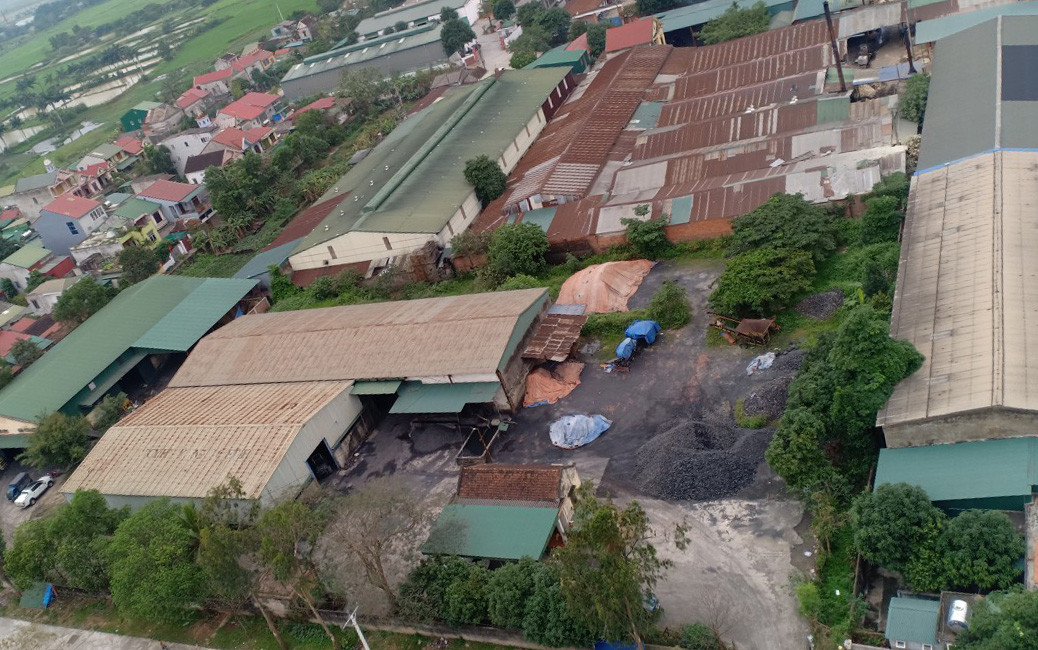 |
| Many industrial parks and clusters in the area currently lack complete and integrated wastewater treatment systems. Photo: Tien Dong |
The reality is that, despite having had one...industrial park and cluster systemAlthough spread throughout the area, currently only 4 out of 8 industrial parks have centralized wastewater treatment systems with a total designed treatment capacity of 11,950 m³.3/day/night. Of the 23 operating industrial clusters, only 10 have invested in centralized wastewater collection and treatment systems, and only 8 of these have operational centralized wastewater treatment systems.
According to the plan, all industrial parks must have areas for sorting and transferring solid waste. However, in reality, most industrial parks do not implement this feature. This has caused considerable difficulties in solid waste management in industrial parks. Currently, facilities within industrial parks are contracting directly with specialized units for collection and processing.
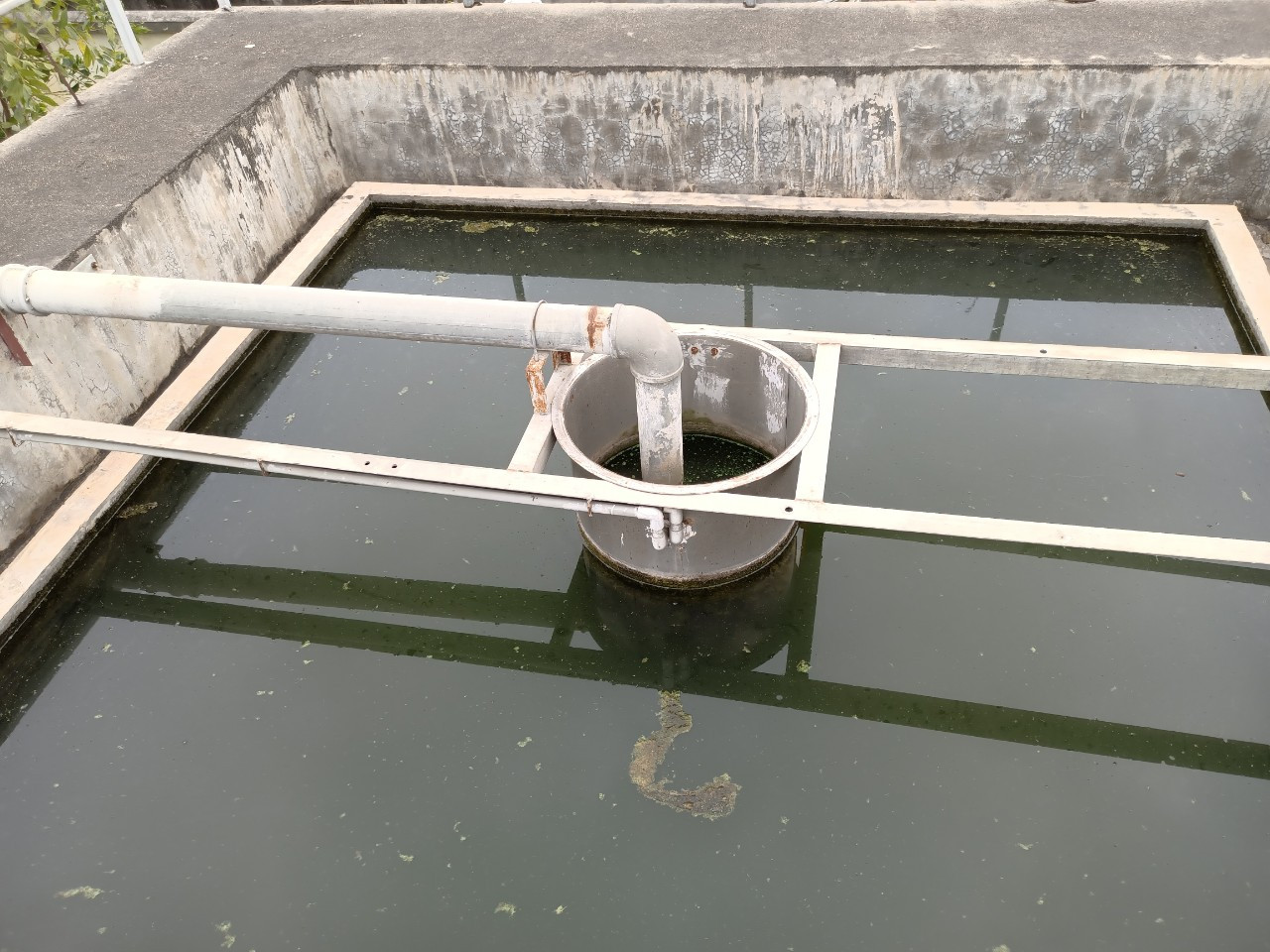 |
| Many industrial clusters, despite having wastewater treatment systems, are almost completely non-operational. The photo shows the wastewater treatment tank of the Thap Hong Ky Industrial Cluster (Dien Chau). Photo: Tien Dong |
Aggregate data for 2021 shows that the collection of hazardous waste from industrial and service activities reached approximately 2,950.3 tons. Besides the shortcomings in wastewater treatment systems, there are currently 10 industrial clusters that are operational or expanding but have not yet received approval for their environmental impact assessment reports from the competent authorities; 13 out of 23 industrial clusters have not yet built stormwater runoff collection systems. This is not to mention the fact that most industrial clusters have not yet completed or built their technical infrastructure.
Currently, the province has 35 facilities with large emission sources that are on the list of entities required to install automatic, continuous monitoring systems. Of these, 10 units are required to install automatic exhaust gas monitoring systems and 25 units are required to install automatic wastewater monitoring systems. However, to date, only 21 out of 35 units have invested in and installed these automatic monitoring systems. In addition, there are 17 facilities with significant or serious environmental pollution that have not yet been certified as having completed thorough remediation. These include 4 hospitals; 7 household waste landfills; and 6 production and business establishments.
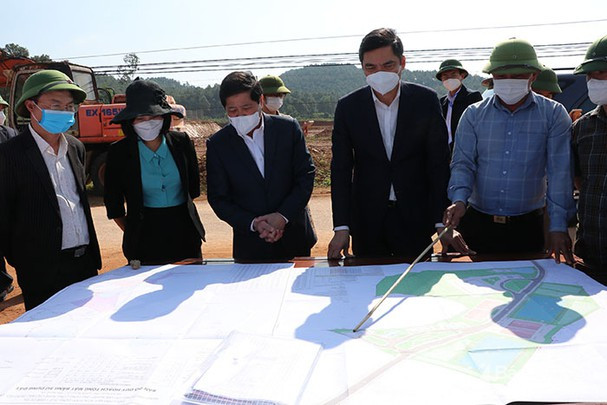 |
| Nghe An province is a priority location for the implementation of the High-Tech Forestry Zone Project in the North Central region. In the photo, a delegation from the Ministry of Agriculture and Rural Development, along with provincial leaders, inspects the project's progress. Photo: Phu Huong |
A coordinated approach is needed.
Besides environmental pollution, many argue that the current institutional framework for developing a circular economy is still incomplete. Furthermore, businesses – the core of the economy – are not yet aware of the necessity of transitioning their current production and business models to a circular economy. In particular, implementing a circular economy requires sorting and cleaning waste before reuse or recycling, but most small businesses, wanting to save costs, have not implemented this.
Mr. Nguyen Huu Mao, Deputy Director of the Department of Planning and Investment, said that the Ministry of Planning and Investment is currently developing a circular economy development plan in Vietnam. However, to build a circular economy, it is fundamentally necessary to build a clean economy. We need to move towards...Develop eco-friendly industrial parks and clusters.The aim is to reduce the use of raw materials, water, energy, and hazardous chemicals; minimize greenhouse gas emissions and economic, environmental, and social risks. Simultaneously, it aims to improve competitiveness and profitability.
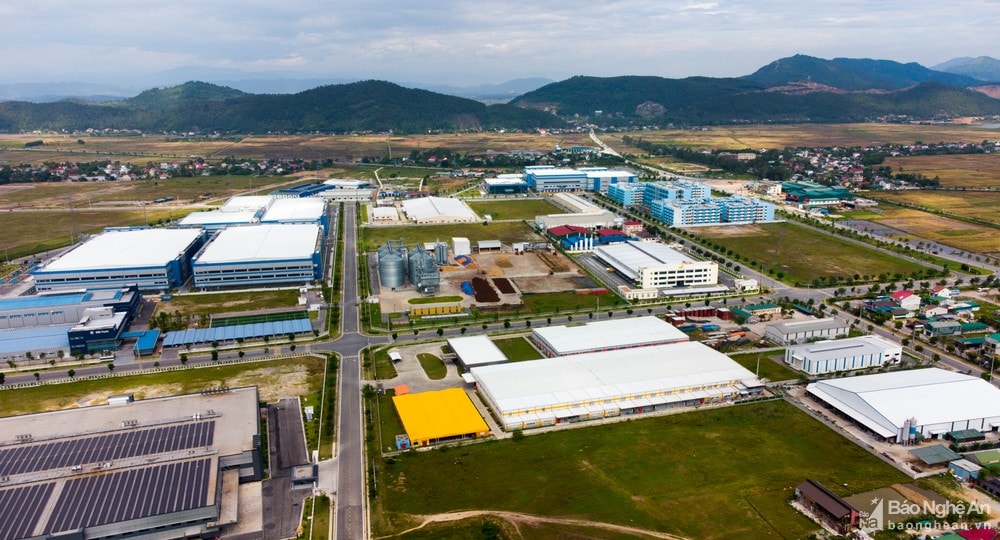 |
| Currently, several newly built industrial parks in the area have met stringent environmental standards. (Photo: Nghe An Newspaper archives) |
Furthermore, the most important thing is to issue regulations and standards requiring units and businesses investing in industrial parks and clusters to share facilities within the park, share production materials; access new technologies and green financial support mechanisms; improve the health and safety of workers; and enhance the quality of life for the community. This aims to achieve the goal of sustainable state management of industrial activities and industrial parks, fulfilling international environmental commitments.
When developing industrial parks and clusters, it is necessary to establish criteria for production, resource conservation, efficient energy use, cleaner production, and to foster strong linkages among businesses within the park. This includes minimizing pollution sources and waste, encouraging the use of clean technologies and environmentally friendly solutions, and building a clean and competitive business community.
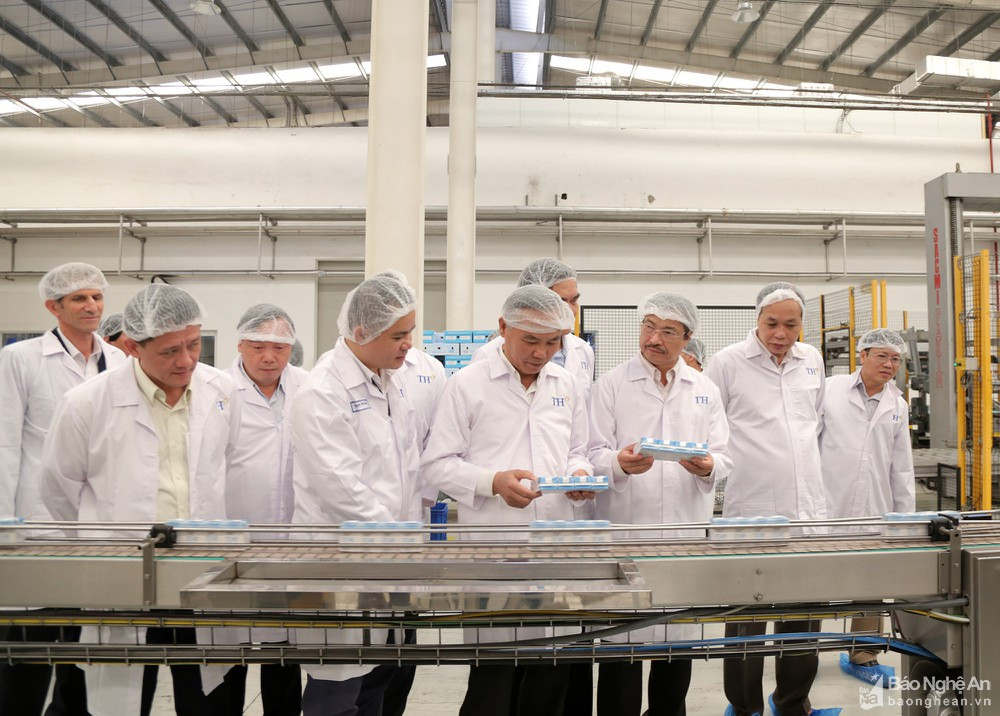 |
| TH Group is one of the companies that has taken a direction in developing clean agriculture and ecological agriculture. Photo: Thu Huyen |
Mr. Mao also cited that, although there is no overall policy framework and criteria for the circular economy, in reality there have been many initiatives and projects following the circular economy model in various fields such asecological industrial zone...clean agriculture, ecological agriculture, organic agriculture... Some businesses, such as TH Group, have proactively applied the circular economy, considering waste design from the product design stage so that when disposed of, it can be easily repurposed into other production processes. Similarly, industrial parks like VSIP and WHA Industrial Zone 1 in Nghe An, despite being newly built, have already met stringent environmental standards…
"It can be seen that, in the current context, when the circular economy has become a general trend, if businesses can grasp this and adapt to integration, they will maintain and enhance their position and affirm their brand in the value chain," Mr. Mao emphasized.


