
Towards safe aquaculture
Recently, the farming of pangasius and brackish water shrimp has faced difficulties due to disease outbreaks. Many veterinary drugs have been used, but disease-causing bacteria develop resistance very quickly. What can be done to ensure safe production?
Disease outbreaks are likely to occur.
According to the General Department of Fisheries, there are four main causes of disease outbreaks in aquaculture: poor environmental management; weak production linkages; inadequate management of the quality of breeding stock, veterinary drugs, and environmental treatment substances; and ineffective management of concentrated farming areas. As a result, diseases often occur easily and, once they do, spread and are difficult to control.
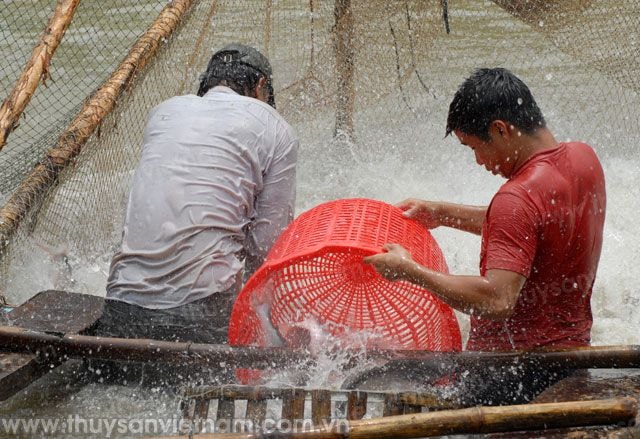 |
| Illustrative image |
The National Agricultural Extension Center emphasized that the farming process is not rational, and the level of aquaculture expertise among farmers is limited, especially when "the market is flooded with chemicals, nutritional supplements, biological products, and environmental treatment and improvement agents. The overload of brands and uncontrolled quality confuse shrimp farmers, leading to the overuse of chemicals, harming the environment, and driving up the cost of farmed products."
Research by Dr. Tran Huu Loc and colleagues at the Ho Chi Minh City University of Agriculture and Forestry, from 2012 to the present, indicates that some antibiotics commonly used by shrimp farmers to combat acute hepatopancreatic necrosis disease in brackish water shrimp have actually been completely resisted by bacteria. This is evidence that some pathogenic bacteria can develop resistance to antibiotics very quickly, rendering the treatment ineffective. According to Dr. Loc, antibiotics should be considered the last line of defense, not a preventative measure.
Pangasius farming needs to change.
According to the Development Aquaculture Company Limited in Dong Thap province, the current disease resistance of pangasius catfish is very poor, from fry to commercially farmed fish. The survival rate of fry is only 20-25% when reared into fingerlings, and only 50-60% survive from fingerlings to juvenile fish. In the 1990s, when farmed fish reached a weight of 0.1 kg each, there was very little loss due to disease, but now, diseases are frequent and losses are still very high. "Diseases cause losses throughout the entire farming process, even until the fish reach harvest size," said the company's leader.
MSc. Vuong Hoc Vinh (An Giang University) provided a vivid example of a method for producing disease-free and healthy fish fry. By stocking the fry at a low density, not feeding them for the first 7 days, and only feeding them just enough in the following days, and minimizing water changes in the nursery pond, it takes 42 days for the fish to reach 1,000 fish per kilogram, instead of the previous 35 days. No antibiotics are used during the nursery process. This results in disease-free fish fry for the market.
“If we consider enhancing the value chain here as providing disease-free fish fry for the aquaculture industry, then hatcheries must accept some changes in mindset,” said Mr. Vinh. Specific changes include not stocking at high densities, not overfeeding the fish to accelerate growth, but allowing them to grow naturally and increase their resistance. During the rearing process, the amount of feed used to promote rapid growth should also be limited; feeding should be moderate to maintain environmental safety. Mr. Vinh explained that when feed is distributed, only 75% is consumed, while 10% dissolves into the environment, and 15% remains. Overfeeding forces the fish to utilize the full capacity of their liver and gallbladder to digest the food, leading to impaired function of these organs and making them more susceptible to disease. Furthermore, excess feed pollutes the environment and breeds pathogens.
Create a shrimp farming process.
To improve shrimp farming efficiency, according to the Institute of Fisheries Economics and Planning, "promoting the non-use of banned antibiotics in aquaculture" is crucial. The Institute's leadership emphasized the importance of shrimp farming using advanced technical processes. For example, in whiteleg shrimp farming areas, "15-20% of the natural area must be used for settling ponds, 5-10% for pond bottom sludge treatment, and 5-10% for wastewater treatment ponds; the quality standards for influent water and wastewater must comply with industry regulations."
Former Deputy Director of the National Agricultural Extension Center, Pham Van Tinh, stated his view on limiting the use of chemicals (only using necessary ones) and avoiding antibiotics. Therefore, farmers must follow proper technical procedures, apply microbial technology correctly, and manage the environment well. He proposed: "The mandatory use of biological products is considered the best alternative to antibacterial agents, as they act as natural immune boosters, stimulating disease resistance in farmed shrimp."
The General Department of Fisheries also agreed on the view to limit the use of veterinary drugs in brackish water shrimp farming; it is necessary to implement advanced technical procedures, including "strongly developing VietGAP in shrimp farming". In the future, solutions are needed to train human resources for shrimp farming to meet the development needs of localities.
According to Vietnam Fisheries


