Economy

The taste of Tet in Gang village's sugarcane molasses.

Gia Huy February 1, 2025 10:12

"My dear, turn your face away, tomorrow morning I'll go to the market to buy molasses and yam for you to eat." For many people in Nghe An province, sugarcane molasses is an indispensable ingredient used to braise fish, make sweet soups, and bake cakes... especially during Tet (Lunar New Year). Among them, sugarcane molasses from Gang village, Nghia Hung commune, Nghia Dan district is favored for its delicious, sweet and refreshing flavor.

img_5456(1).jpg
The craft of making sugarcane molasses in Gang village, Nghia Hung commune, dates back to the 1960s and was recognized as a traditional craft village in 2013. From around mid-November in the lunar calendar, when the sugarcane has accumulated enough sugar, people in Nghia Hung commune, Nghia Dan district, begin harvesting the sugarcane to press it into molasses. Photo: Gia Huy
img_5500(1).jpg
After harvesting, the sugarcane stalks are bundled together, awaiting transport to the crushing plants. Photo: Gia Huy
img_5472(1).jpg
The traditional sugarcane molasses making profession has created jobs and increased income for local people. Mr. Nguyen Van Hieu (42 years old) from Nghia Nhan hamlet, Nghia Hung commune, said that sugarcane cutters like him can earn 200,000 VND/day thanks to this seasonal work. Photo: Gia Huy
Lá mía được người dân làng Găng tận dụng để phục vụ chăn nuôi. Ảnh: Gia Huy
Sugarcane leaves are utilized by the villagers of Găng to feed their livestock. Photo: Gia Huy
img_5521(1).jpg
According to Nghia Hung commune leaders, the entire commune has nearly 500 hectares of sugarcane. Of this, only a small portion is supplied by farmers to sugar factories; the majority is sold to sugarcane molasses processing facilities in Gang village. (In the photo: Sugarcane is gathered at the mills in preparation for the pressing process. Photo: Gia Huy)
img_5713(1).jpg
After being selected and pre-processed, the plump, firm, and sweet sugarcane stalks are put into a juicer to extract the juice. Instead of the time-consuming and laborious manual pressing, according to Mr. Nguyen The Vinh - Deputy Director of the Lang Gang Sugarcane Syrup Processing Cooperative: The sugarcane pressing process has been mechanized using modern machinery, increasing pressing efficiency, extracting all the sugarcane juice, and minimizing labor and manpower. Currently, the cooperative has 71 member households. The sugarcane pressing and syrup-making business has created jobs for more than 200 workers in Lang Gang village with an income of approximately 6 million VND per month. Photo: Gia Huy
img_5567(1).jpg
After drying, sugarcane bagasse is used by locals as fuel, and the ash is used as fertilizer for plants. Photo: Gia Huy
img_5516(1).jpg
Many member households of the Lang Gang sugarcane molasses processing cooperative (Nghia Hung commune, Nghia Dan district) have invested in a continuous system of cast iron furnaces and pans to process sugarcane molasses. Photo: Gia Huy
5-2-.jpg
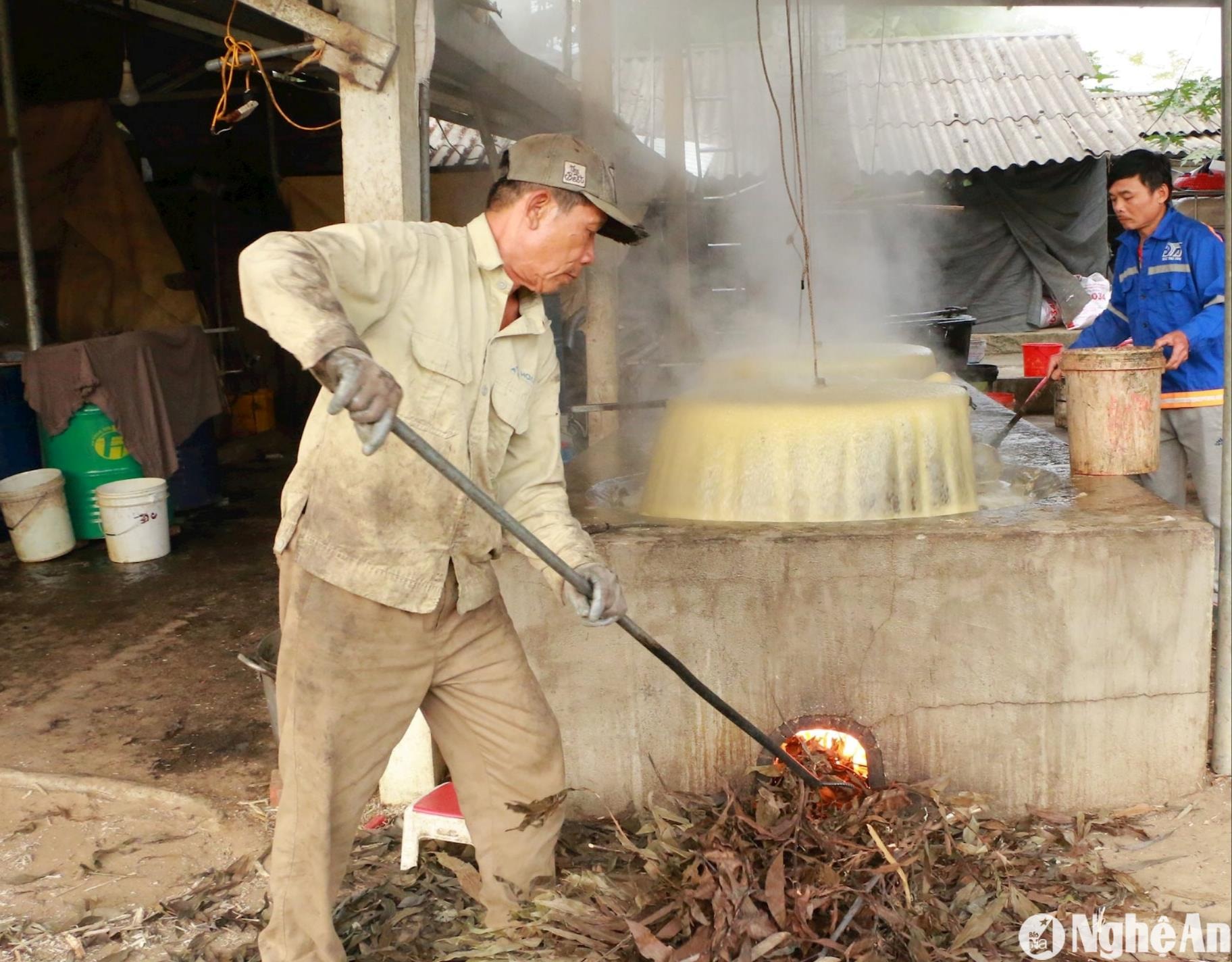
Every year, as Tet (Lunar New Year) approaches, the sugarcane syrup furnaces in Gang village glow red, smoke billowing and carrying sweet, fragrant aromas that permeate the air. Photo: Gia Huy
img_5687(1).jpg
After the sugarcane juice is pressed and settled in tanks, it is transferred to a cooking system with large cast-iron pans, capable of cooking five pans simultaneously. According to experienced craftsmen, maintaining the fire to ensure the correct temperature is crucial. Each batch of syrup takes about 1.5 hours to cook. During that time, fuel must be continuously added and the temperature of the stove maintained. The bubbling sound of the syrup pots, combined with the sweet aroma, fills the entire area. Photo: Gia Huy
img_5613(1).jpg
When the honey boils and bubbles, the cook must constantly monitor it, using a long spoon to skim off the foam and remove any sediment. Importantly, the heat must be carefully adjusted to prevent the honey from overflowing or burning, ensuring clear, golden-yellow, high-quality batches. Throughout the cooking process, the heat in the pans must be consistent; if the heat is too high, the foam will become runny and the honey will not look appealing. (Photo: Gia Huy)
Villagers in Gang hamlet, Nghia Hung commune, Nghia Dan district, press sugarcane and make molasses. Clip: Gia Huy
img_5678(1).jpg
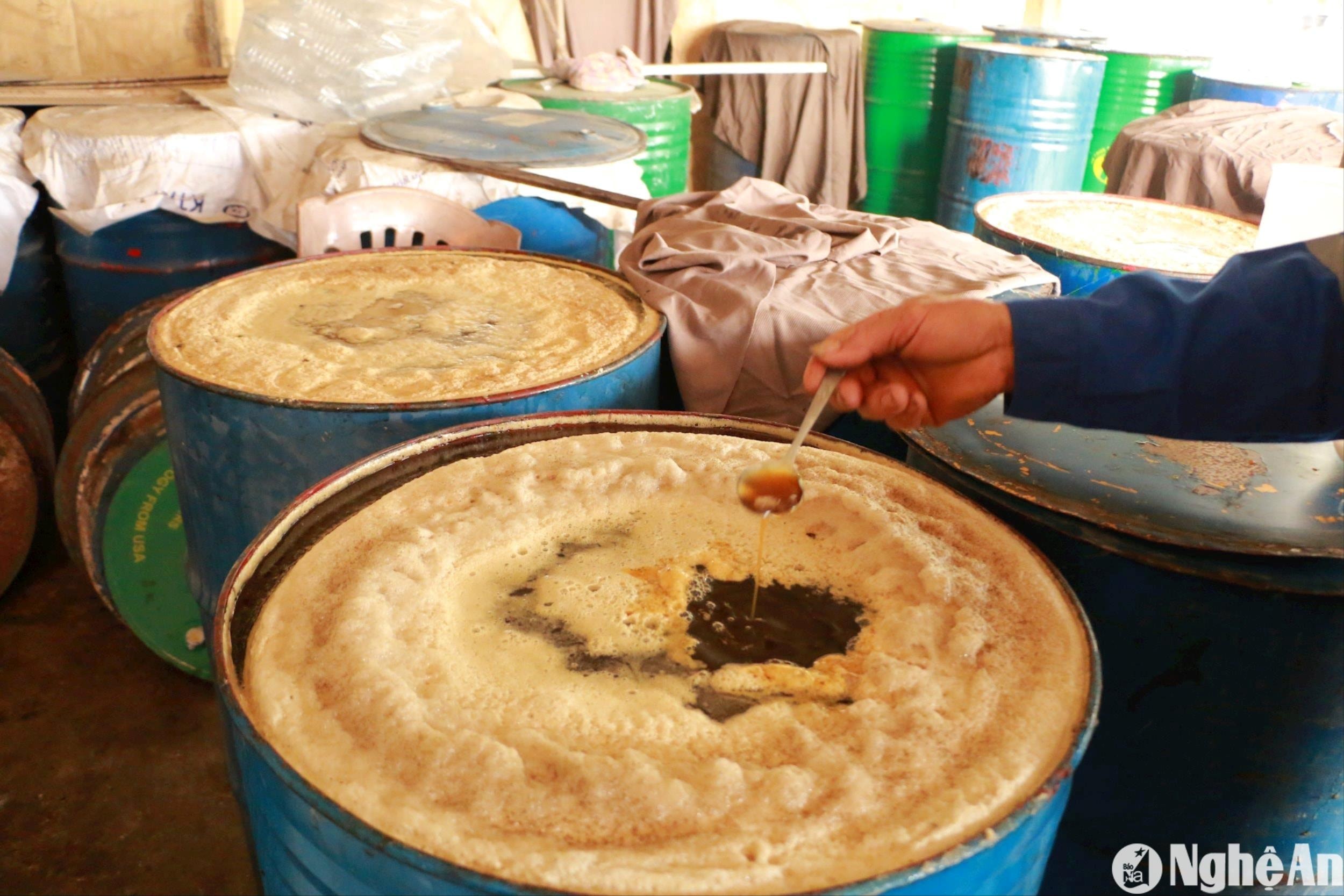
Once the sugarcane juice has been concentrated into syrup, the foam is skimmed off once more before cooling and pumping it into barrels for storage. The sediment filtration process continues throughout the syrup storage period to ensure good quality and a beautiful color. Photo: Gia Huy
img_5660(1).jpg
Each drop of smooth, rich honey is the culmination of a laborious process. Every drop is not only a product of nature but also embodies the dedication and love that the artisans pour into it. From selecting the sugarcane, pressing it, to the cooking, settling, and bottling process, each step requires meticulous attention to detail and experience. The secret to a delicious batch of honey lies in selecting mature, sweet sugarcane, maintaining a consistent heat, and carefully skimming off any foam. Photo: Gia Huy
img_5652-1-.jpg
Gang Village's sugarcane molasses has a unique flavor, a smooth, clear, amber-colored consistency, a sweet and delicate aroma, and is pure, without artificial coloring or additives. According to Mr. Vo Dinh Luong, Director of the Gang Village Sugarcane Molasses Processing Cooperative: During Tet (Lunar New Year), each 200-liter barrel of molasses costs 4-4.2 million VND. This season, his family expects to produce 60 barrels of molasses. After deducting production costs, raw materials, and labor, he expects a profit of over 60 million VND. Molasses producers start production every 2-3 days when they have enough raw materials. The molasses cooking process usually lasts from 4 to 20 hours. From mid-December, the molasses cooking furnaces are almost constantly burning to meet market demand. Photo: Gia Huy
cfd59dfc3d31826fdb20(1).jpg
Besides the molasses produced for the Lunar New Year market, molasses makers in Gang village often set aside a portion, storing it in barrels to crystallize into rock sugar. The crystallization process takes 8-9 months. Each 200-liter barrel of molasses yields approximately 40 kg of rock sugar. Compared to selling molasses, rock sugar has a higher economic value, earning 1.2-1.5 million VND per barrel. Currently, both main products, molasses and rock sugar, have achieved OCOP (One Commune One Product) 3-star certification in 2023. Photo: Gia Huy
fotojet-2-(1).jpg
Renowned far and wide for its delicious, smooth flavor, the sugarcane syrup produced in Gang village sells out as soon as it's made, especially during the Lunar New Year. Making sugarcane syrup is not just a craft; it's an integral part of the nation's culture, passed down from generation to generation. By maintaining this traditional syrup-making craft, the lives of the villagers have steadily improved. (Photo: Gia Huy)
172f66c4ca0975572c18(1).jpg
Sugarcane molasses from Gang village is commonly used to braise fish and meat, and in cooking, especially during Tet (Lunar New Year). It's considered a natural, quintessential seasoning, used in making sweet soups and ancestral offerings. Many people also enjoy dipping sticky rice, banh chung (rice cakes), banh gio (rice cakes with fillings), sweet potatoes, and cassava into sugarcane molasses, savoring its delicious, sweet, and refreshing flavor. Sugarcane molasses is also a special gift exchanged between relatives and friends during Tet, wishing for a sweet new year. As spring arrives, the saying goes: "Passing by the fragrant sugarcane mill, one longs to join in a close friendship." This is the scent of the earth and sky, imbued with the hard work and toil of the laborers, a tradition maintained and developed by the people of Gang village. (Photo: Gia Huy)
0 0 0
x
The taste of Tet in Gang village's sugarcane molasses.
Google News
POWERED BYFREECMS- A PRODUCT OFNEKO