
Nghe An border district strives to overcome the precarious situation of the summer-autumn rice crop.
(Baonghean.vn) - In October-November 2023, the western districts of Nghean province entered the summer-autumn rice harvest season. Over the years, local authorities have made improvements and transformations to mitigate the uncertainty and dependence on weather, terrain, and natural disasters, thereby increasing crop yields.
Experiment with growing rice during the main cropping season.
As a border commune of Ky Son district, Na Ngoi has relatively few paddy fields due to its hilly and steep terrain. Many years ago, the local people rarely planted rice during the summer-autumn season because of the extremely cold weather, and mainly cultivated upland rice in the spring.
In recent years, with the technical and manpower support of armed forces units in the area, including the Border Guard and the 4th Economic and National Defense Brigade, the people of Na Ngoi have gradually become familiar with and practiced wet rice cultivation. In some villages with flatter terrain, such as Huoi Thum and some areas in Phu Kha 1 village, people have also begun to experiment with growing rice during the summer-autumn season, but yields remain unstable.
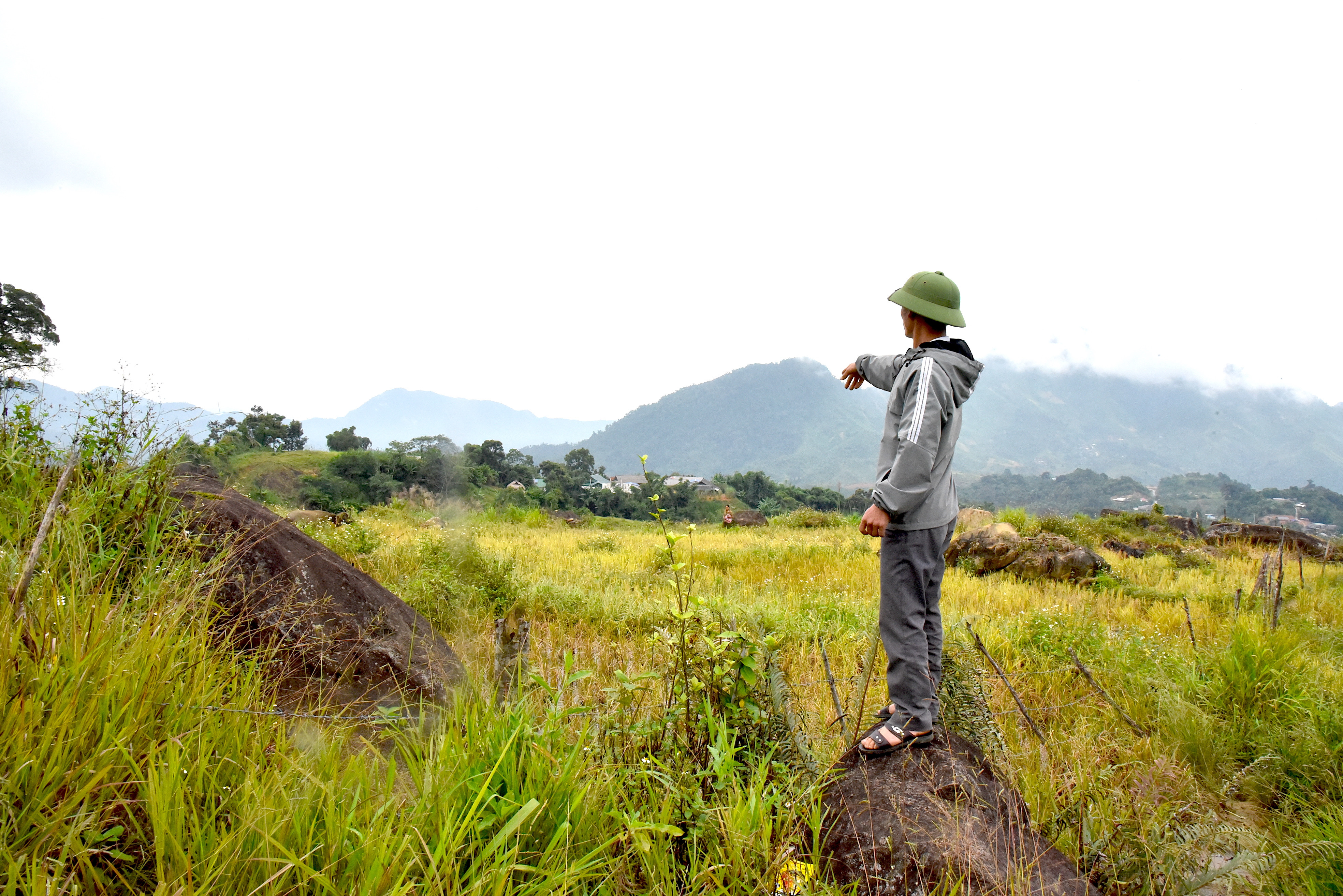
For example, in the 2023 summer-autumn rice crop season, in Phu Kha 1 village, according to Party Secretary Vu Ba Tong, with the support and assistance of Na Ngoi Border Guard Station and the 4th Economic and National Defense Group, this year the village experimented with planting rice in the paddy fields of three households: Vu Ba Po, Vu Ba Bi, and Vu Ba Xenh, using 20kg of rice seeds.
After more than three months of harvesting, despite being a new rice variety with fairly firm and abundant grains, the crop suffered from significant pest and disease infestations, as well as rat damage. This is because surrounding fields were not used for rice cultivation, and other crops had already been harvested, causing pests, especially rats, to concentrate on the rice paddies. Therefore, overall, the summer-autumn rice harvest was not promising.
According to Mr. Vu Ba Tong, for a successful summer-autumn rice crop, planting must be done simultaneously in all the fields of the village or commune. For example, in Huoi Thum village, for about 3 years now, the entire village has been planting summer rice, resulting in fairly stable yields of about 4-5 quintals/hectare.
The entire Ky Son district has over 800 hectares of summer-autumn rice. Currently, the farmers have almost finished harvesting, with an average yield of about 4 tons/ha, and a total production of 3,233.2 tons; of which upland rice accounts for about 5,000 hectares, with a yield of 12 quintals/ha and a production of 6,128 tons.
Transform the crop structure to include suitable varieties.
Ky Son has a rather unique topography and climate, with some localities such as Na Ngoi, Huoi Tu, Nam Can, and Tay Son characterized by high mountains, cold weather, and steep slopes, so rice cultivation, especially seasonal rice, needs careful consideration.
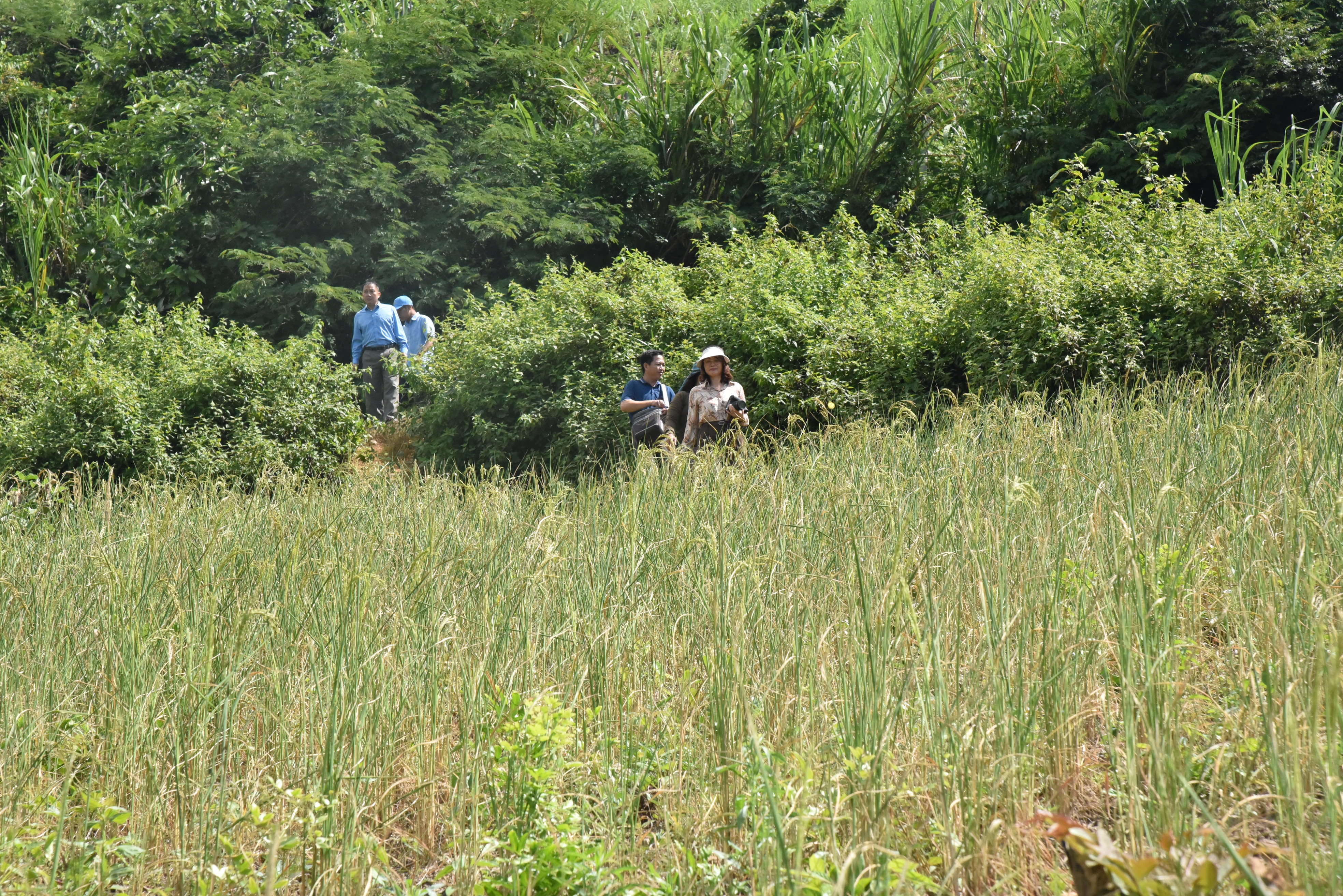
For example, in Nam Can commune, the Chairman of the Farmers' Association, Ho Ba Po, stated that during the 2023 summer-autumn rice crop season, rice was grown in all six villages of the commune, but two villages, Khanh Thanh and Pa Ca, suffered crop failure affecting approximately 60 hectares. The main reasons were drought followed by heavy rain, which resulted in insufficient water retention during the hot season and erosion during prolonged rainfall.
Residents of Nam Can also shared that in recent years, the weather has been erratic, with many prolonged and consecutive heatwaves affecting people's lives and economic development, especially agriculture. As a result, some households have abandoned rice cultivation, switched to other crops, or skipped the entire cropping season. Therefore, for upland rice in 2022, the entire Nam Can commune only met 90.13% of the planned planting area. The situation in 2023 is similar.
To mitigate the instability and losses that reduce crop yields, localities in Ky Son have issued specific directives to improve agricultural efficiency. For example, in Nam Can commune, the commune's People's Committee leaders stated that the commune is guiding people to gradually transform the agricultural economic structure, including changing the crop structure in some villages. This includes shifting from subsistence rice cultivation to commercial production to meet market demands; some villages with low rice yields are gradually switching to growing crops with higher economic returns such as ginger, peaches, and peanuts.
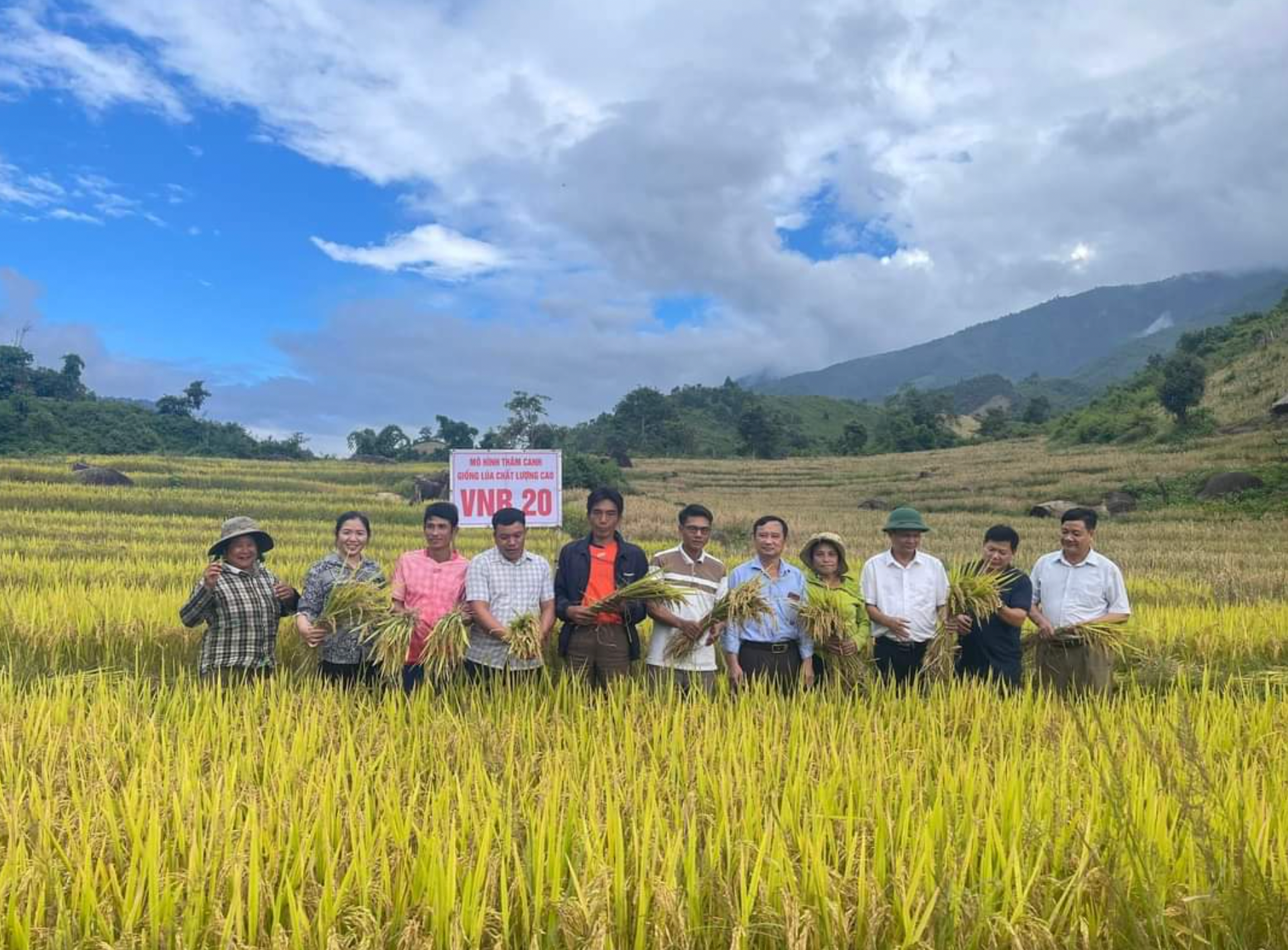
For areas suitable for wet rice cultivation, Ky Son district has also restructured its rice varieties to include higher-yielding, higher-quality varieties. Some areas have implemented this with promising results, such as Bac Ly, Muong Ai, and Chieu Luu communes.
Specifically, at the end of October 2023, the Ky Son District Agricultural Service Center organized an evaluation of the results of the "Intensive Cultivation Model of High-Quality Rice Variety VNR 20" in Muong Ai commune. This is a new rice variety model that the District Agricultural Service Center has been testing on a scale of 20 hectares, with 30 participating households and an implementation cost of nearly 500 million VND. Participating households received support in terms of seeds, fertilizers, pesticides, and training in production techniques. The VNR20 rice variety has a height of 95-100 cm, slightly large, upright flag leaves, strong tillering, and compact clumps, so initially it showed an average yield of 75 quintals/hectare, 10-15% higher than local rice varieties.
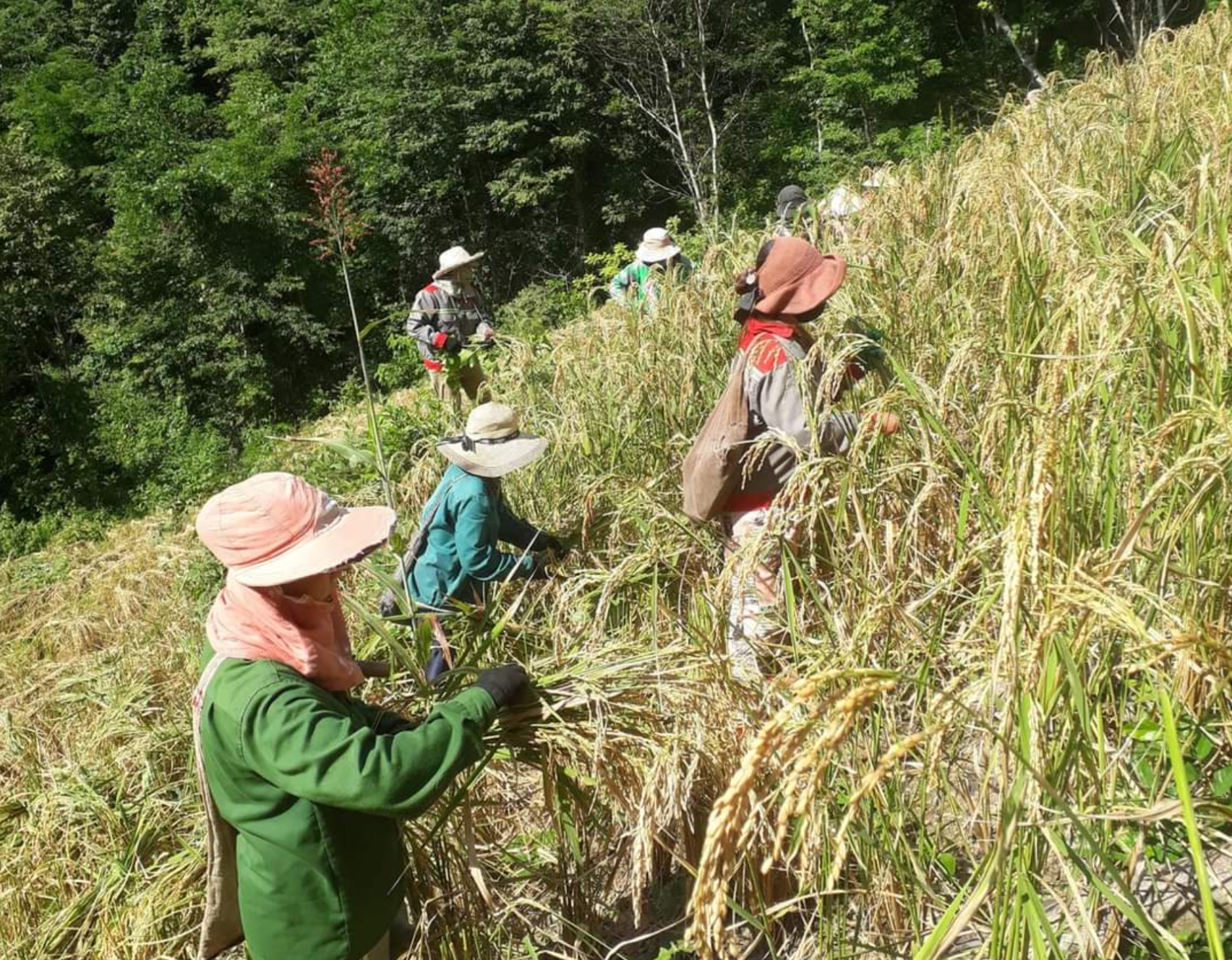
The VNR20 rice variety is short-statured, making it resistant to lodging, pests, and blast disease. Its growth period is 105-110 days. To date, the entire area where the VNR20 rice variety was demonstrated has been harvested. The district plans to continue surveying and restructuring crop varieties for each specific locality to maximize advantages, minimize disadvantages, and ensure yield and quality.


